
AI health coaching is changing what clients expect from wellness professionals. Chatbots can generate habit plans, summarize progress, answer questions, and offer instant support at little cost. Reddit users are already questioning why they should pay hundreds monthly for advice available through AI. For human coaches, the challenge involves protecting client trust, demonstrating measurable results, and delivering meaningful accountability. Understanding health coaching's future, client expectations, and effective behavior change reveals where human expertise remains valuable.
1. AI Health Coaching vs Human Coaches: What Reddit Users Are Actually Saying
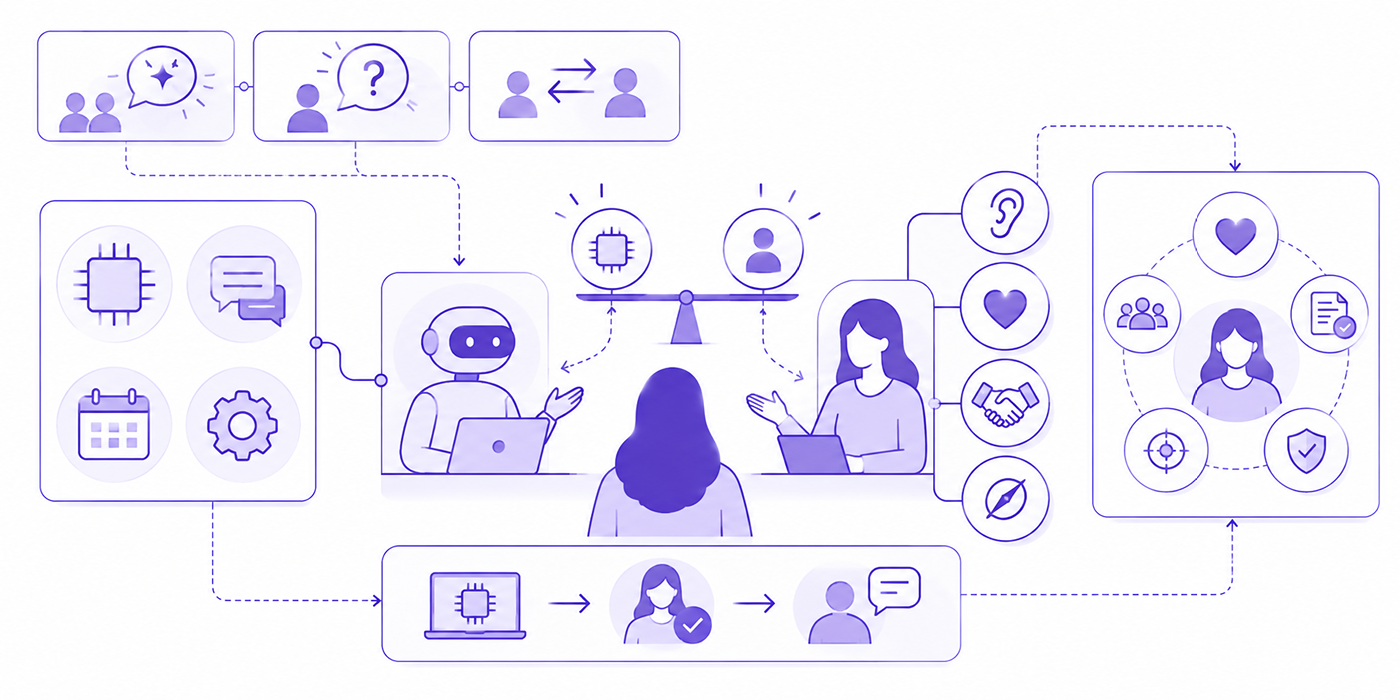
Reddit discussions reveal three competing reactions to AI coaching: clients who appreciate inexpensive, immediate guidance; coaches who worry about their services becoming interchangeable with software; and practitioners experimenting with AI to improve existing coaching relationships.
These perspectives expose weaknesses in traditional coaching business models, particularly where clients are paying premium fees for generic information.
Clients are questioning what their monthly coaching fees actually buy
In an October 2025 Reddit discussion about AI-generated fitness coaching responses, a client described paying approximately $200 monthly for online coaching while receiving increasingly generic check-in responses.
The client became frustrated after noticing an unmistakable AI-generated instruction accidentally included in a coach's message. The issue extended beyond the use of technology: the client felt their personal struggles were receiving little individualized attention.
The user subsequently reported canceling the service.
This example highlights a significant threat to coaches selling repetitive accountability packages. When paid responses resemble chatbot output, clients naturally question the value of personalized coaching relationships, client retention strategies, and premium coaching prices.
The practical lesson: Every paid check-in should contain evidence that the coach understands the client's specific circumstances, previous commitments, current barriers, and progress.
Some consumers are already getting substantial value from AI
A widely discussed May 2025 Reddit account of using ChatGPT for fitness transformation described someone replacing expensive fitness coaching with AI-generated workout planning, food choices, and ongoing guidance.
The user reported achieving better personal results at a lower cost. That experience is self-reported, and it cannot establish that AI coaching generally outperforms professional services.
Nevertheless, the economic pressure is genuine. Clients seeking meal-planning ideas, basic fitness organization, or habit-stacking guidance can access substantial information without purchasing a coaching package.
Human coaches who primarily distribute generic SMART goals, wheel-of-life exercises, and self-care checklists face growing pressure to demonstrate the additional value of individualized application.
Coaches are debating which human skills remain essential
In an August 2026 r/HealthCoaching discussion, participants examined the future of coaching as AI becomes increasingly capable of organizing health information.
Discussion points included deeper listening, recognizing missing information, identifying behavioral barriers, helping clients communicate with healthcare professionals, and understanding when professional referral is appropriate.
These capabilities align with strengths-based coaching, emotional agility, and ethical coaching responsibilities.
Meanwhile, an April 2026 discussion about AI-supported coaching workflows described using AI for preparation, summaries, and administrative support while preserving human responsibility for client-facing decisions.
The strongest conclusion from these conversations concerns value differentiation. Clients can increasingly obtain information, reminders, and suggested plans independently. Coaches need to show how their involvement improves implementation, protects decision quality, and supports lasting behavioral progress.
Reddit experiences are useful signals of emerging concerns. They remain self-selected anecdotes rather than representative measures of client satisfaction, substitution rates, or coaching effectiveness.
| Client Need | AI Can Help With | Human Coach Adds | Recommended Approach |
|---|---|---|---|
| 1. Goal setting | Drafting measurable goals | Testing whether goals fit real priorities | Hybrid coaching |
| 2. Habit tracking | Daily logs and reminders | Understanding why habits collapse | AI tracking + human review |
| 3. Accountability | Automated check-in prompts | Relationship-based follow-through | Hybrid coaching |
| 4. Motivation | Encouragement and reflection prompts | Exploring personal meaning and ambivalence | Human-led coaching |
| 5. Lifestyle education | Explaining general wellness concepts | Checking understanding and relevance | AI-assisted education |
| 6. Sleep habits | Routine reminders and journals | Exploring environmental and lifestyle barriers | Hybrid coaching |
| 7. Stress management | General coping exercise suggestions | Recognizing distress and referral needs | Human-led with referrals |
| 8. Food journaling | Organizing recorded meals | Exploring eating patterns without judgment | Hybrid within scope |
| 9. Exercise consistency | Scheduling movement reminders | Adapting commitments around real obstacles | Hybrid coaching |
| 10. Progress reviews | Summarizing tracked data | Interpreting progress in personal context | Human-reviewed summaries |
| 11. Emotional setbacks | Suggesting reflective questions | Responding sensitively and recognizing risks | Human-led coaching |
| 12. Habit relapse | Identifying repeated missed targets | Investigating shame, pressure, and barriers | Human-led review |
| 13. Decision fatigue | Generating simpler choices | Clarifying values and competing demands | Hybrid coaching |
| 14. Time management | Organizing schedules and reminders | Helping clients renegotiate commitments | AI-assisted planning |
| 15. Confidence building | Generating reflection exercises | Exploring self-beliefs and lived experiences | Human-led coaching |
| 16. Complex life changes | Organizing options and considerations | Working through uncertainty and trade-offs | Human-led coaching |
| 17. Client check-ins | Drafting questions and summaries | Delivering individualized responses | Hybrid with human approval |
| 18. Goal adjustment | Proposing alternative targets | Negotiating realistic changes with clients | Human-led decisions |
| 19. Cultural preferences | Suggesting general adaptations | Exploring lived cultural and family context | Human-led personalization |
| 20. Family pressures | Suggesting communication prompts | Understanding relationship constraints | Human-led coaching |
| 21. Shift work | Organizing flexible routine options | Planning around fatigue and changing demands | Hybrid coaching |
| 22. Burnout concerns | Organizing reflection questions | Recognizing serious concerns and referral needs | Human-led support |
| 23. Medical questions | Preparing questions for clinicians | Identifying scope boundaries and referrals | Qualified clinical referral |
| 24. Medication concerns | Helping organize questions | Directing clients to licensed prescribers | Clinical professional |
| 25. Lab result concerns | Organizing reported information | Supporting appropriate clinician communication | Clinical professional |
| 26. Chronic-condition habits | Tracking agreed lifestyle actions | Supporting adherence within authorized scope | Coordinated care |
| 27. Client privacy | Supporting secure workflows where configured | Managing consent, disclosures, and safeguards | Human governance |
| 28. Crisis disclosures | Potentially flagging concerning language | Using an established safety escalation protocol | Qualified urgent support |
| 29. Between-session support | Providing scheduled prompts and resources | Reviewing emerging barriers and priorities | Hybrid coaching |
| 30. Group coaching | Preparing prompts and materials | Facilitating group dynamics and inclusion | Human-led groups |
| 31. Long-term maintenance | Tracking trends and creating reminders | Supporting identity, autonomy, and adaptation | Hybrid coaching |
| 32. Coaching relationship | Supporting communication and administration | Establishing trust and professional responsibility | Human-led coaching |
2. What AI Health Coaching Does Well — And Where Clients Still Need Human Judgment
AI's most immediate advantage is accessibility. Clients can request a planning exercise, generate a reflection prompt, or review a habit log outside normal business hours.
For people with straightforward wellness goals, affordable automated support may be sufficient. Others benefit from combining digital tools with structured human coaching.
Research on AI-assisted coaching and digital health interventions suggests promising uses for automated feedback, self-monitoring, and action planning. However, evidence remains heterogeneous, and long-term superiority of AI-only or hybrid coaching has not been consistently established.
AI performs well when tasks are structured and repeatable
Consider a client working on walking consistently after lunch. AI can help generate a reminder schedule, suggest implementation intentions, and summarize self-reported completion.
These applications complement habit-stacking methods, SMART goal development, and health behavior change strategies.
Coaches can also automate preparation for accountability sessions, organize strengths-based reflection questions, and produce draft educational resources.
The important distinction concerns the level of decision-making delegated. Generating possible habit cues is comparatively low risk. Interpreting symptoms or recommending changes to prescribed treatment carries substantially greater risk.
AI can miss the reasons behind a client's inconsistency
Imagine a client who repeatedly misses evening walks.
An AI assistant might suggest reducing the walking target, changing reminder times, or scheduling a shorter alternative. Those suggestions could be useful.
A skilled coach might discover that the client spends evenings caring for an elderly parent, feels guilty taking personal time, and fears criticism from family members.
That discovery changes the intervention. The coach may explore emotional agility, apply an immunity-to-change framework, or use holistic coaching principles to investigate competing priorities.
AI can ask relevant questions as well. The difference depends on whether the coach actually recognizes the underlying barrier, develops shared understanding, and responds effectively.
Health-related AI errors carry consequences
The World Health Organization's guidance on generative AI in healthcare identifies risks involving inaccurate outputs, bias, privacy, and excessive reliance on automated recommendations.
For coaching practices, those risks become especially important when clients introduce medication questions, medical diagnoses, restrictive eating, or significant psychological distress.
Proper nutrition coaching boundaries, health coach versus dietitian responsibilities, and professional duty of care remain essential when AI tools are used.
For example, a client mentioning unexplained dizziness during exercise needs appropriate medical assessment rather than an automatically generated exercise adjustment.
A useful operating rule is to automate organization and routine support while requiring qualified human review wherever decisions could materially affect client safety.
3. The Human Coaching Skills That Protect Client Trust, Results & Premium Pricing
The strongest defense against AI commoditization is demonstrable coaching competence. Clients need to experience benefits that justify paying for individualized professional attention.
Six skills deserve particular investment.
1. Deep listening that uncovers the actual problem
Clients often describe symptoms of a behavioral problem rather than its underlying cause.
Someone requesting help with consistency may actually struggle with unrealistic family expectations, perfectionism, low confidence, or competing commitments.
Skilled coaches listen for mismatches between stated goals and daily behavior. They clarify assumptions, identify emotional barriers, and help clients reach meaningful conclusions.
These techniques become more effective through the CLEAR coaching model, strengths-based coaching, and emotional agility practice.
Practical technique: When a client misses a goal, explore what happened immediately before the intended action, what competing demand emerged, and what would make the next attempt more realistic.
2. Accountability that changes behavior
Automated reminders can be effective, especially when clients already have strong motivation and clear plans.
Relationship-based accountability adds a different mechanism: clients know another person understands their commitments, will examine setbacks with them, and expects an honest conversation.
Effective accountability coaching also involves reviewing habit-stacking performance and maintaining realistic SMART goals.
Ask clients to rate their confidence in completing a commitment from zero to ten. If confidence is below seven, investigate the obstacles and negotiate a smaller action.
The specific threshold is a coaching heuristic rather than a validated prediction of success.
3. Appropriate challenge without damaging trust
Some AI interactions can become overly agreeable, particularly when users present confident assumptions or request reassurance.
Human coaches can make the same mistake. Professional expertise involves recognizing when encouragement should give way to respectful challenge.
For example, a client may claim they lack time for exercise while simultaneously maintaining several optional commitments. The coach can help the client examine priorities, ambivalence, and trade-offs.
Methods from transactional analysis, positive psychology coaching, and immunity-to-change work can inform reflective conversations when used appropriately.
Challenge should be collaborative, specific, and responsive to the client's readiness.
4. Cultural understanding and individualized context
Health behaviors are influenced by family arrangements, cultural practices, work schedules, income, and access to resources.
A generic meal-preparation recommendation may be impractical for someone sharing a multigenerational household or working irregular shifts.
Competent culturally responsive coaching accounts for these realities. Holistic coaching methods and preventive health coaching should similarly account for a client's actual circumstances.
Coaches can test proposed actions against three questions: Is the action affordable? Is it socially and practically feasible? Does the client genuinely choose it?
5. Ethical judgment and professional boundaries
Clients may disclose symptoms, medication concerns, disordered eating behaviors, or serious emotional distress during ordinary wellness sessions.
Coaches need to recognize when a situation exceeds their competence and facilitate appropriate referrals.
Understanding therapist versus coach boundaries, nutrition practice restrictions, and coaching ethical standards helps prevent harmful overreach.
The ability to make a safe referral can be more valuable than attempting to provide another answer.
6. Tracking outcomes that matter to clients
Clients should know what their coaching investment is accomplishing.
Use baseline measures, agreed behavioral indicators, review intervals, and client-reported progress. Track meaningful outcomes such as completed commitments, confidence in self-management, and consistency under real-world conditions.
A coach applying behavior change frameworks, the OSCAR coaching model, and life balance assessments can help clients see how individual actions connect to broader goals.
Where clinical outcomes are relevant, leave diagnosis and treatment decisions to appropriately qualified healthcare professionals.
The commercial advantage comes from explaining the work performed and demonstrating credible progress, rather than making unsupported transformation guarantees.
Submit Your Vote Change Your Vote
Please select an option above to see your recommendation.
Your Personalized Recommendation
Here's the most useful next step for your coaching practice:
Pricing pressure: Separate information delivery from human coaching. Make your premium offer about individualized behavior change, real accountability, and documented progress. Audit whether clients experience enough personal attention to justify your monthly fees.
Generic coaching: Review your last five anonymized client check-ins. Each response should reflect an individual barrier, previous commitment, and tailored next step. Replace generic encouragement with specific coaching observations and meaningful follow-up.
Accountability differentiation: Use automation for reminders and tracking. Reserve human sessions for identifying resistance, revising unrealistic commitments, and helping clients navigate emotional and practical obstacles. Measure completed actions rather than message volume.
AI privacy and ethics: Review your coaching agreement and technology policies. Check vendor data retention, access, training-use settings, and security controls. Obtain appropriate client consent and avoid entering identifiable health information into unapproved tools.
Proving client outcomes: Establish a baseline, agree on two or three behavioral indicators, and review progress every four weeks. Track implementation, barriers overcome, and client-reported improvements. Explain your specific contribution to the coaching process.
Interactive on-page selection with personalized feedback. This HTML/CSS-only version does not store or tally votes.
4. How Human Coaches Can Use AI Without Damaging Client Trust or Confidentiality
AI adoption creates an operational challenge for health coaches: determining which activities can safely be automated, what information can be shared, and who remains responsible for the resulting decisions.
The NBHWC's current Code of Ethics and Professional Conduct explicitly addresses disclosure of AI use in coaching services, including potential effects on client privacy and confidentiality.
Professional coaching contracts, ethical standards, and duty-of-care obligations therefore need to account for AI-assisted workflows.
Separate AI tasks into three risk levels
Low-risk administrative support: Drafting general educational material, creating scheduling reminders, preparing blank worksheets, and organizing non-identifiable business information.
These activities can support SMART goal templates, wheel-of-life exercises, and general habit formation resources.
Moderate-risk client support: Drafting personalized check-ins, processing session notes, summarizing client progress, and generating individualized reflection questions.
These tasks require appropriate consent, verified data protections, and meaningful human review. Coaches should assess whether the AI provider uses submitted data for model training, how long information is retained, and who can access it.
High-risk activities: Interpreting medical symptoms, recommending treatment changes, managing emergencies, or making decisions beyond the coach's professional scope.
Such situations require established referral or escalation procedures. Understanding health coach nutrition boundaries, clinical role differences, and therapist referral responsibilities is particularly important.
Apply a five-step AI governance process
Step 1: Create an approved-use policy. Identify the exact tools permitted, approved activities, prohibited information categories, and individuals responsible for oversight.
Step 2: Explain AI use before collecting information. Specify which coaching activities involve AI and what happens to client information. Include these disclosures in your coaching agreement.
Step 3: Verify privacy and security safeguards. Review contractual confidentiality protections, storage locations, retention periods, access permissions, deletion options, and applicable regulatory requirements. De-identification should be assessed carefully because free-text health narratives may remain identifiable through context.
Step 4: Review AI-generated work. Check factual accuracy, tone, relevance, scope of practice, and sensitivity before sharing personalized content.
Step 5: Establish incident procedures. Document what happens if confidential information is exposed, AI generates unsafe advice, or an automated workflow misses a concerning disclosure.
The ICF AI Coaching Framework and Standards also addresses disclosure, trust, technical reliability, privacy, and security.
For coaches pursuing NBC-HWC-related career opportunities, corporate wellness work, or remote coaching positions, documented technology governance can also demonstrate professional maturity.
Client confidentiality deserves special attention because an otherwise useful AI feature can introduce substantial professional risk when personal health information enters an unsuitable system.

5. A 90-Day Strategy to Make Your Human Health Coaching Practice More Competitive
Coaches facing AI competition need a practical business response. The strongest approach combines sharper positioning, consistent service delivery, selective automation, and clear evidence of client progress.
Days 1–30: Identify where your coaching offer has become replaceable
Review your current services and classify every deliverable according to its value.
Generic wellness explanations, standard habit worksheets, and routine reminders face significant competition from free or inexpensive digital tools.
Client-specific reflection, difficult conversations, collaborative problem-solving, and ethical oversight can justify more individualized support.
Audit your last ten client interactions, using appropriate confidentiality safeguards. Identify which exchanges contain specific observations, meaningful questions, or tailored interventions.
Then examine your health coaching niche, market positioning, and current package pricing.
Ask existing clients which parts of coaching they would struggle to reproduce independently.
Their answers can reveal valuable differentiators that marketing materials currently overlook.
Days 31–60: Build a hybrid service with clearly defined human involvement
Create three service levels aligned with different client requirements.
Self-guided support: General education, structured worksheets, tracking tools, and basic habit-planning resources. Suitable for clients who primarily need organization and have limited budgets.
Hybrid coaching: Digital check-ins combined with regular human review, personalized feedback, and scheduled coaching sessions. Suitable for clients who need ongoing behavior change support and structured accountability.
High-touch human coaching: More frequent direct interactions, complex barrier exploration, individualized planning, and close follow-up. Appropriate for clients who need deeper support within the coach's professional scope.
Each service should have a clear description of response times, scheduled interactions, included deliverables, cancellation conditions, and technology use.
Apply professional contracting principles, scope-of-practice safeguards, and inclusive coaching methods across all tiers.
Avoid promising unlimited human availability unless the business can reliably deliver it.
Days 61–90: Prove the value of human involvement
Establish an outcome review at enrollment, day 30, day 60, and day 90.
Measure several dimensions:
Behavioral execution: Percentage of agreed actions completed.
Confidence: Client-reported ability to maintain habits independently.
Barrier resolution: Number and significance of obstacles successfully addressed.
Retention: Percentage of eligible clients continuing into the next service period.
Client experience: Ratings of personalization, usefulness, and clarity.
These are proposed practice-level indicators. They should be interpreted alongside client circumstances rather than treated as standardized clinical outcomes.
Use SMART goals, the OSCAR coaching model, and strengths-based coaching to connect progress reviews with the client's original priorities.
Protect profitability with realistic service economics
Consider a hypothetical hybrid package priced at $280 per client per month.
With 12 active clients, gross monthly revenue equals $3,360.
If every client receives two 45-minute sessions and four 20-minute personalized check-ins monthly, those commitments require approximately 34 hours before additional preparation, marketing, administration, and other responsibilities.
Adding six hours of associated work produces 40 hours of monthly labor, equivalent to approximately $84 in gross revenue per working hour before expenses and taxes.
This calculation exposes why coaches must understand realistic coaching earnings, sustainable package pricing, and client acquisition costs.
Appropriate automation can reduce repetitive administrative work. The recovered time can support individualized client interactions or additional service capacity.
Reposition your marketing around problems clients cannot solve consistently
A broad promise such as helping people live healthier lives provides little differentiation.
A specific offer should identify the client, their persistent behavioral obstacle, and the coaching process used to address it.
For example, a coach specializing in busy professionals might focus on building sustainable movement and sleep routines despite unpredictable schedules.
A coach serving clients struggling with repeated habit setbacks could emphasize accountability coaching, resilience-building methods, and habit-stacking strategies.
Other viable positioning opportunities may involve career burnout coaching, preventive health coaching, or holistic lifestyle coaching, provided the coach operates within appropriate qualifications and professional boundaries.
Finally, improve the sales conversation. Ask prospective clients what they have already tried, including AI tools, and what remains unresolved.
This approach strengthens coaching discovery calls, supports client trust development, and helps overcome common first-client acquisition problems.
The objective is a coaching service whose value clients can describe, experience, and evaluate through progress.
6. FAQs: AI Health Coaching, Human Coaches & the Future of Professional Coaching
-
AI will likely automate or compete with more routine coaching activities, including general wellness education, habit reminders, progress summaries, and basic planning.
The degree of substitution will depend on the client population, task complexity, price, technology quality, and available evidence about outcomes.
Coaches delivering strong behavior change support, professional accountability, and individualized lifestyle interventions may retain meaningful advantages.
The International Coaching Federation's October 2026 AI and coaching white paper examines coach-led, hybrid, and AI-led approaches. Their coexistence offers a useful framework for evaluating how coaching services may evolve.
-
Effectiveness varies according to the target behavior, technology, client characteristics, intervention design, and outcome being measured.
AI-assisted approaches show promise in structured self-monitoring, education, and routine support. Evidence comparing long-term outcomes across AI-only, human-led, and hybrid coaching remains developing.
A client who primarily needs reminders may benefit from automation. Someone facing persistent ambivalence or complicated personal circumstances may benefit from emotional agility coaching, strengths-based methods, and collaborative goal-setting techniques.
The appropriate comparison should focus on measurable results, safety, affordability, and client preference.
-
Clients may pay for individualized attention, professional accountability, practical problem-solving, structured follow-up, and trusted guidance within appropriate professional boundaries.
Coaches also help clients examine why previously attempted plans failed.
Those benefits should appear clearly in the service itself. A coach offering premium health coaching packages needs to demonstrate greater practical value than generic educational content.
Strong client relationships, retention processes, and behavior-change results provide more defensible reasons to continue paying.
-
Coaches can use AI for suitable activities when privacy, professional ethics, vendor safeguards, applicable law, and client consent requirements are properly addressed.
General educational worksheets and non-identifiable administrative materials may present fewer privacy risks than identifiable session transcripts or sensitive health histories.
The NBHWC's professional ethics requirements address AI disclosure and responsible technology use.
Review coaching codes of conduct, client confidentiality agreements, and professional duty of care.
HIPAA obligations depend on the specific legal status and activities of the organization and its service providers; a health coach's job title alone does not determine applicability.
-
Skills involving relationship quality, complex behavioral barriers, ethical judgment, appropriate challenge, and individualized decision support are likely to remain commercially important.
Coaches can strengthen these capabilities through emotional agility, positive psychology coaching, immunity-to-change methods, and culturally responsive coaching.
The ability to recognize when a client needs professional medical or mental health assessment also remains essential.
Investing in these competencies can strengthen client outcomes and provide meaningful differentiation in an increasingly competitive coaching market.
-
Certification can remain worthwhile when it develops practical competence, supports intended employment opportunities, and offers an appropriate pathway toward professional recognition.
Prospective students should evaluate health coach certification versus NBHWC eligibility, corporate hiring requirements, and remote coaching employment prospects.
Programs should be assessed for supervised practice, communication training, ethical decision-making, and applied behavior-change instruction.
Applicants should also compare tuition with realistic coaching income potential and available career pathways.
