
The Ultimate Guide to Getting Health & Life Coaching Certification in Wisconsin: Everything You Need to Know in 2025-2026
Wisconsin is fast becoming one of the Midwest’s most promising states for aspiring health and life coaches. The blend of urban wellness demand from Milwaukee and Madison, coupled with rural community initiatives across smaller towns, has opened the door for certified coaches to thrive in diverse environments. If you’ve ever wanted to build a meaningful career helping people find purpose, improve well-being, and manage their habits, this guide will walk you through exactly how to do it in Wisconsin — with ANHCO’s trusted certification as your foundation.
1. Why Wisconsin Needs More Certified Health & Life Coaches
Wisconsin’s wellness landscape is undergoing transformation. Employers are integrating mental health and wellness programs into corporate settings, while hospitals and private clinics increasingly rely on certified coaches to improve patient outcomes. According to the Bureau of Labor Statistics, the health and wellness coaching market in Wisconsin is expected to grow by 20% between 2024 and 2026.
In cities like Milwaukee, Madison, and Green Bay, the demand for certified professionals with recognized credentials such as the ANHCO Health & Life Coaching Certification continues to rise. These coaches bridge the gap between traditional therapy and fitness guidance by offering structured lifestyle strategies.
Rural communities are also embracing digital wellness solutions. Many ANHCO graduates work remotely, guiding clients through telecoaching sessions while maintaining flexible schedules. This expansion, supported by telehealth laws in neighboring states like Iowa and Illinois, ensures Wisconsin coaches can also serve clients nationwide.
Wisconsin Health & Life Coaching Career Insights (2025–2026)
| Category | Details |
|---|---|
| Average Salary (Certified Coach) | $65,200 / year |
| Top 10% Salary Range | $95,000 – $118,000 / year |
| Entry-Level Salary | $40,000 – $47,000 |
| Job Growth (2024–2026) | Projected 20% increase |
| Common Work Environments | Corporate wellness, telehealth, hospitals, private practice |
| Popular Certifications | ANHCO Certified Coach, NBC-HWC, ICF |
| Education Required | High school diploma or higher |
| Program Duration | 3–6 months |
| Tuition Range | $2,400 – $5,000 |
| Top Employers | Froedtert Health, Aurora Health, UnityPoint, Bellin Health |
| Remote Opportunities | Yes, 70% of coaches serve online |
| Certification Renewal | Every 2 years (CEUs required) |
| Most In-Demand Skills | Behavioral change, nutrition, stress management |
| Top Niche Markets | Corporate stress coaching, weight loss, emotional wellness |
| Emerging Trends | AI-based accountability tools, group coaching |
| ANHCO Pathway | Enroll in ANHCO’s accredited Health & Life Coaching program |
2. Steps to Get Certified as a Health & Life Coach in Wisconsin
Earning your certification is a strategic investment in your credibility. ANHCO’s program is fully aligned with ICF and NBHWC standards, ensuring nationwide recognition.
Step 1: Choose an Accredited Program
Enroll in an ANHCO-accredited course that covers behavioral science, communication, and business strategy. This ensures your training is accepted by Wisconsin employers like Aurora Health or private wellness startups.
Step 2: Complete Training Hours
Students typically complete 100–125 training hours including self-paced online modules, live mentorship, and practical assessments.
Step 3: Practicum and Supervised Coaching
Before certification, complete 20–40 hours of supervised coaching to gain confidence in real-world applications.
Step 4: Pass the Final Certification Exam
This exam evaluates your understanding of health psychology, lifestyle design, and client motivation — crucial for delivering results-based coaching.
Step 5: Launch Your Practice
After certification, graduates can launch independent practices or join digital platforms, similar to professionals featured in Colorado’s ANHCO program.
3. Career Outlook and Income Potential for Wisconsin Coaches
Wisconsin’s coaching industry is shifting from luxury to necessity. Companies now integrate coaching into employee wellness plans. This change, combined with the rise of hybrid work, makes the role of certified coaches more vital than ever.
Corporate Wellness Coaching: Partner with businesses to build sustainable productivity habits.
Health Coaching: Collaborate with medical professionals to support patient lifestyle changes.
Personal Life Coaching: Focus on goal alignment, relationships, and career satisfaction.
Digital Coaching: Work remotely with clients across Michigan and neighboring states.
Certified coaches in Wisconsin earn between $60,000–$80,000 annually, with top-tier specialists crossing $100,000+. Many supplement income through online programs or corporate workshops.
Poll: What’s Your Biggest Challenge in Becoming a Certified Coach?
4. Why ANHCO Certification Is Wisconsin’s Most Trusted Option
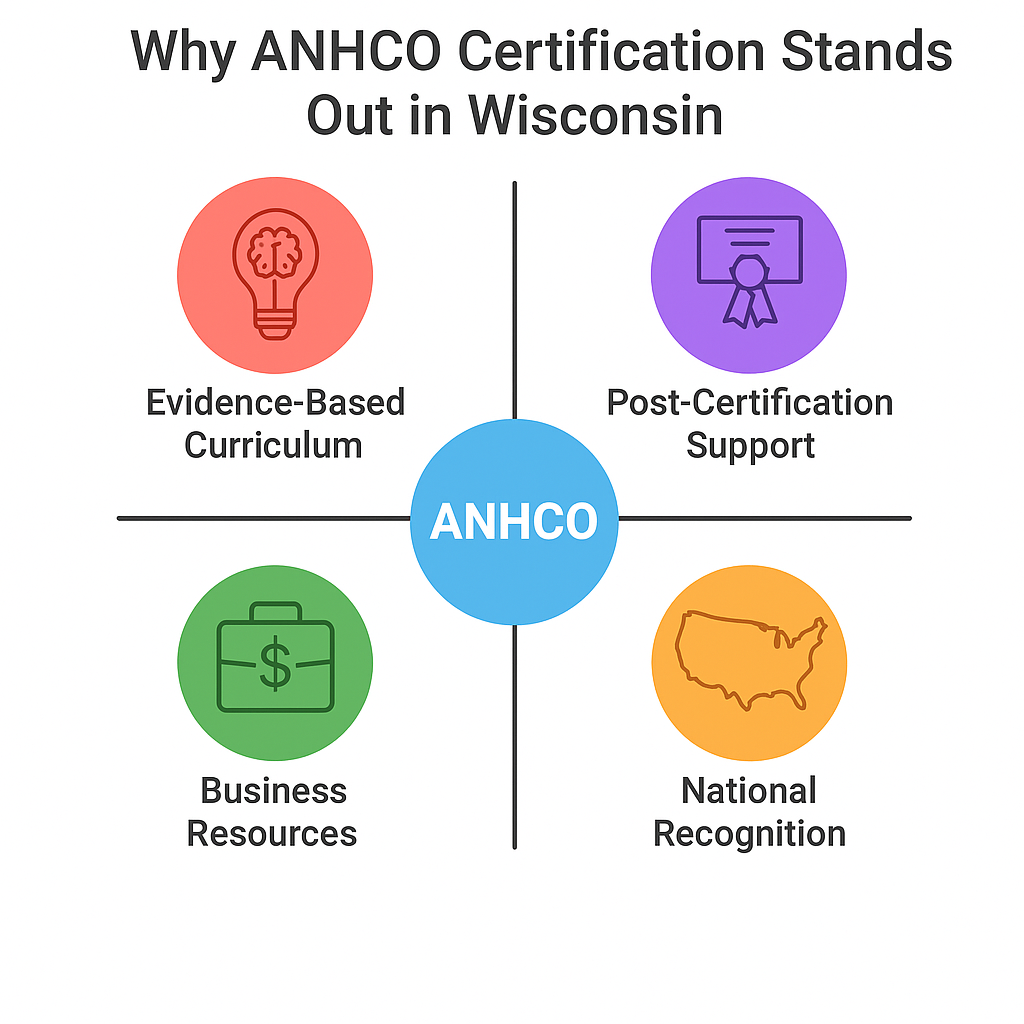
ANHCO stands apart for its evidence-based curriculum and post-certification support. The program blends psychology, nutrition, and business training to help you coach clients holistically. Graduates gain lifetime access to business resources, CEU workshops, and a national directory for client referrals.
In Wisconsin, ANHCO graduates are employed by Aurora Health, Bellin Health, and independent wellness studios. The certification also carries national recognition — meaning you can relocate or expand your virtual coaching business easily across other states like Texas and California.
5. The Future of Coaching in Wisconsin (2025–2026)
By 2026, Wisconsin’s coaching industry will be more integrated with technology than ever. AI-assisted wellness tracking, group accountability programs, and corporate digital coaching will be the norm. Coaches equipped with ANHCO credentials and tech fluency will dominate.
Expect more opportunities in:
Healthcare partnerships for chronic condition management
Corporate resilience programs post-pandemic
Online education and group coaching models
Regional certification scholarships
As the state invests more in community health initiatives, ANHCO-certified coaches will be at the forefront of behavioral change innovation.
6. FAQs About Health & Life Coaching Certification in Wisconsin
-
Most students complete ANHCO’s Health & Life Coaching Certification within 3–6 months, balancing flexible online learning with mentorship
-
No. Anyone passionate about wellness can enroll. ANHCO ensures you gain all the core competencies to begin coaching professionally.
-
Average earnings range between $60,000–$80,000, with private and specialized coaches exceeding $100,000+.
-
Yes. ANHCO certifications are nationally recognized, allowing graduates to coach across all 50 states and even internationally.
-
A combination of science-backed coaching modules, live sessions, practicum, business setup training, and lifetime access to ANHCO resources.
-
Graduates get listed on the ANHCO National Directory, receive marketing templates, and access business mentorship support.
-
Yes, every two years, through Continuing Education Units (CEUs) offered by ANHCO.
