
Effective Strategies for Coaching Clients Through Burnout
Burnout clients do not need more motivation, they need a structured way to rebuild energy, identity, and boundaries while life keeps demanding output. As a coach, you must be able to assess burnout quickly, stabilize clients in the short term, then design sustainable systems that prevent relapse. In this guide, you will learn concrete strategies you can plug into your existing session templates, SMART goal frameworks, and interactive exercises so that your burnout support is repeatable, ethical, and effective across niches.

1. Understanding Burnout Through A Coaching Lens
Burnout is not just exhaustion, it is a collapse of three systems at once: energy, effectiveness, and meaning. If you treat it like simple stress, you will encourage clients to “optimize” a life that is structurally unsustainable. Begin by defining burnout clearly in your intake forms and coaching session templates. Ask about emotional numbness, cynicism, and a sense of reduced accomplishment, not only fatigue and workload.
Map the client’s current life with a detailed burnout intake. Combine powerful questioning techniques with a stress timeline, values misalignment check, and a quick scan of relationships, money, and health demands. This is where you also clarify scope and refer to therapy or medical support when red flags appear, using your ethical coaching principles and dual relationship guidelines.
Because burnout often shows up in high achievers, you will encounter clients who are still outwardly performing. They might be running teams, building businesses, or even leading coaching practices with multiple revenue streams. Your job is to normalize early intervention and frame burnout work as strategic, not as failure. Link the process to long term financial freedom, sustainable leadership, and the ability to keep serving clients or organisations without sacrificing health.
2. Assessment And Intake Strategies That Prevent You From Missing Red Flags
A strong burnout protocol begins before the first call. Use your booking forms and client management systems to capture data on sleep, workload, medical history, mental health care, and medications. Combine this with a few targeted questions about hopelessness, panic, and self harm risk. If anything looks concerning, follow your ethical dilemma decision trees and clearly signpost that coaching is not the right first step.
In live intake sessions, blend structured powerful questions with high sensory awareness. Watch for flat affect, delayed responses, or extreme tension that does not shift during interactive exercises. Ask the client to describe a “typical week” in detail. Many burned-out clients underestimate how extreme their schedule has become until they hear it out loud or see it mapped in a shared document or resource library worksheet.
This is also where you begin expectation management. Explain that burnout recovery is not a two session fix, and that progress often looks like stabilisation first, then slow capacity expansion. Tie your explanation to clear SMART goals and show how you will measure progress with simple indicators like energy ratings, sleep quality, and ability to enjoy non-work activities. When clients see a structured path, they are more willing to commit to packages, which supports your own time management as a coach and revenue planning.
3. High-Impact Session Techniques To Stabilize And Rebuild
Your early sessions should focus on stopping the leak, not redesigning the entire life in one go. Use your coaching toolkit to prioritise interventions with the highest short term impact: non-negotiable rest, boundary scripts, and removal of low value obligations. Often a single decisive conversation with a manager or family member, rehearsed with you using role-play scripts, can cut hours of weekly overload.
Combine cognitive work with simple somatic resets. Short breathing protocols, scheduled breaks, and tech hygiene shifts are easy to pair with wearable tracking tools. This makes progress visible between sessions inside your client management platforms and helps skeptical high performers treat recovery as a measurable training plan rather than vague “self care.” You can also design gamified challenges where clients earn points for micro-wins instead of only big milestones.
As energy returns, shift into meaning and identity. Explore where the client linked worth, belonging, or safety to constant over-functioning. This is where your ethical boundaries resources and confidentiality practices keep the work safe. You are not doing therapy, you are partnering with the client to design new containers and commitments that express their values without burning them out again. Anchor new stories into SMART goals, content they share with their teams, or even future talks and books.
4. Designing Sustainable Systems That Prevent Burnout Relapse
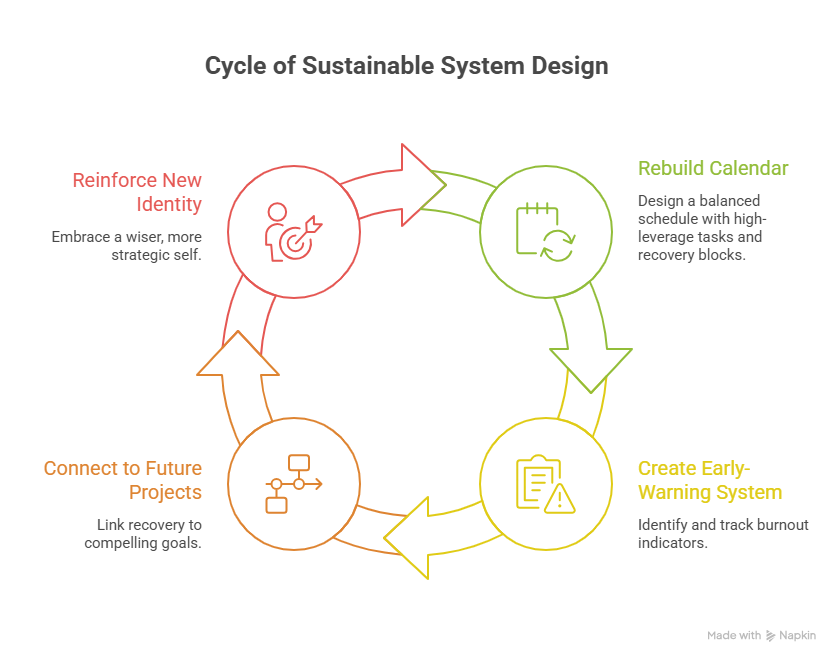
Once a client is no longer at crisis point, your focus shifts to system design. Work together to rebuild their calendar from the ground up, using elements from your session templates, time management strategies, and interactive workshops. Make sure high leverage tasks, deep work, and recovery blocks are protected before meetings and low value commitments claim the week.
Create a personal early-warning system. Ask the client to list specific indicators that historically show up two or three weeks before collapse: skipped meals, lost hobbies, resentment, or frequent illness. Turn these into a simple check-in inside your resource library or coaching app. When warning signs appear, the client knows exactly which pre-agreed interventions to activate and which commitments can be paused without guilt.
To keep change sticky, connect burnout recovery to compelling future projects. This could be a speaking roadmap, a podcast platform, or a coaching retreat they want to lead. When clients see their post-burnout identity as a wiser, more strategic version of themselves, the new boundaries feel like upgrades rather than losses. This mindset also feeds back into your brand if you specialise in burnout coaching, especially when combined with thoughtful branding and pricing.
5. Business And Ethical Considerations For Burnout-Focused Coaches
Burnout coaching is emotionally demanding work. To do it sustainably, you must build a practice that protects your own energy and ethics. Start with clear positioning and offers. If burnout is a core niche, design structured programs instead of ad-hoc sessions, and price them according to the depth of support, your credentials, and your market, guided by pricing strategy resources and high paying niche insights.
Build layered delivery models. Use online courses, group programs, and digital resources as the first touch points for milder cases or for clients with limited budgets. Reserve intensive one to one work for those who truly need it. This mix protects your time, supports multiple revenue streams, and reduces your own risk of burnout.
Ethically, you need strong lines around availability and dual roles. Burned-out clients may push for constant messaging access or want you to fill employer, friend, or therapist roles. Use your boundary guidelines, dual relationship resources, and confidentiality policies to set limits early. Create a referral map for urgent mental health, legal, or financial issues so that you are never improvising under pressure. This professionalism protects your license pathways if you pursue further certifications and credentials and keeps your reputation strong.
6. FAQs: Coaching Clients Through Burnout
-
Look for markers like persistent suicidal thoughts, panic attacks, unprocessed trauma, or complete inability to function at work or home. When those show up, coaching is supportive at best but not primary care. Use your ethical coaching principles, confidentiality policies, and ethical dilemma frameworks to explain why you are referring out. You can stay in the client’s ecosystem after stabilisation, focusing on structure, habits, and future design while the therapist handles clinical work.
-
The first step is always assessment and safety, not optimisation hacks. Start with a detailed burnout intake that covers workload, health, mental health care, and support systems. Use powerful questioning to uncover hidden pressures and SMART goals to define what “better” actually means. Often the initial intervention is a small but symbolic boundary or schedule change that proves new choices are possible. From there you design a structured plan using your toolkit and templates.
-
When workload cannot drop fast, shift focus to micro-recovery and energy leaks you can control. Redesign evenings and days off, improve sleep and tech hygiene, and introduce three-minute grounding practices between meetings, supported by wearable tech insights. Help clients renegotiate even small parts of their role through communication rehearsals. At the same time, explore medium term plans that diversify income or roles, drawing on resources about multiple revenue streams and financial freedom.
-
You must live the boundaries you teach. Structure your calendar with non-negotiable rest, limit intensive one to one spots, and lean on group programs and courses to serve more people without multiplying emotional load. Price your work fairly using pricing strategy guides so you can afford your own supervision, therapy, or coaching. Use interactive communities so peer support carries part of the load, rather than trying to be every client’s only pillar.
-
Anchor every piece of content in hope and clarity, not fear. Acknowledge symptoms honestly, then quickly move to practical frameworks and case studies. Use engaging content practices, podcasts, or speaking opportunities to share stories that demonstrate recovery is possible. Always include simple first steps, checklists, or reflection questions stored in your resource library, so people leave with agency rather than alarm.
-
It depends on your market and your own capacity. In corporate or healthcare contexts, a clear “burnout and resilience coach” brand can position you strongly, especially when supported by recognized certifications and clear branding basics. For personal development audiences, burnout may be one pillar inside a broader promise like sustainable high performance or purpose driven careers. Test language through LinkedIn experiments and podcast conversations to see what resonates without overwhelming prospects.
-
Document your process step by step, from intake to relapse prevention. Turn each stage into modules that can live inside online courses, live workshops, or retreats. Build worksheets, checklists, and scripts into a branded resource library. Then design an offer ladder where self paced products feed into group programs and a small number of premium one to one packages. This structure lets you help more people through burnout while protecting your energy and income.
