
Positive client behaviors are the real assets of your coaching practice. When you reinforce them intentionally, you shorten time to results, increase client satisfaction, and quietly boost referrals without extra marketing spend. Most coaches encourage progress verbally, but very few design a repeatable reinforcement system that works across sessions, programs, and digital touchpoints. In this guide, you’ll build that system step by step so your clients keep doing the right things even when life gets noisy and motivation dips.

1) Understanding Positive Reinforcement In Modern Coaching
Positive reinforcement is not just “giving praise”. It is the intentional process of linking a specific client behavior to a specific reward so the brain tags that action as safe, effective, and worth repeating. When you combine this with clear goals from your SMART goals framework, targeted exercises from your interactive exercise library, and digital workflows inside your preferred coaching software stack, reinforcement becomes an ecosystem rather than a one-off compliment.
Clients are overloaded with advice and resources. The coaches who stand out are the ones who design reinforcement that matches how clients actually live: through notifications from virtual coaching tools, accountability loops in a supportive online coaching community, and meaningful progress milestones instead of generic “good job” messages. When your reinforcement is visible in calendars, inboxes, communities, and sessions, clients feel held by a system rather than depending on raw willpower.
2) High-Value Positive Behaviors Worth Reinforcing
Many coaches accidentally reinforce the wrong behaviors. They give most attention to crisis talk, last-minute reschedules, or dramatic events. Clients then learn that chaos gets the most coach energy. To reverse that pattern, you deliberately over-reinforce behaviors that build capacity: planning, reflection, and courageous micro-actions. The table above gives you options, but choose three priority behaviors per client so your reinforcement feels sharp rather than scattered.
For example, with a health coach building a business, you might reward consistent scheduling powered by your time management systems, celebration posts inside an interactive community thread, and deep work blocks where they implement lessons from engaging content creation guides. The pattern you want is clear: “When I plan, show up, and implement, my coach notices, rewards, and upgrades my strategy.”
When clients are pursuing certification, reinforce learning behaviors instead of just exam scores. Link their study streaks to long-term outcomes captured in the ultimate health coach certification guide, your breakdown of internationally recognized life coaching certifications, and forward-looking pieces on 2025 certification trends. Each study session becomes part of a bigger professional identity, not just a chore before a test.
3) Practical Reinforcement Techniques You Can Use In Every Session
Inside sessions, reinforcement should feel precise, evidence-based, and tied to the client’s self-concept. Generic praise is quickly discounted. Use “behavior plus impact” statements: “When you blocked off Sunday evening for planning, you reduced Monday chaos and finally launched that email campaign.” This pairs well with structured agendas from your coaching session templates and focused prompts drawn from powerful questioning techniques.
Identity-based reinforcement goes deeper. Link positive behaviors to the kind of person your client wants to become. You might say, “You handled that boundary conversation like a professional leader, exactly in line with the identity work from your coaching leadership skills plan.” When you connect actions to identity and values, change becomes far more durable than when you rely on fear or pressure. You can embed mini-celebrations into your virtual coaching tools with emojis, progress tags, or “win of the week” prompts inside an interactive coaching community.
Reinforcement should also sit inside your ethical framework. When a client behaves in a way that protects confidentiality or manages dual roles carefully, reinforce that explicitly. Use language from your guides on coaching confidentiality, managing dual relationships, and resolving ethical dilemmas. You train clients to see ethical maturity as a core achievement, not a boring compliance box.
4) Building Reinforcement Systems Between Sessions
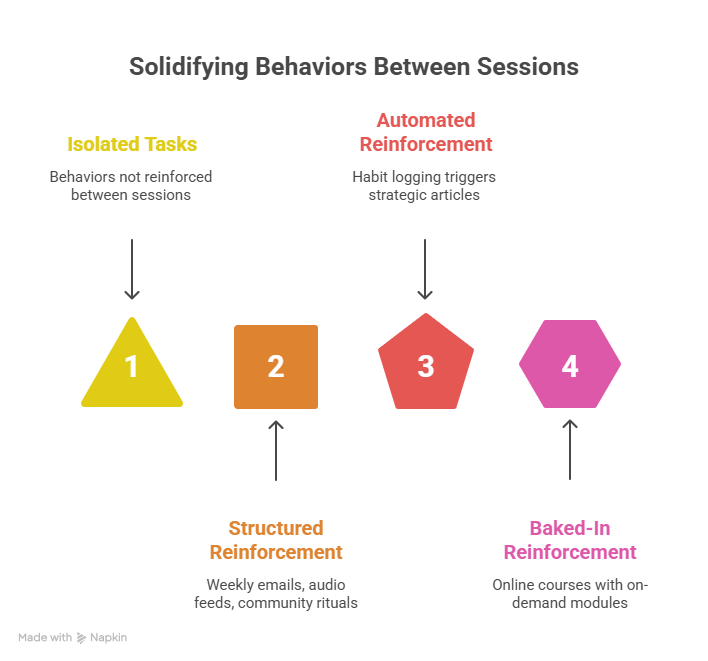
Between sessions is where most behaviors either solidify or disappear. You need at least one structured reinforcement channel that operates even when you are not live. This might be a weekly email highlighting client wins and linking to assets in your coaching resource library, a private audio feed that builds on podcast resources for coaches, or a community ritual where clients post their “Monday commitment” using interactive coaching exercises.
Automations inside your coaching platform can handle much of this reinforcement. When a client logs a habit, they can receive a short message plus a link to strategic articles like developing multiple revenue streams or creating passive income opportunities if they are working on money goals. You’re always connecting micro-behaviors to big-picture outcomes, which demonstrates you think in systems rather than isolated tasks.
You can also bake reinforcement into paid products. A structured online course, built using the guidance from creating and selling coaching courses, allows clients to access reinforcement in short, on-demand modules. After each module, direct clients to apply one concrete action and report back in your interactive community. The aim is consistent: remove friction between a positive behavior and the reinforcing response that follows.
5) Measuring And Adjusting Your Reinforcement Strategy
Positive reinforcement is only powerful if it is linked to measurable outcomes. That means tracking both behavior frequency and client results. Use your software to tag session notes whenever a client demonstrates one of the key behaviors you identified. Over time, correlate those tags with milestones such as landing features via podcast-based visibility, filling events designed with retreat and workshop frameworks, or upgrading offers built on premium pricing strategies.
Every quarter, review your data: which reinforced behaviors clearly connect to faster or deeper results, and which look busy but do little? If clients who consistently attend workshops you host progress faster, double down on reinforcing event attendance with bonuses and recognition. If generic community participation does not correlate with outcomes, redesign how you frame and reward engagement using ideas from building interactive coaching communities. Measurement keeps your reinforcement precise, ethical, and centered on genuine transformation rather than vanity metrics.
Invite clients into this evaluation. Ask which types of recognition, rewards, or structures make them feel genuinely supported. Some respond best to public celebration inside a coaching community; others prefer quiet acknowledgment in one-to-one sessions. Co-designing reinforcement with clients strengthens partnership and increases follow-through on the behaviors you highlight.
6) FAQs On Reinforcing Positive Client Behaviors
-
Start by mapping behaviors to outcomes. Identify actions that reliably predict progress toward goals you already track, such as habit streaks, revenue milestones, or health markers. Draw on data from your coaching software, clarity from your SMART goals systems, and examples in your own case studies. Prioritize behaviors clients can execute independently, like completing reflection prompts with session templates or logging data using wearable tech. That way, your reinforcement amplifies self-leadership rather than dependence on you.
-
Praise is usually vague and focused on outcomes. Effective reinforcement is specific, behavior-focused, and linked to the client’s values and identity. Instead of “Great job”, you say, “You protected your morning focus block even when your team wanted more meetings; that is exactly how a strategic leader operates.” You can deepen the frame with concepts from coaching leadership skills and time management for coaches. Done well, reinforcement becomes a mini reframe that literally changes how clients see themselves.
-
Avoid dependency by reinforcing self-evaluation instead of your opinion. Ask clients to name what they are proud of, what felt different, and how they want to celebrate. Then mirror and sharpen their language. Pair this with tools from essential templates and checklists and interactive exercises that encourage self-coaching. Over time, you move from “I approve you” to “You are learning to recognize and reward your own aligned actions,” which fits the ethical coaching principles you want your practice built on.
-
Adults respond poorly to superficial treats. The strongest reinforcers remove friction, deepen learning, or expand opportunity. Examples include bonus templates from your passive income playbooks, access to advanced sessions linked to retreat and workshop strategy, or short “laser sessions” when a client hits a major milestone. You can also design tiered recognition inside community spaces created with branding basics and interactive community systems. The common thread: rewards accelerate the goals clients already care about.
-
In groups, reinforcement must be public, fair, and linked to shared norms. Create rituals such as weekly win threads powered by interactive coaching exercises, spotlight interviews for members who apply lessons from writing and publishing a coaching book, or gamified challenges inspired by coaching gamification tools. Make criteria transparent so quieter members still have a path to recognition. When you highlight a win, always spell out the underlying behavior so others know exactly what to imitate.
-
Some high performers are suspicious of praise because of past experiences or cultural norms. With them, reinforcement looks like “respectful challenge plus recognition.” You might say, “You executed this plan at seventy percent of your capacity and still doubled your results; let’s design the version that uses the other thirty percent.” This validates achievement while inviting stretch. Link the challenge to bigger outcomes described in pieces on high-earning coaching niches and financial freedom through coaching. The tone stays direct but never demeaning.
-
It can if you use it to push your agenda instead of the client’s stated goals, or if rewards are disproportionate and create pressure. Avoid this by co-creating a reinforcement plan in writing, alongside your agreements on coaching confidentiality and professional boundaries. Make it explicit that clients can adjust or pause any reinforcement element. When autonomy and transparency sit at the center, reinforcement becomes a trust builder rather than a manipulation tool.
