
How to Inspire Clients to Take Immediate Action
Most clients do not suffer from a lack of insight. They suffer from a lack of momentum in the minutes and hours after a session ends. Life floods back in, and the breakthrough you co created loses its edge. As a coach, your real leverage comes from what clients actually do in the next 24 to 72 hours. In this guide, you will learn how to engineer that window using clear micro actions, smart tools, ethical urgency, and a coaching ecosystem that keeps clients moving long after the initial spark.

1) Why Motivated Clients Still Do Not Act
Clients who nod along, take notes, and tell you “This is exactly what I needed” can still stall the moment the call ends. Underneath the motivation, their nervous system is playing defense. Present bias makes short term comfort feel more important than long term transformation, which is why vague goals are deadly. Translating their desires into specific outcomes using structures like the ones in your SMART goals framework instantly lowers resistance, because the brain finally knows what “success” looks like.
A second blocker is cognitive overload. Many coaches overload sessions with insights, leaving clients juggling ten “shoulds” and zero “musts.” Using structured coaching session templates and interactive coaching exercises forces you to channel the conversation into one clear outcome and one practical starting step. When everything is captured in a visible format, especially if you pair it with virtual coaching tools and your own resource library, the next move feels easy instead of ambiguous.
The third barrier is emotional safety. Clients who are unsure about confidentiality or boundaries will avoid visible action, because action exposes them. When you ground your practice in coaching confidentiality best practices, clear professional boundaries, and strong ethical coaching principles, you create a container where clients feel safe taking imperfect steps. Add in your own aligned branding basics, and they visually experience you as someone who knows what they are doing and can be trusted with bold moves.
2) Designing Sessions That End With One Clear Commitment
A powerful session that does not end in a decision is wasted potential. Your goal is to move from exploration to commitment in a predictable arc. At the start, define a concrete outcome for the next 60 to 90 days, using the same rigor you would apply with the SMART goals method. That outcome should align with their bigger niche direction, especially if they are shifting into one of the highest paying coaching niches or preparing for a new life coach certification.
In the middle of the session, step fully into curiosity. Use powerful questioning techniques to uncover what is really driving them, then translate those insights into specific actions using your coaching session templates. If you deliver sessions online, anchor this with visuals and shared notes, using video conferencing hacks and virtual coaching tools so clients can literally see their decisions taking shape.
The final ten minutes are sacred. Offer two or three realistic micro actions, each with a clear deadline and a simple success metric. Ask, “Which one are you truly willing to commit to before we speak again” and wait in silence. Capture their choice inside your systems, whether that is a shared resource library, a tracking feature inside your coaching software, or a post in your interactive coaching community. The session is not finished until the next action is written down and scheduled.
3) Using Tools and Environments to Make Action the Default
Inspiration is fragile if the client’s environment is built for distraction and delay. Your job is to help them redesign the spaces, tools, and systems around them so action becomes the easiest path. Start with a friction audit. Have them choose one goal and list every step between intention and completion. Then remove unnecessary steps using templates from your coaching session designs, automation inside client management platforms, and the repeatable workflows you teach in time management for coaches.
Technology should serve behavior, not the other way around. For health and performance goals, pair sessions with data from wearable tech so clients receive physical feedback every day. For remote clients, combine virtual coaching tools with the delivery tips in video conferencing best practices, so technology feels smooth and sessions are not skipped because of tech anxiety. When check ins are simple voice notes or short form updates, clients are far more likely to keep moving.
Information is part of the environment too. Curate what your clients consume. Direct them to your most relevant coaching resources, invite them into interactive workshops, and encourage them to stay active in your coaching community. If they are constantly surrounded by conversations, tools, and stories that reinforce their new identity, taking action becomes the natural extension of how they already see themselves.
4) Communication Patterns That Create Ethical Urgency
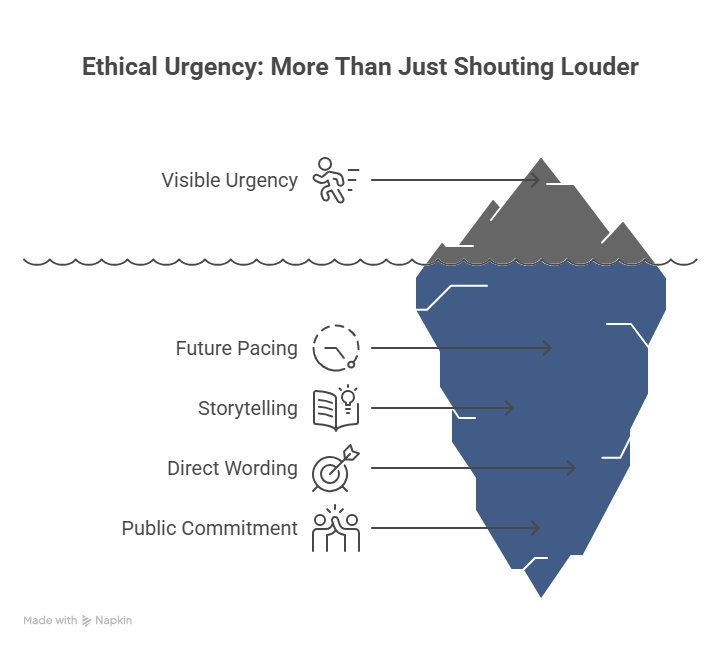
Urgency is not about shouting louder. It is about helping clients see the real cost of delay in language that lands. Start with future pacing questions from your powerful questioning toolkit: “If nothing changes in six months, what becomes more painful or expensive than it is today.” When they answer in their own words, repeat their phrasing back and connect it to a specific action they can take this week. That link between future pain and present action creates urgency that is self generated, not imposed.
Stories amplify this effect. Share anonymized examples of clients who used your financial freedom strategies, implemented tools from your interactive workshops, or built momentum through retreats and coaching events. Emphasize the moment they chose action over hesitation. Use your own journey with certification and credentials as proof that structured paths exist, especially if you hold a health coach certification or advanced life coaching training.
Your wording shapes behavior. Replace “maybe you could try” with “which specific step are you willing to complete before our next call.” This subtle shift, paired with clear expectations around professional boundaries and ethical dilemmas, lets you be direct without being pushy. Public commitments in groups or communities designed using interactive community principles create healthy social pressure. Just make sure your confidentiality practices and dual relationship guidelines are clear so urgency never crosses into exposure.
5) Building a Coaching Ecosystem That Keeps Clients Moving
Single sessions can change a day. Ecosystems change a life. Think of your business as a guided path that continually invites the next right action. That path might start with low commitment resources from your free and premium coaching tools, deepen into group programs and interactive workshops, then extend into retreats, masterminds, and self paced online courses. Each step is designed to prompt clients into decisions and behavior, not just more consumption.
Your revenue model should support that journey. Use insights from developing multiple revenue streams and creating passive income opportunities to build offers that naturally lead to each other. When your pricing is aligned using the guidance in how to price your coaching services, clients feel clear about where they fit. Strategic authority pieces like a coaching book, episodes informed by podcast resources, and smart LinkedIn positioning keep you front of mind between offers.
Certification amplifies the ecosystem when used well. Highlighting your life coach credentials or internationally recognized coaching certifications signals that your methods are structured, accountable, and rooted in best practice. Articles like is a life coach certification worth it and the ultimate health coach certification guide help prospects pre educate themselves before they even speak with you. When clients step into this ecosystem, action stops being a one time event and becomes the culture of your brand.
6. FAQs: Inspiring Immediate Action When It Really Counts
-
Reflective clients do not need more insight. They need containers that force translation from thought to behavior. End every session with one action that can be done within forty eight hours and capture it inside your coaching session template or chosen software platform. Use powerful questioning techniques to help them design experiments instead of perfect plans. Combine that with simple data, such as metrics from wearable tech, so they can see progress without overthinking every step.
-
Ghosting usually points to fear, shame, or misaligned expectations, not disrespect. Revisit the psychological contract using coaching confidentiality guidelines and clear professional boundaries. In your next conversation, use deep questioning to explore what they are afraid might happen if they fail publicly. Offer lower visibility actions, such as private journaling, small environmental tweaks, or anonymous check ins supported by your virtual coaching tools. Then rebuild accountability gradually, perhaps through a gentle group container grounded in your interactive community practices.
-
Ethical urgency is built on facts, not fear. Use frameworks from ethical coaching principles and ethical dilemmas in coaching to keep yourself honest. Help clients quantify the real cost of inaction using examples from financial freedom coaching or health related work informed by health coach certification paths. Offer real deadlines tied to program start dates, limited capacity for live support, or natural life events. Present decisions as invitations, not ultimatums, and respect a genuine “no” as much as a “yes.”
-
Most coaches grow their inner and outer worlds at the same time. Instead of waiting for perfection, apply your own tools to yourself. Use time management strategies and multiple revenue stream planning to clean up your operations piece by piece. Decide what you will share and what stays private using dual relationship guidance. When you speak honestly about being in process, while still keeping your commitments, clients see that action is part of your identity, not just something you preach.
-
The solution is scalable accountability, not constant personal attention. Build a central coaching resource library where each asset ends with a clear call to action. Automate reminders and progress forms inside your chosen coaching software. Offer monthly interactive workshops and evergreen online courses that clients can lean on without you being present every time. Pair this with a thoughtfully designed online community so peers help sustain momentum, while you focus on high leverage conversations and strategy.
