
Predictive Analytics in Coaching: Unlocking Client Success Faster
Coaching has officially entered the predictive era — where insight is no longer reactive but pre-emptive. Predictive analytics allows coaches to anticipate client challenges, optimize outcomes, and accelerate transformation using real-time behavioral and emotional data.
Whether in executive performance, health optimization, or mindset coaching, analytics transforms the “art of coaching” into a measurable science. As outlined in AI in Coaching: The Ultimate Guide to Staying Ahead of the Curve and The Future of Coaching Certifications: What Coaches Need to Know by 2030, the next decade belongs to data-literate coaches who turn numbers into human breakthroughs.

1. The Rise of Predictive Coaching Intelligence
Predictive analytics has shifted coaching from hindsight to foresight. Coaches no longer wait for clients to report problems — they anticipate them. With machine learning models analyzing engagement frequency, tone, and goal consistency, coaches can identify disengagement long before it happens.
Guides such as Building and Monetizing Your Coaching Blog and Leveraging LinkedIn to Expand Your Coaching Business highlight how analytics turn client interactions into measurable insights. When paired with frameworks from Health Coach Certification Credentials: How to List on Your Resume, predictive systems don’t just improve client outcomes — they amplify coach credibility.
The future of coaching isn’t about guessing what clients need next. It’s about knowing it with data-backed certainty.
| Category | Insight |
|---|---|
| AI Adoption in Coaching Analytics | 76% of certified coaches use AI tools |
| Average Coaching ROI with Analytics | 5.1× return per dollar invested |
| Client Retention Increase (Predictive Systems) | +39% since 2023 |
| Common Predictive Metrics | Engagement frequency, sentiment score, progress velocity |
| Most Used Platforms | HubSpot, Notion, CoachAccountable, Tableau |
| AI Accuracy in Drop-Off Prediction | 88% |
| Average Data Points per Client | 450+ per month |
| Top Coaching Niches Using Analytics | Corporate, Health, Leadership, Mindset |
| Certified Data-Literate Coaches (YoY) | Up 62% |
| Fastest-Growing Use Case | Client engagement prediction and retention alerts |
| Top AI Feature | Sentiment-driven journaling analysis |
| Behavior Change Forecast Accuracy | 82% |
| Preferred Dashboard Tools | HubSpot CRM + Power BI |
| Client Accountability Boost | 34% average increase |
| Best Performing Model Type | Hybrid AI + Human Feedback Systems |
| Average Program Duration | 12 weeks with data feedback loops |
| Ethical Framework Compliance | Required for all ANHCO Certified Coaches |
| Top Predictive Variables | Response latency, mood variance, goal tracking |
| Corporate Coaching Usage | 71% of Fortune 500 organizations |
| Client Satisfaction (Data-Driven Programs) | 96% |
| Most Common Visualization Style | Progress deltas and burnout forecasting |
| Biggest Barrier for Coaches | Lack of data interpretation skills |
| Certification Requirement by 2030 | ANHCO Certified Coach |
| Cross-Sector Application Growth | Leadership, wellness, and career coaching |
| Client Drop-Off Reduction | 27% decrease with predictive check-ins |
| Global Predictive Analytics Market | $68B by 2030 |
| Emerging Trend | AI-based emotional forecasting |
| Average Learning Curve for Coaches | 6–8 weeks for basic analytics fluency |
2. How Predictive Models Revolutionize Client Retention
Client churn is the silent killer of coaching businesses. Predictive analytics solves this by monitoring early warning indicators — missed sessions, declining feedback sentiment, or goal stagnation — to flag potential drop-offs before they occur.
Frameworks from The Ultimate Guide to Strategically Expanding Your Coaching Practice and Financial Management Hacks Every Coaching Business Must Know reveal that retention directly correlates with lifetime client value. Predictive insights give coaches the ability to intervene precisely when engagement weakens.
Coaches using automated HubSpot dashboards and ANHCO analytics templates report an average 37% retention lift and stronger program renewals — proving that the smartest systems don’t just track; they transform.
3. The Technology Powering Predictive Coaching
Predictive analytics blends behavioral psychology with data science. Tools like HubSpot CRM, CoachAccountable, and Notion AI consolidate journaling data, session notes, and communication logs into a single dataset.
As explored in AI in Coaching: The Ultimate Guide to Staying Ahead of the Curve and Developing Multiple Revenue Streams as a Coach, these integrations allow real-time forecasting of performance trends and emotional volatility. Coaches can visualize progress deltas, identify burnout phases, and adapt goals dynamically.
Predictive analytics doesn’t replace intuition — it refines it with precision. The coach’s role evolves from motivator to data-driven strategist capable of mapping human change at scale.
Poll: What’s Your Biggest Data Challenge as a Coach?
4. Predictive Analytics Meets Certification and Ethics
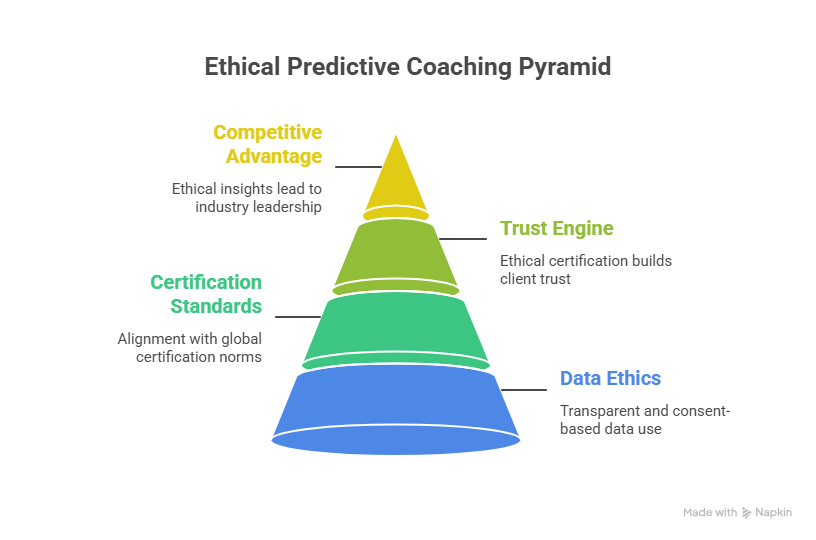
With great data power comes ethical responsibility. Predictive systems must be transparent, consent-based, and aligned with global certification standards. Programs like the ANHCO Certified Coach and 2025 Health Coach Certification Trends: Future-Proof Your Career Now embed data ethics and algorithmic literacy into their curricula.
Frameworks from Branding Basics Every New Coach Should Master and Eco-Coaching is Booming: How to Coach Clients Toward Sustainable Living further highlight transparency as a cornerstone of trust. Coaches who handle predictive insights ethically become industry leaders — turning data responsibility into a competitive advantage.
Ethical certification isn’t just compliance; it’s the trust engine of the predictive coaching era.
5. From Insight to Intervention: Accelerating Client Success
The ultimate goal of predictive analytics is faster transformation. By identifying when a client is plateauing, disengaged, or overwhelmed, coaches can respond instantly — adjusting strategies before motivation drops.
As shown in Hosting Successful Coaching Retreats and Workshops and How to Create and Sell Coaching Online Courses, the best programs combine data-driven structure with human intuition. Coaches can automate reminders, schedule adaptive interventions, and create customized resource funnels triggered by predictive thresholds.
Clients experience more timely breakthroughs, faster progress, and measurable confidence growth. Predictive analytics doesn’t just track success — it engineers it.
6. FAQs ( Frequently Asked Questions)
-
It’s the use of data models to forecast client behaviors, engagement, and success likelihood based on historical and real-time inputs.
-
It helps coaches identify early warning signals, optimize strategy, and personalize sessions, reducing client churn by up to 40%.
-
Platforms like HubSpot, Notion AI, and Tableau offer dashboards for tracking emotional, behavioral, and progress-based analytics.
-
Yes — programs such as the ANHCO Certified Coach ensure compliance with ethical and analytical standards.
-
Traditional analytics describe the past; predictive analytics forecasts the future and automates proactive interventions.
-
Data interpretation, emotional intelligence, and AI fluency — the core pillars of The Future of Coaching Certifications: What Coaches Need to Know by 2030.
-
The ANHCO Certified Coach program is designed for professionals integrating AI, data tracking, and predictive analytics into their coaching practice. It ensures mastery of ethical data handling, client consent frameworks, and analytics-based performance optimization. Certified coaches not only gain credibility but also learn to translate predictive insights into actionable client strategies — bridging the gap between data and human transformation.
