
Why They’re Changing the Game for Coaches
Coaching is no longer about inspiration, charisma, or having the “right mindset.” In 2026, the coaches who are winning are not louder. They are more structured, more precise, and more consistent. They are changing the game not by doing more, but by designing systems that work even when motivation drops, clients resist, and life gets busy.
This shift is not cosmetic. It is structural. And coaches who fail to adapt are already being filtered out by smarter clients, stronger competition, and higher expectations.
This article breaks down what is actually changing the game for coaches, why these shifts matter now, and how to integrate them into your practice without burning out or losing your identity.
1: The Old Coaching Model Is Collapsing (And Clients Can Feel It)
For years, coaching was built around presence, empathy, and insight. Those things still matter, but they are no longer enough. Clients in 2026 are outcome-aware. They have tried journaling. They have watched the videos. They have read the posts. What they want now is reliable change, not emotional validation.
The old model breaks in three places.
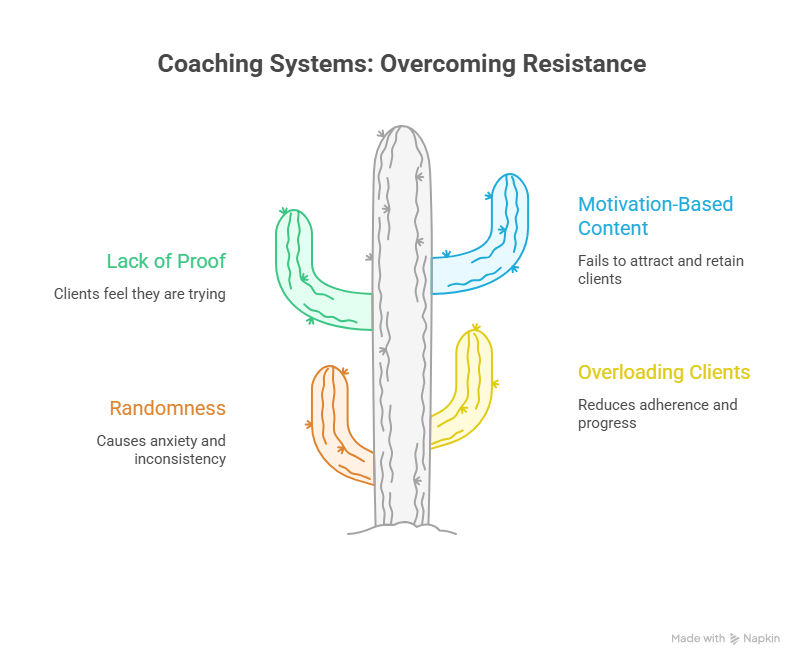
First, it relies too heavily on motivation. Motivation is unstable. It spikes during sessions and collapses under stress. When coaching is designed around inspiration instead of systems, results disappear the moment life applies pressure. This is exactly why modern coaching emphasizes structure, like the execution models explained in how the worlds best coaches get results.
Second, the old model is vague. “Awareness,” “alignment,” and “clarity” sound good, but they do not tell clients what to do on Tuesday when they are tired and overwhelmed. Vague coaching creates polite sessions and poor retention. Clients stay when they can feel movement, not when they feel understood.
Third, the old model is not defensible. In a saturated market, clients compare coaches. If your process cannot be explained clearly, priced confidently, and delivered consistently, you become interchangeable. This is why credibility frameworks like those discussed in how certification enhances your coaching credibility are becoming baseline expectations, not bonuses.
The coaches changing the game are responding to this collapse by redesigning their work around execution, proof, and consistency. They are not abandoning empathy. They are anchoring it inside systems that hold up under pressure.
2: The New Coaching Advantage Is Systems, Not Personality
In 2026, the most effective coaches are not trying to be more charismatic. They are trying to be more reliable.
Reliability creates trust faster than inspiration ever could.
A system-driven coach can explain exactly how a client moves from stuck to stable, from stable to consistent, and from consistent to self-led. This clarity lowers anxiety, improves buy-in, and increases follow-through. It also allows clients to relax into the process instead of constantly asking, “Am I doing this right?”
This shift shows up in several ways.
Coaches are standardizing session flow. Instead of reinventing sessions weekly, they use a repeatable structure that adapts to the client but maintains a clear arc. This is why resources like coaching session templates to boost your productivity instantly are no longer optional.
They are designing behavior-first outcomes. Feelings matter, but behavior is what compounds. Coaches are tracking actions, adherence, and decision quality instead of just emotional insights. This aligns with the data-backed direction outlined in new data proven coaching methods for maximum client success.
They are simplifying aggressively. Complexity kills consistency. Coaches who are winning are stripping their programs down to what actually moves clients. This is the philosophy behind the radical simplicity coaches are loving.
Most importantly, they are codifying what works. Every breakthrough becomes a template. Every pattern becomes a framework. Over time, their coaching stops being improvisation and starts becoming intellectual property.
Before we go deeper, use the table below to see exactly what is changing the game for coaches in 2026 and how to apply it.
3: Why These Shifts Create Better Clients (Not Just Better Coaches)
The real reason these changes matter is not coach success. It is client transformation quality.
When coaching is structured, clients stop outsourcing responsibility. They know what is expected. They know how progress is measured. They know what to do when things break. That clarity reduces dependence and increases self-leadership.
This is where coaching becomes empowering instead of enabling.
Clients start internalizing the process. They learn how to diagnose friction, how to adjust behaviors, and how to recover from setbacks without panic. This is exactly what modern coaching aims to do, as described in how to actually empower clients real results.
Structure also improves emotional safety. Contrary to popular belief, freedom without structure creates anxiety. Clients relax when they feel held by a clear process. This is why structured coaching often feels more human, not less.
Finally, system-driven coaching scales learning. When clients can see their own progress week by week, motivation becomes evidence-based. They do not need hype. They trust the process because they can feel it working.
This is the difference between a coach who is liked and a coach who is respected.
4: How to Apply These Game-Changers Without Becoming Robotic
A lot of coaches resist this new era because they think systems make coaching cold. That is backwards.
Systems do not remove humanity. They remove randomness.
Randomness is what makes clients anxious. Randomness is what makes sessions feel like therapy without a plan. Randomness is what makes your marketing inconsistent and your pricing shaky. When you install structure, your presence becomes more powerful because the client is not confused about what is happening.
Here is how to apply the game-changing shifts without losing your style.
Build a “Core Session Spine” You Never Break
You can still be intuitive. You can still be warm. But your session must follow a repeatable spine:
Reality check: what happened since last session
Friction identification: what blocked execution
Decision point: what needs to change this week
Action design: the smallest actions that move the needle
Accountability lock: how we will track and review
This is the practical evolution of coaching session templates to boost your productivity instantly, and it becomes unstoppable when combined with sharp questions from powerful questioning techniques that transform coaching sessions.
Replace “More Homework” With “Better Adherence”
In 2026, the best coaches do not overload clients. They engineer adherence.
Instead of giving 10 actions, choose 2 or 3 actions and track them hard. Use goal structures that actually hold up in real life, the same way smart goals 20 how top coaches set & achieve client goals focuses on execution and measurement.
If the client fails, do not add more tasks. Reduce friction.
Lower the difficulty
Reduce the frequency
Make the action smaller
Tie the action to an existing routine
Build a fallback option for “bad days”
This is how you create clients who win even when life is messy.
Install Weekly Proof so Clients Feel the Program Working
The biggest retention killer is when clients feel like they are “trying” but not progressing.
So build proof into the journey:
A weekly wins log
A progress score (simple, not complicated)
A monthly reflection that shows what changed
This turns your coaching into results evidence, which is a major reason how the worlds best coaches get results feels different from generic coaching.
Make Your Content Process-Based, Not Motivation-Based
Motivation content gets attention. Process content gets clients.
A process post looks like:
“Here is the 5-step way I fix this problem”
“Here is the weekly system my clients use”
“Here is why your current approach fails and what replaces it”
If you want your practice to grow from a stable foundation, connect this to business-building systems from how to build a successful coaching practice from scratch and early-stage structure from essential first steps for new coaches.
The theme is simple: the new game is won by coaches who repeat excellence.
5: Why Standards and Credentials Multiply These Advantages
In 2026, coaching is professionalizing. That means the market is splitting into two groups.
Coaches who build on standards, structure, and ethics
Coaches who stay vague, trendy, and inconsistent
Credentials matter because they force discipline. They also protect your scope, your language, and your client trust. When you understand standards, you stop overpromising, stop improvising, and start building a defensible method.
That is why coaches focused on long-term credibility lean into resources like:
how certification differentiates your health coaching business to strengthen positioning
health coach certification credentials how to list on your resume to communicate authority correctly
understanding certification standards across organizations to avoid confusion and weak signals
navigating the credentialing process for life coaches to create a clean professional pathway
how to choose the best credentialing body for coaches to avoid misalignment
The deeper advantage is not the badge. It is the professional posture.
When you can clearly define what you do, how you do it, and what standards guide it, you become easier to trust. Trust is what converts. Trust is what retains. Trust is what builds referrals without begging.
And when your delivery system matches that trust, you stop competing on price.
6: FAQs
-
It means the market is rewarding coaches who produce consistent outcomes, not coaches who sound good. In 2026, clients have seen enough motivation content and vague “alignment” messaging. What changes the game is a coach who can install behavior change into a client’s week, track adherence, and guide them through setbacks without shame. That is why system-based delivery and structure are rising, and why frameworks like how to actually change your clients life in 2026 matter more than generic tips. The new game is reliability, proof, and clear process.
-
You do not remove your style. You standardize the container. Use a consistent session spine that includes reality review, friction diagnosis, action design, and accountability. Inside that structure, your voice stays intact. The client experiences you as more confident, not less human, because they feel held by clarity. Start with a template like coaching session templates to boost your productivity instantly, then improve depth through powerful questioning techniques that transform coaching sessions.
-
Because they have been exposed to too many shallow promises. They have watched coaches sell “life changing transformation” without a clear method, and they have personally tried tactics that did not stick. In 2026, clients demand specificity. They want to know what the process is, how progress is measured, and what happens when they slip. Coaches who build credibility through standards and professional structure, like those outlined in how certification enhances your coaching credibility, naturally stand out because they feel safer to trust.
-
Give them a win they can feel, then document it. Use two or three actions only, make them friction-proof, and track adherence in a simple way. Then run a weekly review that extracts lessons and strengthens identity. This produces evidence-based confidence fast. It is also how you build retention without relying on motivation. For goal design that actually holds up, use structures aligned with smart goals 20 how top coaches set & achieve client goals, then reinforce it with performance principles from how the worlds best coaches get results.
-
You can compete without it, but certification often gives you an advantage because it strengthens standards, scope, language, and trust signals. In a market where clients are filtering harder, those signals matter. More importantly, credentialing disciplines your process, which directly improves consistency. If you want to choose wisely, use how to choose the best credentialing body for coaches and compare options through guide to international coaching certification options. Done right, this is not a badge move. It is a reliability move.
-
Likes come from relatability. Clients come from clarity and method. Shift your content to process-based teaching that shows how you solve one painful problem. Publish frameworks, decision rules, and common failure points with fixes. Then tie it back to a consistent offer. If your practice foundation still feels messy, build a stable structure using how to build a successful coaching practice from scratch and essential first steps for new coaches. The goal is that your content becomes a preview of your process.
-
They add complexity instead of improving adherence. They build fancy systems, dashboards, and multi-step plans, but clients cannot execute them under stress. Modern coaching is not “more tools.” It is fewer actions, better tracking, stronger accountability, and smarter relapse planning. This is why the simplicity philosophy in the radical simplicity coaches are loving is so powerful in 2026. Simplicity is what holds when motivation collapses.
