
How to Actually Change Your Client’s Life in 2026
In 2026, clients are not lacking information. They are drowning in it. They know what to do, they just cannot do it consistently. They are overstimulated, under-rested, emotionally reactive, and running on borrowed attention. If your coaching still looks like “talk, motivate, assign homework,” you will get polite gratitude and weak change.
Real life change now demands precision: deep trust, behavior design, and ethical leadership through stress, burnout, grief, and trauma-adjacent moments. This guide shows the exact coaching moves that turn sessions into measurable life upgrades.
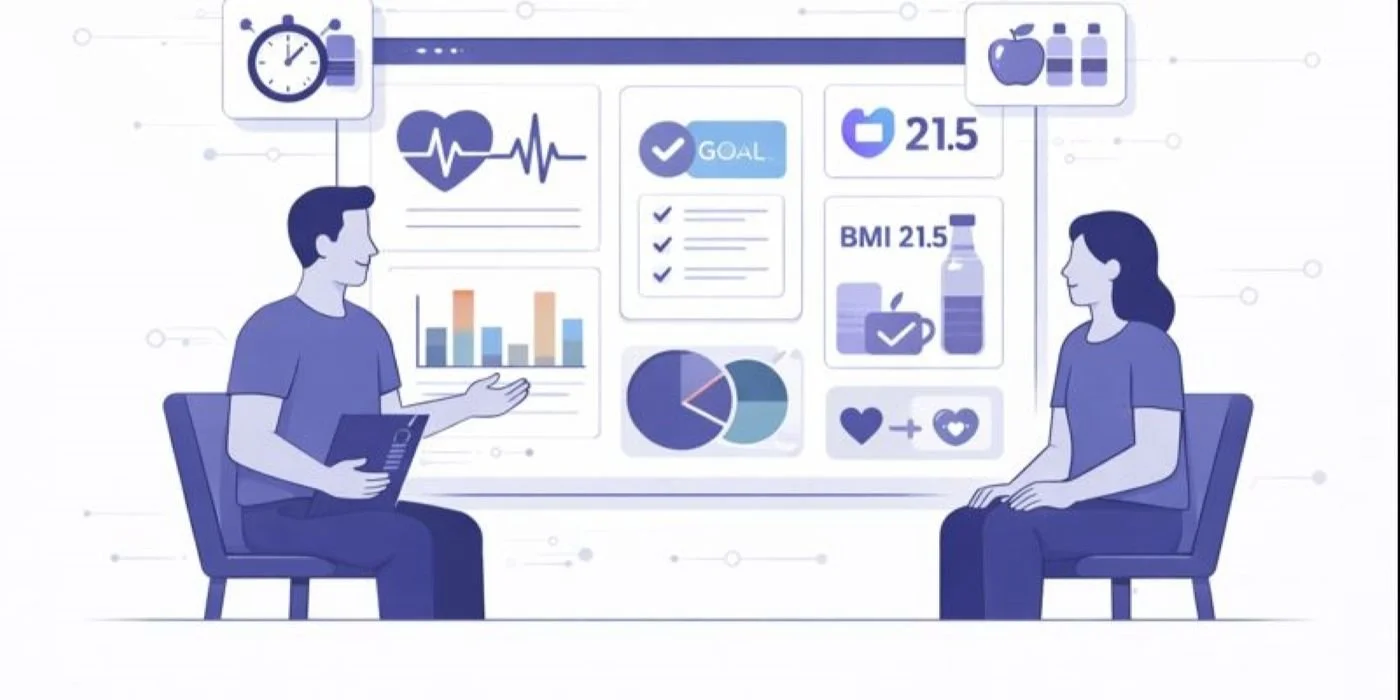
1) What “Life Change” Actually Means in 2026 (Not Motivation, Not Advice)
If you want to change a client’s life, stop aiming for inspiration. Aim for identity shifts supported by repeatable systems. Motivation is unreliable. Systems are predictable. The coach who wins in 2026 is the one who can convert emotion into action without pushing, shaming, or overwhelming.
Most clients show up with one of these hidden realities:
They are trapped in stress loops that never resolve, only pause. That is why you need stress management techniques every coach should know as a core coaching tool, not a bonus topic.
They are exhausted, functioning on adrenaline, and calling it discipline. That is why effective strategies for coaching clients through burnout must shape how you assign actions.
They are “high performers” with low self-trust because they break promises to themselves weekly. That is where effective strategies for reinforcing positive client behaviors becomes the engine of lasting change.
They want better relationships but avoid tough conversations, which is why managing difficult client conversations with ease and conflict resolution strategies every coach needs are not optional if you want life-level results.
They are carrying grief, trauma, or chronic anxiety symptoms. You cannot “mindset” your way through that. You need competence in coaching clients through grief and loss and ethical awareness from how coaches can support clients with PTSD and trauma.
Here is the ruthless truth: clients do not change because they understood something. They change because they practiced something until it became normal. That requires you to hear what they are not saying, which is why effective listening techniques that transform client conversations and building deep trust are the first dominoes.
Life change in 2026 looks like this:
Fewer emotional spikes, faster recovery, more stability. Pair mindfulness and meditation techniques for emotional coaching with real-world execution.
Better boundaries, less resentment, stronger choices. Use techniques for maintaining professional boundaries with clients as your model for client boundary coaching.
Consistent follow-through. That is behavior shaping, not hype, and it connects to how to inspire clients to take immediate action.
If your client’s week does not change, their life will not change. Your job is to change the week.
2) The 2026 Method: Convert Insight Into Weekly Proof (Not “Homework”)
If you want actual life change, stop giving “homework.” Homework feels optional. Proof feels real. Proof is measurable, visible, and tied to identity. This is how you create momentum that survives bad days.
Step A: Listen for the real constraint, not the loudest story
Clients will often present the most emotional topic, but the real constraint is elsewhere. Maybe the real constraint is lack of sleep, not mindset. Maybe it is a boundary leak, not motivation. This is why effective listening techniques and building deep trust come before strategy.
Use the same structure you rely on in the art of powerful questioning: narrow, clarify, confirm. You are not collecting details. You are finding leverage.
Step B: Build “one-week evidence”
A client’s life changes when their week changes. Pick one behavior that creates visible evidence in seven days. Then attach it to a trigger.
Examples of one-week evidence:
One boundary held in real time, supported by professional boundary techniques
One difficult conversation completed, guided by managing difficult client conversations
One stress reset practiced daily, anchored to stress management techniques
One burnout reduction move, aligned with coaching clients through burnout
Step C: Reinforce the identity, not the outcome
If you only celebrate results, clients collapse when results dip. If you celebrate identity, clients stay steady. That is the purpose of reinforcing positive client behaviors: you reinforce the person they are becoming.
Instead of “Great job losing weight,” you reinforce “You followed through when it was inconvenient.” That is life change language.
Step D: Pre-handle the relapse (the part most coaches skip)
Your coaching becomes real when the client has a bad week and still returns to the plan. Build a restart rule. Build a minimum standard. Build recovery.
This connects directly to work-life balance coaching and self-care coaching for client mental health, because stability is the foundation of every other goal.
3) How to Create Breakthroughs Without Breaking Trust
The biggest myth in coaching is that a breakthrough requires intensity. In 2026, breakthroughs require safety plus precision. Your client will not change their life if they feel judged. They will perform for you. They will hide. They will nod. Then nothing changes.
Here is what builds breakthroughs that stick.
Use “accurate reflection” before advice
If your client does not feel deeply understood, your advice becomes noise. Learn the reflection patterns in effective listening techniques and tie them to communication techniques every coach should master. Reflection creates emotional permission. Permission creates action.
Ask questions that remove confusion, not questions that sound smart
Power is not complexity. Power is clarity. Use the structure inside the art of powerful questioning to pinpoint the one decision that changes the week.
Examples:
“What are you avoiding because it scares you?”
“What boundary would fix half of this stress?”
“What is the smallest action that proves you are serious?”
Then convert the answer into a one-week proof plan using how to inspire clients to take immediate action.
Handle emotional spikes with tools, not opinions
When a client gets reactive, you do not debate. You regulate. That is why mindfulness and meditation techniques for emotional coaching should be in your core toolkit. It gives you a reliable reset path in the moment.
Keep ethics tight when grief, trauma, or PTSD shows up
In 2026, more clients are openly discussing trauma and grief. Your job is not to “fix” trauma. Your job is to listen safely, stabilize, and refer when needed. Use PTSD and trauma support guidance and grief coaching strategies to stay competent and protective.
Breakthroughs that stick feel calm, not chaotic. They feel clear, not dramatic. They create evidence, not speeches.
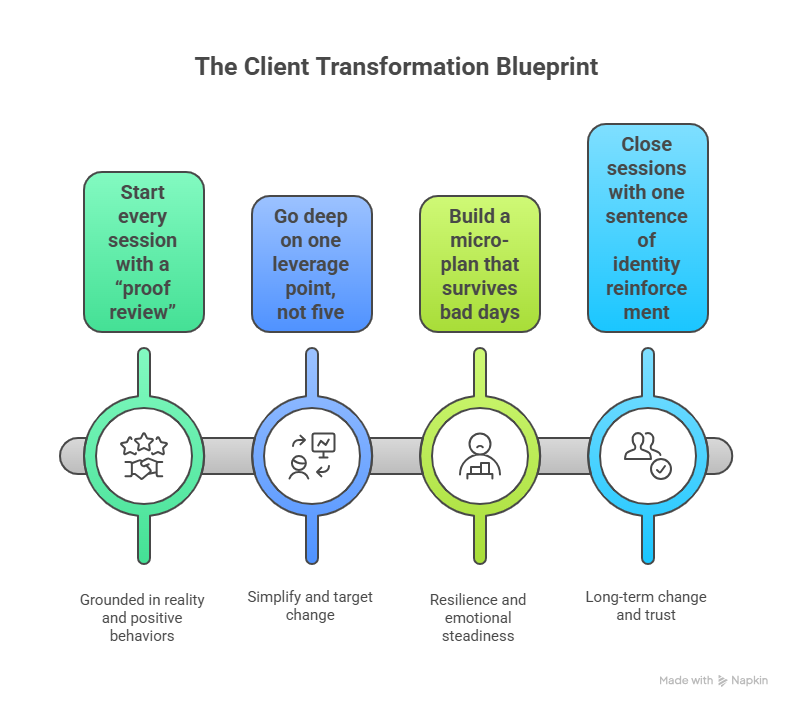
4) The 2026 Client Transformation Blueprint (Session-by-Session)
If you want clients to change their lives, you need a repeatable session structure that produces proof. Here is the blueprint that works across niches.
Start every session with a “proof review”
Do not start with “How was your week?” That creates storytelling. Start with proof:
What action did you complete?
What did you learn?
What needs to change?
This keeps the work grounded in reality and aligns with reinforcing positive client behaviors.
Then go deep on one leverage point, not five
Clients fail because they try to fix everything at once. Your job is to simplify and target. The coaching skill is not adding. It is choosing.
This is where powerful questioning and effective listening work together.
Build a micro-plan that survives bad days
If the plan only works on perfect days, it will fail. Use the resilience logic from coaching clients through burnout and emotional steadiness from mindfulness techniques for emotional coaching.
Your micro-plan must include:
A minimum action
A trigger
A proof method
A restart rule
Close sessions with one sentence of identity reinforcement
Identity reinforcement is what turns short-term compliance into long-term change. Tie it to values, not outcomes:
“You are becoming someone who follows through.”
“You handled discomfort without escaping.”
That kind of reinforcement compounds trust, which is why building deep trust is always linked to client transformation.
5) The Hard Problems Coaches Must Solve in 2026 (If You Want Real Results)
If you want to change lives in 2026, you cannot ignore the modern friction points.
Problem 1: Clients are mentally exhausted and attention-fractured
They are not lazy. They are overloaded. Your job is to reduce cognitive load and design actions that fit real life. Use stress management and work-life balance coaching to build stability before you chase growth.
Problem 2: Clients avoid hard conversations, then pay the price
Avoidance creates resentment, burnout, and relationship breakdowns. Coaches who can guide conflict ethically create life change fast. This is why conflict resolution strategies and managing difficult conversations are transformation skills.
Problem 3: Many clients carry trauma-adjacent experiences
You do not need to become a therapist. You do need to be trauma-aware. Use PTSD and trauma support and grief coaching strategies to stay safe, ethical, and effective.
Problem 4: Clients fail because of identity, not information
They sabotage because success threatens their identity, relationships, or comfort. This is where a structured approach like NLP techniques every coach should master can be useful when applied ethically and practically.
Problem 5: Coaches lose authority when they lack clear professional differentiation
In 2026, clients are more skeptical. They want competence, not vibes. That is why how certification differentiates your health coaching business and choosing quality training through health coaching certification how to choose the right program matters for both outcomes and trust.
The coaches who change lives solve these modern problems directly. They do not bypass them with positivity.
6) FAQs
-
Build “one-week evidence.” Pick one behavior that changes the client’s week and track it with proof. Keep the action small enough to complete and meaningful enough to matter. Reinforce the identity behind the action using reinforcing positive client behaviors, and convert insight into execution with how to inspire clients to take immediate action.
-
Shrink the plan. Increase clarity. Reduce cognitive load. Start with a minimum viable action, attach a trigger, and build a restart rule for bad days. Stabilize stress and recovery first using stress management techniques and capacity-aware planning from coaching clients through burnout.
-
Breakthroughs come from safety plus precision. Use accurate reflection from effective listening techniques and trust-building from building deep trust. Then use powerful questioning to locate the one decision the client is avoiding and design a small action that proves courage.
-
Coach the conversation like a skill, not a personality trait. Clarify the ask, rehearse the delivery, and define the boundary consequence. Use managing difficult client conversations and conflict resolution strategies to guide clients through discomfort without escalation or guilt.
-
Do not dig for details. Stabilize the present moment, prioritize safety, and stay within your scope. Use trauma-aware guidance from supporting clients with PTSD and trauma and compassionate structure from coaching clients through grief and loss. Refer when needed and keep boundaries clear.
-
Balance sticks when boundaries stick. Help clients identify the biggest boundary leak, create one “no list,” and protect a daily recovery block. Use work-life balance coaching strategies alongside self-care coaching for client mental health so the client’s life has capacity for change, not just goals.
