
Mindfulness and Meditation Techniques for Emotional Coaching
Mindfulness and meditation are not trendy add ons in coaching. They are precision tools for working with emotion at the level where change actually sticks: attention, interpretation, and nervous system regulation. When you combine clear questioning with structured practices, clients stop white-knuckling their way through stress and start noticing triggers early, naming emotions accurately, and choosing responses that match their values. This article shows you exactly how to weave mindfulness into emotional coaching so that every session produces practical shifts, not just temporary calm.
Throughout, you can deepen your toolkit with resources like effective strategies for coaching clients through burnout, helping clients manage work-life balance successfully, effective strategies for reinforcing positive client behaviors, and building your coaching toolkit so clients feel supported between sessions too.

1. Why Mindfulness Is A Non-Negotiable Skill In Emotional Coaching
Emotional coaching without mindfulness often turns into sophisticated problem talk. Clients can analyze their burnout, perfectionism, or relationship stress yet still react impulsively when triggered. Mindfulness gives them one missing capacity: the ability to notice thoughts, sensations, and urges before they snowball into behavior. When you pair emotional work with structured practices from burnout coaching strategies and work-life balance planning, you stop fighting fires and start coaching upstream at the level of pattern recognition.
Mindfulness also makes your powerful questions land deeper. When a client is dysregulated, even the best question about purpose, boundaries, or future goals will feel abstract. Short grounding practices at the start of sessions help clients access the prefrontal clarity needed for questions from articles like the ultimate guide to ethical coaching principles and managing dual relationships. You are not simply “being calming.” You are increasing cognitive bandwidth so insight is actually usable.
Finally, mindfulness protects you as a coach. Emotional work activates your own triggers, especially when you support clients through money stories, visibility fears, and resentment about workload. Pair a personal mindfulness practice with boundaries guidance from how to set clear professional boundaries, coaching confidentiality, and ethical dilemmas so you can stay grounded, present, and less likely to overfunction or rescue.
| Emotional Challenge | Mindfulness Technique | Powerful Question | When To Use | Supporting ANHCO Resource |
|---|---|---|---|---|
| Chronic burnout | Three breath reset | “What changed in your body after three slow breaths?” | Session openings when clients arrive overloaded. | Burnout strategies |
| Work stress rumination | Thought labeling | “Is this thought a fact, fear, or prediction?” | When clients replay difficult meetings. | Work-life balance |
| Emotional overeating | Urge surfing breath | “Where do you feel the urge strongest, and what happens if you just breathe with it?” | Before discussing food plans or goals. | Health coaching guide |
| Conflict avoidance | Body scan check in | “Where in your body do you feel ‘no’ that you are not speaking?” | Before boundary setting role plays. | Professional boundaries |
| Perfectionism | Compassion meditation | “How would you speak to a friend in the same situation?” | When clients tear themselves down after small slips. | Ethical coaching |
| Decision paralysis | Anchor on breath plus values | “What choice feels more spacious after five slow breaths?” | During big career or business choices. | Coaching niches |
| Imposter feelings | Noting thoughts | “What label would you give this story instead of ‘truth’?” | When clients step into new roles or pricing. | Pricing services |
| Social media anxiety | Grounding through senses | “What three things can you see, hear, and feel right now?” | Before content creation or lives. | Media visibility |
| Sleep disruption from worry | Breath counting meditation | “What happens when you gently return to the count instead of fighting the thought?” | When clients report night time spirals. | Podcast routines |
| Shame after emotional outbursts | Self compassion phrases | “What would ‘being on your own side’ sound like here?” | Post conflict debrief sessions. | Reinforcing progress |
| Coaching session nerves | Centering breath before calls | “What intention do you want to feel in your body before we start?” | First sessions with new clients. | Life coach roadmap |
| Money anxiety | Compassion plus values inquiry | “What value are you protecting when you worry about money?” | When discussing income or investments. | Financial freedom |
| Client resistance | Curiosity pause | “What part of you is saying no to this change?” | When commitments repeatedly break down. | Coaching toolkit |
| Guilt in dual roles | Non judgmental noticing | “What emotions show up when you imagine saying no?” | With friends, colleagues, or family clients. | Dual relationships |
| Fear of visibility | Exposure with breath anchoring | “What is the smallest visible action that feels edgy but safe?” | Before posting or speaking live. | Brand basics |
| Identity shifts after certification | Values reflection | “As a certified coach, what standard do you now hold yourself to emotionally?” | Right after completing programs. | Listing credentials |
| Overload from scaling business | Breath plus priority scan | “Which emotional state will make scaling sustainable?” | During growth phases. | Scaling strategy |
| Fear of delegating | Notice control sensations | “Where do you feel the urge to control everything?” | Before outsourcing or hiring decisions. | Outsourcing secrets |
| Emotional flooding in groups | Grounding plus naming emotions | “If you had to name this emotion with one word, what is it?” | During workshops or retreats. | Retreat hosting |
| Hopelessness about change | Gratitude plus breath | “What very small shift are you already making?” | When clients feel stuck or defeated. | Growth resources |
| Overidentification with thoughts | Observer meditation | “If your mind were a screen, what is playing right now?” | When self critical narratives dominate. | NLP tools |
| Fear of charging for emotional depth | Compassion plus values scan | “What becomes possible for clients when you are well compensated?” | During package design or price increases. | Certification ROI |
| Confusion about coaching identity | Mindful journaling | “If you stripped labels away, who are you as a coach?” | During brand or niche pivots. | Choosing your name |
| Difficulty switching off after sessions | Closing ritual meditation | “What boundary can you visualize between your work and home right now?” | At the end of intense client days. | Balance routines |
2. Practical Mindfulness Tools You Can Use In Sessions
The simplest mindfulness tools are often the most effective. Start with a ninety second arrival practice. Invite clients to close their eyes, feel their feet on the floor, and take five slow breaths. While they do that, you observe posture, breathing pattern, and micro expressions. This gives you more accurate data before you ask any emotional questions linked to burnout patterns, work-life balance stress, or boundary struggles.
Next, introduce emotion naming drills. Many clients only use three labels: stressed, fine, or tired. Emotional granularity is a skill that can be trained just like any physical habit you reinforce through positive behavior strategies. Use charts or lists between sessions and treat emotion naming as a micro assignment, similar to homework from must-have books for coaches or podcast learning plans. The more precise the label, the more targeted your questions can become.
Finally, build micro practices that fit into real life, not just quiet rooms. Teach clients to pair mindful breaths or quick body scans with existing habits: opening email, stepping into a meeting, or preparing for a coaching call. These micro practices link beautifully with productivity work from outsourcing secrets, strategically expanding your practice, and building a coaching team because they create emotional stability during growth, not only during downtime.
3. Meditation Techniques For Emotional Regulation And Resilience
Meditation in coaching does not need to look like thirty minutes of silence. Short, targeted sequences can radically change how clients process emotion. A core tool is breath based regulation. Practices like box breathing or extended exhales can downshift the nervous system in under two minutes. Use these when clients explore intense material such as burnout stories, financial fears from achieving financial freedom through coaching, or visibility anxiety from media features. Regulation first, reflection second.
Another technique is guided imagery aimed at future self integration. Invite clients to visualize a future version of themselves who already embodies the boundaries, emotional steadiness, and impact described in resources like top life coaching certifications, life coach certification roadmap, and branding basics. After the visualization, ask very specific questions. For example, “What did their morning look like?” or “How did they respond the last time a client cancelled?” You are translating a vague inspiring image into concrete behavioral cues.
For clients who carry deep shame or self judgment, loving kindness meditation can be introduced cautiously. Invite them to silently repeat short phrases like “May I meet this part of me with kindness.” This is especially useful after reviewing high pressure goals, complex ethical situations from dual relationships, or serious boundary violations from ethical dilemmas in coaching. The goal is not to bypass accountability, but to prevent self hatred from shutting down the learning process.
4. Integrating Mindfulness Into Coaching Programs And Packages
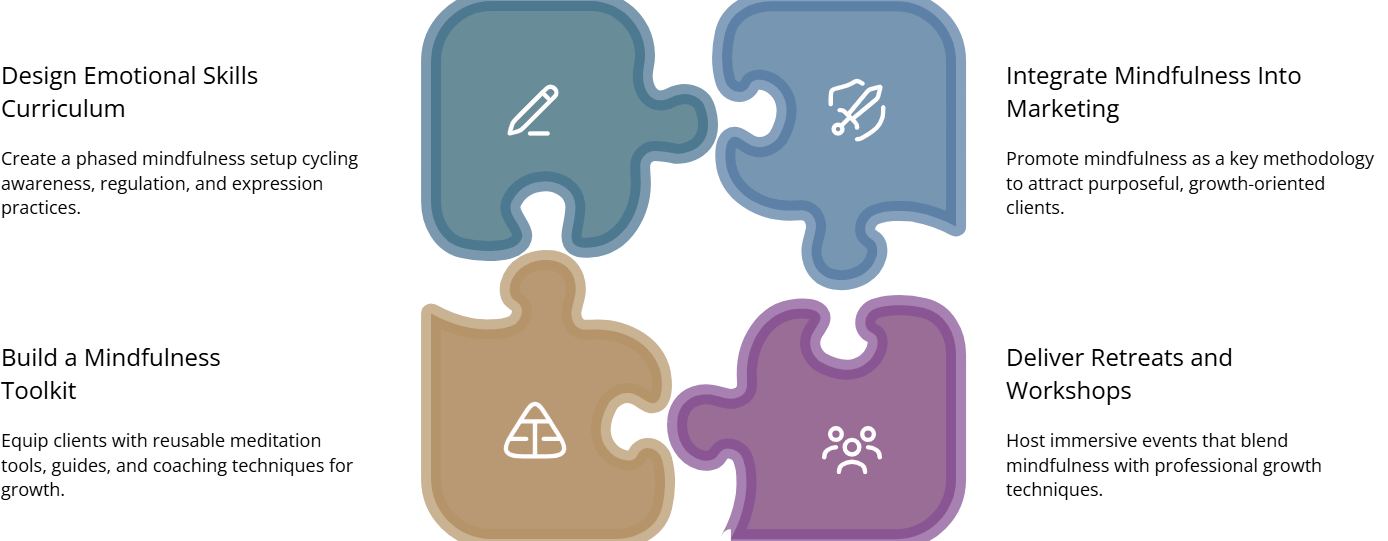
Mindfulness and meditation create more value when they are structured into your offers, not used as random exercises. Start by designing a simple emotional skills curriculum inside your packages. For example, a three month program might cycle through awareness, regulation, and expression. Map practices and questions from the table above to each phase, and reference supporting content like building your coaching toolkit, hosting retreats and workshops, and effective networking techniques to create materials clients can reuse.
You can also differentiate your brand by positioning mindfulness as part of your methodology in your marketing. When you describe your services on LinkedIn or in your media pitches, reference resources like leveraging LinkedIn to expand your coaching business, how to get featured in media as a coaching expert, and writing and publishing your first coaching book. Show that you help clients build emotional capacity, not only achieve external goals. That signal attracts higher quality clients who are ready for deeper work rather than quick tips.
Finally, link mindfulness work to concrete business outcomes, especially if you coach other coaches. When clients see that regulating their nervous system improves sales conversations, client retention, and the ability to scale using strategies from 7 unconventional ways to scale your coaching business, strategically expanding your practice, and outsourcing secrets, they treat mindfulness like a core business system rather than a self care extra that is easy to drop.
5. Common Pitfalls And Ethical Boundaries With Mindfulness Work
Mindfulness and meditation can be misused when coaches slide into therapy territory or ignore power dynamics. One common pitfall is trying to process unresolved trauma entirely through breathing or visualization. Your role is to help clients develop awareness and regulation, not to diagnose or treat mental health conditions. Use the ethics guidance in the ultimate guide to ethical coaching principles, coaching confidentiality, and ethical dilemmas coaches face to define clear referral lines.
Another mistake is over spiritualizing everything. If a client is undercharging, double booked, and not using any systems, they need practical support from resources like building your coaching toolkit, pricing your coaching services, and achieving financial freedom through coaching, not only compassion meditations. Mindfulness should sharpen action, not replace it. Always loop back to concrete behavior: emails sent, conversations held, boundaries communicated.
Finally, stay aware of cultural and personal differences in how clients relate to meditation. Some may have religious concerns, others may have tried mindfulness apps and feel like they “failed.” Use clean questions such as “What has your experience with mindfulness been so far?” and weave in alternative tools like somatic grounding or reflective journaling, drawing on education resources from must-have books for coaches and podcast resources. The goal is to co design emotional practices that respect their background while still building regulation and insight.
6. FAQs: Mindfulness And Meditation In Emotional Coaching
-
Avoid philosophical definitions. Describe mindfulness as a trainable attention skill that lets them notice thoughts, emotions, and urges before they act on them. Connect it directly to their pain points, such as snapping at family after work or panicking before sales calls. Share how short practices support goals already discussed in sessions on burnout, work-life balance, or boundaries, and reference educational content like your ethical coaching principles or health coaching guides so it feels practical rather than mystical. Emphasize that you will start with experiments as short as ninety seconds.
-
Frequency matters more than duration. Many emotionally overloaded clients will not sustain twenty minute meditations but can commit to three to five micro practices daily. Suggest pairing one to two minute exercises with existing habits: opening the laptop, before a meeting, or before bed. Use tracking tools from building your coaching toolkit and reinforce wins using strategies from effective reinforcement of positive behaviors. Once small habits are stable, you can explore longer sessions or structured programs, especially if clients are also engaged in certifications or retreats connected to your wider offer suite.
-
Yes, if you design group structures carefully. Use short shared practices at the start of each session, followed by powerful questions that invite reflection in pairs or small groups. For example, after a three minute breath exercise, ask “Where did you feel resistance?” and let participants share. Combine this with facilitation strategies from hosting successful coaching retreats and workshops to set ground rules around confidentiality and emotional pacing. Group chat or community spaces can host asynchronous reflection prompts linked to resources like podcast recommendations, extending the impact beyond live calls.
-
Mindfulness can strengthen ethics if you use it to slow decisions and clarify consent, but it can blur lines if you attempt therapy level processing without training. Before guiding deeper emotional work, revisit principles from ethical coaching guidelines, coaching confidentiality, and managing dual relationships. Name explicitly when a topic might be better suited to a therapist and help clients find additional support. Use questions like “Is it okay if we stay with this emotion for a little longer?” so clients remain active decision makers, not passive recipients of techniques.
-
Look for programs that combine coaching competencies with trauma sensitivity and contemplative practice. Many life and health coaching certifications now include emotional regulation modules, reflection practice, and ethical training. When reviewing options like those in internationally recognized life coaching certifications, health coach certification costs and hidden fees, and life coach certification ROI, examine how much supervised practice and feedback you will receive. Pair formal training with your own daily mindfulness routine so the techniques you teach are grounded in lived experience, not just theory.
