
The Art of Powerful Questioning in Coaching
Effective coaching lives or dies on the quality of your questions. Techniques, worksheets, and even your coaching niche are secondary to how precisely you can uncover motives, blocks, and blind spots in real time. Powerful questioning does not mean sounding clever. It means asking short, targeted questions that shift responsibility back to the client, deepen insight, and move the session toward clear action. In this guide you will learn how to design those questions deliberately, layer them through a session, and connect them with your wider coaching tools, resources, and certifications.
As you read, notice where your own questioning habits are leaving insight on the table, and pair the strategies below with resources like effective strategies for coaching clients through burnout, helping clients manage work-life balance successfully, how to inspire clients to take immediate action, and effective strategies for reinforcing positive client behaviors to build a complete questioning playbook.

1) Why Powerful Questions Are A Coach’s Sharpest Tool
Average coaching conversations circle around updates, storytelling, and surface level goals. Elite coaching conversations cut straight to patterns that shape a client’s identity, behavior, and environment. The difference is not the number of tools you own from building your coaching toolkit. It is the precision of your questions and how they sequence over time. A single question like “What are you tolerating that keeps this problem alive?” can do more than ten minutes of advice. Pair those questions with frameworks from the ultimate guide to ethical coaching principles, coaching confidentiality, and professional boundaries and your sessions become safer and more transformational.
Powerful questions shift ownership back to the client. Instead of asking, “Do you think you should try time blocking?” you ask, “Given everything on your plate, what structure would make this week feel intentional rather than reactive?” That question forces the client to design, not simply agree. When combined with insights from achieving financial freedom through coaching and how to price your coaching services, you also show clients that your questioning process mirrors the way you run your own practice, which quietly builds authority.
Questions are also your risk management tool. When you work near ethical gray zones or complex emotional material, you use questions to clarify consent, check emotional readiness, and ensure alignment with standards described in ethical dilemmas coaches face, managing dual relationships, and how certification differentiates your health coaching business. A well placed “Is it okay if we explore a tougher angle on this?” protects the relationship and keeps power balanced.
| Client Goal | Question Pattern | How To Use | Start With | Supporting Resource |
|---|---|---|---|---|
| Clarify work life balance | “What would a sustainable week actually look like?” | Map energy, not just time, before restructuring schedules. | Balance scan of one typical week. | Work life balance coaching |
| Reduce burnout | “Which obligation drains you most for the least return?” | Identify one low value commitment to renegotiate or drop. | Stress inventory across roles. | Burnout strategies |
| Increase follow through | “What is the smallest visible action you can do in 24 hours?” | Anchor big goals in concrete micro actions. | Define one outcome metric per goal. | Immediate action methods |
| Reinforce new habits | “When you succeed, how will you celebrate or capture the win?” | Design habit reinforcement rather than relying on willpower. | Weekly habit tracking ritual. | Reinforcing behaviors |
| Clarify niche identity | “Who do you help so specifically that they instantly recognize themselves?” | Push clients to move beyond vague target markets. | Niche brainstorm in three sentences. | High paying niches |
| Evaluate certification options | “What do you want your certification to signal to clients?” | Connect credentials to positioning, not vanity. | List top three business goals. | Certification comparison |
| Plan career growth | “In three years, what problems will you be paid to solve?” | Reverse engineer skills and offers from future positioning. | Vision exercise across income, impact, lifestyle. | Life coach roadmap |
| Price premium packages | “What result makes this investment feel like a bargain?” | Link price to a concrete transformation, not hours. | Outcome mapping for each package. | Pricing strategies |
| Design group programs | “Which outcomes are better achieved in a group than 1:1?” | Filter topics for collective problem solving. | List peer learning opportunities. | Retreats and workshops |
| Grow through networking | “Who already serves your ideal clients and respects your work?” | Target aligned collaborations instead of cold outreach only. | Map five potential partners. | Networking techniques |
| Clarify personal brand | “If clients described you in three words, what should they be?” | Turn vague brand ideas into repeatable language. | Brand word bank exercise. | Branding basics |
| Strengthen ethical awareness | “What could go wrong if we moved faster than your values?” | Slow down high stakes choices to protect integrity. | Scenario mapping of ethical risks. | Ethical principles |
| Protect boundaries | “Which parts of this request fall outside our agreement?” | Recenter the coaching contract without guilt. | Review contract before sessions. | Boundary setting |
| Navigate dual relationships | “How might our existing relationship complicate this work?” | Surface hidden loyalties and expectations. | Risk mapping conversation. | Dual relationship ethics |
| Use NLP based reframes | “If this story were a movie, what genre is it?” | Help clients see narratives as editable, not factual. | Metaphor exploration. | NLP techniques |
| Encourage self trust | “When have you handled something harder than this?” | Anchor present challenge in past competence. | Strengths inventory. | Growth reading list |
| Improve storytelling | “What is the one sentence lesson from this experience?” | Turn rambling stories into usable insight. | Story editing exercise. | Writing your book |
| Plan marketing content | “Which client question do you answer most often?” | Convert repeated coaching moments into content pillars. | FAQ brain dump. | Media positioning |
| Decide on outsourcing | “Which tasks exhaust you but do not require your voice?” | Identify first delegation candidates. | Time tracking over one week. | Outsourcing secrets |
| Scale income | “If you could only keep one offer, which is most scalable?” | Focus on high leverage services. | Revenue breakdown by offer. | Scaling strategies |
| Plan certification investments | “How soon must a new certification pay for itself?” | Set clear ROI timelines before enrolling. | Project income scenarios. | Certification ROI |
| Refine client intake | “Which three questions will filter out poor fit clients?” | Upgrade forms and discovery calls. | Intake form review. | Business clarity work |
| Grow through LinkedIn | “What problem do you want to be tagged for?” | Clarify a repeatable positioning statement. | Profile headline rewrite. | LinkedIn growth |
| Build a coaching team | “Which part of your method can be systemized and taught?” | Extract intellectual property from improvisation. | Process mapping workshop. | Building a team |
| Strategically expand practice | “What new offer naturally serves your existing clients next?” | Expand depth with current clients before chasing new markets. | Client journey mapping. | Expansion guide |
| Stay informed | “Which single insight will you implement from this episode or book?” | Turn learning into action, not just inspiration. | Weekly learning review. | Podcast resources |
2) Types Of Coaching Questions That Unlock Insight
Not all questions are created equal. Closed questions check details. Powerful questions expand perspective, shift time horizons, or challenge identity level assumptions. Start by distinguishing five categories. Vision questions ask what a client wants beyond immediate goals, which pairs naturally with planning content from the ultimate guide to health coach certification and life coach certification costs. Reality questions expose constraints the client has accepted without testing, such as “What stories keep you tolerating this workload?” You can deepen that with resources on work life balance and burnout.
Option questions expand the menu beyond either or thinking. Instead of “Will you quit or stay?” ask “If quitting and staying were not the only options, what third path exists?” Link these explorations to strategic decisions about expanding your coaching practice, outsourcing, and building a team. The same structure applies to client career choices, health routines, and relationship boundaries, and gives them a repeatable mental model they can reuse between sessions.
Obstacle questions target the hidden payoffs that keep a problem in place. Clients rarely procrastinate simply because they are lazy. More often they are protecting an identity, avoiding conflict, or preserving belonging. Questions like “What would you lose if you truly solved this?” or “Who might feel threatened if you changed?” invite honest reflection that connects with ethical safety guidelines in coaching confidentiality, ethical dilemmas, and managing dual relationships. These questions open the door to deeper work that honors both results and relationships.
Finally, ownership questions move clients from insight into commitment. “What exactly will you do by Friday at 5 p.m. and how will we know it is done?” links beautifully with tools in building your coaching toolkit and advanced accountability structures described in 7 unconventional strategies to scale your coaching business. Ownership questions should end almost every segment of a session so that insight never floats unimplemented.
3) Frameworks For Building Laser Sharp Questions
Powerful questioning becomes sustainable when you rely on frameworks instead of improvising every line. The classic GROW model gives you a basic arc: Goal, Reality, Options, Will. You can combine this with the values driven lens from the ultimate guide to ethical coaching principles and income focused design in achieving financial freedom through coaching to keep sessions grounded in both purpose and practicality. Start each session with one sharp goal question, three reality questions, two option questions, then one commitment question. This simple rhythm keeps conversations focused without feeling mechanical.
Layer NLP perspectives on top of GROW. When a client uses rigid language such as “I always fail at marketing,” you can blend pattern interrupt questions from NLP techniques every coach should master, asking “Always, or mostly in one context?” or “If your best friend said this, what question would you ask them?” You are not arguing with the story, you are loosening its structure so new choices can appear. Link this with brand focused work from branding basics for new coaches and leveraging LinkedIn, which often triggers the very self doubt your questions can reframe.
Another practical framework is the ladder of abstraction. Start high with identity questions, then move down to behavior and environment. For example, begin with “Who are you becoming as you take on more clients?” then ask “What does that identity do daily?” then “Which two habits protect that identity when life gets messy?” This structure pairs well with content on health coach certification credentials, certification costs and hidden fees, and future proofing your career through trends. Clients stop seeing credentials, marketing, and routines as separate tasks, and start viewing them as expressions of one coherent identity.
4) Using Questions To Shift Beliefs And Behavior
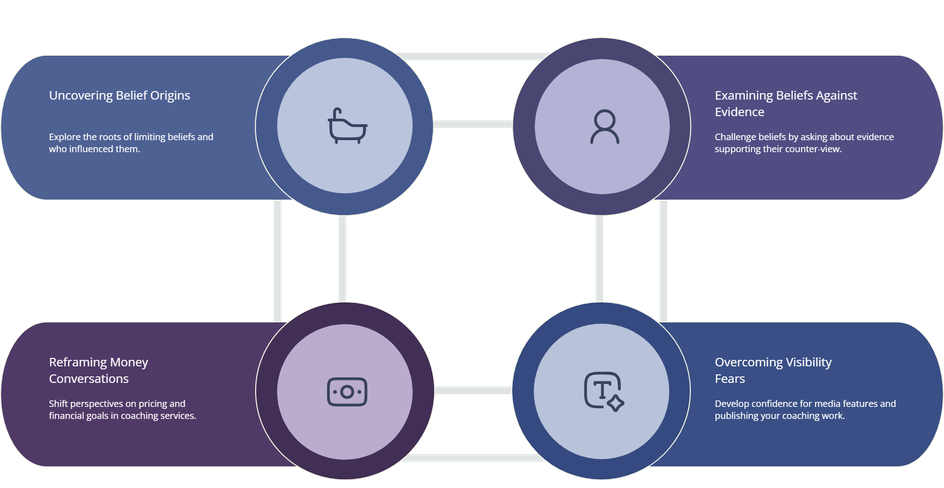
The real art of questioning shows up when you help clients challenge beliefs that silently control their choices. Beliefs often hide inside throwaway phrases: “That is just who I am,” “In my industry you cannot charge more,” or “My partner will never support this.” Pair these statements with curiosity driven questions such as “Who taught you that?” or “What evidence have you collected for the opposite?” These lines work best when grounded in ethical guidance from coaching confidentiality and ethical dilemmas, so clients feel safe enough to be honest.
Belief shifting questions are especially powerful around money, visibility, and authority. When a coach hesitates to raise their fees, questions linked to pricing your coaching services, financial freedom through coaching, and high paying coaching niches can reframe the conversation from “Is this selfish?” to “How does charging more allow you to deliver deeper support?” Likewise, visibility fears can be explored through questions tied to getting featured in media, writing your first coaching book, and leveraging LinkedIn.
To shift behavior, use pre commitment questions. Instead of waiting until the end of a session, ask early: “On a scale from 1 to 10, how committed are you to experimenting with this change this week?” If the number is below 8, follow up with “What would make it a 9?” This loop exposes unspoken obstacles while there is still time to design support structures like accountability checklists from your coaching toolkit, group programs from hosting retreats and workshops, or peer circles built with effective networking techniques.
5) Integrating Powerful Questioning Into Every Session
Great questions lose their power if they are used randomly. Build a session blueprint that integrates questioning with your other tools, certifications, and resources. For new clients who have recently completed programs like how to become a certified life coach or ultimate guide to health coach certification, use intake sessions to ask meta questions: “What kind of questions have helped you most in previous coaching or therapy?” This respects their history and surfaces preferences around depth, pace, and directness, which protects trust built through materials like coaching confidentiality.
During mid program sessions, rely on your question table above as a quick reference. Before each call, pick three question patterns linked to the client’s current focus: work life balance, burnout, scaling their business, or professional boundaries. Combine those with tools from outsourcing secrets, strategically expanding your practice, and building a coaching team so that every powerful question immediately connects to a concrete next step. Questions should never float alone; they should trigger experiments, templates, or resources you have already prepared.
Finally, embed powerful questioning in your long term client journey. Use quarterly reviews to ask meta questions such as “Which questions from our work have stuck with you the most?” Capture these in a shared document or personal workbook, then guide clients to turn them into self coaching prompts. You can even package these prompts into lead magnets that support branding basics, choosing the perfect coaching business name, and content ideas for podcast appearances. In this way, the art of powerful questioning becomes part of your intellectual property, not just an in the moment skill.
6) FAQs: Powerful Questioning In Coaching
-
Clients feel interrogated when questions come too fast, lack context, or ignore emotional signals. Slow your pace and offer micro framing such as “I would like to ask a tougher question to understand this better, is that okay?” Borrow language from coaching confidentiality and ethical coaching principles to reinforce that they can decline anything. Mix deeper questions with reflective summaries and affirmations. Ask more “what” and “how” questions than “why” questions, since “why” can sound accusatory when trust is still forming.
-
There is no fixed number, but you can think in clusters rather than counting individual lines. In a typical sixty minute session you might use one or two vision questions, three to five reality questions, two or three option questions, and two ownership questions. Use the GROW arc described earlier and adapt it to specific themes like burnout coaching, work life balance, or business scaling. Quality matters more than quantity; a single well timed question that lands deeply is worth ten superficial ones.
-
Deliberate practice starts with writing, not speaking. After each session, capture three questions that worked and three that fell flat. Rewrite them using the patterns in the table above, then test revised versions in future conversations. You can also practice in low stakes contexts such as networking events, study groups from life coach certification programs, or community spaces linked to hosting retreats and workshops. Over time, you build a personal “question library” organized by outcome, obstacle type, and client personality, so you are never improvising from zero.
-
“I do not know” usually means “I have never been invited to think about this.” Treat it as a starting point, not a wall. Respond with follow ups like “If you had to guess?” or “What would you know if you did know?” These playful reframes draw on mindset tools from NLP techniques and resilience frameworks you might use in burnout or work life balance coaching. Give clients time to think, and normalize silence as part of the process rather than rushing to fill the gap with advice.
-
Group coaching requires questions that activate peer learning, not only coach client dynamics. Use prompts like “Who else recognizes this pattern?” or “What is one question you would like the group to ask you about this goal?” This approach mirrors design principles from hosting successful coaching retreats and workshops and building a coaching team. Make space for participants to question each other respectfully, using shared agreements based on ethical principles and professional boundaries. The goal is to create a culture where powerful questions circulate, rather than all coming from you.
-
Certifications alone do not guarantee sharp questioning, yet programs that emphasize ethics, reflective practice, and real coaching hours tend to produce better questioners. If you are early in your journey, explore options in top internationally recognized life coaching certifications, compare costs and hidden fees, and assess how each program trains observation, listening, and supervision. Combine formal training with self designed study using books every coach should own and podcast resources. The more intentionally you practice, the more natural powerful questioning becomes in every conversation.
