
How the Positive Psychology Framework Is Revolutionizing Coaching in 2026
Positive psychology is changing coaching in 2026 because it replaces vague motivation with repeatable behavior design. Instead of hoping clients “feel inspired,” you create systems that produce small wins under stress, which is what actually builds momentum. This matters more than ever because modern clients are overloaded, distracted, and burned out. If your coaching does not build progress that survives real life, clients stall, ghost, and blame themselves. Positive psychology gives you a framework to build trust, consistency, and results without relying on hype.
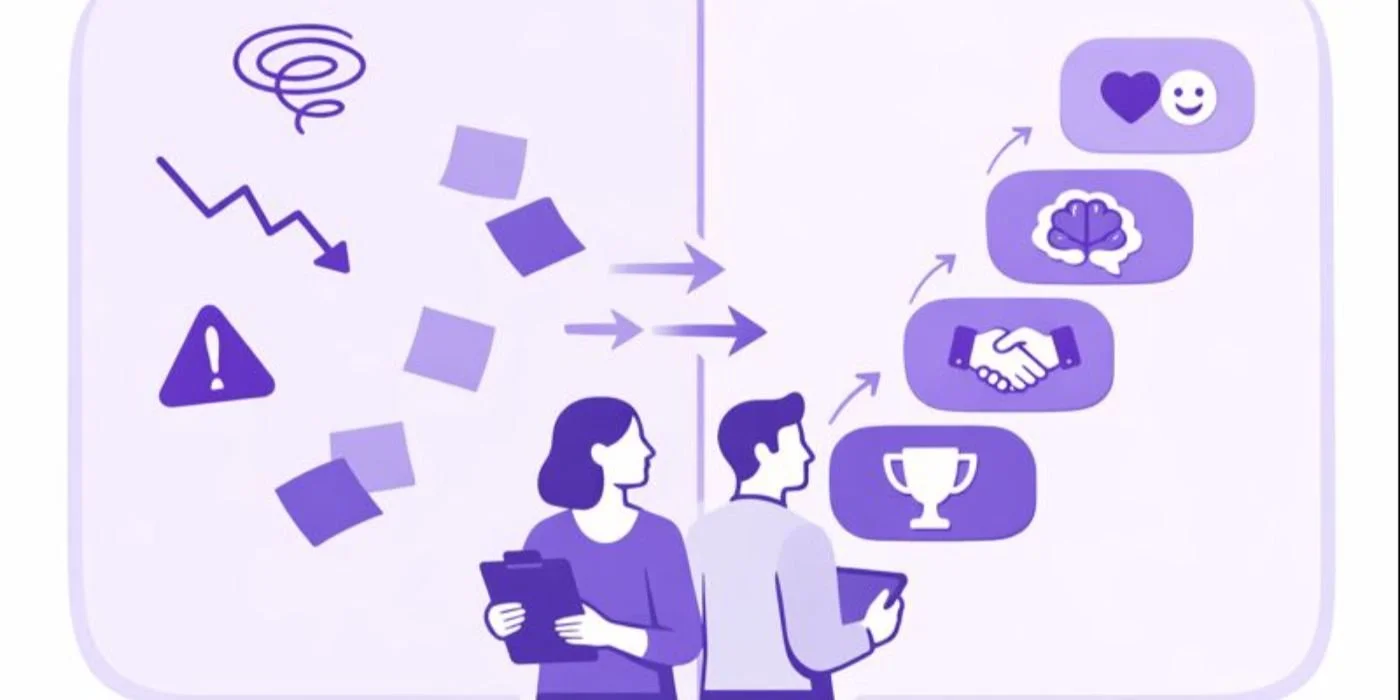
1) Why Coaching Results Break Down in 2026 (And Why Positive Psychology Fixes It)
Most clients do not fail because they lack information. They fail because they lack reliable execution when life gets messy. In 2026, your client is fighting constant friction: notification noise, unstable schedules, stress spikes, emotional eating, decision fatigue, and the quiet shame of “I keep starting over.”
If your coaching approach assumes a stable week, you are building plans that collapse the moment a client’s nervous system gets overloaded. That is why many coaches see the same cycle: strong first two weeks, then inconsistent check ins, then excuses, then silence.
Positive psychology changes your coaching because it focuses on the conditions that make change sustainable. It gives you tools to strengthen:
Self trust: the client’s belief that they do what they say they will do
Identity: “I am the kind of person who follows through”
Positive emotion: not happiness, but energy that broadens options and reduces avoidance
Strengths: the fastest path to competence and momentum
Support systems: routines, environments, and accountability that remove friction
This aligns perfectly with what ANHCO emphasizes about real results and mastery, not motivational talk. If you want a baseline for outcome driven coaching, review how the world’s best coaches get results and compare it to the “information dump” style that creates temporary excitement but weak follow through.
The biggest shift you make in 2026 is this: stop coaching goals as if they are the main thing. Coach the progress engine behind the goal.
When clients are inconsistent, they often do not need bigger goals. They need a system that produces wins they can actually repeat. That is exactly what positive psychology frameworks are built to do, especially when paired with clean execution habits like the ones described in how to make it work every time.
Now the hard truth: if your clients are not getting results, they are not staying. That is why positive psychology is also a business advantage. It improves retention, referrals, and outcomes because progress becomes visible and trackable. That directly connects to building a stronger coaching business with credibility, as covered in how certification differentiates your health coaching business and the broader shift toward future proof skills in 2025 health coach certification trends.
Before you build tactics, you need one principle: positive psychology is not “be positive.” It is designing for momentum.
2) The 2026 Positive Psychology Coaching Model (PERMA Plus Execution)
If you want a model that keeps sessions structured while still feeling personal, use PERMA as your foundation, then add execution design.
PERMA is often taught as a wellbeing framework, but in coaching it becomes a change framework when you translate each pillar into a measurable lever.
P: Positive emotion that fuels action, not empty hype
In coaching, positive emotion is not about pretending life is perfect. It is about creating enough emotional lift that clients stop acting from avoidance. Clients who feel trapped avoid action because action feels like risk. Your job is to build enough safety and possibility that action becomes acceptable again.
Use this with clients who say, “I know what to do, I just cannot start.” Pair it with accountability systems from how to inspire clients to take immediate action and you will see fewer stalled weeks.
E: Engagement through strengths based design
Engagement collapses when the plan fights the client’s nature. Strengths based coaching asks: what does this client do well when they are at their best, and how do we build goals around that?
This is why strengths based coaching is quietly becoming a client magnet. When clients feel that your plan fits them, they stay, they refer, and they buy more. This connects with visibility and audience growth topics like leveraging content marketing to grow your coaching audience because outcomes become your marketing.
R: Relationships that reduce relapse
If your client’s environment is filled with pressure, poor boundaries, and unsupportive dynamics, your plan will break. In 2026, relationship design is not optional. Clients need scripts, boundaries, and community structure that makes progress easier.
This is where coaching overlaps with professional boundaries and ethical practice. Use techniques for maintaining professional boundaries with clients as your standard and teach clients boundary skills without turning sessions into conflict therapy.
M: Meaning that survives low motivation
Motivation disappears. Meaning stays. When you anchor goals to identity and values, clients follow through even when they are tired.
If you want a clear business advantage, meaning driven coaching improves retention because the goal becomes personal, not external. This aligns with credibility building and career positioning, especially when clients ask about credentials and professionalism, covered in health coach certification credentials and how to list on your resume.
A: Accomplishment that creates proof
Clients change when they collect proof. Proof beats inspiration. Your coaching must generate accomplishments that are measurable, specific, and repeatable.
Tie this directly into behavioral reinforcement, using effective strategies for reinforcing positive client behaviors. The key is to reinforce behavior, not personality. “You did the habit despite stress” is better than “You are amazing.”
The add on: Execution design
PERMA becomes revolutionary in 2026 when you add execution tools:
If then planning for predictable friction
Tiny win ladders for overloaded clients
Weekly review loops that turn setbacks into learning
Strengths based habit selection so change feels natural
Fast feedback metrics so clients feel progress in real time
This is how you stop being a motivational coach and become a results coach, the same direction emphasized in how to actually change your client’s life in 2026 and the 1 coaching technique for client breakthroughs.
3) Practical Interventions That Make Positive Psychology “Real” (Not Theory)
Positive psychology becomes powerful when it shows up as repeatable session mechanics.
Here are the interventions that work in the real world, especially with stressed clients who do not want long homework.
Strengths first problem solving
Instead of asking, “What is wrong and how do we fix it,” ask:
“When does this problem happen less?”
“What were you doing differently then?”
“Which strength was present in that moment?”
Then design next week around that. This stops you from building plans that fight the client’s identity. It is also how you deliver outcomes that clients can feel quickly, which fuels marketing channels like email marketing strategies for coaches because client wins create stories worth sharing.
The “minimum viable win” ladder
Most clients quit because they cannot keep up with their own expectations. Create a ladder:
Level 1: a 3 minute version
Level 2: a 7 minute version
Level 3: a full version
Then teach clients to choose based on capacity. This protects consistency. If you coach burnout or work life chaos, combine this with helping clients manage work life balance successfully.
Savoring for behavior reinforcement
Savoring is not gratitude journaling for no reason. It is reinforcement. After a win, have the client:
Name what happened
Name why it worked
Name how it felt
Name how to repeat it
This turns progress into identity and makes the plan stick.
The self trust rebuild protocol
Clients who have failed themselves repeatedly will sabotage progress subconsciously. Fix it with this sequence:
Choose one promise so small it is almost impossible to miss
Keep it daily for 7 days
Increase by 10 to 20 percent only
Track proof in a visible way
This aligns with the “radical simplicity” approach described in the radical simplicity coaches are loving, which is exactly how you keep high stress clients engaged.
Mental contrasting without shame
If your client is optimistic but inconsistent, do not kill their hope. Teach them to contrast:
“What do you want?”
“What is the most likely obstacle?”
“What will you do when it happens?”
This is how you turn wishful thinking into preparation.
Now a key business note: when your coaching method is this structured, it becomes easier to package and sell. You are no longer selling vibes. You are selling a system. That connects with audience building topics like building and monetizing your coaching blog and building your first coaching website because your positioning becomes clearer.
4) How to Build a “Positive Psychology Flywheel” That Makes Clients Refer You
In 2026, referrals come from one thing: clients experiencing progress that feels different from everything they tried before.
A flywheel is a loop that keeps producing results without you pushing harder every week. Here is how to build it using positive psychology principles.
Step 1: Choose one visible behavior metric
Clients do not feel progress when the metric is vague. Choose one behavior metric that is obvious and trackable, like:
workouts completed
bedtime routine completed
alcohol free days
planned meals executed
daily steps
Then pair it with one outcome metric like energy, mood, or waist measurement.
This is where coaching feels professional instead of inspirational. It also supports your authority positioning when clients compare you to less structured coaches. That is part of the reason credentials matter, as explained in how certification differentiates your health coaching business.
Step 2: Build weekly wins using strengths
Do not build goals that require the client to become a different person overnight. Build goals that use their strengths:
organized clients use checklists
social clients use accountability partners
competitive clients use streaks
reflective clients use journaling and review loops
This is how you create engagement and reduce dropout.
Step 3: Reinforce identity, not just outcomes
When a client completes a habit, the reinforcement should be:
“You followed through even with stress.”
“You recovered fast after a bad day.”
“You made the choice that matches your values.”
That creates identity. Identity creates consistency.
If you want to sharpen your reinforcement language, align with effective strategies for reinforcing positive client behaviors.
Step 4: Turn setbacks into a learning loop
Most coaches treat setbacks as a failure. Positive psychology treats it as data. Teach clients:
what triggered the slip
what early warning signs existed
what support was missing
what Plan B will be next time
When clients stop fearing setbacks, they stop quitting. That is how you reduce ghosting and keep programs full.
Step 5: Package the process and market the system
A flywheel becomes a business asset when you package it clearly. That is why content systems matter. If you want to turn this into consistent marketing, use building and monetizing your coaching blog and leveraging content marketing to grow your coaching audience as your baseline strategy.
This is also why positive psychology is “revolutionizing coaching” in 2026. It helps coaches productize a process that reliably produces wins.

5) Where Coaches Mess This Up (And How to Keep Positive Psychology From Turning Into Fluff)
Positive psychology fails when coaches use it like inspirational wallpaper.
Here are the most common mistakes, and the fix.
Mistake 1: Over focusing on “feeling good”
Clients do not pay you to feel good in session. They pay you to build a life that works outside session. Positive emotion is fuel, not the goal. Your job is to convert emotional lift into action design.
Use session structure and homework systems that force implementation. If you want clean structure, take cues from how to make it work every time.
Mistake 2: Strengths talk without execution design
Strengths are useless if they do not show up in a weekly plan. Every time you identify a strength, you should immediately answer:
where will it show up this week
what behavior will it support
what obstacle will it help overcome
Mistake 3: Confusing coaching with therapy
Positive psychology is not therapy, and coaching must stay within ethical boundaries. Your job is to build behavior, identity, and systems. If deeper issues arise, you refer out. This is why professional boundaries matter, and why the ethics and structure in techniques for maintaining professional boundaries with clients matter for serious coaches.
Mistake 4: Programs with no retention engine
If clients finish your program and disappear, you are leaving growth on the table. Positive psychology gives you an easy retention engine:
monthly maintenance plan
quarterly goal reset
strengths reassessment
community support
This connects with building scalable visibility via growing your coaching practice through podcasts and broader authority moves like mastering public speaking as a coach. Your results engine becomes your story.
Mistake 5: Not tying outcomes to credibility and career positioning
In 2026, clients are more skeptical. They are tired of influencers. They want professionalism. Your method, your structure, and your credentials matter. If you want clients to take you seriously, make sure your positioning aligns with health coach certification credentials and how to list on your resume and the future direction outlined in 2025 health coach certification trends.
Positive psychology is not a gimmick. It is the structure behind coaching that actually produces repeatable change.
6) FAQs: Positive Psychology Coaching in 2026
-
Start with one thing: build a “minimum viable win” ladder for one habit. Give clients a 3 minute version, a 7 minute version, and a full version. Then teach them to choose based on capacity, not mood. This prevents all or nothing thinking and protects consistency. Reinforce identity after each win using behavior focused language. If you want to make this system stick, pair it with simple execution principles from the radical simplicity coaches are loving so clients feel progress without adding complexity.
-
Most relapse is not about discipline. It is about recovery speed. Positive psychology helps you build self compassion, planning, and learning loops so a bad day does not become a bad month. You coach the client to expect friction, plan for it, and recover quickly with Plan B behaviors. Use reinforcement methods from effective strategies for reinforcing positive client behaviors so the client feels proof and momentum even after setbacks.
-
Strengths spotting, implementation intentions, savoring wins, values alignment, and self trust rebuilding work extremely well in health coaching because they reduce shame and increase follow through. Pair those tools with practical nutrition behavior support so sessions do not become theory. If you coach diet change, align with frameworks from how coaches can actually change client diets so positive psychology supports real food decisions, not just mindset talk.
-
Keep your work focused on goals, behavior, environment design, identity language, and accountability. When trauma, severe anxiety, or deeper mental health needs appear, you refer out and stay inside a coaching scope. Also maintain clear boundaries in communication, availability, and expectations. If you want a clean professional baseline, follow techniques for maintaining professional boundaries with clients and build your practice on structure, not emotional dependency.
-
It improves retention because clients feel progress weekly, not occasionally. It improves referrals because the client experience becomes distinct. Clients stop saying “my coach motivates me” and start saying “my coach has a system that works.” That is what people share. If you want to turn that into consistent inbound demand, connect your results engine to content systems using leveraging content marketing to grow your coaching audience and long term authority plays like building and monetizing your coaching blog.
-
Yes, because premium offers require predictable outcomes. Positive psychology helps you productize a repeatable change process, which makes premium positioning credible. Package your offer around the flywheel: assessment, strengths based planning, execution design, reinforcement, and review loops. Then document outcomes and client proof. Your credibility increases further when your professional positioning is clear, including how you present credentials, as shown in health coach certification credentials and how to list on your resume. This is exactly the kind of professional differentiation that grows in 2026.
