
Coaching rises or dies on communication. Not because your clients “need motivation,” but because the wrong words trigger resistance, shame, or performative agreement that never turns into action. In 2026, the best coaches are not the most charismatic. They are the most precise. They ask questions that cut through confusion, reflect back patterns without judgment, and create agreements clients actually follow. This article breaks down the communication secret behind successful coaching and gives you scripts, structures, and tools you can use immediately to get clearer sessions and stronger results.
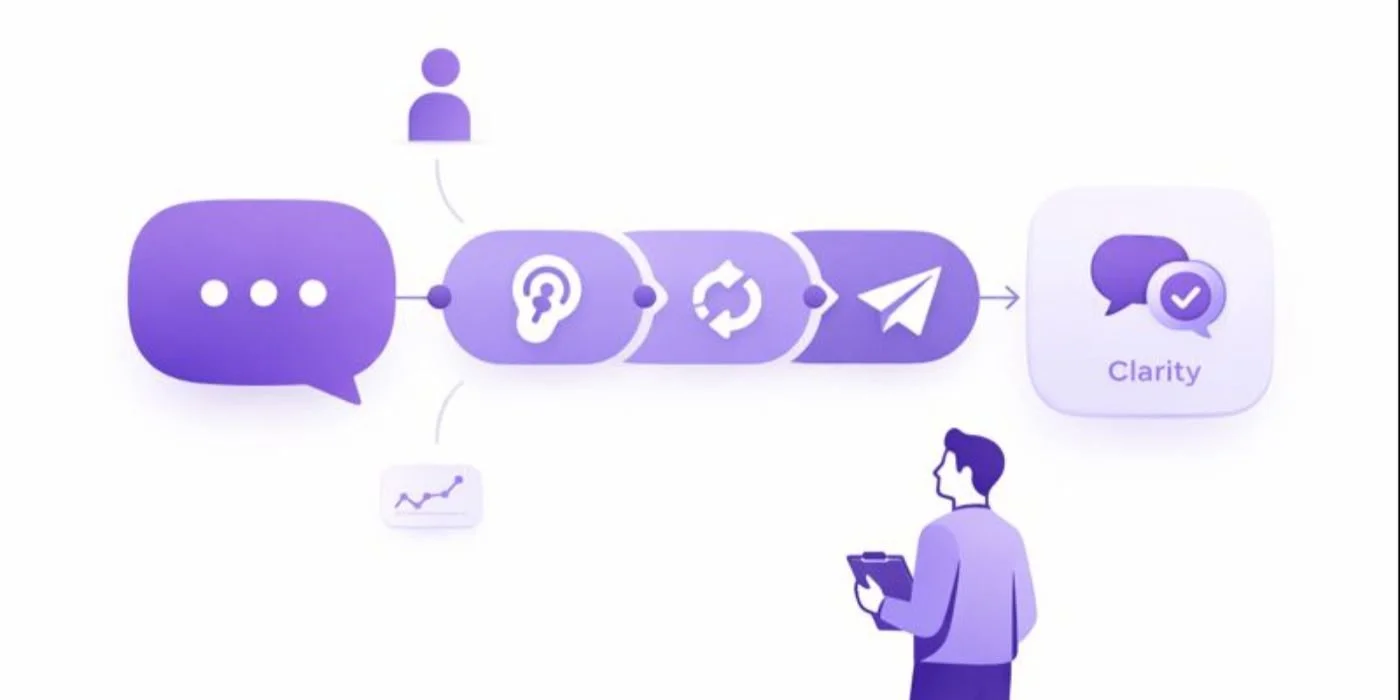
1) The Communication Secret: Clients Change When They Feel Safely Seen and Clearly Directed
Here is the secret most coaches learn late: clients do not change because they understand. They change because they feel accurately understood and cleanly guided without feeling judged. When a client feels misunderstood, they defend. When they feel judged, they perform. When they feel safe and clear, they act.
That is why “good communication” is not being nice. It is being precise, grounded, and structured. It is knowing how to get truth without pressure and how to turn truth into an agreement the client can keep.
If you want to understand why top performers get better outcomes, study how structure drives results in how the world’s best coaches get results and how professionals evolve their process in how coaches reach mastery. The coaches who win in 2026 are not adding random techniques. They are refining how they speak, listen, and frame action.
The reason communication is now the “make or break” skill is simple. Clients are overloaded. They want speed, clarity, and relief. If your sessions become long emotional loops with no behavioral outcome, clients feel worse. If your sessions become rigid advice without emotional safety, clients stop telling you the truth. The sweet spot is safety plus direction, which is exactly what high impact coaching aims for in how to actually change your client’s life in 2026.
The fastest way to upgrade your coaching in 2026 is to stop chasing new frameworks and master what language does in a client’s nervous system. That is also why you cannot ignore professional boundaries when communication gets intimate, which is covered clearly in techniques for maintaining professional boundaries with clients.
2) The 5 Layer Communication Framework Successful Coaches Use
Great coaching communication is layered. If you only ask questions, clients feel interrogated. If you only validate, clients feel comforted but unchanged. If you only direct, clients feel controlled. The best coaches stack five layers in the right order.
Layer 1: Safety language that lowers threat
Clients lie when they feel threatened. Not always intentionally. Their nervous system edits truth to avoid shame. Your job is to make truth feel safe.
Use lines like:
“We are not judging the week, we are studying it.”
“Let’s name facts, not labels.”
“If you did not do it, that tells us something useful.”
This is the same mindset behind ethical practice and clean boundaries in techniques for maintaining professional boundaries with clients, because safety is not emotional dependency. It is psychological clarity.
Layer 2: Precision questions that produce usable data
Successful coaches do not ask “Why?” first. “Why” often triggers defense or storytelling. They ask “What happened?” and “When?” first.
Examples:
“What was the exact moment you stopped?”
“What time did the plan break?”
“What did you do right before it?”
If you want your sessions to create real behavior change, pair this with action prompting frameworks in how to inspire clients to take immediate action.
Layer 3: Reflection that mirrors patterns without attacking identity
Reflection is not repeating what clients say. It is identifying the pattern they cannot see.
High impact reflections sound like:
“When stress spikes, your standards become impossible.”
“You chase perfect weeks, then quit after one slip.”
“Your plan depends on energy you do not consistently have.”
This is how coaches create breakthroughs, similar to the deeper mechanics discussed in the 1 coaching technique for client breakthroughs.
Layer 4: Reframe that creates agency
A reframe is not positivity. It is a shift from helplessness to control.
Reframes that work:
“You did not fail, your system failed under stress.”
“This is not a motivation issue, it is a friction issue.”
“The goal is not perfect, the goal is recovery speed.”
This matches the practical simplicity style described in the radical simplicity coaches are loving.
Layer 5: Agreement language that produces execution
Most coaching fails at the agreement. Coaches end sessions with vague homework and clients leave with polite intention.
Strong agreements include:
One action
One time cue
One obstacle plan
One proof metric
If you want a repeatable structure, align with the outcome first systems in how to make it work every time.
When you stack these five layers, your sessions stop being “nice conversations” and become behavioral engineering with empathy. That is what clients actually pay for.
3) The Real Reason Clients Resist and the Words That Melt Resistance
Resistance is not disrespect. Resistance is protection. Clients resist when your language threatens one of three things:
Their identity
Their autonomy
Their sense of safety
If you want to coach adults in 2026, you must communicate in a way that respects autonomy while still challenging behavior.
Replace advice with “choice architecture”
Bad: “You should meal prep.”
Better: “Do you want a plan that is fast, flexible, or strict this week?”
This gives autonomy without losing direction. It also helps when you coach nutrition change because clients need realistic options, not moral pressure, which is a core theme in how coaches can actually change client diets.
Replace “accountability guilt” with “accountability clarity”
Bad: “Why did you not do it?”
Better: “What blocked it and what do we change in the plan?”
This keeps the client honest without shame. It also supports long term behavior reinforcement, which connects to effective strategies for reinforcing positive client behaviors.
Replace “motivation talk” with “friction talk”
Bad: “You need to be more disciplined.”
Better: “Where is the plan too hard to execute?”
This is the difference between average coaching and professional coaching. It is also why certification and structured training differentiates you in the market, as explained in how certification differentiates your health coaching business and why the industry is moving toward higher standards in 2025 health coach certification trends.
A simple resistance reset sequence
When you feel resistance, do this in order:
Validate: “That makes sense.”
Clarify: “What part feels unrealistic?”
Offer options: “Do you want option A or option B?”
Agree: “What are you committing to, exactly?”
Proof: “How will we know you did it?”
This creates forward motion without power struggle. It is also how you protect professional rapport, which matters if you want long term client retention and authority.
4) The “Truth Without Shame” Method That Makes Clients Finally Open Up
In 2026, your best clients are not the ones who talk a lot. They are the ones who tell the truth early. Truth creates speed. Shame creates delay.
Clients hide the truth in predictable ways:
They report intentions instead of actions.
They describe the plan instead of what happened.
They soften reality to avoid disappointment.
If you want honest sessions, you need a method that makes truth feel safe.
Use facts first language
Start with: “What did you do?” not “How do you feel?”
Feelings matter, but actions create coaching direction.
Then you can ask: “What did you feel right before the slip?”
This keeps the session grounded and results oriented, which is exactly what drives real change as described in how the world’s best coaches get results.
Remove identity attack words
Clients collapse when language becomes personal. Replace:
lazy with overloaded
failure with setback
weak with unsupported
This is not sugarcoating. It is accuracy. Attacks do not create behavior change. Precision does.
Normalize obstacles without normalizing excuses
Say: “Of course stress hit the plan. Now we adjust.”
That line is powerful because it keeps the client responsible while removing shame. It is also how you coach burnout safely, which connects directly to effective strategies for coaching clients through burnout.
Ask the two questions that unlock truth
“What are you not telling yourself?”
“What are you not telling me?”
Used gently, these questions cut through performance. If you feel the client is people pleasing, anchor back to commitment truth. This protects your results and your integrity as a coach.
If you want a structured way to keep sessions ethical and avoid overstepping, keep your practice aligned with techniques for maintaining professional boundaries with clients. When clients open up, you stay grounded in coaching scope.

5) How to Turn Communication Into Outcomes With a Session Structure Clients Follow
The final secret is not just saying the right lines. It is structuring communication so each session produces an outcome.
Here is a high performance structure you can use weekly.
Part 1: The win review
Ask:
“What worked?”
“Why did it work?”
“How do we repeat it?”
This builds self trust and reinforces behaviors, matching the reinforcement logic in effective strategies for reinforcing positive client behaviors.
Part 2: The breakdown review
Ask:
“Where did it break?”
“What was the trigger?”
“What support was missing?”
This turns setbacks into data. It also prevents the “start over” cycle. If your clients constantly restart, you need recovery systems, which connects to building progress reliably in how to make it work every time.
Part 3: The single focus plan
Choose one focus for the week. One. The best coaches in 2026 are not giving clients eight tasks. They are building momentum.
This is the same simplicity that makes coaching feel powerful, not heavy, and it aligns with the radical simplicity coaches are loving.
Part 4: The agreement script
Use this exact format:
“This week you will do X.”
“You will do it on these days.”
“If obstacle Y happens, you will do Plan B.”
“We will measure it by Z.”
This creates proof. Proof creates referrals. When your sessions produce proof consistently, your business grows faster and your content becomes easier to market through channels like email marketing strategies for coaches and visibility systems like leveraging content marketing to grow your coaching audience.
Part 5: The close that strengthens identity
End with:
“What did you learn about yourself this week?”
“What did you do that you are proud of?”
This is not fluff. It is identity reinforcement. Identity drives follow through.
If you want your coaching career to remain competitive, structured communication is the skill that will differentiate you, alongside credibility markers like those discussed in 2025 health coach certification trends and professional positioning guidance like health coach certification credentials and how to list on your resume.
6) FAQs
-
The most important habit is translating everything into facts, patterns, and agreements. Facts prevent storytelling. Patterns create insight. Agreements create action. If a client says they want change but keeps repeating the same week, your job is to reflect the pattern without blame and then design one agreement they can keep. This is why the highest performing coaches focus on structure and execution, not motivation, as shown in how the world’s best coaches get results and how consistent systems are built in how to make it work every time.
-
Challenge behavior, not identity. Validate first, then clarify what is not working, then offer choices. A clean formula is: “That makes sense. Here is what I’m noticing. Which option feels realistic this week?” This preserves autonomy while still holding standards. If you struggle with boundaries when clients become emotional or resistant, keep your practice aligned with techniques for maintaining professional boundaries with clients so you stay professional and effective.
-
Most clients agree because they want to be seen as cooperative, not because the plan fits their real life. Your fix is to test commitment before the session ends. Ask: “On a scale of 1 to 10, how likely is this?” Then redesign until the answer is 9 or 10. Also add a Plan B for stress weeks. This is the same practical simplicity that helps clients stop restarting, which is central to the radical simplicity coaches are loving and long term change strategies in how to actually change your client’s life in 2026.
-
Assume shame, not malice. Use safety language, then ask for specificity. Replace “Why” with “What happened, exactly?” Then use the two unlock questions: “What are you not telling yourself?” and “What are you not telling me?” If the client still avoids honesty, reduce scope and focus on a single measurable behavior. When clients feel proof, honesty increases. Reinforcement frameworks from effective strategies for reinforcing positive client behaviors help here because shame decreases when progress becomes visible.
-
Never moralize food. Coach decisions, environments, and triggers. Ask: “What was happening right before the choice?” and “What need were you trying to meet?” Then design one small change that reduces friction and increases autonomy. If you want a grounded approach that avoids shame and still produces results, use practical guidance from how coaches can actually change client diets and pair it with action prompting methods from how to inspire clients to take immediate action.
-
Premium coaching is not priced by time, it is priced by outcomes and trust. Communication creates that trust when it is structured, precise, and repeatable. Use a consistent session framework, document measurable progress, and make your agreements explicit. Clients pay more when they feel certainty. Combine strong communication with professional credibility, including how you present credentials as described in health coach certification credentials and how to list on your resume, and position yourself with market aligned authority like the trends covered in 2025 health coach certification trends.
