
How Artificial Intelligence Is Changing Client Interactions Forever
Artificial intelligence is not “coming” to coaching. It is already sitting inside your client’s inbox, calendar, notes app, and late night spiral. The coaches who win are not the ones who avoid AI. They are the ones who design better client interactions with it. In this guide, you will learn exactly how AI is changing client communication, trust, and engagement, and how to build an AI assisted coaching experience that feels more human, not less. You will also see what to automate, what to never automate, and how to protect your reputation.
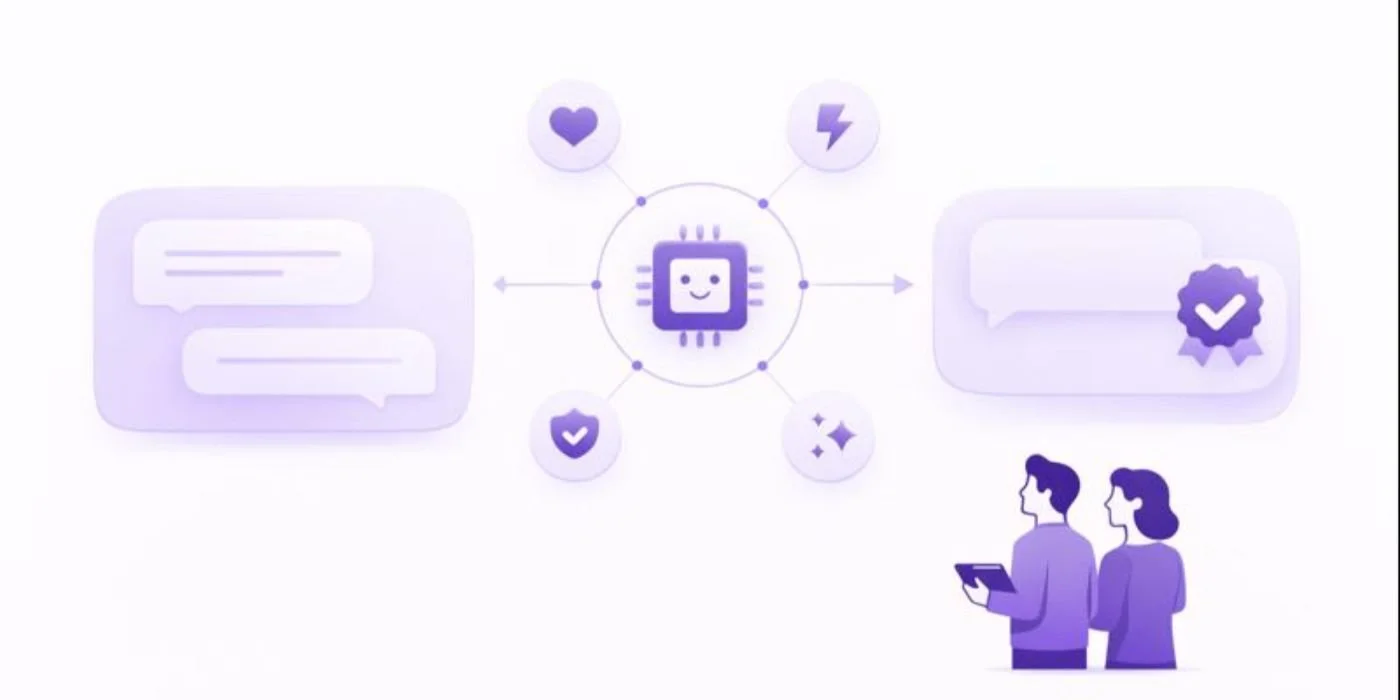
1. How Artificial Intelligence Is Changing Client Interactions Forever
AI is permanently changing how clients expect to be supported between sessions. The old model was “talk once a week, hope they apply it.” The new model is “micro support daily, with feedback loops.” If your client can open an app and get instant clarity, your coaching must feel even more intentional, structured, and results focused than that. This is where your edge lives.
The biggest shift is not tools. It is interaction design. Clients now expect fast answers, personalized follow up, and consistency. They also expect privacy, boundaries, and emotional intelligence. If you ignore this, you get punished in three ways.
First, your clients stop asking questions. They ask AI instead, then show up confused. That is how trust quietly dies. The fix is building a clear “AI plus coach” workflow, similar to how you would structure follow through using the frameworks in how to make it work every time and the systems mindset in why it’s the hidden goldmine of coaching.
Second, your content and programs get compared to free. The client thinks, “Why pay when I can ask a chatbot?” The answer is simple. AI gives information. Coaching creates transformation. But your delivery must prove it, which ties directly to how to actually empower clients real results and the leverage you build through how technology is completely transforming the coaching industry.
Third, client attention is fractured. They binge prompts, templates, and advice, but do not execute. Your job becomes less about giving more ideas and more about installing a better decision process. This is where structure like the 1 coaching technique for client breakthroughs and skill building like the coaching skill you didnt know you needed becomes non negotiable.
Here is what AI changes in real client interactions.
Response speed expectations. If clients can get immediate output elsewhere, a 48 hour delay from you feels like neglect. You do not need to be always available. You need a system that creates consistent touchpoints, like the routines you would build from managing your time efficiently as a successful coach and the boundaries in how to set them and save your career.
Personalization expectations. Clients now believe personalization is normal. They expect reminders that match their goals, language, and triggers. You can deliver that without burning out by using templates and workflows connected to why coaches are embracing this positive change model and the practical communication structure in the communication secret behind successful coaching.
Accountability expectations. Clients now want tracking. Not pressure. Tracking. AI makes it easier to run weekly check ins, micro commitments, and pattern detection, but your role is still to coach the meaning behind the data. That is why mastery frameworks like how coaches reach mastery matter more than ever.
Trust expectations. AI creates new trust risks. If you are vague about what you store, what you use, and what is automated, you look careless. This connects directly to why trust is the most valuable asset in coaching and professional safety standards like the non negotiable standards every coach must know.
If you want clients to feel supported instead of monitored, you need a simple rule.
Use AI to increase clarity, consistency, and speed. Never use AI to replace empathy, consent, or judgment.
That one line will protect your brand, your referrals, and your long term positioning, especially if you are building a premium business using strategies from why its the ultimate client magnet in 2026 and scalable assets like how to create and sell coaching online courses.
2. The New Client Expectation Stack: Speed, Personalization, and Proof
If you are hearing “I tried a few tools and nothing stuck,” that is not laziness. That is a broken interaction system. AI has raised the baseline, so clients now want three things from every touchpoint.
Speed with boundaries. Clients want fast help, but they also want you to be stable. If you reply randomly, they feel unsafe. If you reply instantly always, you burn out. The middle path is clear communication policies using principles from how coaches avoid career ending mistakes and the boundary framework in why coaches must avoid this trap.
Personalization that feels real. Clients can smell generic scripts. AI makes generic even easier, which means generic now feels insulting. The fix is to build a “client language bank” using their own phrases, values, and triggers, then write your follow ups in that voice. This is how you make your work feel premium, similar to positioning guidance from how to price your coaching services to attract clients and brand clarity from branding basics every new coach should master.
Proof of progress. Clients do not want motivation. They want evidence. AI can help you capture progress signals, but you must coach the story behind the signal. This is the difference between “tracking” and “transformation,” and it aligns with the trust building approach in why trust is the most valuable asset in coaching.
Here is the painful truth. Most client churn happens quietly in the gaps. The client misses two actions. They avoid telling you. They show up vague. They start questioning if coaching works. Then they disappear. AI changes this because it lets you create micro touchpoints without extra hours, which supports retention strategies you can amplify with the future of client engagement 2026 and community design ideas from hosting successful coaching retreats and workshops.
A high performing modern coaching experience has four layers.
Layer 1: Clarity. Client always knows the next step. Tie this to simple execution systems from how to make it work every time.
Layer 2: Consistency. Client gets the same rhythm weekly. Use planning discipline from managing your time efficiently as a successful coach.
Layer 3: Connection. Client feels emotionally safe. Strengthen communication quality using the communication secret behind successful coaching.
Layer 4: Conversion and continuity. Client sees outcomes, upgrades, referrals. That ties directly to growth systems like the ultimate guide to strategically expanding your coaching practice and leverage strategies in developing multiple revenue streams as a coach.
When you install these layers, AI becomes a multiplier. Without them, AI becomes noise.
3. What to Automate vs What to Keep Human: The No Regret Rules
You do not need more AI features. You need rules that prevent reputation damage.
Rule 1: Automate structure, not emotion. Use AI to format, summarize, sequence, and remind. Keep empathy and judgment human. This protects you under professional standards like the non negotiable standards every coach must know.
Rule 2: Automate between session friction, not identity work. AI is great at helping clients take action. It is dangerous when clients use it to decide who they are. That is your job as a coach, supported by frameworks like the neuroscience based method every coach needs now and the growth approach in how the positive psychology framework is revolutionizing coaching in 2026.
Rule 3: Automate repeatable education, not sensitive conversations. AI can create a clear explainer about habits, communication, leadership, and decision making. But any topic involving deep shame, trauma, or crisis needs your human presence and your protocol. That mindset aligns with why coaches need it more than ever 2026 and risk awareness in how coaches avoid career ending mistakes.
Rule 4: Automate data cleaning, not data collection. The fastest way to lose trust is to store too much. Clients do not want to feel tracked. They want to feel supported. Keep the minimal info needed to coach effectively, and do it transparently. That reinforces the positioning in why trust is the most valuable asset in coaching.
Here are “safe automations” that improve client interactions immediately.
Session recap templates. AI drafts, you edit, client receives within two hours. This improves follow through and reduces confusion.
Weekly check in prompts. AI generates three questions based on last week’s commitment. You send them as a structured message.
Resource sequencing. AI helps map “what to learn next” so clients stop consuming random advice. This supports scalable education systems like how to create and sell coaching online courses.
Repurposing for consistency. If you teach something once in a session, you can turn it into an email, a post, and a worksheet without exposing client details. That is how you build distribution using growing your coaching practice through podcasts and authority assets like writing and publishing your first coaching book.
Now here is what you should never automate.
Never automate replies to emotional disclosures. Never automate conflict responses. Never automate anything that could be interpreted as diagnosis or therapy. Never let clients believe a bot is you. These are the hidden landmines that destroy credibility and create refund demand.
If you want a simple decision filter, ask one question.
If this message got screenshot and shared, would it make me look careless.
If yes, it stays human.
4. The AI Assisted Coaching Workflow That Feels More Human, Not Less
Most coaches fail with AI because they throw tools at the process instead of designing the journey. You need a workflow that feels calm, clear, and coach led.
Use this five step workflow.
Step 1: Create a client language bank. Capture five things.
Their top goal in one sentence
Their biggest friction in one sentence
Their values words, like freedom, stability, confidence
Their triggers, like overwhelm, perfectionism, people pleasing
Their proof preference, like numbers, feelings, or routines
This instantly improves your messaging, similar to the clarity you build when choosing the perfect name for your coaching business because it forces specificity, and the positioning discipline used in why theyre changing the game for coaches.
Step 2: Install a weekly rhythm. Your client should know exactly what happens each week.
One session. One commitment. One check in. One reflection prompt. One adjustment.
This is how you reduce chaos and increase results. It also supports scalable delivery if you expand using how to build a coaching team that boosts revenue by 300 and growth systems from 7 unconventional strategies to scale your coaching business in 2025.
Step 3: Use AI for recap, reminders, and resource sequencing. Keep it short.
Clients do not need long messages. They need the next move. That is why resource overload kills execution, and why the leverage mindset in creating passive income opportunities in coaching must be paired with a strong sequence.
Step 4: Use a “human review gate” before anything client facing goes out. AI drafts. You approve. Always.
This protects you from tone mistakes, inaccurate assumptions, and trust damage, which directly connects to how to set them and save your career and the long term authority you build through how to get featured in media as a coaching expert.
Step 5: Track the right metrics. Not vanity. Reality.
Track these five.
Completion rate of weekly commitment
Reply rate to check ins
Session preparedness score, did they show up clear
Breakthrough frequency, how often they report insight
Retention and referrals
This is how you build a premium practice that actually delivers financial outcomes, aligned with achieving financial freedom through coaching and smart operations principles in outsourcing secrets freeing up 20 hours weekly in your coaching business.
Now let’s address the fear that AI will make you look generic.
The opposite is true if you do it right.
Most coaches send fuzzy encouragement. AI can do that. Your edge is specificity and execution. Your messages should sound like this.
Here is what you committed to.
Here is the obstacle that blocked you last week.
Here is the smallest next step you will do in 10 minutes.
Here is the proof we will look for by Friday.
That is coaching. That is also exactly why systems like why top coaches are obsessed exist. Results come from repeatable behaviors, not inspiration.
5. Guardrails: Trust, Ethics, Boundaries, and Brand Protection
The fastest way to kill your coaching business is to be sloppy with trust. AI increases both opportunity and risk. Your guardrails must be clear and visible.
Guardrail 1: Disclosure. Tell clients what is assisted and what is human. You do not need to overshare. You need to be honest. This reinforces the authority you build with the non negotiable standards every coach must know.
Guardrail 2: Consent. If you store any personal content, you get explicit consent. If you use transcripts, you get explicit consent. If you use examples for content, you get explicit consent. Trust is not assumed. Trust is engineered, which aligns with why trust is the most valuable asset in coaching.
Guardrail 3: Data minimization. Collect less. You do not need full life stories. You need enough to coach effectively. This reduces liability and increases safety.
Guardrail 4: Boundaries. Set response windows, what is allowed in messages, and what requires a session. This is how you prevent “AI raised expectations” burnout, and it supports the time discipline in managing your time efficiently as a successful coach.
Guardrail 5: Human escalation. If a client message signals crisis, your policy triggers your protocol. AI should never be the decision maker in that moment.
Now let’s talk about the hidden brand risk.
If you over rely on AI, your content voice becomes bland. Your client comms become generic. Your reputation becomes replaceable. That is why your personal authority assets still matter.
Use public speaking, writing, podcasts, and workshops to make your expertise feel lived and real. Build those assets using mastering public speaking as a coach, writing and publishing your first coaching book, and growing your coaching practice through podcasts.
When clients see your thinking in public, AI becomes your assistant, not your replacement.
Also do not ignore business leverage.
AI can increase conversion and retention, but only if your offers are structured. If your pricing is confusing, AI will not save you. Rebuild pricing clarity using how to price your coaching services to attract clients and strengthen your offer stack with the hidden revenue streams most coaches overlook but shouldnt.
One final warning.
Do not let AI turn your coaching into constant messaging. Clients do not need more access. They need better outcomes. If you create unlimited chat support, you do two things.
You train dependency.
You train burnout.
Instead, design structured touchpoints, and let your client build competence. That is real empowerment, exactly as taught in how to actually empower clients real results.
6. FAQs: Artificial Intelligence and Client Interactions
-
Never automate emotional disclosures, conflict responses, crisis related messages, or anything that could be interpreted as diagnosis or therapy. Those moments require human judgment, consent, and care. AI can help you draft calmer language, but you should always review and personalize before sending. The safest approach is to automate structure and consistency, such as recaps and check ins, while keeping empathy and boundary decisions human. This protects trust and keeps you aligned with professional standards and long term brand credibility.
-
Your coaching feels generic when your communication lacks specificity. Use AI to summarize session notes and extract the client’s exact language, then write follow ups using their words, values, and real constraints. Keep messages short and action driven. Always include a single next step, the obstacle to watch for, and how you will measure progress. AI should increase clarity and consistency, while your coaching adds depth, accountability, and judgment. That combination makes your work feel premium, not automated.
-
AI can improve follow through by reducing friction. Use it to create micro action plans, weekly check in questions, and reminder sequences that match the client’s schedule. Pair this with a fixed weekly rhythm so clients always know what happens next. Track completion rate, reply rate, and session readiness so you see problems early instead of discovering them after motivation drops. When clients feel supported in small moments, execution becomes easier, and sessions become more productive because progress is already in motion.
-
Set boundaries around availability, topics allowed in messages, and what requires a session. Define response windows, such as one daily check in review, and communicate that your support is structured to protect results and prevent overwhelm. Make it clear that AI assisted messages are for reminders, recaps, and action prompts, not therapy or crisis support. These boundaries protect your time, prevent client dependency, and reduce the risk of miscommunication. Consistent boundaries build safety, which increases trust and retention.
-
Clients do not pay for information. They pay for transformation, clarity, accountability, and a relationship that helps them apply change. AI can produce advice, but it cannot reliably design a personalized coaching journey with ethical guardrails, real time judgment, and human trust. Coaches who win will integrate AI to improve consistency and support, then use their expertise to coach decisions, identity shifts, and execution. If your offer is structured and your outcomes are clear, AI becomes a value add that strengthens your results.
-
Protect privacy by collecting less data, storing only what you need, and getting explicit consent for transcripts, summaries, or any stored notes. Avoid placing sensitive personal details into tools that you cannot control or secure. Use anonymized summaries when possible, and keep your client language bank focused on goals, constraints, and action commitments rather than private history. Transparency matters. Tell clients what is assisted, what is stored, and how it helps their progress. Privacy done right increases trust and reduces risk for both you and the client.
-
Start with three actions. First, use AI to draft a short session recap template that includes the key commitment, the obstacle, and the next step. Second, create a weekly check in message with three questions that you reuse and customize. Third, build a resource sequence so you stop dumping content and instead deliver one focused lesson per week. Add a human review gate for anything client facing. This simple setup improves clarity, consistency, and follow through without increasing your workload or harming trust.
