
How Quickly Can You Earn Your Life Coach Certification?
Busy professionals don’t get stuck because life coach certification is “hard.” They get stuck because they choose a program with vague pacing, unclear practice requirements, and no accountability — then the finish line keeps moving. This guide answers the real question: how quickly can you earn your life coach certification without sacrificing credibility, competency, or client trust. You’ll learn realistic timelines, what actually determines speed, how to compress the process with a disciplined plan, and how to avoid programs that look fast but produce weak coaches.
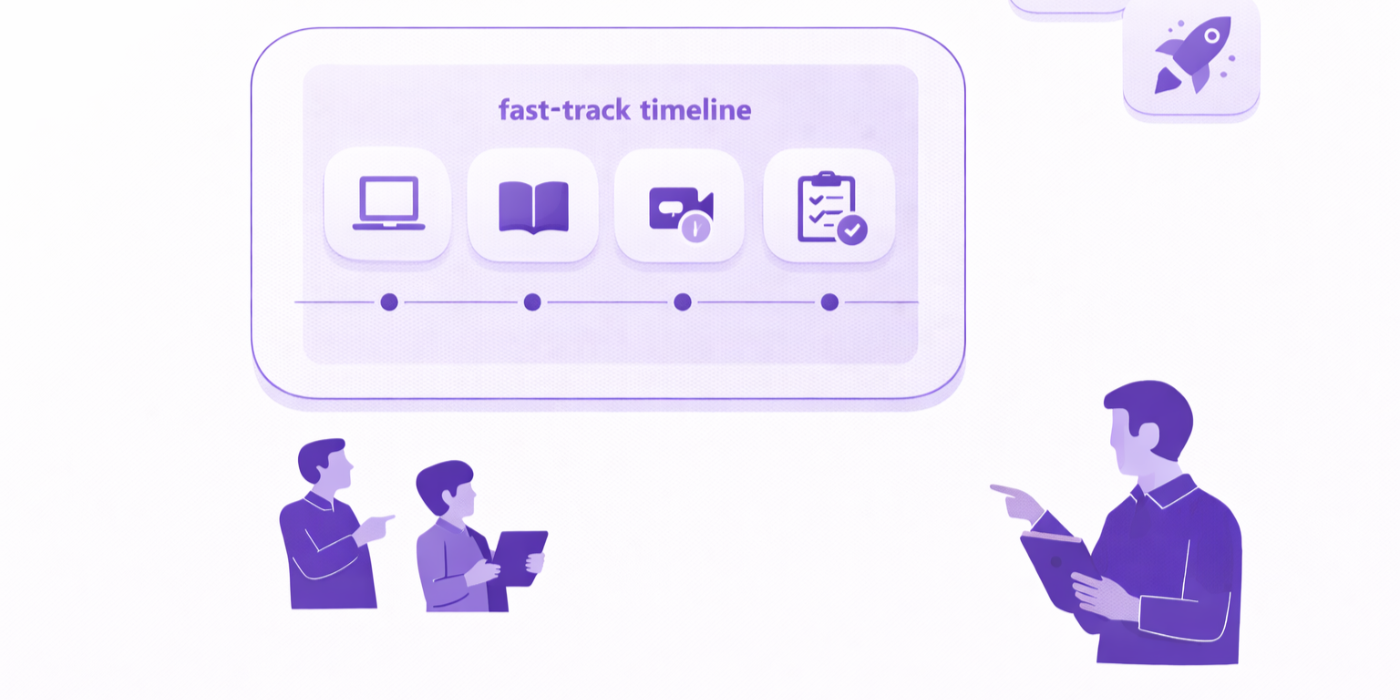
1) The real answer: how quickly can you earn a life coach certification?
Most people want a single number. The reality is that certification speed depends on format + requirements + your weekly available hours + how fast you complete practice reps. The fastest legitimate timeline is rarely the program’s marketing headline — it’s the time it takes to complete training + practice + assessments without delays.
Here are the timelines that show up most often:
Fastest “completion” path (credential issued quickly): 4–8 weeks
Only possible when the program is designed as an accelerated track and you can protect time. The risk is finishing “on paper” but not feeling competent in real sessions.Most realistic “busy professional” path: 8–16 weeks
This is the sweet spot for people working full-time: consistent weekly work, steady skill reps, minimal burnout.Deep mastery + strong practice evidence: 4–6 months
If you want confidence, a cleaner coaching voice, and proof of competency that builds trust, you’ll typically need more practice reps and feedback cycles.
Your goal shouldn’t be “finish ASAP.” It should be finish fast and finish strong — because trust is the currency clients pay you with, and that trust is built on competence, standards, and consistent results, not speed alone. That’s why coaches who focus on outcomes and process outperform those who focus on “getting certified” — a theme running through how the world’s best coaches get results and how coaches reach mastery.
The 7 factors that control your certification speed
Weekly time you can actually protect (not what you wish you had)
Program pacing (structured plan vs “do it whenever”)
Practice requirements (how many sessions, how logged, how approved)
Feedback turnaround (mentor review speed)
Live attendance rules (fixed times vs flexible options)
Admin friction (platform complexity, paperwork, tracking)
Your re-entry plan after missed weeks (this is where most people lose months)
If you want speed, you must reduce friction and protect consistency. That’s the same execution principle behind the radical simplicity coaches are loving and disciplined goal structures like SMART goals 2.0.
2) Timeline breakdown by program style (so you can choose the fastest path for your schedule)
Speed is not one-size-fits-all. The fastest program for one person can be the slowest for another if it conflicts with their calendar.
A) Structured self-paced (fastest for unpredictable schedules)
This is the best option when you work full-time, travel, or have family obligations — because you can compress work on good weeks while staying consistent on hard weeks. The key is structured pacing, not “total freedom.” The mindset behind it maps directly to the radical simplicity coaches are loving and execution frameworks like how to make it work every time.
Typical completion: 8–16 weeks (faster if you have 6–8 hours/week)
Best for: Busy professionals who still want real skill
Red flag: Unlimited time with no milestones (you’ll drift)
B) Cohort-based hybrid (fastest for people who need accountability)
If you fall behind without deadlines, a cohort can actually be faster, because it eliminates decision fatigue and forces practice reps. This works best when the program offers multiple live time options and fast make-up policies.
Typical completion: 10–20 weeks
Best for: People who need structure to finish
Tie-in skills: Communication quality and client trust — see building deep trust and the communication secret behind successful coaching.
C) Accelerated / intensive (fastest on paper, risky in practice)
This can be truly fast if you can protect time for a short window. But “fast” can backfire if you don’t practice enough and you leave with shaky confidence. If you choose accelerated, build your skill through reps and feedback, and use structured session design from coaching session templates.
Typical completion: 4–8 weeks (only with protected time)
Best for: People with a clear time window
Risk: Graduating fast but not feeling client-ready
D) Credential pathways (ICF-style paths can be longer, but stronger positioning)
Some pathways that align with major credentialing bodies may take longer because of deeper practice and assessment expectations — but they can build stronger long-term credibility. If your goal is a credential-based career path, use resources like navigating the ICF certification application process and avoiding mistakes via common mistakes to avoid on the ICF certification exam.
3) The fastest way to finish (without becoming a weak coach): the “skill-first compression plan”
Here’s what usually happens when people try to finish quickly: they read more and practice less. That creates a dangerous outcome — you become certified but not confident, and then you hesitate to coach. That hesitation costs months.
Speed that holds up in real life comes from practice reps + feedback + a simple session structure.
Step 1: Build your session structure in one day
You don’t need a complex method. You need a reliable flow you can repeat. Use a structure like:
Open + set focus
Explore context
Clarify goal
Identify barriers + beliefs
Generate options
Choose 1–2 commitments
Close with recap + accountability
This aligns with real coaching productivity systems like coaching session templates and conversation skill foundations like the art of powerful questioning.
Step 2: Do one coaching rep every week, minimum
Even if you only have 3 hours/week, do one rep. Reps remove fear. Reps reveal what you actually need to study. Reps compress the timeline because your learning becomes targeted — the same principle behind mastery in how coaches reach mastery.
Step 3: Use feedback to avoid building bad habits
Without feedback, you’ll drift into advice-giving, over-talking, or rescuing clients. That can damage trust and violate boundaries. Protect yourself with ethical standards like the ultimate guide to ethical coaching principles and boundary skills like techniques for maintaining professional boundaries.
Step 4: Build trust signals while you train
Trust is built through professionalism and clear boundaries. Busy professionals must be especially careful because rushing increases mistakes. Learn how to protect client safety via coaching confidentiality and understand why trust drives results in why trust is the most valuable asset in coaching.
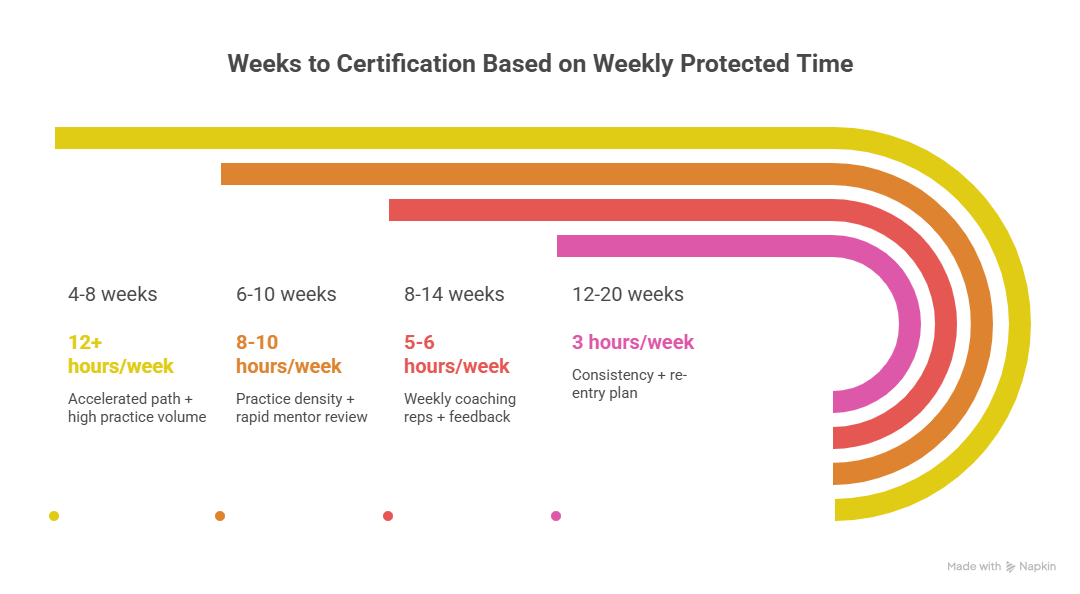
4) The realistic “weeks-to-certification” timelines (based on your weekly hours)
Instead of guessing, anchor your timeline to the only thing that matters: weekly protected time.
If you can do 3 hours/week
You can finish quickly if your program has clear pacing and your practice requirements are straightforward. But you must avoid drifting. Use discipline systems like SMART goals 2.0 and keep it simple with radical simplicity.
Likely timeline: 12–20 weeks
Your speed lever: consistency + re-entry plan
If you can do 5–6 hours/week
This is where “quick” becomes realistic without burnout. You can maintain learning momentum and do enough practice reps to feel competent.
Likely timeline: 8–14 weeks
Your speed lever: weekly coaching reps + feedback
If you can do 8–10 hours/week
You can finish fast and still build competence — if feedback cycles don’t slow you down.
Likely timeline: 6–10 weeks
Your speed lever: practice density + rapid mentor review
If you can protect time like a sprint (12+ hours/week)
You can finish in 4–8 weeks if the program is designed for it. The critical danger is overconfidence: finishing fast does not guarantee skill.
Likely timeline: 4–8 weeks
Your speed lever: accelerated path + high practice volume
If your program doesn’t require meaningful practice and feedback, finishing quickly becomes a warning sign — not a win. Coaching is a trust business, and trust is built through competence and standards, reinforced by the non-negotiable standards every coach must know.
5) How to avoid “fast certification” traps that hurt your credibility
Some programs are “fast” because they cut the very things that make you a coach: supervised practice, ethical training, and feedback. Those shortcuts show up later — when clients feel unimpressed, referrals don’t happen, and you start doubting yourself.
Here’s how to protect your credibility while moving fast:
Trap 1: Programs that sell confidence instead of competence
If a program’s marketing is all “become a coach in 7 days” but can’t explain how skill is assessed, you’re buying inspiration, not training. Compare with competency-driven expectations like essential coaching skills for ICF credentialing.
Trap 2: No ethics and boundaries foundation
A fast path without ethical grounding is dangerous — confidentiality, scope, boundaries, and dual relationships can become career-ending mistakes. Protect yourself using coaching confidentiality and managing dual relationships.
Trap 3: Not building an operational system for real clients
Fast certification is useless if you can’t deliver a clean client experience. Use modern systems and tools for online sessions via virtual coaching tools and video conferencing hacks. A strong client experience is a trust signal.
Trap 4: Thinking certification is the finish line
Certification is the beginning of your credibility stack. You still need to position your credential and communicate it clearly. Use how certification differentiates your coaching business and presentation guidance like how to list credentials on your resume.
6) FAQs: How Quickly Can You Earn Your Life Coach Certification?
-
If you can protect time and the program is accelerated with clear requirements, 4–8 weeks can be realistic. For most busy professionals, 8–16 weeks is a more stable fast track because it supports consistent practice and feedback, which is how coaches develop mastery in how coaches reach mastery.
-
Only if the program is designed for acceleration and you can commit significant weekly hours (often 10+), plus complete practice and assessments without waiting. If your schedule is unpredictable, a structured self-paced approach will often be faster in reality because you won’t miss required checkpoints, aligning with radical simplicity.
-
Three things: unclear practice requirements, slow mentor feedback, and lack of a weekly pacing plan. These cause drift, and drift turns weeks into months. Use plan discipline like SMART goals 2.0.
-
It can be if it cuts practice, ethics, and assessment. Credibility comes from competency and standards, not time alone. Protect your professionalism using ethical coaching principles and non-negotiable standards.
-
Use a weekly minimum plan (3–5 focused hours), do one coaching rep weekly, and keep your learning targeted to your next rep. This prevents binge-study cycles and builds confidence through real practice, supported by conversation skill resources like powerful questioning techniques.
-
Practice reps + feedback. Confidence is a byproduct of repetition and reflection. Build skill in listening and question depth using effective listening techniques and the art of powerful questioning.
-
Build your client-ready stack: session flow template, onboarding checklist, check-in system, progress tracker, and boundary language. This compresses your launch timeline and increases retention — supported by resources like coaching session templates and trust-building guidance in building deep trust.
