
The 10 Best Coaching Apps Every Professional Should Know
Technology has raised the bar for coaching delivery. Clients now expect structure, clarity, and momentum between sessions, not just a weekly call. The right coaching app stack can make your process feel premium, protect your boundaries, and create proof your clients can see. The wrong stack creates friction, overwhelms clients, and quietly kills retention. This guide breaks down the 10 best coaching apps professionals should know, plus how to pick, implement, and scale them without turning your coaching into generic templates.
1) Why coaching apps are now a professional requirement, not a bonus
Coaching apps are no longer a “nice to have.” They are the infrastructure that holds client follow through when life gets messy. Most clients do not fail because they lack desire. They fail because the plan is not visible on Tuesday night when stress hits. They forget the next step, feel behind, and quietly disengage. A clean app system fixes this by making the process obvious and measurable, which connects directly to engagement and retention in The Future of Client Engagement 2026 and the repeatability mindset in How to Make It Work Every Time.
Apps also change what clients believe they are paying for. When your delivery is organized, clients feel you are running a real method, not just conversations. That matters because the market is crowded with coaches who sound the same. Structure becomes a trust signal, similar to how credibility is reinforced in How Certification Differentiates Your Health Coaching Business and how professionalism is protected through boundaries in Techniques for Maintaining Professional Boundaries With Clients.
The biggest advantage is consistency. When your onboarding, check ins, reminders, and progress tracking are consistent, clients stay calm. Calm clients execute. Confused clients procrastinate. That execution is where transformation happens, which ties to outcome driven coaching in How the World’s Best Coaches Get Results and action activation in How to Inspire Clients to Take Immediate Action.
At the same time, apps can destroy trust when used badly. Too many tools create cognitive load. Clients feel like they joined a system, not a relationship. Your job is not to build a tech maze. Your job is to build a simple loop that supports change, the “radical simplicity” approach echoed in The Radical Simplicity Coaches Are Loving and the real life impact focus in How to Actually Change Your Client’s Life in 2026.
2) How to choose the right coaching apps without drowning in options
If you pick apps by popularity, you end up with a stack you do not use. If you pick apps by outcomes, you build a system clients feel. Start by defining your coaching loop. A loop is what happens every week between sessions. One action. One check in. One recap. One adjustment. That simple loop is what produces consistency, which aligns with the method based approach in How the World’s Best Coaches Get Results and the repeatability logic in How to Make It Work Every Time.
Then choose apps in this order.
First, client experience and trust. You need one place where clients can see their plan, tasks, and next steps. Without this, clients feel lost, and they often interpret that as “this coach is not organized.” Organization is a hidden credibility signal, tied to long term client confidence in The Future of Client Engagement 2026 and the trust building value of structure in How to Actually Empower Clients Real Results.
Second, boundaries and sustainability. If your tools make clients feel like they can message you at any time, you create a burnout trap. Burnout kills delivery quality. Delivery quality kills outcomes. That is why boundaries are non negotiable, and why they are emphasized in Techniques for Maintaining Professional Boundaries With Clients and the career protection mindset in How to Set Them and Save Your Career.
Third, proof. Your tools should make progress visible without making life complicated. Proof reduces doubt. Doubt reduces renewals. Renewals are the real business engine, which connects to business growth topics like Developing Multiple Revenue Streams as a Coach and building authority through consistent delivery in How Coaches Reach Mastery.
Finally, simplicity. A smaller stack beats a larger stack every time. Your goal is to automate friction, not to automate care. Care must remain human, especially in emotional coaching contexts that connect with Mindfulness and Meditation Techniques for Emotional Coaching and burnout recovery work in Effective Strategies for Coaching Clients Through Burnout.
3) The 10 best coaching apps every professional should know
These are not the “10 most famous.” These are the 10 categories and platforms professionals typically rely on to run coaching like a real system. The best stack is the one that matches your delivery model, which also connects to building a clear coaching brand experience through Building Your First Coaching Website: A Complete Guide and converting content with Email Marketing Strategies for Coaches.
CoachAccountable
Built for coaching operations. Strong for check ins, accountability, and structured programs. Best for coaches who want predictable follow up without chasing clients.Practice Better
Client portal plus programs plus tracking. Often used by health and wellness professionals. Strong for resource sharing and client management.Trainerize
Excellent for fitness adjacent coaching with habit tracking, routines, and client engagement. Strong for coaches who want visible daily adherence.TrueCoach
Another strong coaching platform for program delivery, client messaging, and progress tracking. Often chosen for clean client experience.Notion
A flexible client portal and resource library when configured well. Best for coaches who want a simple hub and can set up templates. Great for building a “single source of truth,” which supports consistency like How to Make It Work Every Time.Google Workspace
Forms, docs, and simple tracking can run an entire coaching system when used intentionally. Best for coaches who want minimal tools and high clarity.Calendly
Scheduling is a trust and professionalism issue. When scheduling is messy, clients feel friction. Calendly fixes booking, reminders, and rules so your delivery feels stable, reinforcing boundaries themes in Techniques for Maintaining Professional Boundaries With Clients.Zoom
Still the backbone for sessions. The value is reliability and simplicity. Less friction means fewer missed sessions, which protects results and retention.Kajabi
For coaches building programs, courses, and paid content ecosystems. Strong when you want leverage and scalable offers, tying to How to Create and Sell Coaching Online Courses and Creating Passive Income Opportunities in Coaching.ActiveCampaign
Email automation that turns audience into booked calls. Strong for segmentation, nurturing, and retention sequences. Connects directly to Leveraging Content Marketing to Grow Your Coaching Audience and Building and Monetizing Your Coaching Blog.
The key is this. You do not need all ten. You need a stack that covers delivery, accountability, and marketing. That is what creates stability, which supports professional growth and authority as reinforced in How Coaches Reach Mastery and client impact in How to Actually Change Your Client’s Life in 2026.
4) The only coaching app stack you need to start with
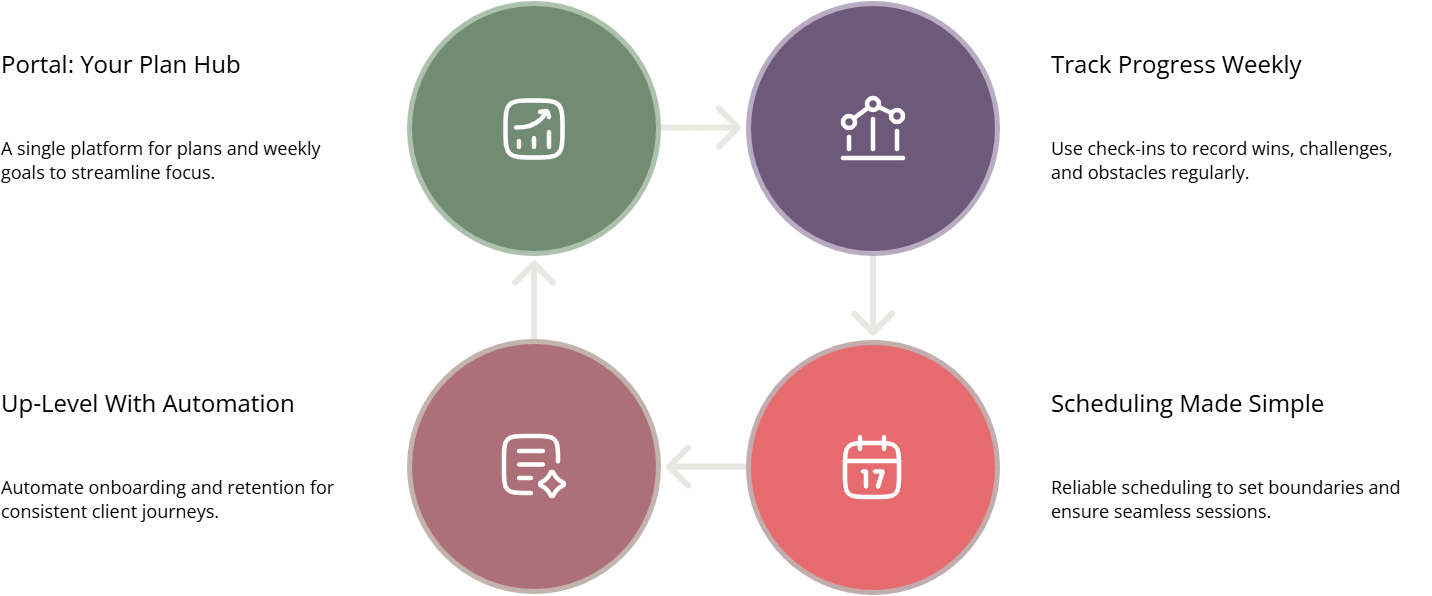
If you are early stage, start with a three tool stack. One portal. One check in system. One scheduling tool. That is it. This keeps clients focused and keeps your delivery consistent, aligning with simple method based coaching in The Radical Simplicity Coaches Are Loving and the reliability principle in How to Make It Work Every Time.
Your portal holds the plan and the week’s focus. Your check in system captures wins, misses, and barriers. Your scheduling tool protects boundaries and keeps sessions consistent. This creates a stable coaching rhythm, which strengthens engagement as described in The Future of Client Engagement 2026 and reinforces boundaries from Techniques for Maintaining Professional Boundaries With Clients.
If you are scaling, add two more layers. An email automation tool for onboarding and retention sequences, which supports conversion thinking from Email Marketing Strategies for Coaches. Then add a community platform if you run cohorts, which supports leadership and group outcomes tied to Coaching Leadership Skills: How to Lead and Inspire Clients.
What you must avoid is adding tools before you have a clear coaching loop. Tools do not fix unclear methods. They amplify them. Make the method clear first, which connects to mastery building in How Coaches Reach Mastery and real client impact in How to Actually Change Your Client’s Life in 2026.
5) The most common app mistakes that quietly kill client results
Mistake one is over tracking. Coaches often track too many metrics and clients feel judged or overwhelmed. Track what matters for behavior change. One to three core actions. One simple reflection. That is how you keep momentum, and it links to reinforcement in Effective Strategies for Reinforcing Positive Client Behaviors.
Mistake two is unclear support rules. Clients message whenever they want, and you respond whenever you can. That creates unpredictability. Unpredictability creates anxiety. Anxiety reduces follow through. Protecting rules and boundaries is essential, which is why it connects to Techniques for Maintaining Professional Boundaries With Clients and the career protection theme in How to Set Them and Save Your Career.
Mistake three is turning coaching into templates. Templates are useful, but clients need personal context. Your tech should support your coaching voice, not replace it. The human part is where breakthroughs happen, similar to the transformation focus in The 1 Coaching Technique for Client Breakthroughs and the deeper skill themes in The Coaching Skill You Didnt Know You Needed.
Mistake four is ignoring marketing systems. Coaches try to post more instead of fixing conversion. If you have traffic but low bookings, you need a stronger nurture and follow up system, linking to Leveraging Content Marketing to Grow Your Coaching Audience and Building and Monetizing Your Coaching Blog.
Mistake five is not capturing proof. You should be collecting client wins in a structured way so renewals feel obvious. Proof is the engine of premium pricing and referrals, and it supports the credibility themes in How Certification Differentiates Your Health Coaching Business.
6) FAQs: Coaching apps and professional coaching systems
-
The best choice is the one that keeps your delivery simple for clients. Start with one portal and one check in system. If your clients feel lost between sessions, you will lose retention. A simple weekly loop often beats a complex platform. Prioritize clarity and consistency first, which supports the engagement approach in The Future of Client Engagement 2026.
-
Most coaches should run three to five tools at most. More than that usually creates client overwhelm and fragmented delivery. A smaller stack also protects your time and energy, which links to sustainability and boundaries in Techniques for Maintaining Professional Boundaries With Clients.
-
No. Apps replace friction, not expertise. They help clients remember, track, and follow through. The breakthrough moments still come from coaching skill, method, and leadership. That is why results frameworks matter and connect to How the World’s Best Coaches Get Results.
-
Create a simple proof loop: one action, one tracking method, one weekly reflection, one adjustment. Keep it small enough that clients can do it during stressful weeks. This is how you build momentum and identity level confidence, tied to reinforcement in Effective Strategies for Reinforcing Positive Client Behaviors.
-
Progress visibility, consistent check ins, and clear support rules matter most. Retention is driven by proof and confidence. If your app stack makes progress visible and reduces confusion, clients stay longer and renew more easily.
-
Automate reminders and structure, but keep your voice in recaps and coaching feedback. Use automation for timing, not for empathy. Clients want consistency, but they also want to feel seen, which connects to meaningful coaching engagement themes in The Future of Client Engagement 2026.
