
How to Coach Clients with Anxiety and Depression Effectively
Anxiety and depression do not always show up as crisis moments. More often, they appear as inconsistency, avoidance, exhaustion, emotional shutdown, or clients saying “I know what to do, I just can’t do it.” Coaching clients through these states requires precision, emotional intelligence, and strict ethical clarity. This is not about fixing people. It is about helping clients function, regulate, and move forward safely while respecting the line between coaching and therapy.
Effective anxiety and depression coaching focuses on stability first, action second. When coaches push motivation before regulation, clients feel misunderstood and fall into shame cycles. When coaching is done correctly, clients rebuild confidence, regain emotional control, and learn how to operate even when their mental health is not at its best.

1) Understanding Anxiety and Depression Through a Coaching Lens
Most coaches fail clients with anxiety and depression because they misunderstand what they are seeing. Anxiety is not just worry. It is a nervous system stuck in threat mode. Depression is not laziness. It is a collapse of energy, meaning, and reward. When coaches treat these states as mindset problems, clients feel broken instead of supported.
Anxious clients often appear productive on the surface. They overprepare, overthink, and overcommit. Underneath, they are exhausted and terrified of falling behind. Depressed clients often withdraw quietly. They miss sessions, delay responses, and lose interest in goals that once mattered. Both patterns erode self-trust, which is why coaching must prioritize stability and predictability.
This is where foundational work like helping clients manage work life balance successfully becomes critical. When life feels unmanageable, anxiety spikes. When effort feels pointless, depression deepens. Coaching must restore a sense of control before expecting progress.
Clients with anxiety and depression also struggle with emotional safety in conversations. Feedback can feel threatening. Silence can feel like rejection. Coaches who lack listening discipline unintentionally escalate symptoms. Using frameworks from effective listening techniques that transform client conversations allows you to calm the nervous system before introducing change.
Most importantly, coaching is not therapy. You are not treating conditions. You are supporting behavior, structure, and self-management. Keeping this boundary protects both you and the client, and aligns with the ultimate guide to ethical coaching principles you cant ignore.
| Client Signal | Coaching Focus | Stabilizing Action | Coach Question | Refer When |
|---|---|---|---|---|
| Constant worry | Nervous system regulation | 2-minute breathing reset | What feels unsafe right now? | Panic attacks escalate |
| Task avoidance | Action reduction | 5-minute starter task | What is the smallest step? | Functional shutdown |
| Emotional numbness | Body awareness | Daily body scan | Where do you feel nothing? | Dissociation signs |
| Hopeless language | Meaning restoration | Values-based goal reset | What still matters? | Suicidal ideation |
| Overthinking | Thought containment | Worry window scheduling | When do thoughts spiral? | Intrusive thoughts |
| Missed sessions | Friction audit | Reduce goals to two | What feels too heavy? | Withdrawal patterns |
| Sleep disruption | Evening routine | Device cutoff rule | What keeps you wired? | Sleep deprivation risk |
| Guilt for resting | Reframing rest | Rest as recovery rule | What do you fear? | Compulsive behavior |
| People pleasing | Boundary safety | Pause before yes | What feels risky to refuse? | Manipulation present |
| Low energy | Energy basics | Protein and hydration check | When do you eat? | Physical health decline |
| Emotional volatility | Grounding tools | Temperature or movement reset | What calms you fastest? | Loss of control |
| Negative self-talk | Language correction | Replace “should” language | What’s the kinder truth? | Self-harm language |
| Isolation | Connection mapping | One safe reach-out | Who feels safe? | Social withdrawal deepens |
| Decision paralysis | Simplification | Default decisions | What repeats daily? | Work impairment |
| Burnout signs | Load reduction | Non-negotiable rest | What drains you? | Chronic burnout |
| Shame spirals | Self-compassion | Coach self-talk script | What would you say to a friend? | Emotional collapse |
| Avoiding feedback | Safety in dialogue | Feedback framing | What feels threatening? | Defensive escalation |
| Overworking | Identity balance | Non-work identity activity | Who are you outside work? | Anxiety when idle |
| Loss of motivation | Purpose reconnect | Values clarification | Why does this matter? | Major depressive signs |
| Relapse cycles | Restart strategy | 15-minute reset plan | How do you restart? | Addiction concerns |
| Fear of failure | Risk reframing | Safe exposure steps | What’s the real risk? | Panic disorder signs |
| Emotional shutdown | Gentle re-engagement | Low-pressure routines | What feels manageable? | Functional impairment |
| Constant overwhelm | Priority discipline | Top 3 weekly outcomes | What truly matters? | System overload |
| Client feels broken | Normalize experience | Education on nervous system | What’s actually happening? | Loss of hope |
2) Coaching Anxiety Without Feeding the Fear Loop
Anxious clients live inside anticipation. They suffer future problems before they exist. Coaching must interrupt this loop without invalidating the fear. Dismissing anxiety makes it worse. Overanalyzing it also makes it worse. The goal is containment.
Effective anxiety coaching focuses on regulation before reasoning. When the nervous system is activated, logic does not land. Teach grounding techniques that clients can use mid-stress, then layer in planning once the body is calmer. This approach pairs well with mindfulness and meditation techniques for emotional coaching.
Another key mistake coaches make is pushing accountability too hard. Anxiety already feels like pressure. Instead, design actions so small that the nervous system does not perceive threat. Momentum builds safety. This is the same principle used in how to inspire clients to take immediate action, but applied with compassion.
Boundaries are also essential. Anxious clients often seek reassurance outside sessions. If unchecked, this becomes dependency. Set clear communication expectations early using how to set clear professional boundaries with coaching clients.
3) Coaching Depression Without Pushing or Collapsing
Depression removes energy and meaning. When coaches respond with enthusiasm or pressure, clients feel defective. The correct approach is lowering the bar without lowering standards.
Depressed clients need predictability, not inspiration. Teach routines that survive low-energy days. Celebrate showing up, not outcomes. Use techniques from effective strategies for reinforcing positive client behaviors to rebuild confidence gradually.
Language matters deeply here. Depressed clients often speak in absolutes. “Always,” “never,” “pointless.” Coaches should gently interrupt this with evidence and curiosity, not correction. This is where the art of powerful questioning in coaching becomes critical.
Never isolate depressed clients emotionally. Encourage safe support networks and maintain ethical clarity using coaching confidentiality and how to protect your clients and your practice.
4) Maintaining Ethics, Safety, and Professional Scope
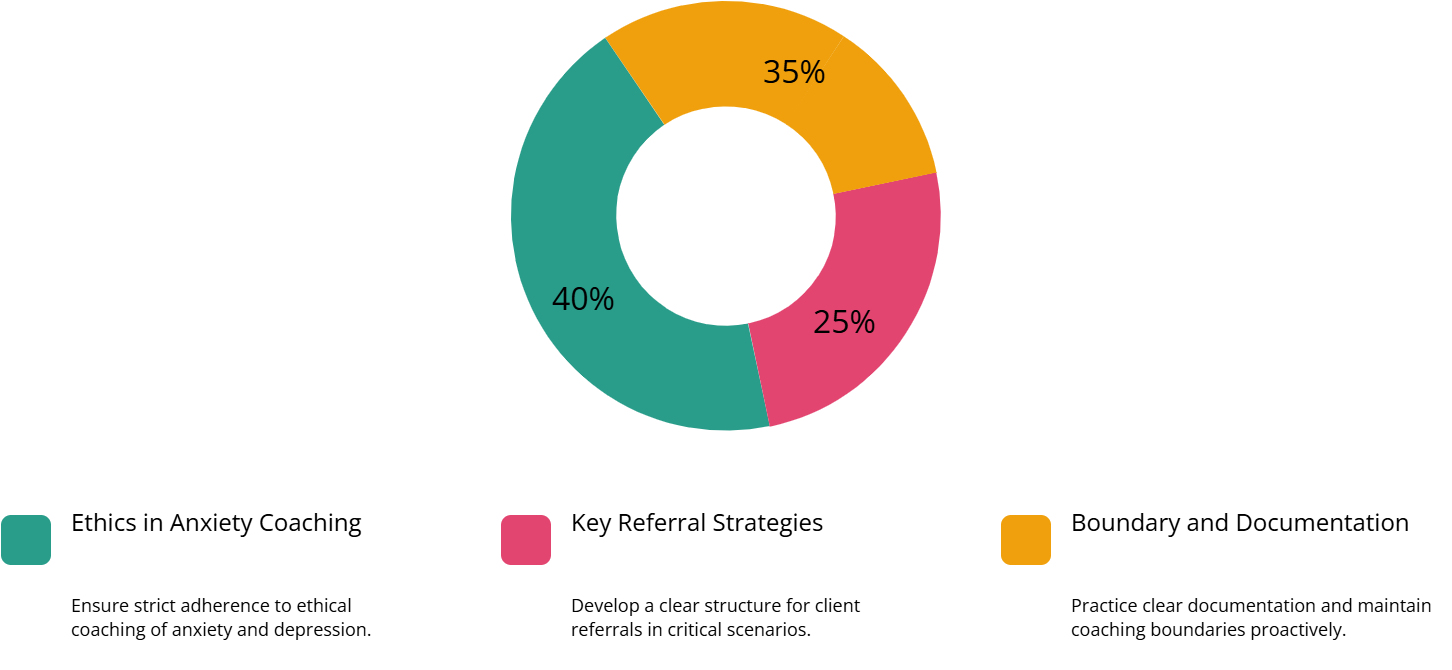
Coaching anxiety and depression requires stronger ethics, not looser ones. Always establish referral thresholds. Always document boundaries. Always prioritize safety over progress.
If a client expresses hopelessness, self-harm ideation, or loss of function, referral is not failure. It is competence. Use guidance from ethical dilemmas coaches face and how to solve them gracefully and managing dual relationships essential ethics for coaches.
Your role is to support stability, habits, and identity rebuilding. When done correctly, coaching becomes a powerful complement to mental health care, not a substitute. The safest coaches do not wait for a crisis to set rules. They explain scope in plain language, confirm what support looks like between sessions, and create a simple referral plan before it is ever needed. That clarity reduces client dependency, protects your credibility, and keeps the client connected to the right level of care at the right time.
5) Building Long-Term Resilience, Not Dependency
The ultimate goal is independence. Clients should leave coaching with tools, not reliance. Teach self-regulation, boundary setting, and restart strategies so clients can function even during setbacks without needing constant reassurance or external validation.
Encourage identity expansion beyond struggle. Clients who only identify as “anxious” or “depressed” stay stuck in survival mode. Coaching should help them reconnect with capability, purpose, and contribution using frameworks like effective networking techniques for coaches and values-based planning that shifts focus from symptoms to strengths. Pair this with boundary clarity from how to set clear professional boundaries with coaching clients so growth does not turn into overexertion.
When resilience increases, anxiety softens and depression loosens its grip. Clients begin to trust themselves again, tolerate discomfort without panic, and recover faster after setbacks because they are no longer relying on motivation or mood to function, but on systems they know how to use.
6) FAQs: Coaching Clients with Anxiety and Depression
-
Coaching focuses on habits, structure, boundaries, and action planning, not diagnosis or clinical treatment. The goal is functional stability and forward movement. Keep scope clear using ethical coaching principles. Protect privacy and trust with coaching confidentiality.
-
Refer if there is self-harm language, suicidal ideation, severe withdrawal, panic escalation, or loss of daily functioning. Having referral thresholds is a safety skill, not a weakness. Use decision guidance from ethical dilemmas coaches face. Maintain clean boundaries with dual relationships ethics.
3. What is the best way to coach anxious clients who overthink everything?
Start with regulation before logic, because a activated nervous system cannot absorb strategy. Use containment tools like time-boxing worry, micro-actions, and clear routines. Support calmer communication through effective listening techniques. Reinforce progress with positive behavior reinforcement. -
Lower the action threshold while keeping consistency high, so clients can succeed even on low-energy days. Focus on small routines, identity rebuilding, and shame reduction. Use curiosity-based prompts from powerful questioning. Reduce overload with work life balance coaching.
-
Assume overload first, not resistance, then shrink the plan until it feels safe to start. Use “minimum viable steps” and remove friction from the environment and schedule. Build urgency without pressure using inspiring immediate action. If burnout is present, apply burnout coaching strategies.
-
Set communication expectations early and teach self-soothing tools the client can use without you. Build boundaries around messaging, session frequency, and emotional rescue patterns. Use boundary frameworks from professional boundaries with clients. Strengthen the relationship through trust building methods in building deep trust.
-
Master calm listening, validation without rescuing, and direct language that does not shame the client. Prepare for hard moments with scripts and structure so you do not freeze or overtalk. Use frameworks from managing difficult client conversations. Resolve tension cleanly using conflict resolution strategies.
-
Teach repeatable systems: daily anchors, boundary scripts, restart plans, and values-based goals. Encourage support networks and purposeful routines that reduce isolation and rumination. Expand identity and confidence using effective networking techniques. Keep emotional regulation skills sharp with mindfulness and meditation tools.
