
Transactional Analysis (TA): The Ultimate 2026 Guide for Coaches
Transactional Analysis (TA) is one of the most coach-useful frameworks ever created because it turns “vague interpersonal mess” into a readable map: what state someone is speaking from, what state they’re pulling you into, and what pattern keeps repeating. When you pair TA with modern coaching skills—trust-building, powerful questions, and behavior design—you stop guessing and start engineering cleaner conversations, better boundaries, and repeatable client follow-through. This 2026 guide shows you how to apply TA in real sessions without turning coaching into therapy, while still getting deeper, faster results. (For context-setting, see how the world’s best coaches get results and why trust is the most valuable asset in coaching.)
1) Transactional Analysis for coaches: the “conversation operating system” you can actually use
Most coaching problems aren’t “knowledge” problems. They’re state problems: a client knows what to do, but keeps sabotaging, arguing, appeasing, ghosting, or spiraling. TA gives you a compact way to notice what’s running under the words—and to intervene without shaming, lecturing, or over-explaining (which often backfires). If you want a complementary lens, skim the communication secret behind successful coaching and powerful questioning techniques that transform coaching sessions.
At its core, TA helps you answer four coaching-critical questions:
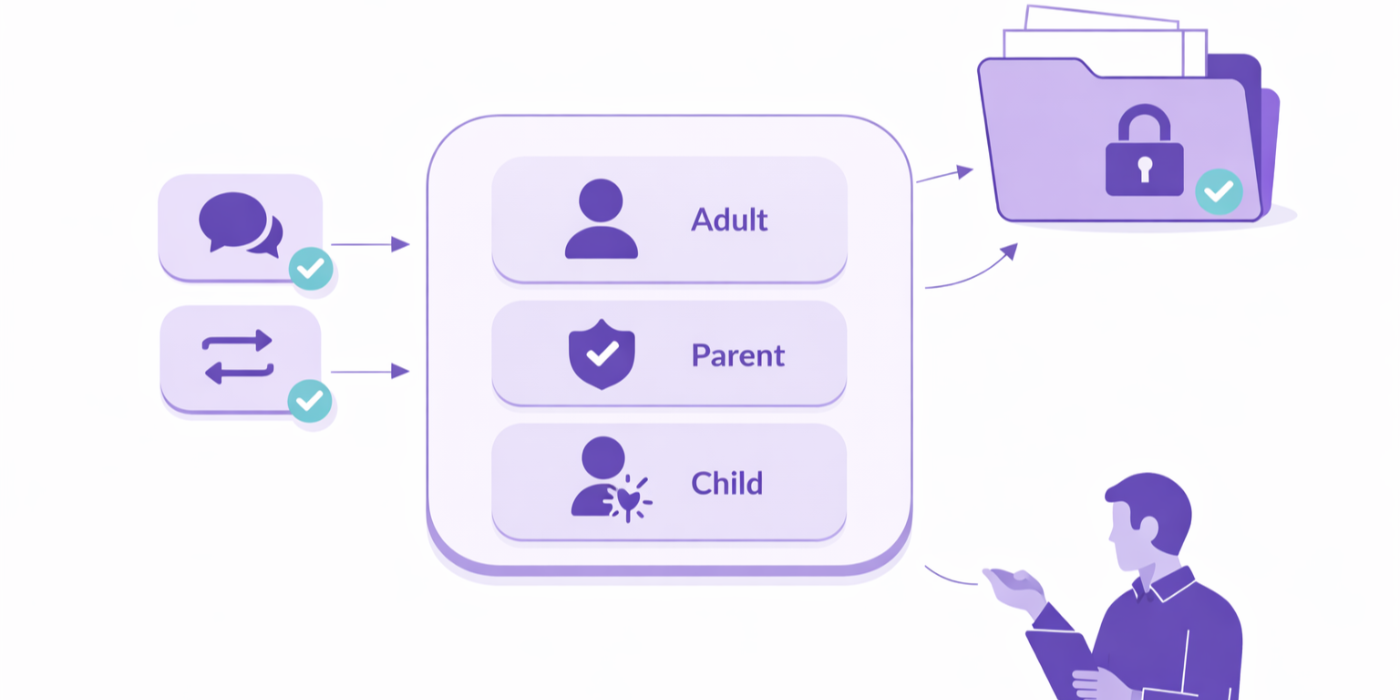
Which “ego state” is speaking right now? (Parent / Adult / Child)
What transaction is happening? (Adult→Adult? Parent→Child? Child→Parent?)
What payoff is the pattern producing? (Relief, control, avoidance, attention, safety)
What’s the next clean move? (Shift to Adult, repair, contract, or boundary)
TA becomes especially potent in 2026 coaching environments where clients are overwhelmed, distracted, and flooded with advice content. Your job becomes less “teach” and more “stabilize state + design the next 1% action.” That philosophy aligns well with the radical simplicity coaches are loving and how to make it work every time.
The three ego states (coach version, not textbook fluff)
Parent: internalized rules, “shoulds,” judgments, and protection scripts. Can be nurturing or critical.
Adult: present-moment processing, reality-testing, choices, boundaries, clean requests.
Child: emotion, creativity, needs, fear, rebellion, play, shame, attachment patterns.
A high-performance coach learns to hear the ego state and respond strategically: support the need, not the drama; validate emotion without rewarding dysfunction; invite Adult without sounding cold. That’s the same “precision empathy” implied in how to actually empower clients: real results and the practical rigor in why this skill determines your coaching success.
2) Ego states in real coaching conversations: how to hear them and shift them without friction
If you treat TA like labels, you’ll sound clinical and clients will resist. If you treat TA like signal detection, you become lethal—in the best way. You’re listening for tone, certainty, posture, urgency, absolutes, and permission-seeking. That kind of observation skill pairs nicely with the neuroscience-based method every coach needs now and the practical structure in coaching session templates to boost your productivity instantly.
Fast “audio cues” for each state
Critical Parent often sounds like:
“You should…” “That’s lazy.” “Be disciplined.” “What’s wrong with you?”
Coaching risk: clients internalize shame, then hide.
Nurturing Parent sounds like:
“It’s okay.” “You’re doing your best.” “Let’s take care of you.”
Coaching risk: you accidentally rescue and weaken agency.
Adult sounds like:
“Here are the facts.” “What are my options?” “What’s the next step?”
Coaching win: ownership, clarity, behavior.
Adapted Child sounds like:
“Whatever you think.” “I don’t know.” “I tried everything.”
Coaching risk: compliance without commitment (then ghosting).
Free Child sounds like:
“What if we tried…?” “I’m excited.” “I want to play with this.”
Coaching win: creativity, energy, momentum.
Rebellious Child sounds like:
“I’m not doing that.” “This is stupid.” “I hate being told.”
Coaching win (if handled well): self-authorship.
The 10-second reset: move the room to Adult
When a session tilts Parent↔Child, you don’t lecture. You re-center.
Try this sequence (tight, powerful, non-therapist-y):
Name the state (without naming it):
“I hear a lot of pressure/judgment/fear in that.”Extract the need:
“What are you trying to protect right now?”Return to choice:
“Given that, what’s the smallest next step you choose?”
This aligns with the trust mechanics in why trust is the most valuable asset in coaching and the outcome focus in how to actually change your client’s life in 2026.
Coach self-management: your ego state is part of the intervention
Clients pull. It’s not personal—it’s pattern. If you feel:
Urge to fix → you’re drifting into Nurturing Parent
Urge to scold → Critical Parent
Urge to defend → Child
Urge to disappear → Adapted Child (coach version)
Your move: Adult breath + contract.
“Let’s slow down and clarify what you want from me right now.”
If you want boundary and scope clarity, pair this with how coaches avoid career-ending mistakes and the standards in the non-negotiable standards every coach must know.
3) Transactions that make or break outcomes: complementary, crossed, and “covert” coaching traps
A transaction is simply: who is speaking to which part of the other person.
Complementary: the response matches the invite (Adult→Adult, Parent→Child, etc.)
Crossed: the response comes from a different state, creating friction
Ulterior (covert): words say one thing, subtext says another (where games begin)
Why this matters: client follow-through often fails because the plan was made in Adult, but execution happens in Child under stress. To close that gap, combine TA with behavior design from interactive coaching exercises to keep clients motivated and goal clarity from smart goals 2.0.
Complementary Adult→Adult: the gold standard (but not always available)
Adult-to-Adult looks like:
“Here’s what happened.”
“Here are constraints.”
“Here are options.”
“I choose X.”
Your role is to protect Adult space. That can mean pausing emotional spirals, reframing shame, or renegotiating scope. If your client base is remote-heavy, this gets easier with clean structure from virtual coaching tools: boosting your remote session effectiveness and communication reliability from video conferencing hacks for flawless online coaching sessions.
Crossed transactions: where sessions get “weird” fast
Classic example:
Client (Child): “I failed again… I’m hopeless.”
Coach (Adult): “Let’s analyze your schedule and optimize.”
Result: client feels unseen → shuts down or argues.
Better move: meet the state briefly, then lift:
Coach: “That sounded painful. Before we plan, what do you need right now—comfort, clarity, or courage?”
Then: “Okay—now, in Adult: what’s one controllable variable this week?”
That “state-first” approach pairs well with how coaches can actually change client diets because lifestyle change fails when emotion isn’t handled first.
Ulterior transactions: the hidden contract that drains coaches
Ulterior transactions show up as:
“I want accountability” (but secretly wants parenting)
“I want feedback” (but wants reassurance only)
“I want results” (but wants zero discomfort)
Your protection is the explicit coaching contract: what you do, what they do, and how you’ll handle avoidance. Use systems thinking from best coaching software & platforms for client management in 2025 and client engagement design from the future of client engagement 2026.
4) Games, strokes, and scripts: how self-sabotage stays “logical” until you name the payoff
This is where TA becomes a behavior change weapon.
Strokes: the attention economy inside your client’s nervous system
A “stroke” is recognition—positive or negative. Clients who didn’t get clean recognition often learn to get predictable strokes through:
overachieving (praise strokes)
conflict (negative strokes)
helplessness (rescue strokes)
perfectionism (approval strokes)
Coaching move: don’t just motivate—retrain stroke patterns. Teach clients to generate self-strokes based on process, not mood. Pair this with strength-based framing from how the positive psychology framework is revolutionizing coaching in 2026 and identity reinforcement from why top coaches are obsessed.
Games: repeated sequences with a familiar emotional ending
Games aren’t “manipulation” in a cartoon villain way. They’re predictable relational loops that protect the client from a deeper fear.
Coach-relevant examples:
“Yes, but…” (gets solutions, rejects them, ends with “nothing works”)
“If it weren’t for…” (outsources responsibility, protects self-image)
“Now I’ve got you…” (provokes, then blames, ends with moral superiority)
Your job is not to diagnose. It’s to interrupt the payoff:
Spot the loop early.
Name the pattern cleanly.
Offer an Adult alternative.
Reinforce when they choose Adult.
This is exactly the kind of “mastery move” described in how coaches reach mastery and the coaching skill you didn’t know you needed.
Scripts: the invisible rules running the client’s life
A script is a long-term life story the client keeps proving: “I’m behind,” “I’m too much,” “I always fail,” “People leave,” “Success is unsafe.”
In coaching, you’re not doing deep trauma excavation—but you can do script testing:
Identify the script sentence
Find disconfirming evidence
Design a “new script experiment”
Track results weekly
Use structure from why it’s the hidden goldmine of coaching and measurement culture from how technology is completely transforming the coaching industry.

5) A practical TA coaching workflow for 2026: session design, boundaries, and client follow-through
Here’s the difference between coaches who know TA and coaches who profit from TA: they operationalize it into a repeatable workflow. If you want to build that into your practice stack, cross-reference 15 must-have coaching tools every professional needs in 2025 and creating a coaching resource library your clients will love.
Step 1: Contract in Adult (and keep returning to it)
A strong contract prevents 80% of “games” before they start:
What result are we targeting?
What does the client do between sessions?
What does the coach do (and not do)?
What happens when avoidance shows up?
If you coach cohorts, this is even stronger with group norms from how to build an interactive coaching community online and engagement rituals from best practices for creating interactive coaching workshops.
Step 2: Run “state checks” before strategy
Before you plan:
“What state are you in right now—overwhelmed, flat, reactive, steady?”
“What do you need first—calm, clarity, courage, or constraint?”
This prevents you from giving Adult plans to Child nervous systems. Combine with habit scaffolding from gamification tools coaches are using for maximum engagement and follow-through supports from the 10 best coaching apps every professional should know.
Step 3: TA micro-interventions you can use without jargon
Permission shift: “Can we move from blame to problem-solving?”
Boundary reset: “I can support you; I won’t carry it for you.”
Choice language: “What do you choose to do next?”
Pattern mirror: “I notice we go from hope → pressure → avoidance. Is that true?”
Adult anchor: “What are the facts we know today?”
These pair nicely with content authority building in how to create engaging coaching content clients love and credibility scaffolding in how to get featured in media as a coaching expert.
Step 4: Build between-session structure that prevents regression
TA shines when you track patterns weekly. Use:
a 3-question weekly check-in
one tiny commitment
one “script interrupt” experiment
one boundary sentence practice
If clients struggle with consistency, build systems with best coaching software & platforms for client management in 2025 and use community reinforcement from free & premium coaching resources to boost your practice.
Step 5: Know your ethical line (coaching vs therapy) and stay powerful
TA overlaps with therapy language—so your professionalism is to keep it coaching-clean:
You focus on present patterns + future choices, not clinical treatment.
You refer out when the client needs trauma therapy, crisis support, or clinical care.
You document agreements and maintain clean boundaries.
This aligns with the non-negotiable standards every coach must know and protects your career the way how coaches avoid career-ending mistakes teaches.
6) FAQs: Transactional Analysis for coaches in 2026
-
It can be—if you use it to diagnose, label, or dig into trauma narratives. In coaching, TA is best used as a communication and behavior map: identify the state, interrupt the pattern, and help the client make Adult choices. Keep it action-based and contract-based, and use ethical scope from the non-negotiable standards every coach must know.
-
Learning to shift transactions back to Adult without sounding cold. Name what’s happening (pressure/fear/judgment), validate briefly, then return to choice. This complements powerful questioning techniques that transform coaching sessions because the right question only works when the client is in the right state.
-
Rescuing is usually Nurturing Parent reacting to Child distress. Your upgrade is: warm boundary + clear contract + small commitments. Say: “I’m with you, and I won’t carry it for you.” Then design a micro-action. Reinforce autonomy using the radical simplicity coaches are loving.
-
Because sessions are often Adult, but life triggers Child. You need between-session scaffolding: check-ins, tiny commitments, and script interrupts. Tools and structure from coaching session templates to boost your productivity instantly and engagement design from the future of client engagement 2026 solve this.
-
Yes—and it’s powerful. Group TA helps you spot Parent-led “should culture,” Child-led avoidance, and Adult-led problem-solving norms. Pair with how to build an interactive coaching community online so the group reinforces Adult behavior, not drama.
-
Using TA as labels (“you’re in Child”) instead of signals.
Over-intellectualizing and skipping emotion regulation.
Failing to contract, then getting pulled into games.
Confusing coaching scope with therapy scope.
These are the same professionalism gaps covered in how coaches avoid career-ending mistakes.
