
Health Coach Certification Salary Report (Real Data, 2026-27)
Health coach pay in 2026 is real, but it’s also wildly misunderstood—because “salary” can mean hourly employee pay, a corporate package with bonuses, or self-employed revenue that looks high until churn, cancellations, and unpaid admin time crush it. This report cuts through the noise with defensible ranges from major salary aggregators, plus a practical playbook to raise your income without burning out, undercharging, or building a coaching business that depends on constant hustle.
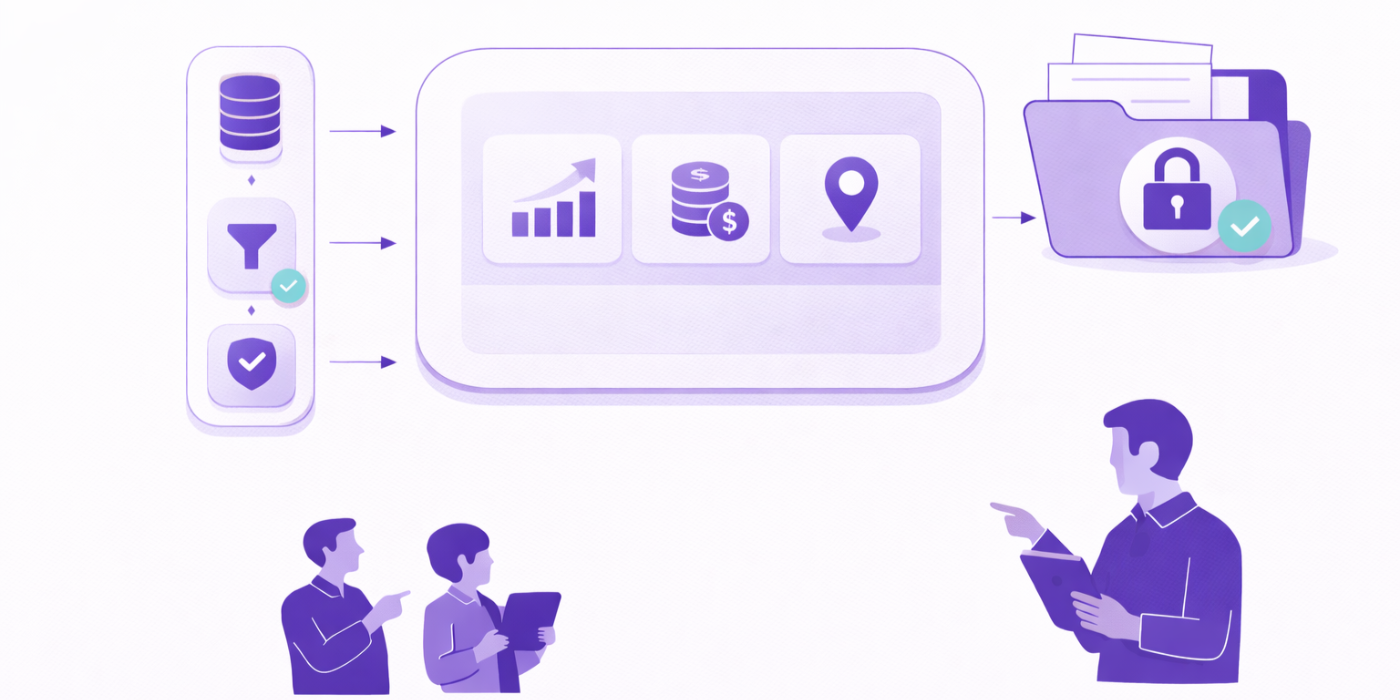
1) What “salary” really means in health coaching (and why most numbers mislead you)
Before you look at any number, decide which bucket you’re in—because each bucket follows different rules and pay ceilings.
Bucket A: Employed health coach (W-2 / payroll).
This is the world of hourly rates, benefits, caseload expectations, and performance metrics. Aggregators show an average health coach hourly pay around ~$21/hr (Indeed), with wide variation by location and employer type. If you want stability, this bucket is attractive—but the tradeoff is that your income is tied to job bands and the organization’s scope, not just your results.
Bucket B: “Health-adjacent” roles that overlap with coaching.
Many coaches end up in roles categorized as health education specialists (or similar). The U.S. Bureau of Labor Statistics reports a median annual wage of $63,000 (May 2024) for health education specialists. This matters because employers frequently slot coaches into these job families, even if your title says “coach.”
Bucket C: Self-employed coach (business income).
This is where people say “I make six figures”—but they often mean revenue, not take-home. If you haven’t built retention systems, boundaries, and delivery consistency, you can end up with a high-stress treadmill (exactly why the hidden goldmine of coaching is rarely “more clients,” and often better systems).
Bucket D: Credentialed specialist coaching (higher ticket + higher accountability).
When pay jumps, it’s usually because you’re doing measurable outcomes work (behavior change, adherence, risk reduction, return-to-work support) and communicating it like a pro—skills covered in how the world’s best coaches get results and the communication secret behind successful coaching.
Now, let’s get to the numbers—but in a way you can actually use.
2) The 2026 salary range you can actually defend (and how to explain it to clients or employers)
If you want a defensible 2026 pay narrative, stop searching for a single “average.” Use a range + context approach:
A. Employed health coach: use hourly reality + band reality
Indeed reports ~$21.40/hour average for “health coach,” based on thousands of datapoints aggregated over time (updated Feb 2026, reflecting recent years).
ZipRecruiter shows many “health coach” salaries clustering around $40,000–$59,500 with top earners near $73,500.
How to use this without sounding generic:
If you’re applying for roles and you say “I’m looking for $70k+,” you’ll get screened out unless you can justify it. Your justification should be scope + outcomes + documentation—the same way the non-negotiable standards every coach must know makes you credible fast.
A stronger line is:
“Based on current market bands for health coaches, I’m targeting the top quartile because I bring measurable retention and adherence improvements, plus a documented coaching workflow.”
That workflow is what separates “motivational chats” from real behavior change (see how to actually change your client’s life in 2026 and the 1 coaching technique for client breakthroughs).
B. The “adjacent” benchmark: health education specialists
The BLS benchmark matters because organizations use it to set pay bands. Median wage: $63,000 (May 2024), with top earners >$112,900.
If you do education, program design, community outreach, or behavior-change curriculum, you can often map to this band.
Pain point coaches ignore: they negotiate like a freelancer (“I deserve more”) instead of like an operator (“My role reduces downstream costs and improves engagement”).
C. Salary sites give a “mid-band” anchor you can reference
Salary.com lists a median ~ $66,100 for “Health and Wellness Coach,” often within ~$59,400–$74,400 depending on profile/location.
Use this to sanity-check offers—especially if your job includes case management style responsibilities, reporting, or program coordination.
D. Why some “certified health coach” numbers look higher
Some aggregators for “certified health coach” show notably higher reported medians (and are sensitive to small sample size, title inflation, and role mislabeling).
This is why your job title can distort your expectation: “Certified Health Coach” at a corporate program can be very different from “Health Coach” in retail wellness.
Key takeaways for 2026:
If you want stable pay quickly, the market tends to cluster around mid-five figures for many generalist roles.
If you want to break out, you need either a better band (adjacent job family) or an offer model that doesn’t cap you at hourly. (That’s why balancing human touch with coaching automation is an income strategy—not a tech hobby.)
3) The 7 income levers that beat “get another certification” (and why most coaches stay stuck)
A certification can open doors, but pay jumps come from income levers—the factors that make an employer (or client) say, “You’re worth the premium.”
1) Role definition (what you actually do)
If your job is “coaching conversations,” you’ll be paid like a commodity. If your job is behavior change execution + documentation, you’re closer to a program role (which maps higher). Pair your positioning with why trust is the most valuable asset in coaching.
Pain point: Coaches accept vague job descriptions—then wonder why pay is capped.
2) Proof of outcomes (even if it’s simple)
You don’t need clinical metrics. You need behavior metrics:
adherence rate (weekly actions completed)
retention rate (who completes the program)
“stuck moment” patterns (what blocks follow-through)
This is exactly the skill stack behind how to make it work every time and how coaches reach mastery.
3) Retention engineering (you don’t “get lucky,” you design it)
If your income depends on clients staying, you must build systems that prevent mid-program drop-offs—check-ins, nudges, frictionless scheduling, and micro-commitments (see the future of client engagement 2026).
Pain point: Great coaches lose money because clients disappear between sessions.
4) Offer architecture (how you package transformation)
Hourly coaching punishes you for being effective. Packages reward you for creating a repeatable path.
If you’re unsure how to structure it, study the radical simplicity coaches are loving and why top coaches are obsessed with reducing steps while increasing compliance.
5) Niche selection (not “passion,” but paid demand)
Niches that pay better share one trait: the buyer feels the cost of inaction.
burnout → productivity loss
weight/metabolic support → chronic risk
sleep → performance and safety
stress → healthcare utilization
Pain point: Coaches pick niches that feel meaningful but can’t support premium pricing.
6) Acquisition channel (where your clients come from)
Referrals and partnerships pay better than chasing leads daily. If your marketing doesn’t convert, it’s usually not your content—it’s your offer clarity + proof + trust pathway (see why it’s the ultimate client magnet in 2026).
7) Boundary strength (yes, boundaries affect income)
When boundaries are weak:
you overdeliver for underpay
you attract high-drama clients
you burn out and churn your own business
That’s why how to set clear professional boundaries and techniques for maintaining professional boundaries are income skills.
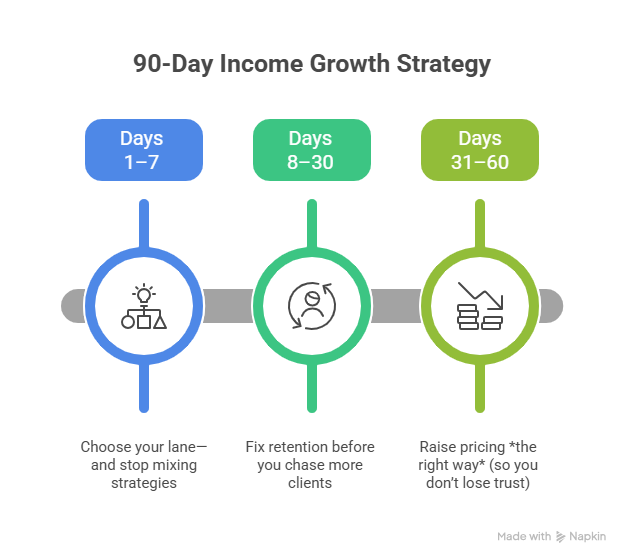
4) The 90-day plan to raise your income (without adding chaos to your life)
This section is built for the most common reality: you’re busy, you want more money, and you don’t have time for “content every day” or rebuilding everything.
Step 1 (Days 1–7): Choose your lane—and stop mixing strategies
Pick one lane for 90 days:
Lane A: Employed pay increase path (fastest stability).
Your goal is to move into a higher band by changing scope, not begging for a raise.
Do this:
Rewrite your resume to mirror outcomes: adherence, engagement, retention, completion.
Map your tasks to “health education specialist” type duties where applicable (helps band alignment).
Build a one-page “coaching workflow” that shows your structure (borrow principles from coaching session templates and powerful questioning techniques).
Lane B: Private practice income increase path (highest upside).
Your goal is to turn random sessions into a repeatable transformation path.
Do this:
Create one 8-week signature program with:
weekly check-in
one tracked behavior
one “stuck moment” protocol
Turn your program into a clear promise (not “feel better,” but “X outcome via Y process”). Use smart goals 2.0 framing, not vague motivation.
Step 2 (Days 8–30): Fix retention before you chase more clients
Your pay doesn’t rise when you add leads. It rises when your client-months increase.
Install:
Weekly check-in form (3 questions: wins, barriers, next step)
Two nudges per week tied to the plan (not generic “you got this”)
Clear boundaries + expectations (see managing difficult client conversations and conflict resolution strategies)
This is the difference between “clients ghost” and “clients graduate.”
Step 3 (Days 31–60): Raise pricing the right way (so you don’t lose trust)
Pricing jumps fail when:
you raise rates without raising clarity
your offer is still “sessions”
you can’t explain your process
Pricing jumps work when:
your program is packaged
your timeline is defined
your success criteria is visible
A clean move: add a mid-tier option (hybrid group + 1:1 support). You don’t need more complexity—just a better structure (see how to build an interactive coaching community).
Step 4 (Days 61–90): Build a “proof portfolio”
You need proof that doesn’t violate privacy and doesn’t sound fake.
Create:
anonymized before/after behavior scorecards
testimonial capture process (see client testimonials capture)
“case patterns” doc: top 5 barriers + what fixes them (this becomes marketing content and delivery structure)
If you do this, you stop selling yourself and start selling your system—which is what premium pay rewards.
5) Where the best-paying opportunities hide (and how to qualify for them)
Most coaches look for “health coach jobs” and wonder why pay feels capped. Better strategy: pursue roles where coaching is tied to organizational outcomes.
1) Corporate wellness and vendor programs
These roles care about:
engagement
adherence
completion
retention
If you can speak that language, you can justify higher bands—even if the headline averages look modest.
Your advantage increases when you bring consistency systems (see how technology is completely transforming the coaching industry and best coaching software and platforms).
2) Education + program design hybrid roles
If you can design curriculum, run workshops, and coach implementation, you start mapping to higher “education specialist” style expectations (and pay logic).
This is where “coach + educator” is more valuable than “coach only.”
3) Premium private practice (but only with boundaries + retention)
Yes, private practice can exceed employee bands—but only when you stop making these income-killer mistakes:
custom plans for everyone (no repeatability)
no cancellation policy
no check-in structure
no accountability mechanism
If you want premium without burnout, copy what works: effective strategies for reinforcing positive behaviors and how to inspire clients to take immediate action.
4) Why ANHCO’s 2026 ranges are useful (and how to use them)
ANHCO’s own reporting frames 2026 health coach income ranges and growth levers (niche, online models, scaling). Use it as an internal benchmark to align your plan and expectations with what your audience already believes.
6) FAQs: Health Coach Certification Salary Report (Real Data, 2026)
-
For many generalist roles, market bands commonly cluster in mid-five figures, with hourly averages around the low-$20s and annual bands that often sit roughly in the $40k–$60k range depending on employer and region. The fastest way up is to expand scope (program ownership, reporting, outcomes).
-
Because they’re sampling different populations (titles, locations, employer types) and sometimes mixing “health coach” with “certified health coach” or adjacent roles. Sample size and title inflation can distort the result.
-
Yes, but typically not by staying in a generalist hourly role. It’s more likely through (1) leadership/program roles mapped to higher pay bands, or (2) a business model with strong retention + premium positioning. BLS-adjacent categories show top earners exceeding six figures in related job families.
-
Certification can increase access and credibility, but pay increases come from role scope, measurable outcomes, and your ability to communicate value. That’s why coaches who master trust, boundaries, and delivery systems see bigger jumps than coaches who only collect credentials (see why this skill determines your coaching success).
-
Usually one of these: unclear niche, weak retention, inconsistent lead flow, or a delivery model that caps income at hourly. Fix retention and offer structure first (see the future model every coach needs to adopt by 2026).
-
Pick one lane (employee or private practice), then install a retention system: weekly check-ins, micro-commitments, and a clear success scorecard. That single change often increases completion, testimonials, referrals, and pricing power faster than “more marketing.”
-
Anchor to market bands (hourly/annual), then justify with scope and outcomes: retention improvements, adherence tracking, workflow consistency, documentation quality. Use adjacent job-family logic (like health education specialist) when your duties match.
-
Track:
revenue per client-month
churn rate (monthly)
effective hourly rate (including admin time)
referral rate
completion rate
Then rebuild your offer until these numbers stabilize (see why coaches must avoid this trap).
