
Why Emotional Consent Matters in Every Coaching Session
Emotional consent is the missing safety system in most coaching sessions. Not “permission” in a vague way, but a repeatable practice that keeps clients regulated, protects trust, and prevents you from accidentally pushing someone into emotional intensity they didn’t choose. Without it, even skilled coaches create hidden harm: clients shut down, ghost, or leave feeling exposed. With it, you get cleaner breakthroughs, stronger follow-through, and fewer “I don’t know why I’m stuck” loops. This guide gives you a session-ready framework, micro-scripts, and decision rules you can apply in real time.
1. What Emotional Consent Is (and the Real Problems It Prevents)
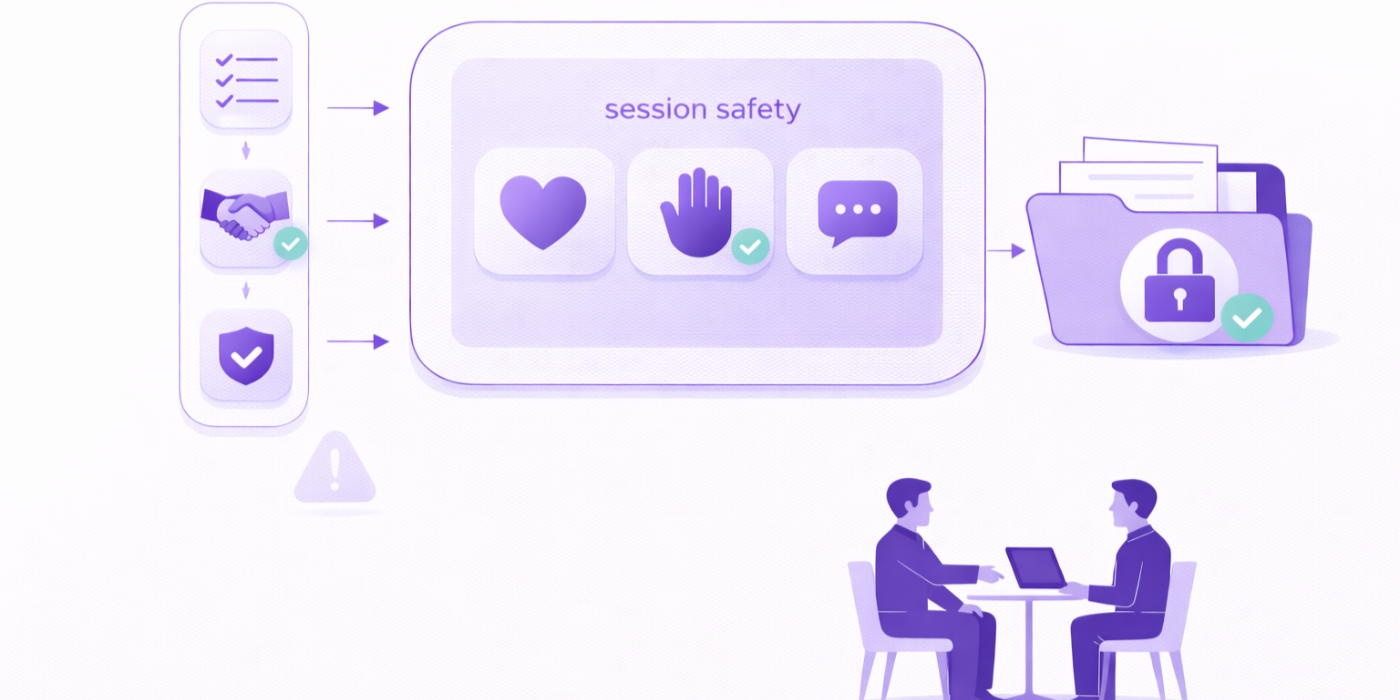
Emotional consent is the client’s clear, ongoing choice about how deep you go, how fast you go, and what happens if it gets too much. It’s not a one-time “are you okay?” It’s a continuous agreement that protects agency, reduces shame, and keeps coaching inside safe, ethical limits—especially when emotions spike.
If you’ve ever had a client say “I didn’t expect to cry today,” freeze mid-session, or leave a call feeling foggy and exposed, you’ve seen the cost of skipping consent. This is exactly why professional standards matter, and why the non-negotiable standards every coach must know should show up in your session structure, not just your bio.
Here are the biggest session-level failures emotional consent prevents:
Accidental emotional flooding: You ask one powerful question, and suddenly the client is overwhelmed. Consent provides a brake, not just acceleration. This pairs naturally with mindfulness and meditation techniques for emotional coaching because regulation comes before insight.
Boundary drift: The session turns into uncontained trauma processing, and you feel pressure to “save” them. Consent plus scope keeps you professional, and techniques for maintaining professional boundaries gives you the language to do it cleanly.
Trust erosion: Clients may look fine on camera but feel violated internally when they’re pushed. Trust is fragile; why trust is the most valuable asset in coaching is not a philosophy—it’s a retention system.
Breakthrough confusion: Clients confuse intensity with progress. Emotional consent keeps you focused on change mechanics, like the ones in how to actually empower clients instead of chasing emotional peaks.
Session hangover: Client leaves dysregulated, then spirals alone. Consent includes aftercare and next-step containment, which supports follow-through the way how to make it work every time teaches: clarity, repetition, structure.
High-level takeaway: emotional consent is not “being nice.” It’s risk management + trust building + outcome design in one practice, and it makes your communication sharper in the ways described in the communication secret behind successful coaching.
2. The 5-Step Emotional Consent Protocol You Can Run in Real Time
If you want emotional consent to work under pressure, it must be simple, repeatable, and observable. Use this five-step protocol as your session operating system. It integrates naturally with strong coaching structure, like the kind outlined in coaching session templates to boost your productivity instantly, and it strengthens your outcomes the way how the world’s best coaches get results suggests: clear process + consistent execution.
Step 1: Name the choice point (without drama)
Most coaches skip consent because they don’t notice the moment where a client is crossing into intensity. Your job is to spot it and name it plainly.
High-signal choice points:
voice changes, long pauses, eyes darting
“I don’t know why I’m emotional”
sudden topic switch
repeating the same sentence
apologizing for feelings
Micro-line: “We’re at a tender spot—do you want to stay here or shift?”
This is not therapy language; it’s professionalism. It also prevents the trust ruptures that show up later as ghosting, which is why building deep trust and effective listening techniques are not “soft skills”—they’re retention skills.
Step 2: Ask for explicit permission (and make “no” safe)
Emotional consent fails when “yes” is the only socially acceptable answer. You have to actively make refusal safe.
Micro-line: “No is completely okay—what feels right?”
This aligns with the credibility principles in how certification enhances your coaching credibility: clients trust you more when you protect them from your own agenda.
Step 3: Set boundaries on depth, time, and outcome
Consent without boundaries is just emotional wandering. Define the guardrails:
Depth: “light touch” vs “deeper exploration”
Time: “2 minutes” vs “rest of session”
Outcome: “understanding” vs “action plan” vs “closure”
Micro-line: “Do you want 2 minutes of feeling, then we build a plan?”
This is how you turn emotion into change, which is what how to actually empower clients focuses on: not just insight, but translation into behavior.
Step 4: Regulate before you analyze
If the client is dysregulated, analysis becomes noise. Build a quick regulation menu:
breathe + orient (3 objects in room)
feet on floor + slower pace
sip water + long exhale
one sentence summary of what’s happening
This connects to practical emotional coaching tools in mindfulness and meditation techniques and protects you from escalation in conversations, which is why managing difficult client conversations is a must-read if you want fewer sessions that spiral.
Step 5: Close the loop (so the client doesn’t leave “open”)
Your session ends are where your reputation is built. If a client leaves emotionally open, they associate coaching with danger—even if you meant well.
Close the loop with:
a 1–2 sentence meaning statement (“What did we learn?”)
one small next step (“What’s the smallest safe action?”)
an aftercare plan (“How will you re-ground today?”)
That’s how you create consistency like how to make it work every time teaches—small, repeatable wins that build identity and trust.
3. Emotional Consent in High-Stakes Sessions: Trauma, Grief, Burnout, and Shame
Emotional consent matters most when the topic is heavy and the client’s nervous system is already primed. In these sessions, the coach’s biggest mistake is thinking the client’s openness equals readiness.
When trauma appears: stay in coaching scope
If a client touches trauma, your role is not to extract the story. Your role is to protect the person and keep coaching safe.
Consent rules for trauma-adjacent moments:
Ask permission before any “why” questions
Favor present-moment language (“What’s happening right now?”)
Keep time limits (“2 minutes, then ground”)
Offer a referral boundary if needed
This is where techniques for maintaining professional boundaries keeps you ethical, and it prevents the “career-ending mistakes” described in how coaches avoid career-ending mistakes.
When grief shows up: don’t force meaning
Grief doesn’t need reframing on demand. Consent here means letting the client choose witnessing vs action.
If you coach grief often, pair emotional consent with the compassion strategies in coaching clients through grief and loss. It will improve retention because clients feel respected, not managed.
When burnout is present: consent protects against overcommitment
Burnout clients often agree to plans that are too big because they feel guilty. Emotional consent includes consent to smaller goals.
Use consent language to right-size:
“Would it feel supportive to reduce the goal?”
“Do you want a survival plan or a growth plan this week?”
“Can we choose the minimum viable habit?”
This ties to real-life work-life coaching in helping clients manage work-life balance and burnout-specific coaching in effective strategies for coaching clients through burnout.
When shame runs the session: consent prevents coercion
Shame makes clients compliant. They’ll say “yes” to anything—then disappear. Emotional consent here must be gentle and choice-focused.
Build shame-safe practice with:
slower pacing
fewer “why” questions
explicit permission to pause
a “no pressure” reset
For deeper shame patterns, frameworks like inner critic management techniques help you turn self-attack into workable data without making the client feel examined.
4. Emotional Consent Tools That Make Your Communication Cleaner and Your Questions Safer
Emotional consent isn’t just what you ask—it’s how you ask, and when. If your communication is sharp, consent feels natural, not awkward. Start by tightening your fundamentals using communication techniques every coach should master and then upgrade your session precision with the art of powerful questioning.
Tool 1: The “menu” question (reduces pressure instantly)
Instead of forcing a client down one path, offer options.
“Do you want empathy, clarity, or a plan?”
“Do you want to explore feelings or build a boundary?”
“Do you want to go deeper or stay practical today?”
This prevents the classic coaching failure where your “best question” lands at the wrong time. It also supports the kind of structured coaching that shows up in smart goals 2.0.
Tool 2: The “two-minute container” (keeps depth safe)
Depth becomes safe when it has a limit.
Micro-line: “Let’s stay here for two minutes, then we ground.”
This is a powerful way to handle emotional intensity without dodging it, and it’s exactly the kind of ethical structure emphasized in understanding certification standards across organizations.
Tool 3: Reflective listening with consent (stops accidental interpretation)
Reflection is helpful. Interpretation can be invasive. Consent keeps the difference clean.
Micro-line: “Can I reflect what I’m hearing—and you tell me if it fits?”
If you want a stronger listening toolkit, build it from effective listening techniques. You’ll notice clients soften because they feel met, not analyzed.
Tool 4: Conflict and boundary scripts (so emotional consent survives real life)
Many coaching sessions become “interpersonal labs.” Emotional consent lets clients practice conflict safely.
If you coach boundaries and conflict often, combine consent with tools from conflict resolution strategies every coach needs. The session becomes less emotional chaos and more skill-building.
Tool 5: Online-session safety (Zoom makes cues harder)
On video calls, you miss body language. That means you must check consent more often, with shorter loops.
Helpful supports:
agree on a pause signal (“raise hand”)
use a 0–10 intensity scale
ask “Do you want camera off for a minute?”
If you record sessions or run remote sessions heavily, operational clarity from zoom & video conferencing best practices helps you maintain privacy, consent, and comfort.

5. How to Build Emotional Consent Into Your Coaching System (So It Happens Automatically)
The fastest way to make emotional consent consistent is to build it into your templates, documentation, and between-session support. If it lives only in your head, you’ll forget it when a session gets intense.
1) Add consent checkpoints to your session template
Add three mandatory lines to your structure:
Start: “Depth today: light / medium / deep?”
Midpoint: “Do we keep going or shift to action?”
End: “Are you okay carrying this until next session?”
This integrates perfectly with coaching session templates and improves outcomes because clients leave with closure, not emotional residue.
2) Build a “scope + consent” section into intake
Your intake should set expectations:
coaching is not therapy
client can pause or decline
your referral boundary exists
privacy expectations are clear
This strengthens trust the same way building deep trust recommends: clarity early, not conflict later.
3) Use between-session support that respects consent
Some clients love check-ins; some feel policed. Consent means you ask:
“Do reminders help or stress you?”
“How often should I check in?”
“Do you prefer text, email, or none?”
If you do email-based support, systems from automated email sequences can help you stay consistent while still letting the client choose the intensity.
4) Track trust and safety like outcomes
If you want your coaching business to last, track trust signals:
session endings feel contained
client follows through
fewer no-shows
client shares honestly without collapse
This aligns with outcome-focused coaching described in new data: proven coaching methods and helps you build the kind of credibility that how certification differentiates your health coaching business explains—clients feel professionalism, not just hear it.
6. FAQs: Why Emotional Consent Matters in Every Coaching Session
-
No. Check-ins ask how someone feels. Emotional consent asks what they choose next: depth, pace, and direction. It’s a decision tool that protects trust, like the principles in why trust is the most valuable asset in coaching.
-
It usually speeds them up because clients feel safe enough to be honest. Consent prevents shutdown and reduces post-session regret. It pairs perfectly with breakthrough work like the 1 coaching technique for client breakthroughs because breakthroughs stick when the nervous system can tolerate them.
-
Name what you notice and offer choice: “I’m noticing tension—do you want to slow down or keep going?” Then regulate before analysis using approaches from mindfulness and meditation techniques for emotional coaching.
-
Use short, normal language and ask fewer, better questions. Improve your delivery by strengthening fundamentals from communication techniques every coach should master and reflection skill from effective listening techniques.
-
Use consent + scope: “Is it okay if we stay in the present and keep this gentle?” Then set a boundary and consider referral if needed. This is exactly why techniques for maintaining professional boundaries matters.
-
Add one mid-session checkpoint: “Do you want to stay here or shift to next steps?” It prevents flooding, creates containment, and improves session endings—the “make it work every time” consistency described in how to make it work every time.
