
Zoom & Video Conferencing Best Practices: The Ultimate 2026 Guide for Coaches
Virtual coaching is no longer a “backup format” — it is a core delivery channel that directly affects trust, retention, follow-through, and referrals. Coaches lose clients online for reasons they often misdiagnose: friction before the session, cognitive overload during the call, weak session architecture, and poor post-session continuity. This guide gives you a professional, high-performance system for Zoom and video coaching in 2026: setup, delivery, engagement, ethics, and optimization — with practical standards you can apply immediately to improve client outcomes and reduce dropout.
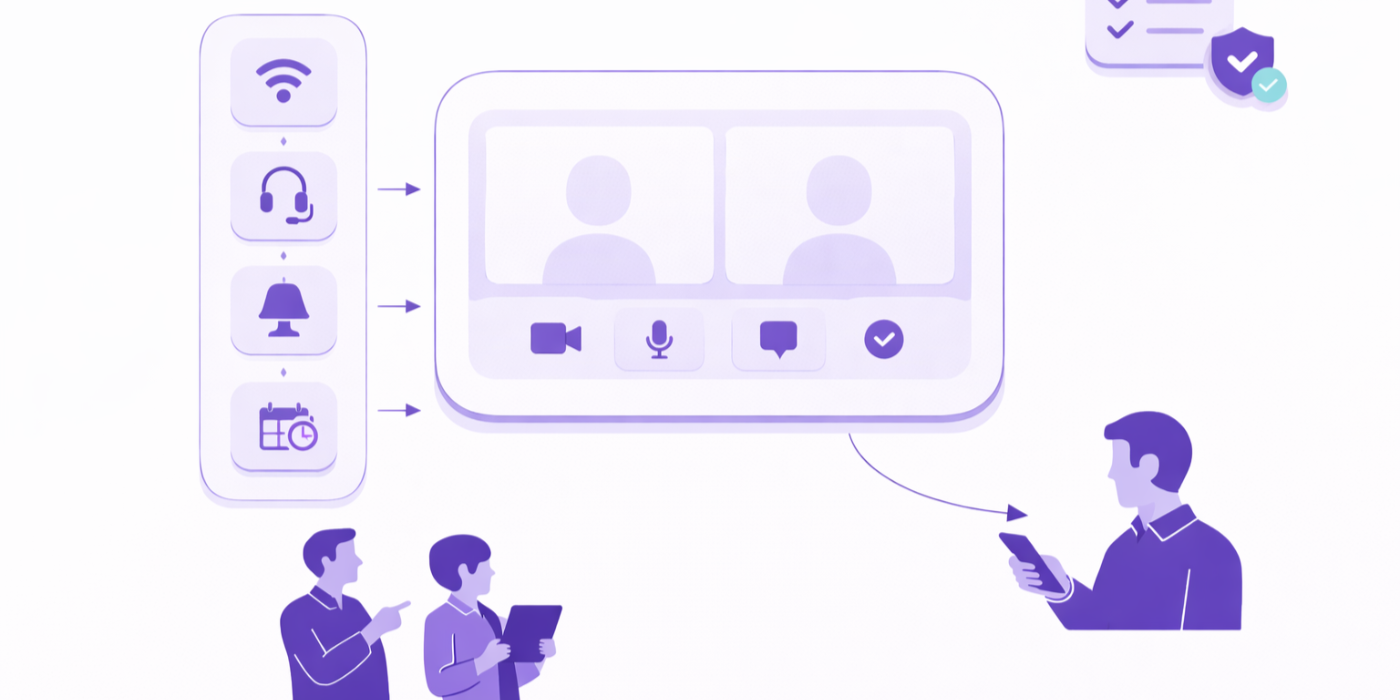
1) Why Video Coaching Sessions Succeed or Fail (and What Coaches Usually Miss)
Most coaches assume video quality issues are “technical problems.” In reality, many online coaching failures are experience design problems. Clients do not leave because your camera is not cinematic; they leave because sessions feel hard to join, mentally messy, emotionally unsafe, or impossible to act on afterward. That is why video best practices must be tied to coaching outcomes — not just platform features.
When your workflow lacks structure, even strong coaches struggle with delivery consistency. A coach may be excellent at effective listening techniques that transform client conversations, but if the client spends the first 8 minutes troubleshooting audio, the session starts in stress mode. A coach may be skilled in powerful questioning techniques that transform coaching sessions, but if screen fatigue is high and transitions are clunky, clients answer shallowly. A coach may care deeply about building deep trust and strengthening client relationships, but if confidentiality expectations are unclear, trust remains fragile.
The best virtual coaches treat video sessions as a designed environment. They combine platform settings, communication rituals, session flow, engagement prompts, and follow-up systems. This is where your video strategy connects to broader practice systems like coaching session templates to boost productivity instantly, building your coaching toolkit: essential templates and checklists, best coaching software & platforms for client management in 2025, and virtual coaching tools boosting your remote session effectiveness.
A second mistake is over-indexing on “features” instead of client behavior. Whiteboards, breakout rooms, annotations, polls, AI summaries, and integrations can help — but only when they support a coaching objective such as clarity, accountability, reflection, or action commitment. If you want more follow-through, your call should integrate methods from how to inspire clients to take immediate action, effective strategies for reinforcing positive client behaviors, interactive coaching exercises to keep clients motivated, and gamification tools coaches are using for maximum engagement — not just prettier meetings.
Finally, coaches who scale online without burnout build standards around boundaries and ethics from day one. Video coaching creates hidden risks: recording assumptions, oversharing through chat, blurred time boundaries, device distractions, and home-environment privacy leaks. Those issues must be handled with the same seriousness as the ultimate guide to ethical coaching principles you can’t ignore, coaching confidentiality: how to protect your clients and your practice, how to set clear professional boundaries with coaching clients, and techniques for maintaining professional boundaries with clients.
If you implement the standards in this guide, your sessions will feel calmer, more professional, easier to attend, and more action-oriented — which improves outcomes and protects your reputation.
| Area | Best Practice | How to Implement | Why It Matters for Coaching | Start With |
|---|---|---|---|---|
| Booking | Time-zone confirmation | Auto-show client local time in invite | Prevents no-shows and lateness | Calendar setting check |
| Booking | Clear session type labels | Name sessions (intake, strategy, follow-up) | Sets expectations before joining | Rename booking options |
| Invites | Single join link | Avoid sending multiple platform links | Reduces client confusion and stress | One platform policy |
| Invites | Pre-session instructions | Include camera, audio, quiet-space checklist | Creates smoother starts | 3-line checklist |
| Reminders | 24h + 2h reminders | Automate with booking workflow | Improves attendance and mental readiness | Turn on two reminders |
| Environment | Neutral background | Use tidy, distraction-light backdrop | Keeps focus on client conversation | Declutter visible frame |
| Environment | Front lighting | Place light source in front of face | Improves warmth and nonverbal clarity | Window/ring light |
| Audio | Dedicated microphone/headset | Test before first client block | Audio quality impacts trust more than video | Basic USB mic |
| Audio | Mute notification sounds | Silence device alerts and desktop apps | Protects emotional presence | Focus mode |
| Connectivity | Backup internet plan | Hotspot ready + tested | Prevents abrupt session failures | Phone hotspot checklist |
| Platform | Waiting room enabled | Control entry and timing | Privacy and professionalism | Default on |
| Platform | Meeting password standard | Use secure default templates | Reduces unauthorized access risk | Saved meeting template |
| Platform | Host-only screen share default | Enable participant sharing only when needed | Prevents accidental overshares | Default host-only |
| Platform | Recording consent workflow | Ask explicitly before every recording | Ethics, trust, compliance | Consent script |
| Session Start | 2-minute regulation check-in | Breath, state, intention prompt | Improves depth and focus | “How are you arriving?” |
| Session Start | Agenda co-creation | Confirm one outcome + one blocker | Prevents meandering sessions | 2-question opening |
| Delivery | Camera eye-line placement | Raise camera to eye level | Strengthens connection and trust | Laptop stand/books |
| Delivery | Visible note-taking protocol | Tell client when you are writing | Prevents “coach is distracted” feeling | One sentence cue |
| Delivery | Screen share only for purpose | Use worksheets, progress dashboards, plans | Keeps sessions action-linked | 1 shared tool max |
| Delivery | Silence tolerance | Allow reflective pauses before prompting | Produces deeper client insight | Count 3–5 seconds |
| Engagement | Chat-based commitments | Ask client to type one action step | Increases clarity and ownership | “Type your next step” |
| Engagement | Micro-polls during groups | Use polls to segment needs live | Improves participation in cohorts | 1 poll midpoint |
| Engagement | Shared progress tracker | Review wins, misses, barriers weekly | Improves accountability and retention | 3 metrics only |
| Engagement | Breakout prompts for groups | Give exact questions + timebox | Prevents awkward silence in cohorts | 2 prompts, 6 minutes |
| Accessibility | Captions enabled when helpful | Turn on live captions by default option | Improves comprehension and inclusion | Caption setting preset |
| Accessibility | Visual agenda slide | Show session flow in first minute | Reduces anxiety for overwhelmed clients | Simple 3-step slide |
| Closure | Action recap on-screen | Summarize 1–3 commitments visibly | Boosts follow-through after session | Recap template |
| Closure | Obstacle pre-mortem | Ask what could derail the plan | Improves real-world execution | One barrier + response |
| Follow-Up | Send recap within 12 hours | Email or portal summary + next steps | Maintains momentum between calls | Recap template |
| Follow-Up | Automated check-in touchpoint | Midweek nudge linked to commitment | Reduces drop-off and ghosting | 1 nudge rule |
| Improvement | Session QA review | Audit starts, transitions, closes monthly | Fixes silent performance leaks | Review 3 recordings/notes |
2) Pre-Session Zoom Setup That Eliminates Friction and Protects Trust
If your client experience feels inconsistent, the root issue is often pre-session system design, not your coaching ability. High-performing virtual coaches build a “frictionless runway” before the call ever starts. This connects directly to how technology is completely transforming the coaching industry, the future model every coach needs to adopt by 2026, balancing human touch with coaching automation for optimal results, and automated email sequences: the ultimate 2026 guide for coaches.
Build a pre-session workflow, not isolated reminders
A professional video coaching workflow should include:
Booking confirmation (with local time clearly displayed)
“How to prepare” message (device, headphones, quiet room, notebook)
Reminder at 24 hours and 2 hours
Optional intake prompt or reflection question
Link to reschedule policy and boundaries
Backup contact path if tech fails
This is where coaches can apply principles from how to set clear professional boundaries with coaching clients, managing difficult client conversations with ease, conflict resolution strategies every coach needs, and the non-negotiable standards every coach must know before a conflict ever happens.
Standardize your Zoom room like a clinical environment
Treat your video room as part of your professional brand. The client should experience the same reliability every time. That means:
Same join process
Same opening sequence
Same confidentiality language
Same visual professionalism
Same closeout and next-step protocol
This consistency supports your reputation the same way why trust is the most valuable asset in coaching and the communication secret behind successful coaching support long-term client retention.
The minimum technical baseline coaches should adopt in 2026
You do not need a studio. You need stable competence:
Good audio (headset or external mic)
Front-facing light
Eye-level camera
Quiet environment
Backup internet
Distraction-free desktop
Updated app/version
Test link before client blocks
For coaches building remote practices, combine this with systems from launch your successful health coaching career: complete roadmap, step-by-step guide: how to become a certified life coach, best coaching software & platforms for client management in 2025, and the 10 best coaching apps every professional should know.
Pre-session regulation matters more than most coaches realize
Clients often join sessions dysregulated: rushed, ashamed, distracted, or emotionally flooded. If you start immediately with “So what do you want to work on?”, you may get shallow answers and weak outcomes. Instead, use a 60–120 second arrival ritual. This aligns beautifully with mindfulness and meditation techniques for emotional coaching, stress management techniques every coach should know, effective strategies for coaching clients through burnout, and helping clients manage work-life balance successfully.
That small opening ritual often creates a disproportionate jump in session depth because the client feels seen before they are asked to perform.
3) In-Session Video Coaching Delivery: Presence, Structure, and Outcomes
The biggest online coaching myth is that “virtual means less connection.” Poorly run virtual sessions create less connection; well-run virtual sessions can create extremely high trust, because they are intentionally structured, emotionally clear, and easier to revisit through notes and action plans. This is especially true when you combine best practices from communication techniques every coach should master, the art of powerful questioning in coaching, effective listening techniques that transform client conversations, and building deep trust: how to strengthen your client relationships.
Use a visible session architecture
Clients relax when they understand the flow. A simple structure:
Arrival and state check
Win review / carryover from last session
Today’s focus and desired outcome
Exploration and coaching work
Decision and action commitments
Barrier planning and recap
This framework also supports methods from smart goals 2.0: how top coaches set & achieve client goals, the wheel of life reinvented: strategies for coaching mastery, solution-focused brief coaching (SFBC): the ultimate 2026 guide for coaches, and appreciative inquiry: the ultimate 2026 guide for coaches.
Screen sharing is a coaching tool, not a presentation habit
Many coaches overuse screen share and accidentally reduce emotional connection. Share your screen only when it improves:
clarity (visual plan, worksheet, roadmap)
commitment (typed action steps)
accountability (habit tracker, progress check)
reflection (journal prompt, exercise)
education (brief framework)
Use screen share intentionally with resources from coaching session templates to boost your productivity instantly, building your coaching toolkit essential templates and checklists, daily journaling prompts: the ultimate 2026 guide for coaches, and life mapping: the ultimate 2026 guide for coaches.
Master “online nonverbal communication”
In virtual coaching, subtle cues matter more because bandwidth is reduced. Improve connection by:
looking at camera during key empathic statements
slowing transitions
naming observations (“I noticed your energy changed there”)
avoiding constant self-view checking
minimizing keyboard noise and multitasking
signaling when taking notes
These micro-behaviors reinforce principles in the communication secret behind successful coaching, why coaches are embracing this positive change model, the neuroscience-based method every coach needs now, and how the positive psychology framework is revolutionizing coaching in 2026.
Protect the close
A strong session can still fail if the ending is vague. Before the client leaves, require:
one primary commitment
one measurable indicator
one likely obstacle
one support strategy
one next check-in point
That close integrates beautifully with how to inspire clients to take immediate action, effective strategies for reinforcing positive client behaviors, how to actually empower clients real results, and how the world’s best coaches get results.
4) Engagement & Accountability Systems That Make Video Coaching Actually Work Between Calls
Most coaches do not have a “Zoom problem” — they have a between-session continuity problem. The call itself may be excellent, but momentum dies in the gap. Clients forget decisions, lose emotional activation, get pulled into work/family stress, and return next session with guilt instead of progress. This is why video coaching best practices must be linked to retention and accountability design, not just real-time conversation quality.
A high-performing approach combines session delivery with systems from the future of client engagement 2026, why they’re changing the game for coaches, why top coaches are obsessed, and new data proven coaching methods for maximum client success.
Use “micro-commitments” instead of motivational speeches
After video sessions, clients rarely need more inspiration. They need friction-aware action design. Instead of assigning broad goals, use:
one tiny action tied to a specific trigger
one completion proof (photo, message, checklist)
one fallback version (if the day goes wrong)
one support reminder (calendar/text/email)
one review point at next session
This aligns with how to make it work every time, the radical simplicity coaches are loving, the 1 coaching technique for client breakthroughs, and why coaches must avoid this trap.
Create a “video-session recap pipeline”
Your recap system should not be an afterthought. Send a short recap within 12 hours:
what mattered most
decisions made
action steps
barriers identified
what to do if momentum drops
next check-in date
Coaches can automate and personalize this using frameworks from automated email sequences the ultimate 2026 guide for coaches, client testimonials capture the ultimate 2026 guide for coaches (for milestone moments later), creating a coaching resource library your clients will love, and free & premium coaching resources to boost your practice.
Use one engagement layer, not five disconnected tools
A common 2026 mistake: coaches stack apps (Zoom + forms + chat + tracker + portal + reminders + AI notes + community) without integration logic. Clients then disengage because the experience feels like admin work. Start with one clean stack and expand only when behavior improves. This is the practical side of balancing human touch with coaching automation for optimal results, how artificial intelligence is changing client interactions forever, best coaching software & platforms for client management in 2025, and 15 must-have coaching tools every professional needs in 2025.
Group and cohort video coaching needs different engagement mechanics
For groups, passive attendance is the enemy. Use:
pre-call prompts
live polls
chat commitments
breakout pairs with exact questions
“wins round” at the end
asynchronous follow-up in a community channel
These methods pair well with how to build an interactive coaching community online, best practices for creating interactive coaching workshops, how to create engaging coaching content clients love, and podcast resources that keep coaches ahead of industry trends for ongoing value delivery.

5) Privacy, Boundaries, Ethics, and Professional Standards in Video Coaching (Non-Negotiables)
As coaching becomes more digital, trust is increasingly built (or broken) through operational behavior. A coach can be warm and skilled, but if they are careless with recordings, chat messages, shared screens, or session timing, clients feel unsafe. In 2026, strong video coaching is not just about engagement — it is about professional stewardship.
This section should be treated as foundational alongside the ultimate guide to ethical coaching principles you can’t ignore, coaching confidentiality: how to protect your clients and your practice, managing dual relationships essential ethics for coaches, and ethical dilemmas coaches face and how to solve them gracefully.
Recording is never “automatic permission”
Many coaches assume platform notices are enough. They are not a substitute for relational consent. Best practice:
ask before recording
explain why you want to record
explain where it is stored
explain who can access it
offer a no-recording option
confirm the client’s choice each time if appropriate
That one conversation often strengthens trust because it communicates respect and control — core principles in why trust is the most valuable asset in coaching and building deep trust how to strengthen your client relationships.
Boundary drift happens faster online
Online coaching blurs edges: “quick messages” become mini-sessions, late-night voice notes become emotional dependency, and rescheduling becomes chaotic if policies are unclear. Protect both client outcomes and your capacity by setting:
response windows
emergency limitations
messaging scope
cancellation/reschedule rules
session length boundaries
off-platform communication rules
Use the same seriousness you bring to how to set clear professional boundaries with coaching clients, techniques for maintaining professional boundaries with clients, how coaches avoid career-ending mistakes, and how to set them and save your career.
Shared-screen and chat hygiene are part of ethics
A surprisingly common risk in virtual coaching is accidental exposure:
open tabs with client names
unrelated notifications during screen share
visible emails/messages
unsecured notes on shared devices
sensitive chat exports stored loosely
Fix this with a simple protocol:
close all unrelated tabs/apps
use focus mode / do not disturb
separate coaching browser profile
dedicated client note system
clear naming/storage rules
review before sharing/downloading
These are practical extensions of the non-negotiable standards every coach must know, coaching confidentiality how to protect your clients and your practice, how technology is completely transforming the coaching industry, and wearable technology preparing your coaching business for the future when integrating more digital data sources.
When video is not enough
Professional coaches must know when a client issue exceeds the scope of coaching or requires a different support structure. This matters even more online where cues can be harder to read and clients may disclose more from the perceived safety of distance. Maintain scope clarity while drawing on supportive, ethical communication approaches from coaching clients through grief and loss compassionate strategies, the importance of self-care coaching for client mental health, how coaches can support clients with PTSD and trauma, and managing difficult client conversations with ease.
Professionalism online is not about being rigid. It is about creating a container where transformation can happen safely, consistently, and sustainably.
6) FAQs: Zoom & Video Conferencing Best Practices for Coaches
-
If you can only improve one thing, improve audio quality first. Clients will tolerate average video, but poor audio increases fatigue, misunderstanding, and emotional distance. A basic headset or USB microphone often improves trust faster than buying a better camera. Then optimize your session structure using coaching session templates, powerful questioning techniques, and effective listening techniques.
-
The “best” length depends on the goal, client profile, and your delivery model — but the key is not duration, it is energy architecture. Many coaches get better outcomes by tightening sessions and improving pre-work + follow-up instead of extending call time. Pair your session length with SMART Goals 2.0, interactive coaching exercises, and automated email sequences to maintain momentum between calls.
-
Only with clear, explicit consent and a defined purpose. Recording can help with review and accountability, but it also creates privacy and trust concerns if handled casually. Before recording, explain why, where it is stored, and who can access it. This should align with your standards for ethical coaching principles, coaching confidentiality, and professional boundaries.
-
Use fewer tools, but use them with intent. Start with one video platform, one recap system, one accountability mechanism, and one resource hub. Add features only when they improve behavior (attendance, follow-through, reflection, retention). Great starting points include best coaching software & platforms, virtual coaching tools, building your coaching toolkit, and balancing human touch with coaching automation.
-
Usually one of four issues: vague action steps, no friction planning, no between-session touchpoint, or too many commitments. Fix it by ending every session with one measurable action, one likely barrier, and one recovery plan. Then reinforce with a recap and midweek nudge. This approach works especially well when combined with how to inspire clients to take immediate action, reinforcing positive client behaviors, and how to actually empower clients real results.
-
Group coaching succeeds when participation is designed, not improvised. Use pre-call prompts, live polls, exact breakout instructions, chat commitments, and a structured closing round. Avoid long monologues and generic Q&A formats that let members hide. To improve retention and session energy, combine group session design with interactive coaching workshops, building an interactive coaching community online, engaging coaching content clients love, and gamification tools for engagement.
