
How Coaches Can Actually Change Client Diets
Coaches hear it all the time. “I know what to eat, I just do not do it.” That gap is where most diet coaching fails. Clients do not need more rules. They need a system that survives cravings, stress, social pressure, and shame. This guide shows how to actually change diets by building trust, regulating emotions, designing environment wins, and turning food choices into repeatable routines. You will learn how to coach action without judgment, handle setbacks without losing momentum, and create results that stick even when life gets messy.

1) Why Diet Change Is Hard Even for Smart Clients
Most clients are not confused. They are conflicted. They want the result, but they also want comfort, speed, and relief. Food is rarely just food. It is stress relief, identity, reward, and sometimes the only break they get in a chaotic day. If you coach diets like a simple knowledge problem, you will get polite agreement and quiet relapse. Start by strengthening the relationship container with deep trust skills and sharper listening techniques so clients tell you what is really driving the behavior.
Diet change also collapses when clients are emotionally overloaded. When stress is high, the brain chooses the fastest reward. When burnout is present, discipline disappears. That is why diet coaching must include nervous system tools like stress management techniques and recovery support from burnout coaching strategies. If your plan requires high willpower every day, it will fail the first time life hits.
Another hidden killer is shame. Shame makes clients hide binges, under report snacking, and avoid check ins. Your job is to keep truth safe. You do that with clean communication techniques and better powerful questioning that uncovers patterns without blame. Diet change sticks when honesty becomes normal, not scary.
Finally, diet change is social. Family routines, work demands, and cultural habits shape food choices. If you do not coach the environment, you are coaching in a vacuum. Teach clients to protect time and energy with work life balance support and keep boundaries clean with professional boundaries. The diet becomes consistent when the life around it becomes consistent.
2) Build Trust First or Clients Will Hide the Food Truth
Diet coaching requires radical honesty. If a client fears judgment, they will curate their updates. They will report the salad and omit the late night binge. They will say “good week” and avoid details. That is not because they are dishonest. It is because shame is loud. Your first job is to make truth safe by building deep trust and demonstrating skilled listening so clients feel understood instead of evaluated.
Trust grows when your questions feel clean. Use powerful questioning to explore patterns, not punishments. Ask what happened before the choice. Ask what need the food met. Ask what the client avoided feeling. Then use communication techniques to reflect the truth in a calm tone that removes drama. Clients change when they stop making the lapse mean they are broken.
You also need boundaries so the coaching container stays stable. Diet coaching can slide into dependency if the client treats you like an emergency regulator. Set expectations using professional boundaries. Boundaries protect you and they protect the client because they build self trust. You are not there to rescue them from cravings. You are there to coach skills so they can lead themselves.
If emotions are intense, bring in nervous system support. When stress is high, appetite signals and impulse control get distorted. Use stress management tools and mindfulness practices so clients can pause before the bite. That pause is where choice is born. When trust and regulation improve, food logging becomes honest, not performative.
3) Turn Diet Goals Into Micro Actions That Survive Real Life
Diet change succeeds when it becomes embarrassingly simple. Most clients fail because the plan is built for a perfect week. When life is messy, the plan collapses and shame takes over. Instead, design “minimum viable actions.” Minimum viable actions are tiny but consistent. They create momentum without requiring motivation. Use immediate action coaching to lock the next step while the client is committed, then maintain progress with positive behavior reinforcement.
Make the client choose one lever for seven days. Not seven habits. One lever. Example levers include protein at first meal, water on wake, one planned snack, or a no phone rule during eating. The goal is to reduce decision fatigue. When a client has fewer decisions, they execute more. You can reinforce this by improving time structure through work life balance coaching so meals stop being random.
Also coach the environment. If trigger foods are visible, cravings win. If the client is hungry and no food is prepared, convenience wins. If the home is stocked for chaos, chaos becomes the diet. Use client relationship trust to get honest about what is in the pantry and what routines exist, then use difficult conversation skills if the client resists change. This is where many coaches get soft. Results require strategy and firmness.
Finally, treat slip ups as training reps. A slip is not proof the plan failed. It is proof you need a better fallback. After a slip, the next meal matters more than the last one. Build a reset script. Build a recovery meal. Build a “same day repair” rule. Then reinforce the identity shift with positive behavior systems. Consistency is not perfection. It is recovery speed.
4) Coach Emotional Eating Without Shaming the Client
Emotional eating is often a regulation strategy. The client is not weak. They are trying to feel better fast. If you attack the behavior without addressing the need, the need will find another outlet. Start by building emotional safety using trust building and reflecting patterns with skilled listening. Clients change when they feel safe enough to tell the truth about stress, loneliness, anger, and grief.
Then teach regulation before restriction. Food choices improve when the nervous system calms down. Use mindfulness and meditation tools and practical stress management techniques to insert a pause. That pause is the doorway to choice. A simple protocol can be: pause, breathe, name the emotion, choose the next best action, then eat if hunger is real.
If the emotional load is deeper, do not ignore it. Some clients are navigating trauma, loss, or chronic anxiety. In those cases, the diet is not the core problem. It is a symptom. Learn how to support sensitive clients through grief and loss coaching and trauma patterns with PTSD and trauma support. Your coaching should be compassionate and structured, not intense and pushy.
Also address self care. Many clients binge because they are depleted. They do not sleep, they do not rest, they do not recover. Food becomes the only comfort they allow themselves. Build sustainable recovery with self care coaching and protect energy through work life balance strategies. Diet change becomes easier when the client is not in survival mode.
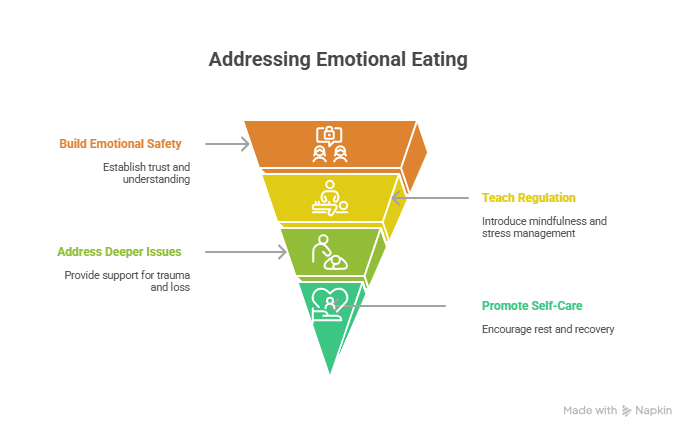
5) Handle Setbacks, Resistance, and Family Pushback Like a Pro
Diet change is a relationship issue as much as a nutrition issue. Partners may resist. Friends may mock. Family may pressure. Clients then fold to avoid conflict. That is why you must coach communication and boundaries, not just meals. Teach clients practical scripts using communication techniques and reinforce healthy limits with professional boundaries. A single boundary script can save a client from weekly sabotage.
Resistance also shows up inside the coaching relationship. Some clients nod and do nothing. Others argue or disappear. Your job is to address it without drama. Use difficult conversation skills to name the pattern and invite honesty. Then use powerful questioning to find the cost of change. Many clients fear that a new diet means giving up identity, culture, social belonging, or comfort. If you do not surface that fear, it will control decisions in secret.
Setbacks are guaranteed, so treat them as part of the plan. Build a relapse protocol and rehearse it in advance. That is where most coaches drop the ball. They wait for failure, then improvise. Instead, teach the client how to recover fast. Encourage quick re engagement using immediate action coaching and stabilize the new behavior with positive reinforcement strategies. The faster they recover, the more they trust themselves.
If the client is burned out, be careful with pressure. Burnout makes willpower fragile. Support recovery first using burnout coaching and self care coaching. When capacity returns, the diet becomes consistent again.
6) FAQs: How Coaches Can Actually Change Client Diets
-
Treating diet change like information transfer. Clients usually know what to do. They struggle to do it under stress, social pressure, and emotional load. Start by building deep trust so clients report honestly, then use effective listening to uncover the real trigger. Combine this with stress management tools so the client has a pause before cravings. Information does not create change. Systems and regulation do.
-
You coach recovery speed, not perfection. The binge pattern is often all or nothing thinking. Use powerful questioning to uncover the story they tell after the slip, then replace it with a reset script. Reinforce the recovery behavior using positive behavior reinforcement. The key rule is “next meal repair.” One balanced meal after a slip prevents a spiral. Also support regulation with mindfulness tools so emotions do not drive autopilot eating.
-
Do not shame the coping strategy. Replace it. Build emotional safety with trust building and validate the need, then introduce regulation routines from stress management and mindfulness coaching. Give the client a two minute alternative before eating. If hunger remains, eating is allowed. The win is that the client paused and chose. That is how self control grows.
-
Coach boundaries and scripts. Many clients fail because they cannot handle comments, pressure, and trigger foods at home. Teach clear language using communication techniques and protect the coaching container with professional boundaries. Encourage environment changes that reduce friction, like a safe shelf or pre planned meals. If conflict arises, coach calm repair using conflict resolution strategies. Diet change becomes easier when the client stops trying to please everyone.
-
Make the plan smaller and more specific. Use immediate action coaching to lock one minimum viable habit and one exact time window. Then track one leading indicator and reinforce it with positive behavior reinforcement. Also stabilize their day by coaching work life balance because chaotic schedules create chaotic eating. Consistency is built by fewer decisions, clearer accountability, and faster recovery.
-
Recognize that food can be a survival strategy. If grief or trauma is present, pushing strict diet rules can backfire. Support the client compassionately through grief and loss coaching and use trauma aware pacing from PTSD and trauma support. Keep actions tiny, focus on stability, and use mindfulness tools to regulate. Diet change becomes sustainable when the client feels safe in their body.
-
Diet coaching can be emotionally heavy. Protect your energy with clear professional boundaries and keep your sessions structured with consistent prompts and follow ups. When clients struggle, avoid rescuing. Coach skills and reinforce progress using positive behavior systems. Support your own stability with the same principles you teach, including self care coaching foundations and smart workload planning. You get consistent client results when your practice is consistent too.
