
Must-Know Client Preferences Shaping the Future of Coaching
Client preferences are no longer a minor detail in coaching. They are quietly restructuring how coaching is delivered, priced, packaged, and judged. Clients do not just want support anymore. They want relevance, flexibility, emotional safety, faster clarity, cleaner systems, and proof that the coaching experience will fit their real life instead of becoming another burden they fail to maintain.
That shift matters because the future of coaching will not be shaped only by what coaches want to teach. It will be shaped by what clients are no longer willing to tolerate. Friction-heavy onboarding, vague promises, rigid formats, shallow personalization, and weak follow-through are losing power fast. Coaches who understand these preferences early will not just stay current. They will become easier to trust, easier to choose, and harder to replace.
1. Why Client Preferences Are Becoming the Real Competitive Advantage in Coaching
For years, many coaches built their businesses around their own preferred style. They created packages they liked delivering, content they liked posting, and systems that made sense from the coach’s perspective. That model is weakening. Clients today are more informed, more comparison-oriented, more time-constrained, and less patient with experiences that feel generic or unnecessarily difficult. They may still want empathy and human connection, but they want it delivered in a way that respects modern attention, modern overwhelm, and modern decision fatigue. Coaches already exploring the future model every coach needs to adopt by 2026, balancing human touch with coaching automation for optimal results, how technology is completely transforming the coaching industry, and how artificial intelligence is changing client interactions forever can already see this shift accelerating.
The old assumption was that clients would adapt to the coach’s container. The emerging reality is the opposite. Strong coaches now adapt their container to the client’s psychology, schedule, communication style, energy capacity, and trust threshold. That does not mean becoming boundaryless or endlessly accommodating. It means designing a coaching experience that removes avoidable friction while protecting transformation. A client who feels overwhelmed by long homework, confused by scattered resources, or pressured by unclear expectations is not resisting coaching. They may be resisting bad design. This is exactly why coaching session templates to boost your productivity instantly, building your coaching toolkit essential templates and checklists, creating a coaching resource library your clients will love, and best coaching software and platforms for client management in 2025 matter so much.
Client preferences are also reshaping trust. In the past, some coaches won clients through charisma, confidence, and inspiration alone. That still matters, but it is no longer enough. Clients increasingly look for signs of competence embedded in the experience itself. They notice whether communication is clear, whether onboarding feels intentional, whether sessions feel personalized, whether privacy is respected, whether progress is tracked, and whether the coach seems to understand the client’s real-life constraints. Trust is no longer built only through tone. It is built through design. That connects directly with coaching integrity building trust and credibility in your practice, why trust is the most valuable asset in coaching, building deep trust how to strengthen your client relationships, and the non-negotiable standards every coach must know.
Another reason these preferences matter is that they influence outcomes. A client who feels seen, guided, and supported in the right format is more likely to stay engaged, take action, and continue. A client who feels confused, mismatched, or emotionally unsafe may drop off even if the coach is highly skilled. This means client preference is not just a customer experience issue. It is an outcome issue, a retention issue, and a referral issue. Coaches who ignore it will increasingly confuse avoidable friction with client “lack of commitment.”
2. The Biggest Client Preferences Coaches Can No Longer Ignore
The first major preference is personalization without chaos. Clients increasingly want coaching that feels designed for their reality, not delivered from a generic template. They want their goals, constraints, emotional patterns, and pace taken seriously. But this does not mean they want a completely improvised experience. They still want structure. The winning model is personalized structure: a clear framework adapted intelligently. Coaches who understand how to actually empower clients real results, the 1 coaching technique for client breakthroughs, why top coaches are obsessed, and how the world’s best coaches get results already tend to work this way naturally.
The second is clarity over charisma. Inspiration still matters, but clients are becoming less impressed by polished language alone. They want to know what the offer includes, how support works, what kind of outcomes are realistic, what the process looks like, and how progress will be measured. Unclear coaching packages, vague transformation promises, and fuzzy support models create hesitation. The future belongs to coaches who can explain their work simply and concretely. That aligns strongly with coaching case study templates demonstrating your value effectively, client testimonials capture, essential resources for coaching certification and credentialing, and how certification differentiates your health coaching business.
The third is lower-friction delivery. Clients are increasingly intolerant of sloppy logistics. They do not want to search emails for links, forget where worksheets live, fill out repetitive forms, or navigate five disconnected platforms. They want clean onboarding, intuitive tech, centralized resources, and simple communication. This preference is not superficial. It reflects the modern expectation that premium support should feel organized. Coaches who ignore this will increasingly look outdated even if their session quality is high. This is exactly where virtual coaching tools boosting your remote session effectiveness, video conferencing hacks for flawless online coaching sessions, digital marketing tools coaches need for explosive growth, and virtual retreat platforms coaches are using successfully become strategically important.
The fourth is support that fits real life. Clients are tired of coaching models that assume infinite bandwidth. They do not want excessive homework, overly intense routines, or perfect consistency requirements that collapse the moment life gets busy. They want progress they can maintain. That means simpler assignments, higher-leverage actions, and more realistic pacing. Coaches who understand this are more likely to produce sustainable change, especially when guided by smart goals 2.0 how top coaches set and achieve client goals, effective strategies for reinforcing positive client behaviors, how to inspire clients to take immediate action, and the radical simplicity coaches are loving.
The fifth is emotional safety with honest challenge. Clients do not want to be babied, but they also do not want to feel judged, rushed, or emotionally mishandled. They want coaches who can hold discomfort without turning cold, who can challenge excuses without shaming vulnerability, and who can help them face truth without making them feel broken. This preference is central to the future because trust-sensitive coaching will continue to outperform ego-driven coaching.
3. How Modern Client Expectations Are Changing Coaching Delivery Models
One of the clearest changes is the movement away from purely session-based coaching toward continuity-based coaching. Clients increasingly prefer support that extends beyond the live conversation. That does not always mean unlimited access. It often means lightweight but intentional between-session support: check-ins, reflection prompts, reminders, progress tracking, or a clear place to revisit resources. Clients want the transformation to continue between calls, not pause until the next appointment. This trend fits closely with automated email sequences, interactive coaching exercises to keep clients motivated, best practices for creating interactive coaching workshops, and how to build an interactive coaching community online.
Another change is the shift toward hybrid delivery formats. Clients increasingly want a mix of live coaching, digital resources, self-paced tools, and structured support. This preference is growing because it respects different learning styles and different energy states. Some clients process best live. Some need to reread. Some need templates. Some need short nudges. Some need community reinforcement. Coaches who insist on one delivery style for everyone will increasingly feel narrow. Hybrid models, when done well, feel modern, flexible, and premium.
There is also a growing preference for shorter paths to relevance. Clients do not want to wait three sessions to feel that the coach understands them. They expect quicker insight, faster specificity, and early signs of movement. That means better intake, better listening, and stronger early-session design. It also means coaches need to stop wasting early sessions on vague orientation and instead create quick wins that build confidence. This approach becomes stronger through powerful questioning techniques that transform coaching sessions, effective listening techniques that transform client conversations, the coaching skill you didn’t know you needed, and the communication secret behind successful coaching.
Modern clients also expect stronger consent and boundary language. They want to know how communication works, what is private, what support is available, what the coach’s role is, and how emotionally intense topics will be handled. This does not just protect the coach. It protects the client’s nervous system. A coaching container feels more premium when it feels more explicit and respectful. That is why why emotional consent matters in every coaching session, coaching confidentiality how to protect your clients and your practice, managing dual relationships essential ethics for coaches, and the ultimate guide to ethical coaching principles you can’t ignore are becoming increasingly central.
Finally, clients want proof translated into confidence. They do not just want to hear that the coach is passionate or experienced. They want to see what progress looked like for others, how the process works, what changes tend to happen, and whether people like them benefited. Social proof, case studies, and structured progress markers are becoming part of the coaching experience itself, not just the marketing.
4. What Coaches Must Change Now to Meet These Emerging Preferences
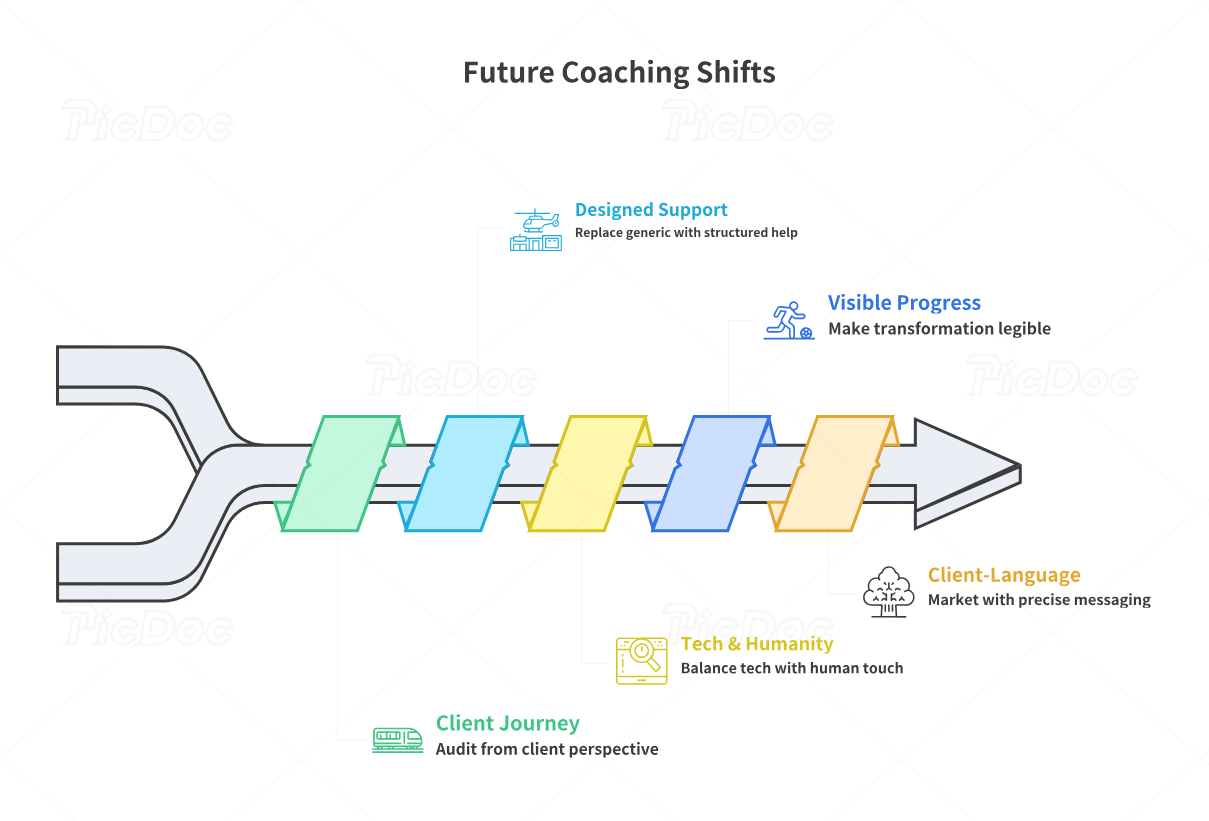
The first change is that coaches need to audit their client journey from the client’s point of view. Not from the coach’s point of view. Look at discovery, booking, intake, onboarding, communication, resources, session flow, follow-up, and completion. Where is friction hiding? Where is confusion hiding? Where is avoidable cognitive load hiding? A coach may believe the experience is “simple” because they understand it. The client does not. The future belongs to coaches who are willing to simplify aggressively.
The second change is to replace generic support with designed support. A lot of coaching still relies on inspiration plus improvisation. That feels warm, but it does not always scale or sustain outcomes. Designed support means building clear onboarding, stronger goal setting, personalized milestones, progress review, and a visible structure for between-session action. It means the client can feel the architecture of the process. That architecture creates trust even before results fully appear.
The third change is to protect humanity while using more technology. This is a subtle but crucial shift. Clients increasingly appreciate convenience, reminders, centralized resources, and digital support. They do not want coaches to reject modern systems in the name of purity. But they also do not want a cold, over-automated experience that feels like a chatbot wearing a coaching label. Great coaches will use technology to reduce admin and improve consistency while keeping the live human moments more present, not less. This is where 15 must-have coaching tools every professional needs in 2025, best coaching software and platforms for client management in 2025, wearable technology preparing your coaching business for the future, and leveraging wearable tech for next-level client coaching become part of a broader strategic question.
The fourth change is to make progress more visible. Many coaches deliver real transformation but fail to make it legible. Clients want to know whether they are moving, where they are improving, what patterns are changing, and what still needs attention. Visible progress builds motivation and reduces the discouragement that can come from slow internal change. This does not require turning coaching into a sterile dashboard. It requires using milestones, reflections, small measurements, or structured reviews so progress stops feeling invisible.
The fifth change is to market with client-language precision. If client preferences are shaping the future, then content and messaging must reflect those preferences too. Coaches should speak to overwhelmed clients who need realistic change, to skeptical clients who need proof, to private clients who need safety, to busy clients who need less friction, and to intelligent clients who want more than soft slogans. The coaches who sound most relevant will increasingly win attention and trust before the first sales call.
5. The Coaching Businesses Most Likely to Win in the Next Phase of the Industry
The coaches most likely to thrive are not necessarily the loudest or the most automated. They are the ones who combine trust, structure, adaptability, and clarity. They understand that premium no longer means complicated. It means coherent. It means thoughtful. It means the client feels guided from first contact to final outcome without being smothered, confused, or emotionally mishandled.
Winning coaching businesses will likely have a few common traits. They will deliver personalized pathways inside structured systems. They will use technology to remove friction, not to replace care. They will speak with pain-point specificity instead of vague inspiration. They will create clearer proof and clearer outcomes. They will build strong boundaries and emotional safety into the container. And they will understand that the client experience starts far before the first session and continues far after it. This broader mindset is strengthened by how to create engaging coaching content clients love, digital marketing tools coaches need for explosive growth, seo tools for coaching websites, and youtube channel growth for coaches.
These businesses will also stop confusing intensity with effectiveness. Many clients do not need more pressure. They need better design. They need support that respects limited bandwidth while still creating accountability. They need coaching that feels usable on a Tuesday afternoon, not just inspiring during the session. That is why simplicity, practicality, and sustainable pacing will become even more valuable.
Another likely winner is the coach who understands trust-sensitive communication. This includes how they challenge clients, how they handle vulnerability, how they explain scope, and how they present proof. The market is slowly becoming less tolerant of hype-heavy messaging and more responsive to grounded authority. Clients are learning to look for signals of integrity. Coaches who underestimate that shift may still attract attention, but they will struggle to build durable loyalty.
The final winners will be coaches who keep learning from the market without losing their principles. Client preferences should shape delivery, not erase standards. The goal is not to become endlessly reactive. The goal is to become more intelligently responsive. That balance will define the next generation of respected coaching brands.
6. FAQs
-
Because clients are increasingly evaluating coaching as a full experience, not just as a conversation. They care about personalization, clarity, flexibility, privacy, and progress visibility. Those preferences influence trust, retention, referrals, and outcomes all at once.
-
Personalized structure is one of the biggest. Clients do not want a completely generic process, but they also do not want a chaotic custom experience. They want coaching that feels tailored while still being clear and organized.
-
Usually more thoughtful technology, not more technology for its own sake. Clients appreciate tools that reduce friction, centralize resources, and support progress. They tend to dislike tech that makes the experience colder, more fragmented, or harder to navigate.
-
By simplifying the path rather than lowering the standard. Better coaching translates insight into doable actions, prioritizes what matters most, and uses accountability intelligently. It does not drown clients in assignments and then blame them for falling behind.
-
A major one. As coaching topics become more personal and digital delivery becomes more common, clients increasingly want clear confidentiality, respectful boundaries, and thoughtful handling of vulnerable information. Privacy is becoming part of the premium experience.
-
They either ignore the shift entirely or overcorrect by becoming boundaryless and over-accommodating. The real opportunity is to design a coaching experience that is both responsive and structured, modern and deeply human.
