
Digital marketing does not fail most coaches because they lack ambition. It fails because their tools are disconnected, their messaging is inconsistent, their lead flow is fragile, and their follow-up depends on memory instead of systems. A coach can be brilliant in-session and still struggle to grow because discovery is weak, nurture is thin, and conversion relies on scattered effort. The right digital marketing tools fix that by turning expertise into visibility, trust, demand, and revenue.
For coaches who want sustainable growth, the goal is not collecting random apps. It is building a lean growth stack that attracts the right audience, captures intent, deepens authority, and moves prospects toward action. That is why the strongest tool decisions sit at the intersection of how technology is completely transforming the coaching industry, best coaching software and platforms for client management in 2025, automated email sequences, and SEO tools for coaching websites.
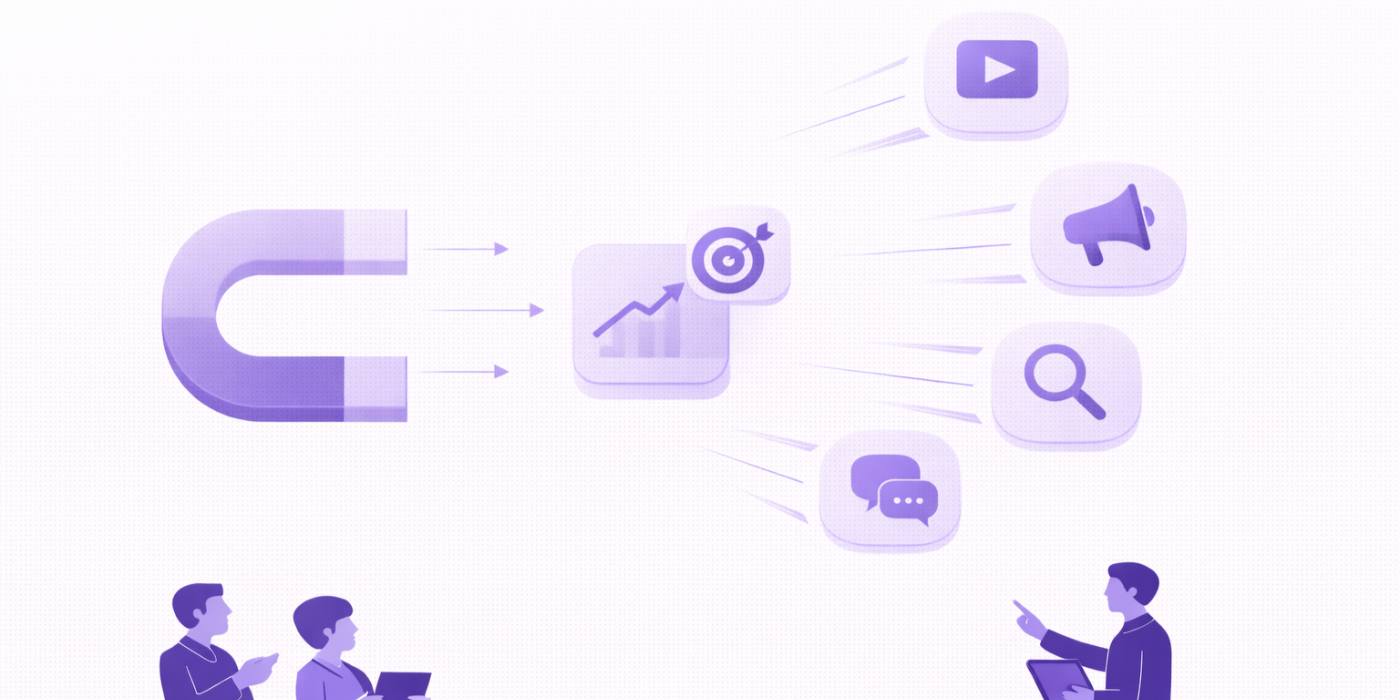
1. Why Most Coaches Stall Before They Scale
Many coaches assume growth is a traffic problem when it is really a systems problem. They post consistently for a few weeks, get some likes, maybe even book a few calls, then momentum disappears. Not because the market is dead, but because the path from attention to trust to action is full of leaks. Their website does not convert. Their lead magnet is vague. Their emails do not nurture. Their social content attracts curiosity but not qualified intent. Their testimonials are buried. Their booking flow introduces friction. Their follow-up stops after one touchpoint. These are not small technical issues. They are revenue-killing gaps.
Explosive growth in coaching almost never comes from working harder at random. It comes from building a digital infrastructure that makes your expertise easier to discover, easier to trust, and easier to buy. Coaches who understand this stop treating marketing like separate chores and start treating it like one connected client journey. That client journey usually begins with search, social content, or referrals, moves into credibility and education, then into nurture and conversion. That is why smart coaches study how to create engaging coaching content clients love, client testimonials capture, why it’s the ultimate client magnet in 2026, and how the world’s best coaches get results.
The painful truth is that many coaches are not underperforming because they lack talent. They are underperforming because their digital presence creates confusion instead of confidence. Prospects land on a page and cannot tell who the coach helps, what outcome is offered, what proof exists, or what next step to take. Content sounds inspirational but not decision-driving. Email sequences are either absent or generic. Analytics are ignored, so weak pages stay weak for months. This is exactly where the right tools become non-negotiable. They help a coach diagnose drop-off, tighten messaging, automate repetition, and make growth measurable rather than emotional.
Explosive growth also demands protection from burnout. Coaches who try to manually handle content publishing, lead capture, appointment scheduling, social messaging, reminders, testimonial collection, and follow-up eventually become trapped in admin. Their calendar looks full, but their growth engine stays fragile. That is why scalable coaches lean into balancing human touch with coaching automation for optimal results, building your coaching toolkit essential templates and checklists, coaching session templates to boost your productivity instantly, and the future model every coach needs to adopt by 2026.
2. The Core Digital Marketing Tool Stack Every Growth-Focused Coach Needs
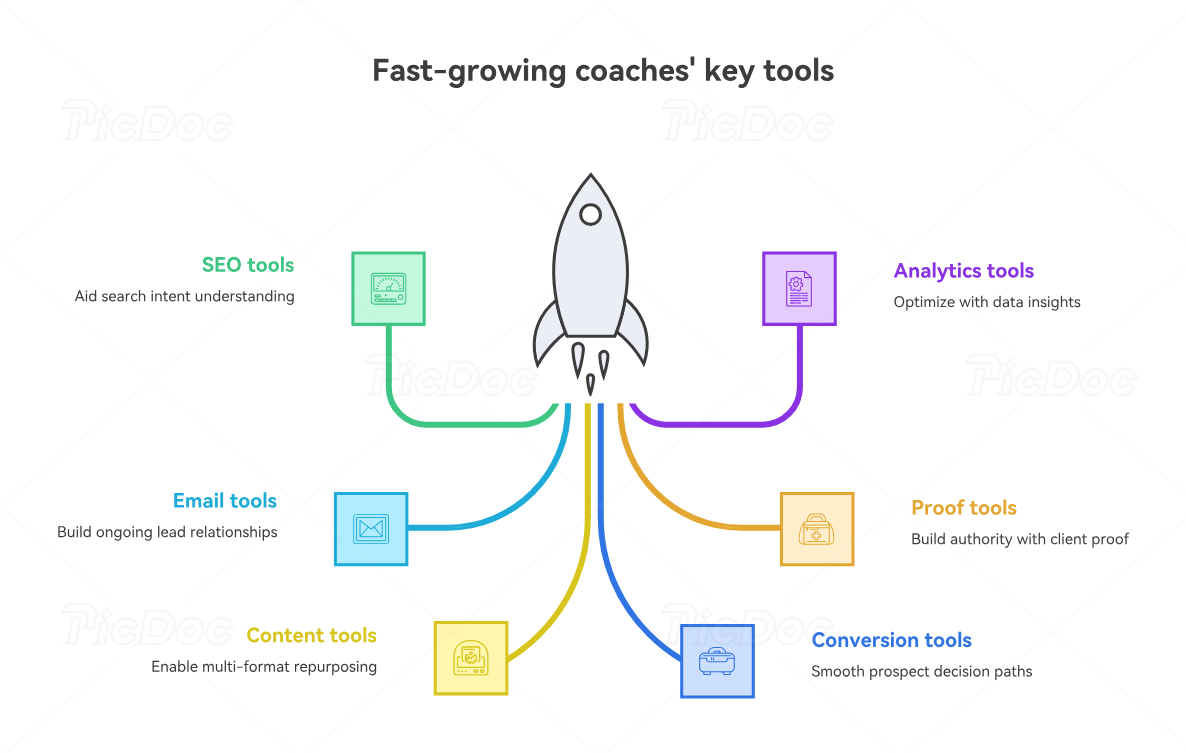
Most coaches do not need fifty tools. They need a small number of tools doing critical jobs exceptionally well. The strongest stack usually includes six functions: visibility, capture, nurture, conversion, proof, and measurement. Miss one, and growth becomes unstable. Nail all six, and marketing starts compounding.
First comes visibility tooling. This includes SEO platforms, keyword research tools, social schedulers, and content creation systems. Visibility is not just about being seen. It is about being found by the right person at the right level of urgency. A coach who ranks for vague terms may get traffic but weak fit. A coach who creates platform-specific content without understanding audience problems may get engagement but poor conversions. That is why effective visibility work aligns with comprehensive analysis the most profitable coaching niches today, exclusive 2025 coaching industry report key trends and insights, coaching market size forecast massive growth opportunities by 2030, and how to create engaging coaching content clients love.
Second comes lead capture tooling. Website pop-ups, landing page builders, link-in-bio tools, and form builders matter because attention that is not captured disappears. Coaches often underestimate how many warm prospects leave simply because no relevant next step existed. One strong checklist, quiz, mini-class, or niche-specific guide can convert passive attention into owned audience. This is where coaches benefit from the thinking behind curating the perfect coaching toolkit for every niche, free and premium coaching resources to boost your practice, creating a coaching resource library your clients will love, and interactive coaching exercises to keep clients motivated.
Third comes email nurture tooling. Email remains one of the highest-trust channels because it allows coaches to deepen authority without relying on platform algorithms. A strong email system welcomes leads, segments based on interest, educates around pain points, handles objections, and invites the right next step. This matters enormously for coaches whose audience is interested but hesitant, inspired but skeptical, or aware but not ready. The right automation stack amplifies lessons from automated email sequences, why trust is the most valuable asset in coaching, building deep trust how to strengthen your client relationships, and the communication secret behind successful coaching.
Fourth comes conversion tooling. Calendars, CRMs, webinar platforms, proposal systems, and booking workflows can dramatically raise close rates when implemented well. Coaches often focus too heavily on content and too lightly on the decision stage. But if your booking page feels generic, your inquiry form fails to qualify, your reminders are weak, and your follow-up vanishes after a no-show, you are wasting your own marketing effort. Strong conversion design reflects the discipline behind how to inspire clients to take immediate action, the 1 coaching technique for client breakthroughs, why coaches must avoid this trap, and how to make it work every time.
Fifth comes proof tooling. Testimonial capture systems, case study templates, short-form video editors, and presentation tools all help coaches convert results into credibility. Too many coaches deliver real outcomes and then fail to package that proof in a way prospects can absorb quickly. Great proof assets reduce uncertainty, accelerate trust, and answer the prospect’s silent question: “Can this work for someone like me?” This is why client testimonials capture, coaching case study templates demonstrating your value effectively, coaching integrity building trust and credibility in your practice, and new data proven coaching methods for maximum client success deserve to influence your stack decisions.
Sixth comes measurement tooling. Analytics, heatmaps, campaign tracking, email reporting, and pipeline tracking are not optional for serious growth. Coaches who ignore measurement tend to overvalue what feels creative and undervalue what actually converts. Measurement reveals which blog posts attract buyers, which pages lose people, which emails trigger replies, which lead magnets produce weak-fit leads, and which calls come from the right channels. That level of visibility protects time, improves precision, and makes scaling less emotional.
3. How to Choose Tools That Drive Growth Instead of Creating Chaos
A lot of coaches sabotage their own marketing by buying tools that solve someone else’s problem. They hear what a large creator uses, copy the stack, and end up with expensive software that adds complexity without moving revenue. The right question is never “What’s popular?” It is “What bottleneck is hurting my growth most right now?” That question changes tool buying from reactive to strategic.
Start by identifying your current choke point. If people are not discovering you, visibility tools matter most. If you get traffic but few leads, capture tools matter most. If you get leads but weak call bookings, nurture and conversion tools matter most. If you close clients but growth stays word-of-mouth dependent, proof and referral tools matter most. If you are busy but unclear what is working, measurement tools matter most. This diagnostic mindset echoes the clarity found in which certification is right for you, essential resources for coaching certification and credentialing, launch your successful health coaching career complete roadmap, and step-by-step guide how to become a certified life coach.
Next, assess audience behavior. Some coaching audiences respond strongly to webinars. Others prefer short-form video. Some search on Google before buying. Others live in Instagram DMs or YouTube. Some need deep trust-building before booking. Others are decisive but need a clearer offer. Tools should match how your buyers actually evaluate change, not how marketers talk about funnels in the abstract. A coach serving burned-out professionals may need sharper email nurture and scheduling ease. A coach serving self-development enthusiasts may benefit more from content repurposing and community platforms. A coach serving certification-focused buyers may need SEO, comparison pages, and clearer proof.
Then examine operational tolerance. Every tool adds setup, maintenance, and training cost. Even powerful software becomes harmful if it makes your system harder to run. Coaches who are already stretched thin should prefer tools that integrate well, automate repetitive work, and reduce admin. Tools should remove friction from delivery and growth, not create another layer of hidden labor. This is where balancing human touch with coaching automation, how coaches avoid career-ending mistakes, the ultimate guide to ethical coaching principles you can’t ignore, and how to set clear professional boundaries with coaching clients become surprisingly relevant to marketing systems.
Also look at speed to value. Some tools generate results fast. A better scheduling flow can improve booking rates immediately. A sharper email welcome sequence can increase call readiness within days. A clearer testimonial capture process can strengthen social proof quickly. Other tools, such as SEO platforms and content libraries, create compounding returns over months. Smart coaches build a mix. They choose one or two quick-win tools to improve immediate performance and one or two compounding tools to strengthen long-term demand.
Finally, avoid the trap of buying tools before clarifying message. No platform can rescue a vague niche, a weak promise, or soft positioning. If your content lacks specificity, your website does not articulate outcomes, and your offer sounds interchangeable, even great tools will amplify confusion. Coaches who grow faster usually sharpen message and infrastructure together, not separately.
4. The Highest-Impact Marketing Tool Categories for Explosive Coaching Growth
The coaches growing fastest right now usually build around a handful of high-leverage categories.
1) SEO and search intelligence tools
These tools help coaches understand what prospects are actively searching for, what competitors rank for, and where buying intent lives. This matters because search traffic often carries stronger intent than casual social attention. A person searching for certification pathways, coaching ROI, burnout support, or health transformation guidance is often closer to action than someone passively liking inspirational content. Search-driven strategy works especially well when paired with ultimate guide to health coach certification in 2025 get certified fast, best online health coach certification programs for busy professionals, health coach certification salary report real data 2026-27, and certified health coaches reveal is certification really worth it.
2) Email marketing and automation tools
These tools convert fleeting attention into an ongoing relationship. They help coaches welcome new leads, segment audiences, deliver educational value, and present offers in a structured way. The strongest email systems do more than send newsletters. They diagnose objections, reflect audience pain points, and move prospects toward readiness. This supports the trust-rich style reflected in effective coaching communication for NBHWC certification, common pitfalls in the NBHWC certification exam, common mistakes to avoid on the ICF certification exam, and navigating the ICF certification application process.
3) Content creation and repurposing tools
Explosive growth often depends on publishing one strong idea across multiple formats: blog, email, video clip, carousel, short post, webinar prompt, FAQ, and lead magnet. Repurposing tools, graphic platforms, clip editors, and AI writing assistants make this far more efficient. The key is not volume for its own sake. It is consistency without dilution. Coaches using content intentionally often mirror the depth found in youtube channel growth for coaches, podcast resources that keep coaches ahead of industry trends, must-have books every coach should include in their library, and how technology is completely transforming the coaching industry - 1.
4) Conversion and scheduling tools
Many coaches lose warm prospects at the exact moment of decision. Their calendar link is buried. Their inquiry form is generic. Their follow-up lacks urgency. Their onboarding is clunky. Scheduling and CRM tools close this gap by making action easier and qualification tighter. They help ensure the right leads get a smoother path while the wrong leads self-filter earlier. This improves close rates and reduces wasted emotional energy.
5) Proof and authority tools
Explosive growth rarely happens without clear proof. Tools that help collect testimonials, turn wins into case studies, and transform client results into polished assets do serious heavy lifting. Coaches often underestimate how much uncertainty prospects carry. A strong testimonial video, before-and-after narrative, or outcome slide deck can reduce months of hesitation. Authority building also benefits from how certification differentiates your health coaching business, health coach certification credentials how to list on your resume, 2025 health coach certification trends future-proof your career now, and top accredited health coach certifications recognized globally.
6) Analytics and optimization tools
These are the tools that stop you from guessing. They show where prospects drop off, which content channels attract intent, which assets create bookings, and which pages need rework. Coaches serious about scale stop relying on “I think this is working” and start living inside observable patterns. That is where growth becomes repeatable rather than lucky.
5. A Practical Growth Stack for Coaches at Different Stages
Not every coach needs the same stack. The right tools depend heavily on stage.
For the early-stage coach, the smartest stack is simple: a clean website, a basic SEO tool, one landing page builder, one email platform, one scheduling tool, one design tool, and one testimonial capture method. At this stage, the goal is not enterprise sophistication. It is proof of traction. You need a clear message, one lead magnet, one nurture path, one offer, and one easy booking flow. Coaches here benefit from learning from how quickly can you earn your life coach certification, how to quickly earn a health coach certification online, is a life coach certification worth it real coaches share their ROI, and life coach certification costs full breakdown and hidden expenses.
For the growing coach, the stack expands. Add CRM discipline, richer automation, better analytics, repurposing workflows, a webinar or workshop platform, and stronger authority assets. At this point, inconsistency becomes expensive. You may already have audience attention, but now you need better qualification, stronger nurture, and more deliberate proof. Growth-stage coaches often need systems that help them retain quality while volume rises.
For the premium or team-based coach, the stack should prioritize integration, pipeline visibility, attribution, team collaboration, advanced segmentation, referral tracking, and content operations. Here the danger is not a lack of tools but a lack of coherence. Premium growth depends on consistent client experience from first click to signed offer to retained relationship. Coaches at this stage need tools that protect brand standards, speed response times, and support scale without making the business feel colder or more transactional.
Across all stages, one principle holds: do not confuse more tools with more power. Power comes from alignment. Your visibility assets, lead capture, nurture, proof, and booking path should feel like one conversation. That is what turns digital marketing from noise into momentum.
6. FAQs
-
There is no universal single tool, but email automation is often the most underused high-impact asset because it turns borrowed attention into an owned relationship. Social platforms can fluctuate, but email lets coaches build trust over time, handle objections, and guide prospects toward action. It becomes even more effective when supported by automated email sequences, building deep trust, and why trust is the most valuable asset in coaching.
-
Yes, because search and social serve different parts of the buyer journey. Social can create awareness and affinity, but SEO often captures people with active intent. Someone searching for coaching help, certification guidance, or a niche-specific solution is already expressing need. That is why SEO compounds so well for coaches building long-term demand.
-
Landing page builders, form tools, CRMs, and email segmentation tools are especially useful because they shape who enters your system and how they are filtered. Better qualification starts before the sales call. The more specific your forms, pages, and nurture, the fewer low-fit leads you waste time on.
-
Usually five to seven core tools are enough at the beginning: website platform, SEO or keyword support, lead capture page, email tool, scheduler, design tool, and analytics. More than that can create overhead before traction exists. The goal is clarity and execution, not software accumulation.
-
Yes, when used to assist structure, repurposing, research organization, and content production speed rather than replace real insight. AI should help coaches say valuable things more consistently, not say empty things faster. This balance reflects the thinking behind how artificial intelligence is changing client interactions forever, the future model every coach needs to adopt by 2026, and balancing human touch with coaching automation.
-
They buy tools before defining the journey those tools are supposed to support. Without a clear niche, offer, message, and next-step flow, even excellent software creates busier chaos instead of better growth. The tool should support the strategy, not become the strategy.
