
Coaching Automation: Next-Level Tools to Grow Your Business Faster
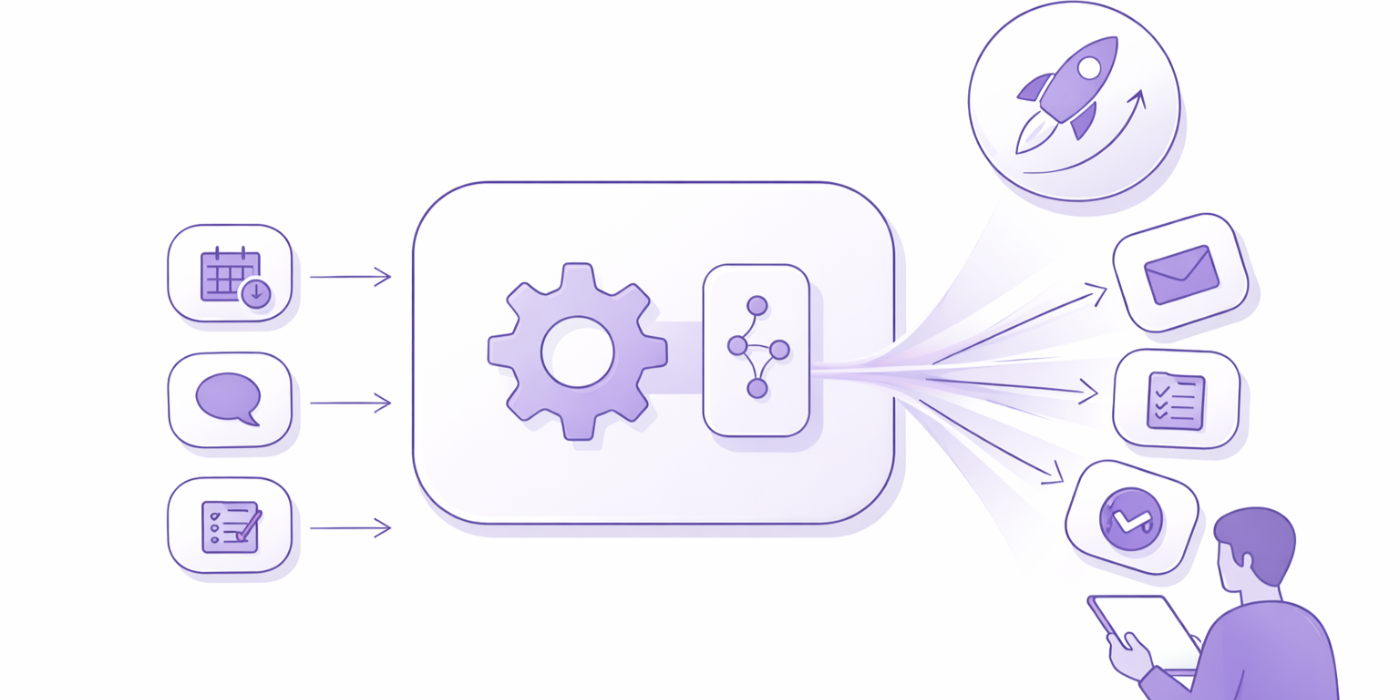
Automation is becoming the dividing line between coaching businesses that stay founder-dependent and coaching businesses that scale with control. Coaches lose growth when follow-ups slip, onboarding drags, reminders are manual, notes are scattered, and client support depends on memory instead of systems. The real win is not “doing less work.” It is creating cleaner delivery, faster response times, stronger retention, and a better client experience through automating your coaching business, smarter essential CRM tools, stronger balancing human touch with coaching automation, and the wider shift in how technology is completely transforming the coaching industry.
1. Why Coaching Automation Has Become a Growth Requirement, Not a Nice Extra
Most coaching businesses do not stall because the coach lacks talent. They stall because the business runs on manual effort at every stage. Leads wait too long for replies. Discovery calls happen without pre-qualification. Proposals sit unsent. New clients arrive confused. Check-ins are inconsistent. Feedback gets buried. Renewal conversations happen late. Referrals are left to chance. A coach who understands the future model every coach needs to adopt, studies the future of client engagement, improves coaching session templates, and builds around best coaching software and platforms for client management stops bleeding opportunities that should never have been lost in the first place.
Automation solves a different problem than most coaches assume. It does not only save time. It removes inconsistency. That matters because inconsistency quietly damages trust. A client who receives a late welcome email, a missed recap, or a forgotten accountability prompt does not just see a scheduling issue. They see a business that feels less reliable than the transformation it promises. That is why the strongest operators combine automated email sequences, interactive goal tracking tools, custom coaching dashboards, surveys and feedback tools, and client session recording tools into one clean operating system.
The highest-return automation is almost never flashy. It is usually the infrastructure beneath growth: lead capture, segmentation, reminders, onboarding, progress tracking, check-in forms, testimonial requests, reactivation campaigns, and renewal prompts. These systems free the coach to do more of the work clients actually pay for: pattern recognition, better decisions, sharper communication, stronger accountability, and more precise support. That is why coaches who want serious scale keep learning from the 10 best coaching apps every professional should know, virtual coaching tools boosting remote session effectiveness, Zoom and video conferencing best practices, and the emerging shift in how artificial intelligence is changing client interactions forever.
| Business Stage | Manual Task | Automation Workflow | Best Trigger | Biggest Payoff |
|---|---|---|---|---|
| Lead capture | New inquiry arrives and waits | Instant confirmation + next-step email | Form submission | Faster lead trust |
| Lead qualification | Manual screening by DM or email | Pre-call intake form with tags | Booking request | Higher-fit calls |
| Discovery calls | No prep before session | Auto-send prep questionnaire | Call booked | Sharper sales conversations |
| No-show recovery | Prospect disappears after missed call | Missed-call reschedule sequence | No attendance recorded | Recovered revenue |
| Proposal follow-up | Coach forgets to chase decision | Timed follow-up email series | Proposal sent | Higher close rate |
| Payment setup | Manual invoice reminders | Auto invoice + due-date reminders | Client signs | Fewer delays |
| Client onboarding | Welcome materials sent one by one | Structured onboarding sequence | Payment confirmed | Smoother first impression |
| Intake collection | Missing baseline information | Auto-send intake and baseline survey | Onboarding step reached | Better coaching diagnosis |
| Calendar management | Manual session coordination | Self-booking with rules and buffers | Client invite | Less admin drag |
| Session reminders | Late or absent reminders | Email + SMS reminder cascade | Upcoming appointment | Lower no-show rate |
| Session prep | Coach enters call without context | Auto-pull notes and goals summary | 24 hours before session | More focused coaching |
| Session recap | Clients forget commitments | Auto-send recap template with actions | Session marked complete | Better follow-through |
| Homework delivery | Assignments sent inconsistently | Action-plan email or portal update | Recap approved | Higher implementation |
| Weekly accountability | Coach chases updates manually | Weekly check-in form automation | Specific weekday/time | More consistent engagement |
| Habit tracking | Progress hidden in messages | Daily micro-tracking prompts | Client program active | Visible progress data |
| Goal review | Goals become stale | Monthly goal-review workflow | Month-end | Stronger retention |
| Resource delivery | Coach re-sends same materials | Segmented resource library delivery | Tag or milestone | Less repeat admin |
| Feedback collection | Feedback requested randomly | Mid-program pulse survey | Program midpoint | Faster service improvement |
| Engagement rescue | Quiet clients drift away | Low-engagement recovery sequence | No response or missing forms | Reduced churn |
| Renewal prep | Renewal discussed too late | Progress summary + renewal prompt | 30 days before program end | Higher retention revenue |
| Offboarding | Program ends without closure | Exit survey + next-step recommendations | Program complete | Better client experience |
| Testimonials | Coach forgets to ask for proof | Timed testimonial request flow | Milestone or completion | More social proof |
| Referrals | Referrals left to luck | Referral request after measurable win | Positive survey response | Warm lead generation |
| Community engagement | Group goes quiet between calls | Scheduled prompts and wins ritual | Weekly cadence | Stronger belonging |
| Content nurture | Audience hears from coach inconsistently | Segmented nurture sequence | Lead magnet opt-in | Higher conversion later |
| Reactivation | Old leads and clients go cold forever | Quarterly reactivation campaign | Inactivity window | Low-cost revenue lift |
| Reporting | Coach cannot see bottlenecks | Dashboard of leads, attendance, churn, renewals | Daily sync | Smarter decisions |
2. The Right Automation Stack for a Coaching Business That Wants Faster, Cleaner Growth
A coaching automation stack should be built in layers, not purchased in panic. The first layer is client capture and organization. You need one reliable place where inquiries, tags, forms, call history, and program status live. Without that, automation becomes scattered noise. This is why essential CRM tools to manage your coaching client relationships, better automating your coaching business, stronger best coaching software and platforms, and smarter virtual coaching tools belong at the base of your stack, not somewhere after your marketing has already gotten messy.
The second layer is communication automation. This includes lead-response emails, pre-call reminders, onboarding sequences, weekly check-ins, mid-program nudges, missed-session follow-ups, renewal prompts, and post-program nurture. Most coaches underbuild here, then wonder why leads cool off and clients drift. The issue is rarely motivation. It is usually silence at the wrong moment. When your timing improves, your business feels more professional. That is why automated email sequences, how to create engaging coaching content clients love, digital marketing tools coaches need for explosive growth, and SEO tools for coaching websites influence business growth far more than coaches expect.
The third layer is delivery automation. This is where the client feels the business. Intake forms, goal-tracking dashboards, session recaps, habit prompts, resource delivery, accountability check-ins, and feedback loops all belong here. Coaches who skip this layer force clients to depend on memory and willpower. That is one reason implementation collapses between sessions. A delivery stack that includes interactive goal tracking tools, creating custom coaching dashboards, powerful client journaling tools, habit formation tools, and interactive coaching exercises makes progress more visible and therefore more repeatable.
The fourth layer is proof and retention. Growth gets faster when wins are captured, summarized, and reused. A coach who automates progress reviews, testimonial requests, referral prompts, and reactivation campaigns compounds trust every month. This is where client testimonials capture, coaching case study templates, surveys and feedback tools, and creating a coaching resource library your clients will love become growth assets rather than background admin. The coach who sees automation as client-experience architecture usually grows faster than the coach who sees automation as back-office convenience.
3. What to Automate First If You Want the Fastest Return Without Breaking the Client Experience
The best first automation is lead response. Speed matters because attention decays fast after interest spikes. A prospect who downloads a guide, fills out a form, or books a discovery call is signaling active intent. When the next step is immediate and clear, your conversion window stays open. When the response is slow or vague, trust leaks before the conversation even starts. That is why early-growth coaches should begin with automated email sequences, clean essential CRM tools, practical digital marketing tools, and stronger SEO tools for coaching websites before they obsess over more advanced workflows.
The second automation to build is onboarding. This is where many coaching businesses accidentally create doubt. A client pays, then receives scattered emails, unclear instructions, missing forms, and no strong sense of momentum. That first week should feel organized, calm, and directional. A great onboarding automation sends the welcome message, baseline questionnaire, calendar setup, tech instructions, expectations, boundary notes, and first milestone. Coaches who care about retention study the communication secret behind successful coaching, reinforce the non-negotiable standards every coach must know, protect clarity through coaching session templates, and use Zoom and video conferencing best practices to make the first phase feel solid.
The third automation to prioritize is accountability between sessions. Most coaching value is won or lost after the call ends. The client forgets the insight, delays the action, avoids the hard conversation, or lets the week run them over. Weekly check-in forms, goal reminders, habit prompts, progress dashboards, and missed-check-in alerts turn coaching from a conversation into a system. That is why interactive goal tracking tools, custom coaching dashboards, powerful client journaling tools, habit formation tools, and gamification tools coaches are using for maximum engagement create such a disproportionate return.
The fourth automation to build is retention infrastructure. Renewal should never feel like a last-minute sales ask. It should feel like the next obvious step because the business has already made progress visible. Mid-program surveys, milestone recaps, testimonial capture, referral requests, and end-of-program next-step sequences make the value legible. Coaches who want a healthier revenue floor rely on using surveys and feedback tools to improve coaching outcomes, client testimonials capture, coaching case study templates, and free and premium coaching resources to boost your practice because those assets help both service quality and future conversion.
4. How to Automate Aggressively Without Losing Trust, Warmth, or Coaching Quality
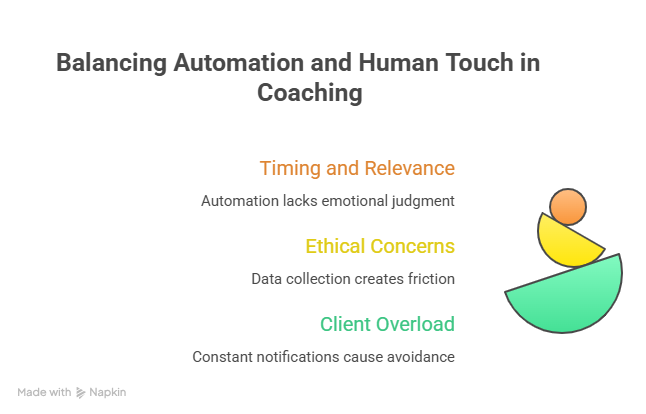
Bad automation feels like a template trying to impersonate care. Good automation feels like thoughtful support arriving at the right moment. The difference is timing, relevance, and emotional judgment. Session reminders can be automated. Progress surveys can be automated. Resource delivery can be automated. Renewal prompts can be automated. Emotional nuance cannot be outsourced that casually. Coaches who want scale without coldness keep studying balancing human touch with coaching automation, why trust is the most valuable asset in coaching, coaching integrity, and how the world’s best coaches get results because trust compounds faster than clever workflows ever will.
The safest rule is simple: automate logistics, systematize accountability, and personalize emotionally significant moments. That means a welcome sequence can be automated, but a client sharing a major setback deserves a human response. A milestone recap can use a template, but the reflection inside it should sound like you actually noticed the client’s progress. An AI-assisted draft can save time, but the final message should still sound coached, not processed. This is where how artificial intelligence is changing client interactions forever, the future model every coach needs to adopt, the future of client engagement, and best coaching apps every professional should know become useful only when paired with judgment.
Ethics matter even more as automation expands. When coaches automate intake, recordings, reminders, surveys, and message flows, they create more data, more touchpoints, and more opportunities for friction. That means consent, confidentiality, scope, and boundaries have to be explicit. Clients should know what is being tracked, how it is used, and where human review enters the process. Coaches who build durable businesses strengthen why emotional consent matters in every coaching session, coaching confidentiality, understanding ethical responsibilities as a health and life coach, and how to set clear professional boundaries with coaching clients before they ever brag about being “fully automated.”
Another overlooked issue is client overload. Coaches sometimes automate everything they can and create a business that feels like a constant stream of notifications, surveys, links, nudges, worksheets, and reminders. More automation does not automatically create more implementation. Often it creates more avoidance. The better move is to reduce friction and increase clarity. One weekly form is stronger than five scattered prompts. One clean dashboard is stronger than six disconnected tools. One useful recap is stronger than a flood of low-signal messages. That is why creating a coaching resource library your clients will love, building your coaching toolkit with essential templates and checklists, curating the perfect coaching toolkit for every niche, and best practices for creating interactive coaching workshops matter so much. They keep the system lean enough to stay useful.
5. A 90-Day Coaching Automation Plan to Grow Faster Without Building a Mess You Will Regret
In the first 30 days, audit before you automate. Track where leads are slowing down, where clients get confused, what you repeat every week, what you forget under pressure, and which parts of delivery depend too much on memory. Most coaches discover that their real bottlenecks are lead response, onboarding, check-ins, testimonial capture, and renewal timing. That is where to start. Use this phase to simplify the process itself, then reinforce it with automating your coaching business, better essential CRM tools, smarter custom coaching dashboards, and stronger surveys and feedback tools.
In days 31 to 60, build the first revenue-critical workflows. Create your lead-response sequence, discovery-call prep, onboarding flow, weekly accountability form, session recap process, and testimonial request sequence. Keep each workflow short, clear, and measurable. You want to see whether open rates improve, show-up rates rise, check-ins increase, and client confusion drops. This is the phase where automated email sequences, client session recording tools, interactive goal tracking tools, coaching case study templates, and client testimonials capture earn their place because each one strengthens either conversion or retention.
In days 61 to 90, optimize and trim. This is where mature operators separate useful automation from noisy automation. Review which reminders are ignored, which forms are incomplete, which emails are opened but not acted on, and where clients still need a human touchpoint. Use your results to shorten sequences, improve timing, rewrite weak copy, and move repetitive resources into a cleaner library. Coaches who want strong compounding growth layer in digital marketing tools, SEO tools, how to build an interactive coaching community online, and best practices for creating interactive coaching workshops only after their client journey already feels dependable.
The biggest automation mistakes are predictable. Coaches automate broken processes instead of fixing them. They buy too many tools before defining the workflow. They over-message clients and call it nurturing. They ignore consent and boundaries. They fail to measure whether anything improved. They let AI draft everything and flatten their voice. They automate sales faster than they automate delivery, then create churn. A stronger approach is to let coaching integrity, the ultimate guide to ethical coaching principles you can’t ignore, why trust is the most valuable asset in coaching, and how coaches avoid career-ending mistakes shape the operating system. Faster growth is powerful. Controlled growth is what protects the brand.
6. FAQs
-
Start with lead response and discovery-call preparation. That single workflow protects warm demand, increases professionalism, and reduces the number of calls wasted on poor-fit prospects. Build it inside essential CRM tools, reinforce it with automated email sequences, and connect it to digital marketing tools and SEO tools for coaching websites so incoming interest is handled properly.
-
It absolutely improves results when used well. Better reminders, cleaner check-ins, stronger recaps, visible goal tracking, and timely feedback loops reduce the gap between insight and implementation. That is why interactive goal tracking tools, custom coaching dashboards, powerful client journaling tools, and habit formation tools matter so much in a serious coaching business.
-
Fewer than most people think. A lean stack with a CRM, scheduler, video platform, form system, email automation, and one progress-tracking method is usually enough. Growth gets messy when coaches assemble disconnected apps without a workflow behind them. Build from best coaching software and platforms, virtual coaching tools, best coaching apps every professional should know, and building your coaching toolkit instead of chasing complexity.
-
Write like a coach, not like a software manual. Use your actual tone, anticipate the client’s real friction, and personalize emotionally important moments. Automation should carry clarity and timing, while the human layer carries empathy and judgment. This balance gets stronger when you study the communication secret behind successful coaching, balancing human touch with coaching automation, how the world’s best coaches get results, and the future of client engagement.
-
AI is useful when it speeds drafting, organizes notes, summarizes patterns, and supports operational clarity. It becomes risky when it replaces judgment, weakens confidentiality, or handles emotionally sensitive moments without proper oversight. Coaches should keep AI inside clear ethical guardrails shaped by how artificial intelligence is changing client interactions forever, why emotional consent matters in every coaching session, coaching confidentiality, and understanding ethical responsibilities as a health and life coach.
-
You should see faster lead response, better call attendance, smoother onboarding, more completed check-ins, stronger session follow-through, clearer renewal conversations, and lower client confusion. The business should feel calmer and more reliable from both sides. Track those gains with surveys and feedback tools, custom coaching dashboards, client session recording tools, and coaching case study templates.
