
Automating Your Coaching Business: Essential Tech Tools
Automating a coaching business is not about replacing human connection. It is about removing the friction that quietly destroys it. When coaches are buried in scheduling errors, forgotten follow-ups, scattered client notes, inconsistent check-ins, missed invoices, and manual reminders, client trust erodes long before results do. The right systems free you to coach better, respond faster, and create a practice that feels calm, credible, and scalable.
The coaches growing fastest are not always the most charismatic. They are often the ones building smart back-end systems around coaching session templates, stronger client management platforms, better virtual coaching tools, sharper automation workflows, and thoughtful ethical guardrails. This is how automation becomes an outcome tool, not just an efficiency trick.
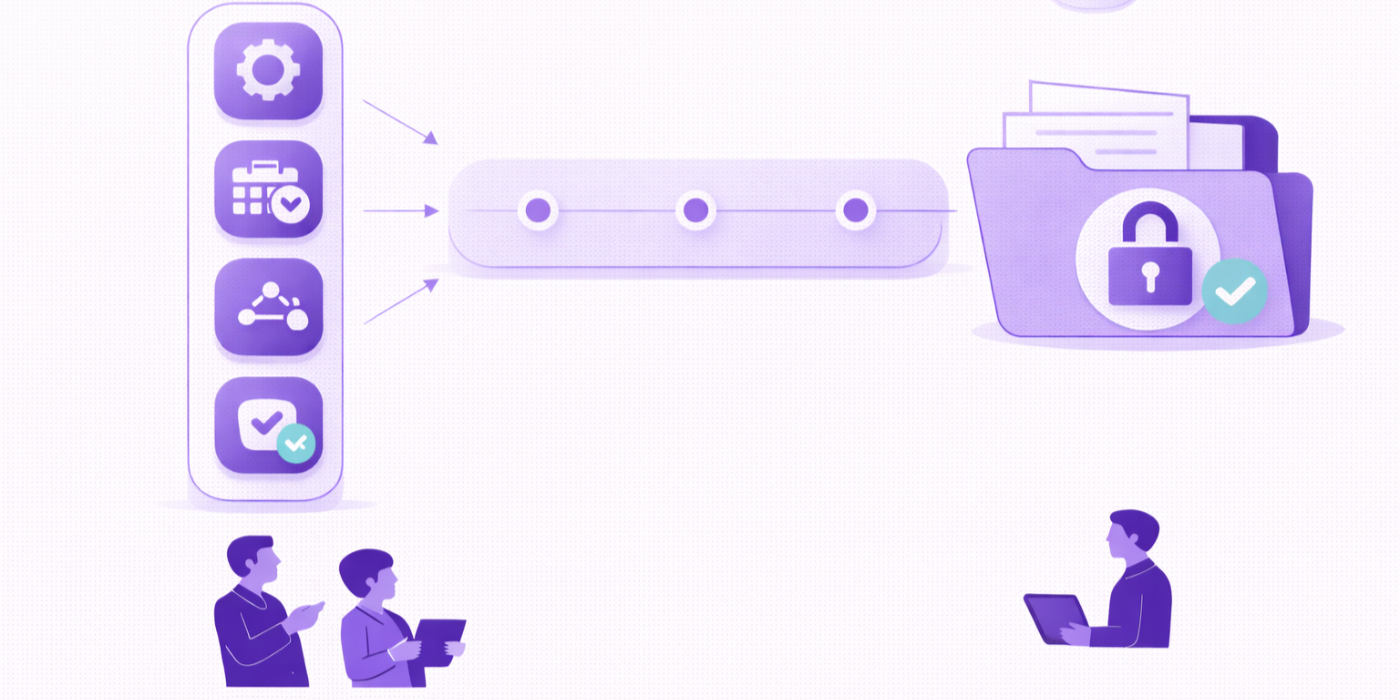
1. Why automation is now a performance advantage for coaches
Most coaching businesses do not break because the coach lacks talent. They break because the client experience is inconsistent. A client fills out an intake form and hears nothing for four days. A payment link gets buried. A Zoom link goes missing. Homework is sent once, then forgotten. Wins are never documented. Retention drops, not because the coaching was bad, but because the delivery felt unstable.
This is exactly where automation becomes strategic. It creates predictable touchpoints around effective coaching communication, protects momentum with interactive coaching exercises, supports accountability through daily journaling prompts, and helps coaches maintain consistency without becoming robotic. When a client receives the right reminder, reflection prompt, session prep form, and progress recap at the right time, coaching suddenly feels more premium.
Automation also reduces invisible cognitive load. Many coaches operate with too many mental tabs open: remembering who needs a check-in, who asked for meal-planning support, who missed the last session, who has not paid, and who said they were close to giving up. Systems catch what memory drops. That matters because how the world’s best coaches get results is rarely through motivation alone. It is through repeatable structure, clean follow-through, and smart use of technology transforming coaching.
The best automation strategy is not to automate everything. It is to automate the repeatable pieces that do not require your intuition: scheduling, reminders, basic onboarding, progress collection, content delivery, feedback capture, and re-engagement. Then you keep your live presence for what matters most: emotional nuance, behavior change, trust-building, and breakthrough conversations supported by powerful questioning and effective listening.
| Business Need | Tool Category | What It Automates | Why It Matters | Best Starting Move |
|---|---|---|---|---|
| Lead capture | Form builder | Inquiry intake | Faster response time | Create one niche-specific discovery form |
| Discovery calls | Scheduling tool | Booking and reminders | Fewer no-shows | Add email and SMS reminders |
| Onboarding | Workflow automation | Welcome emails and documents | Professional first impression | Build a 3-email welcome series |
| Payments | Billing platform | Invoices and recurring payments | Protects cash flow | Set auto-pay for packages |
| Contracts | E-sign tool | Agreements and consent | Reduces legal ambiguity | Automate signature before first session |
| Session prep | Pre-call questionnaire | Client reflections before calls | Improves session depth | Send 24 hours before each call |
| Video sessions | Video platform | Meeting links and calendar sync | Reduces tech friction | Use one default meeting template |
| Notes | Client portal | Centralized session notes | Prevents scattered follow-up | Store goals, wins, and blockers together |
| Habit coaching | Habit tracker | Daily behavior logging | Creates objective patterns | Track one keystone habit first |
| Nutrition support | Meal logging app | Food tracking prompts | Better dietary coaching data | Use photo logging before macro tracking |
| Accountability | Check-in form | Weekly progress reporting | Spots drop-off early | Ask only 3-5 essential questions |
| Homework delivery | Email automation | Post-session action plans | Improves follow-through | Create 5 reusable homework templates |
| Mindset work | Journaling tool | Prompt delivery and reflection capture | Deepens self-awareness | Send one prompt after each session |
| Motivation | SMS nudges | Timed encouragement | Keeps clients engaged | Use no more than two nudges weekly |
| Program delivery | Course platform | Modules and drip content | Scales knowledge transfer | Automate weekly lesson release |
| Community engagement | Community platform | Prompts, wins, and peer support | Improves retention | Launch one weekly ritual |
| Progress tracking | Dashboard tool | Goal and metric visualization | Makes progress visible | Track three outcomes only |
| Session records | Recording tool | Optional replay library | Boosts client recall | Use clear consent policies |
| Testimonials | Feedback capture tool | Review requests and stories | Builds social proof | Trigger requests after measurable wins |
| Content marketing | Scheduling platform | Social publishing queue | Sustains visibility | Batch one month of posts |
| SEO growth | SEO tool | Keyword and content analysis | Attracts inbound leads | Optimize one service page first |
| Email nurture | CRM/email platform | Lead segmentation and follow-up | Prevents cold leads from dying | Build a 5-email nurture series |
| Re-engagement | Win-back automation | Follow-up for dormant clients | Recovers lost revenue | Trigger at 21 or 30 inactive days |
| Referrals | Referral workflow | Requesting introductions | Turns results into growth | Ask right after client milestones |
| Boundaries | Messaging rules | Office hours and reply expectations | Prevents burnout and resentment | Automate response-time reminders |
| Compliance | Secure storage tool | Protected client files | Safeguards trust | Centralize sensitive documents |
| Continuity | Knowledge base | Templates and SOPs | Easier team growth later | Document one workflow per week |
| Analytics | Reporting dashboard | Retention and conversion tracking | Better decisions | Review metrics monthly |
2. The essential tech stack every coaching business should evaluate
A coaching tech stack should not be built around trends. It should be built around client journey stages. Start with the path a real client takes: discovery, booking, onboarding, payment, session delivery, accountability, progress tracking, renewal, and referral. If your tools do not support those steps, they are noise.
The first category is booking and calendar automation. Coaches lose revenue when prospects are forced to email back and forth for a time slot. A smart scheduling layer integrated with video conferencing best practices and video conferencing hacks removes friction before trust even begins. It also communicates professionalism. A smooth booking flow tells clients your business is stable.
The second category is onboarding automation. This includes welcome emails, agreements, intake forms, expectation-setting, and session preparation. Coaches who skip strong onboarding often spend the first three sessions correcting preventable misunderstandings. By contrast, coaches using coaching case study templates, organized resource libraries, and essential certification resources can deliver clarity from day one.
The third category is accountability automation. This is where many coaches underperform. Great advice does not matter if the client disappears between sessions. Weekly check-in forms, habit trackers, reflection prompts, micro-reminders, and lesson drip systems create structure around behavior change. This is especially powerful when paired with smart goals strategies, life mapping, gratitude journaling, and affirmation cards. The point is not content overload. The point is consistent client engagement.
The fourth category is communication and follow-up automation. The strongest coaches never leave a session hanging in the client’s memory. They send recap notes, next steps, deadlines, and encouragement in a systemized way. Tools that support client session recording, automated email sequences, and better client testimonials capture can strengthen both results and marketing at the same time.
The fifth category is audience growth automation. A coaching business with no inbound lead engine becomes emotionally dependent on every sales conversation. That creates desperation clients can feel. Automated content systems supported by YouTube channel growth, SEO tools for coaching websites, engaging coaching content, and coaching apps every professional should know make growth less fragile.
3. How to choose tools without overbuilding your business
Many coaches sabotage automation by buying too much software too soon. They end up with a calendar app, CRM, form builder, community platform, course platform, payment tool, AI note taker, email system, and dashboard tool that barely talk to one another. The result is not leverage. It is digital clutter. More tools can actually create more manual work when data is duplicated, notifications collide, and clients are forced to log into five portals.
A better rule is to automate one business bottleneck at a time. If you are losing leads, fix inquiry response and booking first. If clients are ghosting between sessions, fix accountability. If you are exhausted from admin, fix onboarding and session follow-up. If growth is unpredictable, fix email nurture and content distribution. This approach aligns with curating the perfect coaching toolkit, building essential templates and checklists, and focusing on professional coaching tools that actually solve a business problem.
When evaluating a tool, ask five harder questions. First, does it reduce client friction or just add a prettier interface? Second, can it support your niche without forcing awkward workarounds? Third, does it help you uphold professional boundaries and clear client expectations? Fourth, will it still work if you double your client load? Fifth, can you explain its purpose to a client in one sentence?
A strong tool should also reinforce your coaching method. If you focus on behavior change, your system should support frequent habit check-ins, not just pretty session notes. If your work centers around emotional regulation, your automation should make room for mindfulness and meditation techniques, stress management strategies, and recovery support for clients dealing with burnout or work-life balance. The system should serve the method, not the other way around.
Finally, be ruthless about ethics. Automation can become sloppy fast. Coaches sending mass reminders at the wrong time, collecting sensitive data without secure storage, or using AI-generated communication without reviewing tone can harm trust. That is why coaching confidentiality, ethical responsibilities, emotional consent, and coaching integrity should shape every automation choice.
4. The highest-impact automations coaches should implement first
If you want the fastest return, start with automations that directly improve attendance, follow-through, and retention. These are the parts of the business where small systems create outsized results.
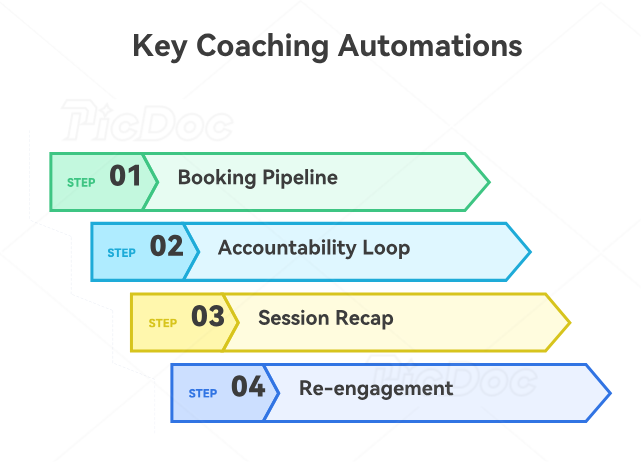
The first high-impact automation is the booking-to-onboarding pipeline. A prospect books a discovery call. Immediately they receive a confirmation, a short pre-call form, a reminder sequence, and a simple explanation of what will happen next. If they convert, the system should trigger agreement signing, payment, welcome instructions, and the first session prep form. This reduces awkward delays and reinforces professionalism before coaching even begins. It pairs naturally with how certification differentiates your business, stronger credential presentation, better program selection clarity, and the authority benefits of top accredited health coach certifications.
The second high-impact automation is the weekly accountability loop. This is where real coaching businesses are won or lost. Every week, clients should receive one short check-in form asking about wins, misses, confidence, obstacles, and next-step commitment. Coaches who do this consistently catch disengagement early. They can identify when a client is spiraling, rationalizing, or quietly withdrawing. That makes automation a retention tool, not just an administrative convenience. It also amplifies methods taught in new data-proven coaching methods, the positive psychology framework, solution-focused brief coaching, and the neuroscience-based method every coach needs.
The third high-impact automation is the post-session recap. This should include three things only: what was clarified, what the client committed to, and when the next checkpoint happens. Clients forget more from sessions than coaches think. Without a recap, insight evaporates into good intentions. With a recap, the session extends into behavior. This is even stronger when paired with how to inspire immediate action, positive behavior reinforcement, the communication secret behind successful coaching, and client breakthrough techniques.
The fourth high-impact automation is re-engagement for slipping clients. Many coaches let quiet clients vanish because reaching out feels emotionally loaded. A structured reactivation sequence removes that hesitation. It can include a compassionate check-in, a quick reflection question, a low-pressure re-entry offer, and a reminder of past wins. This is especially important when supporting clients through grief and loss, trauma-aware situations, self-care support, or deeper self-talk struggles addressed in inner critic management.
5. How to automate without losing the human touch clients pay for
The fear around automation is valid. Many coaches have experienced brands that over-automate everything until every message sounds templated, every check-in feels mechanical, and every interaction becomes obviously scaled. That is not premium. That is distance disguised as efficiency. Clients do not pay for polished systems alone. They pay for feeling seen, understood, challenged, and supported.
The solution is to automate delivery mechanics while personalizing the coaching moments. For example, your system can automatically send a weekly check-in, but the questions can reflect your method. Your reminder sequence can be automatic, but the tone can sound like your actual voice. Your post-session recap can be sent through a template, but the commitments inside it should be specific. Your community prompt can be scheduled, but your response to client wins must feel real. This balance is central to balancing human touch with automation, especially as AI changes client interactions and future coaching models keep evolving.
A useful rule is this: automate the predictable, humanize the emotional. Scheduling, reminders, forms, resources, invoices, and delivery flows are predictable. Fear, shame, resistance, avoidance, grief, identity conflict, and breakthrough moments are emotional. Those require presence. Coaches who confuse these categories create sterile businesses. Coaches who separate them create trust-rich systems. This is where building deep trust, managing difficult conversations, conflict resolution, and the art of powerful questioning remain irreplaceable.
You also need boundaries built into your automation. Not every client message deserves instant access. Not every form should ask for deeply personal information. Not every win should trigger a testimonial request. Strong systems respect pacing and consent. That is why automation should always be filtered through non-negotiable coaching standards, trust as a coaching asset, dual-relationship ethics, and career-ending mistakes coaches must avoid. Automation should make clients feel supported, never monitored.
Done well, automation actually makes you more human. It removes the scramble that makes coaches rushed, forgetful, reactive, and mentally divided. It gives you more attention to bring into live sessions. It creates cleaner memory between appointments. It prevents details from slipping. And it lets your clients experience you as steady. Steadiness is one of the most underrated trust signals in coaching.
6. FAQs
-
Start with scheduling, reminders, onboarding, and one weekly accountability check-in. These four areas solve the most common early-stage breakdowns: no-shows, slow follow-up, unclear expectations, and loss of momentum. Before buying advanced tools, make sure your basic client journey feels clean and reliable using systems informed by launching a health coaching career, becoming a certified life coach, health coach certification for busy professionals, and how quickly to earn certification.
-
It can absolutely improve outcomes when it strengthens adherence, memory, self-reflection, and accountability. Automated reminders help clients show up. Automated check-ins catch slippage. Automated recaps reinforce action. Automated content delivery keeps education structured. Time savings are only the surface benefit. The deeper value is improved follow-through, which is why coaches are obsessed with certain methods, client engagement futures, the hidden goldmine of coaching, and real-results empowerment matter so much.
-
Use as few as possible while still covering booking, payments, session delivery, notes, accountability, and follow-up. For many solo coaches, three to five core tools are enough. The goal is not sophistication. The goal is reliability. A smaller stack with strong integration beats a bloated stack that confuses both coach and client. This is consistent with radical simplicity for coaches, coaches reaching mastery, the coaching skill you did not know you needed, and future-proofing your coaching career.
-
AI can be useful for drafting recaps, organizing notes, brainstorming content, and speeding up admin, but it should never replace ethical judgment, relational nuance, or informed consent. Coaches must review outputs, protect confidentiality, and avoid using AI in ways that blur boundaries or misrepresent expertise. Safe adoption depends on your standards, storage practices, and transparency. That is why it helps to ground your systems in ethical coaching principles, online education for continuous development, exclusive coaching industry trends, and coaching market growth opportunities.
-
Watch for three signals: client follow-through, client sentiment, and operational clarity. If clients attend more consistently, complete more actions, and describe your process as organized and supportive, your automation is helping. If they seem confused, emotionally distant, or overwhelmed by notifications and portals, it is hurting. Review every workflow from the client’s point of view, not just your own. That perspective gets stronger when informed by wearable technology for coaching, leveraging wearable tech, best practices for interactive workshops, and building an interactive coaching community.
-
They automate complexity instead of simplifying experience. Many coaches build impressive-looking systems that make clients click through too many steps, complete too many forms, and receive too many messages. Good automation feels lighter, not heavier. It should reduce effort while increasing clarity. The best systems quietly remove friction in the background so the coaching relationship can stay in the foreground.
