
Corporate Health Coaching in 2026: Reddit Experiences on Pay, Hiring, Benefits & Credentials Employers Ask For
Corporate health coaching can solve one of private practice’s hardest problems: the employer supplies the clients. The trade-off is less control over pay, scheduling, coaching volume, documentation, and performance metrics. In 2026, current job postings and Reddit experiences show a market ranging from lower-paid contract work to employee roles with benefits and stronger hourly rates. Anyone considering health-coach employment should compare certification requirements, career income realities, and coaching-market demand before accepting the first remote offer they find.
1. What Corporate Health Coaching Jobs Actually Look Like in 2026
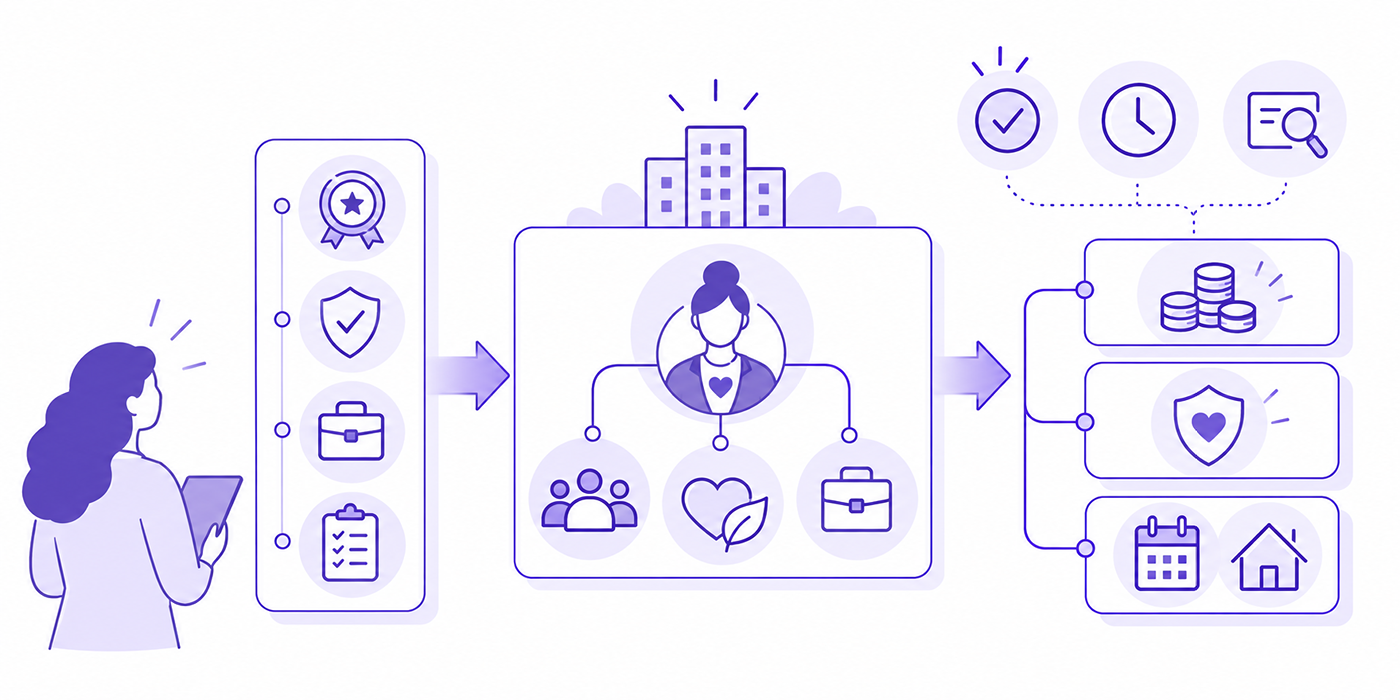
“Corporate health coach” covers several employment models. One coach may work directly at an employer site running wellbeing programs. Another may work remotely for a digital-health company whose corporate clients purchase coaching for employees. Others sit inside healthcare systems, chronic-condition programs, insurers, benefits platforms, or population-health teams.
That difference matters because the actual job can stretch far beyond one-to-one coaching. A current Personify Health workplace-coach vacancy combines individual and group coaching with workshops, webinars, platform engagement, event coordination, data use, and interaction with corporate benefits leadership. It requires a health-related bachelor's degree, asks for three to five years of related experience, and lists NBHWC or ICF certification as preferred and required within two years of hire. Someone preparing for this type of role therefore benefits from behavior-change expertise, leadership communication, professional contracting, and cultural competence, not coaching technique alone.
Kaiser Permanente's September 2026 Atlanta Wellness Coach opening illustrates another model. The part-time role pays $31.53–$40.77 per hour, lists NBC-HWC as highly preferred, and centers on individual wellness coaching, lifestyle and behavior-change support, goal setting, health education, member engagement, data collection, and virtual or telephone encounters. It also asks for either a relevant bachelor's degree or three years of health-education experience. That is a useful reminder to study health-coaching job requirements, NBHWC eligibility, ICF versus NBHWC, and career ROI together.
Reddit experiences reveal the operational side job descriptions sometimes hide. In a January 2025 discussion, one coach with 7.5 years in corporate wellness described years of back-to-back 15- and 30-minute appointments. Another commenter said acquaintances working at Omada Health, Trustmark, and Personify Health were earning roughly $23–$28 per hour, with two of the three roles full-time. Those figures are individual anecdotes rather than a market wage survey. They still reveal why career burnout, self-care systems, coaching ethics, and duty of care matter inside the profession itself.
The broader labor market also offers useful context. Health coaching does not have a clean standalone Bureau of Labor Statistics occupation, so adjacent categories should be treated carefully. BLS reports a 2025 median wage of $64,070 for health education specialists, with 6% projected employment growth from 2025 to 2035 and about 6,900 openings per year. Hospital-employed health education specialists had a 2025 median wage of $83,040. These figures describe health education specialists rather than corporate health coaches, but they help illustrate the wider market surrounding health promotion, wellness careers, behavior change, and workplace wellbeing.
| Offer Detail | Strong Signal | Potential Warning | Question to Ask Before Accepting |
|---|---|---|---|
| Employment classification | W-2/employee with clearly stated benefits | 1099 responsibilities treated like employment | Am I an employee or independent contractor? |
| Hourly rate | Competitive for experience and local market | Credential-heavy role with entry-level compensation | What determines placement within the pay range? |
| Guaranteed hours | Written weekly minimum | Hours depend entirely on bookings | Are my weekly hours guaranteed? |
| Health insurance | Clearly documented eligibility | Full-time workload with no coverage | When does medical coverage start? |
| Paid time off | Defined PTO policy | Unpaid leave only | How much PTO is included? |
| Retirement benefits | Employer retirement plan or contribution | No retirement support | Is there a 401(k) or equivalent benefit? |
| Credential requirement | Requirement matches responsibilities | Multiple expensive credentials for low-level work | Which credential is mandatory at hire? |
| Credential timeline | Employer allows time to qualify | Employee pays immediately without support | Can certification be completed after hiring? |
| Certification reimbursement | Employer pays or subsidizes it | All costs fall on employee | Is certification or exam reimbursement available? |
| Continuing education | Learning budget or paid CE | Mandatory CE entirely unpaid | Does the company fund continuing education? |
| Client load | Clearly defined sustainable target | Continuous calls with little recovery time | How many coaching encounters occur per shift? |
| Appointment length | Enough time for meaningful coaching | Very short scripted encounters | How long is a standard coaching appointment? |
| Buffer between calls | Documentation/admin time protected | Appointments scheduled back-to-back all day | How much buffer exists between sessions? |
| Documentation | Clear workflow integrated into work hours | Charting expected after scheduled shift | When is documentation completed? |
| Performance metrics | Quality, engagement and outcomes balanced | Success measured mostly through volume | Which metrics determine performance? |
| Call monitoring | Transparent QA used for development | Unclear or punitive monitoring | Are coaching sessions recorded or audited? |
| Sales expectations | Clearly separated from coaching | Pressure to upsell disguised as coaching | Do coaches have conversion or sales quotas? |
| Engagement targets | Realistic member-engagement goals | Coach held responsible for uncontrollable participation | How are engagement targets calculated? |
| Scope of practice | Written and professionally aligned | Pressure to operate outside credential scope | How are out-of-scope issues escalated? |
| Clinical escalation | Clear referral pathway | Coach left alone with complex clinical issues | Who handles medical or mental-health escalation? |
| Supervisor credentials | Leadership understands coaching | Managers judge coaching without relevant expertise | Who supervises the coaching team? |
| Training period | Paid structured onboarding | Immediate caseload with minimal orientation | How long is onboarding? |
| Technology burden | Integrated systems and adequate training | Multiple systems reducing client time | Which platforms must coaches use daily? |
| Remote status | Clearly defined location policy | “Remote” role restricted after hiring | Is remote status contractual or discretionary? |
| Residency restrictions | Requirements disclosed upfront | Unexpected state restrictions | Which states may employees work from? |
| Schedule control | Predictable scheduling or real flexibility | Evening/weekend requirements hidden until interview | How much control do coaches have over schedules? |
| Caseload complexity | Cases matched to scope and training | High-acuity clients routed to general coaches | What types of clients will I coach? |
| Group coaching | Training and preparation time provided | Group facilitation added without workload adjustment | How much group work is expected? |
| Career progression | Defined senior, lead or program roles | Flat role with no progression | Where do successful coaches move internally? |
| Turnover | Stable team and long-tenured coaches | Continuous recruitment for the same position | What is average tenure on this coaching team? |
2. Corporate Health Coach Pay: Why $25 an Hour Can Mean Very Different Things
A headline hourly rate tells you surprisingly little.
Personify Health currently advertises a full-time workplace health coach role at $25–$35 per hour, with medical and dental coverage, PTO, mental-health support, retirement planning, professional-development support, and benefits beginning on day one. A separate current Kaiser Permanente role offers $31.53–$40.77 per hour for 20 hours weekly and describes the position as a regular employee role. Someone evaluating health-coaching earnings should therefore compare total compensation alongside health-coach job opportunities, credential ROI, and long-term career demand.
Contract work changes the calculation.
A current remote Indeed listing advertises a full-time 1099 NBC-HWC position at roughly $20–$35 per hour, while another listed remote health-coach position shows $18–$24 per hour. Independent contractors may need to cover their own benefits, tax obligations, unpaid time away, and business expenses, depending on their circumstances. A $30 contractor rate and a $30 employee rate therefore represent different economic packages.
Reddit frustration in 2026 concentrates heavily around this gap. An August thread criticized a bilingual role requiring NBHWC certification while advertising $20–$25 per hour without benefits. In the same discussion, another coach reported finding a $30-per-hour 1099 contract, while commenters emphasized the economic difference between contractor and employee compensation. These accounts reinforce why coaching income mathematics, career sustainability, self-care practices, and professional boundaries belong in an employment decision.
Salary aggregators add another imperfect reference point. Indeed currently estimates Omada Health coach pay at about $24.35 per hour from seven past and present postings and Personify Health health-coach pay at about $30.63 per hour from eight postings. These are platform estimates with small samples, so they should be treated as directional rather than authoritative. A stronger job search compares live offers, employment requirements, credential requirements, income goals, and the workload attached to each rate.
The useful number is therefore effective compensation per working hour, not advertised coaching pay.
Someone earning $28 an hour with paid meetings, documentation, training, PTO, insurance, and retirement support may have a substantially different package from someone earning $32 as a contractor who absorbs every non-client hour personally. That calculation also affects whether private health coaching, corporate employment, client acquisition, or a hybrid model makes more sense.
3. What Credentials Employers Actually Ask For
The credential picture becomes clearer when you separate certificate completion from board certification.
NBHWC states that NBC-HWC board certification requires completion of an approved training program, 50 qualifying health-coaching sessions, and either an associate degree or higher or 4,000 hours of work experience before examination eligibility. Candidates researching this path should compare health-coach certification versus NBHWC, ICF versus NBHWC, professional ethics, and duty-of-care expectations.
Employers increasingly have a practical reason to distinguish the two. NBHWC's employer guidance emphasizes that board certification signals standardized training, an independently assessed examination, an established scope of practice, ethics requirements, and continuing education. Its current career center includes openings titled Workplace Health Coach, Wellness Coach, Health & Well-Being Coach, remote health coach, lead health and wellness coach, and board-certified health coach/RN. This makes formal coaching standards, behavior-change competence, clear coaching scope, and contracting skills especially relevant to organizational work.
The important word is frequently preferred, rather than universally required.
Kaiser's current wellness role says NBC-HWC is highly preferred. Personify's current workplace role says NBHWC or ICF certification is preferred and must be obtained within two years of hire. Other employers may accept relevant degrees, nursing backgrounds, dietetics credentials, exercise physiology experience, motivational interviewing experience, or several years of health education work.
Reddit experiences broadly align with that mixed picture. A January 2025 commenter said many available coaching roles required ICF or NBHWC certification while others substituted direct coaching experience or related education. An April 2025 discussion included a coach saying organizational employers they had seen frequently sought board certification. Another February 2026 discussion among dietetics professionals included sharply different views on NBC-HWC value, with one commenter describing employer sponsorship while others questioned its incremental value for professionals who already had extensive health-related credentials.
The strongest applicant therefore builds a credential stack matched to the job. A corporate wellness role might reward leadership communication, cultural competence, health behavior change, and SMART goal coaching. A healthcare-adjacent role may place more weight on clinical experience, nursing, nutrition, chronic-condition knowledge, documentation, and interdisciplinary boundaries.
4. Benefits, Workload and Metrics: The Parts of the Offer That Can Matter More Than Salary
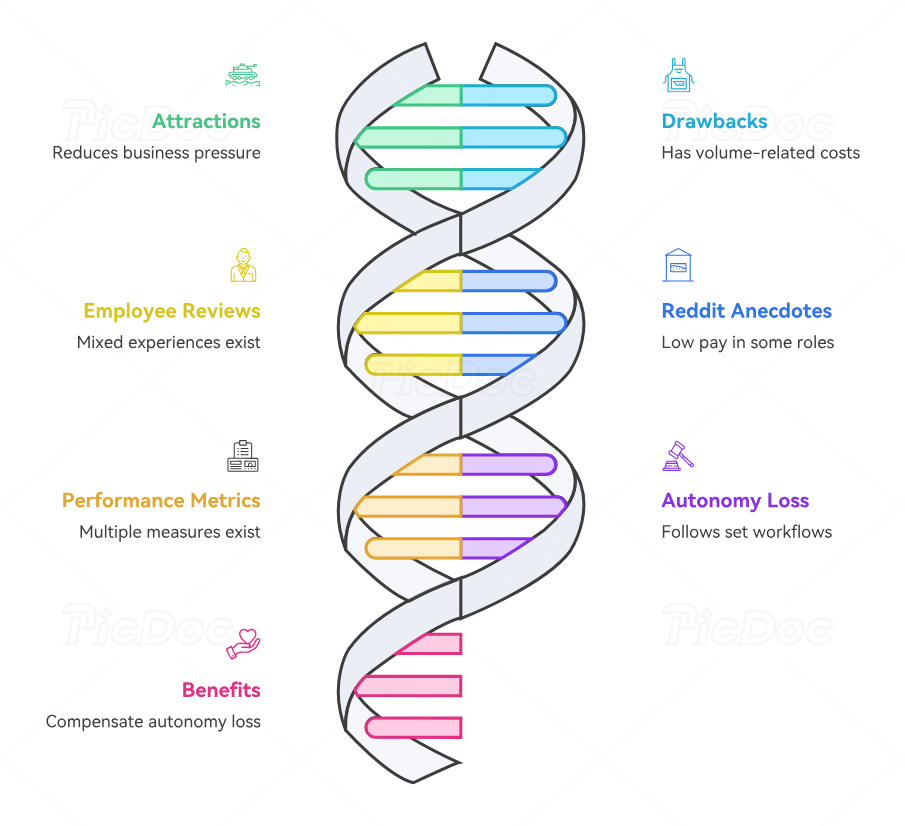
Corporate employment becomes attractive when it removes business-development pressure. You can spend far less time worrying about finding your first coaching clients, building a private-practice income, positioning your coaching offer, and generating leads. The employer provides infrastructure, technology, members, brand credibility, and usually a standardized coaching process.
The cost can be volume.
Employee reviews and Reddit experiences repeatedly describe short appointments, call-heavy days, scripts, utilization targets, and close performance monitoring at some organizations. Personify Health reviews from 2026 are mixed. Some employees describe meaningful remote work and fair benefits, while another health coach describes tight scheduling, extensive call monitoring, and metrics-driven management. These reviews reflect individual experiences and can vary by team and period. Coaches familiar with career burnout, self-care coaching, Positive Intelligence, and professional boundaries should evaluate whether the work design supports sustainable practice.
A May 2026 Reddit poster described surviving on one part-time health-coaching job for ten months before finding another, with neither providing benefits. They also complained about long interview processes and employers imposing performance structures they felt conflicted with their understanding of coaching standards. Another February 2026 thread warned about approximately $20-per-hour “coaching mill” jobs while noting that the poster had also encountered better-paying opportunities, many of which required certification. These anecdotes sharpen the importance of coaching ethics, clear agreements, scope boundaries, and behavior-change quality.
Ask specifically how performance is measured.
“Member engagement” can mean attendance, completed sessions, platform logins, program enrollment, follow-up rates, satisfaction scores, health-behavior measures, or retention. “Quality” may involve recorded-call audits, supervisor scoring, documentation accuracy, motivational-interviewing standards, or adherence to a proprietary coaching framework.
A role that measures ten things gives you ten potential pressures.
This also explains why corporate coaching can feel different from using flexible methods such as the CLEAR coaching model, OSCAR model, T-GROW framework, or Immunity to Change. Your employer may already have required workflows, documentation standards, call structures, and escalation pathways.
Benefits can compensate for some loss of autonomy. Personify's current full-time workplace position explicitly lists medical and dental coverage, PTO, mental-health support, retirement planning, financial protection, professional development, and day-one benefits. An Omada employee review posted in April 2026 likewise praised flexible scheduling, benefits, and PTO while mentioning limited advancement and changing coaching-quality standards. That is why comparing employment and entrepreneurship, full-time coaching economics, career sustainability, and professional development gives a better picture than hourly pay alone.
5. How to Become a Stronger Corporate Health-Coach Candidate
The strongest application starts with the employer's problem.
A benefits platform may need better member engagement. A hospital may need patients to follow lifestyle recommendations. A workplace-wellbeing provider may need coaches who can facilitate groups, communicate with HR, analyze participation data, run onsite events, and support behavior change. A chronic-care company may need coaches who can work safely around medical complexity without exceeding scope.
Build your résumé around those outputs.
Current Personify requirements explicitly include motivational interviewing, individual behavior-change management, group coaching, presentation skills, metrics, electronic documentation, event coordination, and stakeholder management. Kaiser's listing emphasizes health education, data collection, adapting to different learning needs, collaboration, evidence-based information, facilitation, communication, and problem solving. These skills map naturally to health behavior change, leadership coaching, cultural competence, and professional coaching standards.
Quantify experience wherever possible.
“Provided health coaching” tells the employer almost nothing. Stronger evidence might show number of clients coached, number of sessions completed, group size, completion rates, engagement improvement, workshop attendance, documentation volume, languages used, or percentage of clients completing agreed action plans. Keep outcomes within appropriate coaching scope, use clear contracts, demonstrate SMART goal competence, and show actual behavior-change skill.
Experience can also be built strategically while pursuing NBC-HWC. The board currently requires 50 qualifying sessions, each at least 20 minutes, with at least 75% of the session devoted to coaching facilitation rather than education. Sessions can be paid or pro bono, while friends, family, and current classmates cannot count toward the log. This creates an opportunity to build both exam eligibility and concrete interview stories while studying NBHWC requirements, ICF alternatives, client acquisition, and coaching credibility.
Finally, prepare interview examples around difficult coaching situations rather than memorized definitions. Explain how you handled resistance, protected scope, adjusted a goal, worked across cultural differences, referred an out-of-scope issue, documented a session, or maintained rapport with a disengaged client. Knowledge of ADKAR, CLEAR, OSCAR, and T-GROW becomes more convincing when you can show how the underlying principles changed a real conversation.
6. FAQs About Corporate Health Coaching Jobs in 2026
-
Q1. How much do corporate health coaches earn in 2026?
Current U.S. postings show substantial variation. Personify Health advertises one workplace-coach position at $25–$35 per hour, while Kaiser Permanente lists a September 2026 wellness-coach opening at $31.53–$40.77 per hour. A remote 1099 NBC-HWC listing surfaced by Indeed advertises roughly $20–$35 per hour. Compare those figures with health-coaching income, employment options, credential requirements, and total benefits rather than treating one hourly rate as a universal benchmark.
-
Q2. Do corporate health-coaching jobs require NBC-HWC certification?
Requirements vary. Some employers require it, others prefer it, and some allow certification after hire. Kaiser's current role lists NBC-HWC as highly preferred, while Personify's current workplace-coach role prefers NBHWC or ICF certification and requires one within two years. Compare NBHWC pathways, ICF versus NBHWC, health-coach job requirements, and career ROI before paying for another credential.
-
Q3. Do corporate health coaches receive employee benefits?
Some do, particularly standard full-time employee roles. Personify's current full-time workplace-coach posting lists medical and dental benefits, PTO, mental-health support, retirement planning, professional development, and day-one benefit eligibility. Contract and part-time roles can offer much less. Reddit posts in 2026 describe coaches working multiple part-time jobs without benefits and contractors being paid hourly without employee coverage. Evaluate coaching income, burnout risk, career stability, and benefits together.
-
Reddit discussions consistently describe remote positions as competitive, especially among newer coaches. A 2025 commenter said many available positions required certification and suggested contract, care-coordination, or engagement roles as possible experience-building routes. Improve competitiveness through board-certification planning, behavior-change skill, professional credibility, and measurable coaching experience rather than relying on a training certificate alone.
-
Depending on the employer, the day can include one-to-one coaching, short telephonic appointments, messaging, group coaching, health education, webinars, documentation, data entry, platform engagement, event facilitation, referrals, and meetings with organizational stakeholders. Current Personify and Kaiser postings demonstrate this broader workload. Skills in CLEAR coaching, SMART goals, behavior change, and cultural competence can all become relevant.
-
Employment can provide clients, systems, supervision, predictable experience, and sometimes benefits. Private practice provides greater control over pricing, niche, scheduling, and program design while making you responsible for getting clients, positioning, and operational costs. A hybrid route can also allow a newer coach to accumulate experience while testing an independent offer.
