
Positive Intelligence (PQ): How Coaches Are Using Mental Fitness for Lasting Change
Clients often understand their patterns long before they can change them. They recognize the perfectionism, avoidance, overthinking, people-pleasing, or self-criticism driving their choices, yet insight disappears under pressure. Positive Intelligence gives coaches a mental-fitness framework for interrupting those automatic reactions and practicing more constructive responses. Combined with the science of behavior change, emotional agility, habit formation, and structured accountability coaching, PQ turns internal awareness into repeatable behavior clients can use between sessions.
1. Why Positive Intelligence Has Become a Powerful Coaching Framework
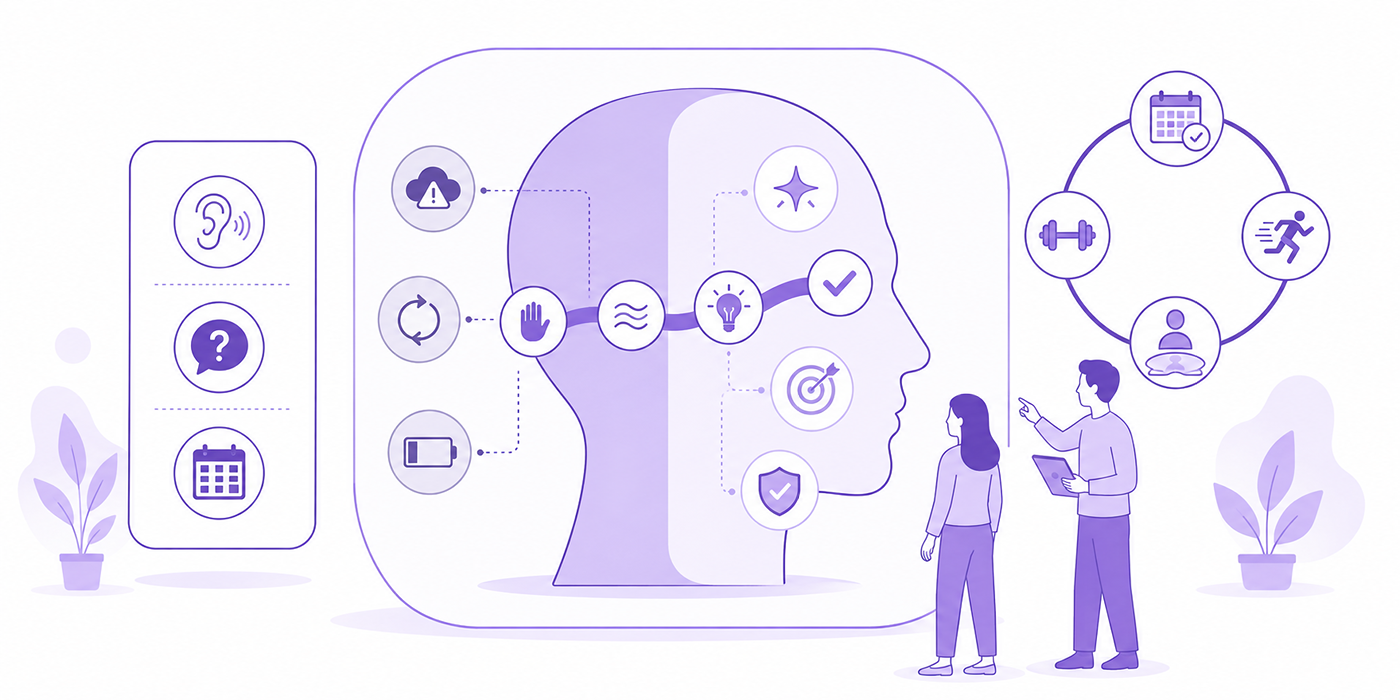
Positive Intelligence, commonly shortened to PQ, is a branded mental-fitness framework developed by Shirzad Chamine. Its central idea is that people operate through recurring mental patterns that either support effective responses or pull them into stress-driven reactions. The framework calls the unhelpful patterns Saboteurs and describes the wiser, more constructive mode as the Sage. Its official coaching system centers on Saboteur recognition, Sage activation, and Self-Command practice.
This language gives coaches a practical way to explore patterns that clients frequently experience as personality defects. A client who constantly anticipates disaster may begin to identify a Hyper-Vigilant pattern. A leader who controls every detail may recognize a Controller response. A professional who ties self-worth to achievement may see the Hyper-Achiever at work. That externalized language can support a psychologically safe coaching environment, improve constructive feedback conversations, strengthen emotional intelligence coaching, and create more useful discussions about client anxiety and stress.
The framework identifies ten common Saboteurs: Judge, Avoider, Controller, Hyper-Achiever, Hyper-Rational, Hyper-Vigilant, Pleaser, Restless, Stickler, and Victim. The Judge is presented as the universal Saboteur, while the others operate as recurring accomplice patterns. The model describes five Sage powers: Empathize, Explore, Innovate, Navigate, and Activate.
These labels become useful when a coach treats them as hypotheses for exploration. A client may display behaviors associated with several patterns depending on the context. The same person can become controlling during uncertainty, pleasing during relationship conflict, restless during repetitive work, and hyper-rational during emotionally difficult conversations. Skilled coaches connect each pattern to the client’s triggers, beliefs, physical cues, short-term rewards, long-term consequences, and desired alternative.
This individualized approach fits naturally with transformational coaching, strengths-based coaching, positive psychology coaching, and life-purpose coaching. The Saboteur label identifies the automatic pattern. The Sage perspective helps the client choose a response aligned with strengths, values, relationships, and longer-term priorities.
Mental fitness also addresses a persistent weakness in conventional coaching: clients can produce excellent insights during a session and revert to familiar reactions the moment stress rises. A manager may understand that micromanagement damages the team while continuing to intervene whenever a deadline feels threatened. A client may recognize a people-pleasing pattern while agreeing to another unwanted request before they have consciously evaluated it. Sustainable health behavior change, dependable habit stacking, practical resilience coaching, and effective self-care coaching all require skills that remain accessible during difficult moments.
PQ practice aims to shorten the distance between trigger and conscious choice. A client learns to notice the Saboteur response, interrupt its momentum, regulate attention, access a Sage perspective, and select an intentional action. The process resembles training a behavioral micro-skill. Repetition matters because habits reduce decision burden and become increasingly tied to familiar contexts, while general neuroscience recognizes that repeated experience can produce functional and structural adaptation. Transfer from a trained exercise to broader behavior still requires careful coaching, contextual practice, and real-world application.
The Positive Intelligence company reports participant survey outcomes across performance, well-being, relationships, empathy, and conflict management. Coaches should describe these figures accurately as company-published, self-reported program data rather than universal guarantees. A credible coach combines the framework with transparent client expectation management, observable accountability measures, ethical client feedback practices, and properly documented coaching case studies.
Positive Intelligence Coaching Matrix: 30 Client Patterns, Questions, Practices, and Progress Signals
| Client Pattern | Possible Saboteur Signal | High-Value Coaching Question | Mental-Fitness Practice | Progress Signal | Related ANHCO Resource |
|---|---|---|---|---|---|
| Relentless self-criticism after mistakes | Judge | What useful information remains after removing the personal attack? | Label the judgment, regulate attention, and write one factual learning point | Faster recovery and more specific reflection | Emotional agility |
| Constant criticism of colleagues | Judge of others | Which unmet expectation is hidden underneath your criticism? | Separate observable behavior from interpretation and prepare a clear request | Fewer personal accusations during conflict | Constructive feedback |
| Believing every setback proves life is unfair | Judge of circumstances | Which part of this situation still contains information, choice, or opportunity? | List facts, constraints, influence, resources, and next decisions | More energy directed toward controllable action | Resilience coaching |
| Delaying uncomfortable conversations | Avoider | What is avoidance protecting you from experiencing temporarily? | Rehearse the opening sentence and schedule the conversation | Shorter delay between concern and communication | Difficult situations |
| Suppressing conflict to preserve harmony | Avoider or Pleaser | What price are you paying for harmony without honesty? | Practice one respectful disagreement in a low-risk setting | Greater tolerance for constructive tension | Psychological safety |
| Micromanaging capable employees | Controller | Which outcome requires oversight, and which method can belong to the employee? | Delegate one result with decision boundaries and review points | Less unnecessary intervention | Emotional intelligence coaching |
| Feeling unsafe when plans change | Controller or Hyper-Vigilant | Which uncertainty requires preparation, and which requires adaptability? | Create a minimum plan, contingency, and decision deadline | Reduced compulsive planning | Anxiety and stress coaching |
| Self-worth depends on achievement | Hyper-Achiever | Who are you when performance is temporarily removed? | Identify three non-performance sources of identity and value | Less emotional collapse after disappointing results | Self-actualization coaching |
| Immediate goal replacement after success | Hyper-Achiever or Restless | What experience or need deserves acknowledgment before the next target? | Complete a success review covering meaning, learning, and recovery | Greater satisfaction and deliberate goal selection | Positive psychology coaching |
| Using logic to avoid emotional material | Hyper-Rational | What emotional information would complete your analysis? | Name the emotion, physical cue, need, and behavioral implication | More emotionally informed decisions | Emotional agility |
| Impatience with emotional colleagues | Hyper-Rational or Judge | What might their reaction reveal about impact, trust, or unmet needs? | Summarize the other person’s perspective before responding | Improved listening and lower defensiveness | Relationship intelligence |
| Rehearsing worst-case scenarios repeatedly | Hyper-Vigilant | Which risk is probable enough to justify action today? | Assign probability, impact, prevention, and review date | Less time spent on low-probability threats | Stress strategies |
| Difficulty resting while responsibilities remain | Hyper-Vigilant or Hyper-Achiever | How does reduced recovery affect the quality of your decisions? | Schedule recovery as a performance-supporting commitment | Improved recovery without excessive guilt | Self-care coaching |
| Agreeing to requests before checking capacity | Pleaser | What would you decide after considering your needs equally? | Use a delayed-response phrase before accepting commitments | Fewer resentful agreements | Expectation management |
| Resentment after helping others | Pleaser | Which unspoken expectation accompanied your help? | Clarify consent, limits, desired reciprocity, and available capacity | More honest support decisions | Safe communication |
| Constantly seeking novelty | Restless | Which valuable result requires staying with discomfort or repetition? | Complete one focused work block before switching tasks | More projects completed before new ones begin | Habit formation |
| Abandoning routines when excitement declines | Restless | What structure can carry the behavior after motivation changes? | Attach the behavior to a stable cue and minimum standard | Improved consistency during low-motivation periods | Habit stacking |
| Perfectionism delays completion | Stickler | What standard is required by the outcome rather than your anxiety? | Define a completion threshold before beginning | Faster delivery with maintained quality | Micro-coaching |
| Excessive irritation with minor errors | Stickler or Controller | What is the actual impact of this error? | Classify the error as critical, correctable, or cosmetic | Responses become proportional to impact | Mindset shifts |
| Feeling powerless during recurring problems | Victim | Which need deserves validation, and which choice remains available? | Separate emotional acknowledgment from the next controllable action | More agency without emotional suppression | Transformational coaching |
| Seeking reassurance before every decision | Victim, Pleaser, or Hyper-Vigilant | Which decision criterion can you trust independently? | Make one low-risk decision before requesting outside validation | Greater independent decision confidence | Strengths-based coaching |
| Repeating harsh internal predictions | Judge or Hyper-Vigilant | What evidence supports, weakens, or qualifies this prediction? | Convert the prediction into a testable statement | More balanced risk assessment | Behavior-change science |
| Client understands patterns but cannot interrupt them | Weak Self-Command | What physical cue tells you the pattern has started? | Use a brief sensory-attention practice at the earliest cue | Earlier recognition before behavior escalates | Accountability coaching |
| Conflict produces instant defensiveness | Judge, Controller, or Victim | What could you learn before defending your position? | Pause, summarize the feedback, and ask one clarifying question | Longer pause before defensive responses | Feedback skills |
| Setbacks trigger abandonment | Judge or Victim | What is the smallest credible return action? | Predefine a restart behavior for missed commitments | Shorter recovery time after disruption | Resilience coaching |
| Career success feels emotionally empty | Hyper-Achiever | Which values receive too little expression in your current life? | Map achievement goals against meaning, connection, and contribution | Goals become more personally aligned | Life-purpose coaching |
| Client has several neglected life areas | Mixed Saboteur pattern | Which area creates the greatest cost or leverage? | Complete a life-area assessment and choose one priority | Focused action replaces scattered improvement attempts | Life-balance wheel |
| Health routines collapse under stress | Judge, Avoider, or Restless | Which minimum behavior remains possible during difficult weeks? | Create a reduced version of the routine | Continuity during high-pressure periods | Health behavior change |
| Client feels depleted by constant demands | Pleaser, Hyper-Achiever, or Hyper-Vigilant | Which demand should be declined, delegated, delayed, or reduced? | Complete a capacity and boundary review | Protected recovery and fewer automatic commitments | Career burnout coaching |
| Insight fades between coaching sessions | Insufficient practice structure | Which daily trigger can remind you to apply this insight? | Create one cue, one practice, and one weekly reflection | Greater use of coaching skills in real situations | Client accountability |
2. How the Three PQ Mental Muscles Create Practical Change
The Positive Intelligence framework describes three mental muscles: the Saboteur Interceptor, the Sage, and Self-Command. Coaches can translate these concepts into a straightforward development process: recognize the automatic reaction, regulate attention, access a wider perspective, and choose the next behavior deliberately.
The Saboteur Interceptor Muscle
The Saboteur Interceptor helps clients detect a habitual pattern while it is occurring. Recognition must become specific enough to guide action. “I am overthinking” offers limited direction. “My Hyper-Vigilant pattern is generating low-probability risks because I am about to make an uncertain decision” gives the client a trigger, pattern, context, and likely function.
Coaches can strengthen this recognition through questions drawn from emotional agility, behavior-change coaching, stress-management strategies, and transformational coaching:
What happened immediately before the pattern appeared?
Which thought or internal phrase repeated?
What changed in your breathing, posture, tension, or attention?
What action did the pattern urge you to take?
What immediate discomfort did that action reduce?
What longer-term cost followed?
This level of analysis helps clients recognize the pattern before it controls the complete response. The coach may build a trigger map covering situations, people, bodily signals, internal language, emotional reactions, and habitual actions. A Pleaser pattern may begin with a request, produce chest tension, trigger the thought “They will be disappointed,” and lead to an immediate yes. The new intervention point appears between the request and the agreement.
Recognition should avoid shame. Harshly judging a Saboteur adds another layer of judgment and consumes the attention required for change. Coaches can frame the pattern as a learned protective response that has exceeded its current usefulness. The official PQ model similarly describes Saboteurs as early survival patterns that become automatic over time. This framing supports positive psychology coaching, strengthens client trust, improves difficult-client conversations, and reduces defensiveness during constructive feedback.
The Self-Command Muscle
Self-Command involves directing attention deliberately rather than allowing the automatic reaction to dominate. Positive Intelligence uses brief sensory-attention exercises called PQ Reps. These practices may involve focusing closely on breathing, touch, sound, or another immediate physical sensation for a brief period.
The coaching value comes from creating a reliable pause. Stress can impair working memory, attention, response inhibition, and cognitive flexibility, all of which influence goal-directed behavior. A brief attention-regulation practice can help the client create enough distance from an automatic reaction to consider a better response.
Coaches should connect the exercise to a real trigger. Generic practice may improve familiarity, while contextual practice increases usefulness. A leader can use a brief sensory reset before responding to criticism. A Pleaser can use it when a request creates immediate pressure. A Stickler can use it when an imperfect draft triggers compulsive revision. A client developing healthy habits can attach the practice to an existing cue through habit stacking, track completion through accountability coaching, and refine it through ongoing client feedback.
The practice should remain short enough for high-pressure use. A ten-minute exercise may work during morning preparation and fail during a tense meeting. The client needs a version that can be completed discreetly and rapidly. The coach can help create a practice ladder:
A fuller practice during low-pressure training.
A one-minute version before predictable triggers.
A ten-second version during live situations.
A recovery version after an automatic reaction has already occurred.
This layered design supports micro-coaching, resilience development, self-care routines, and sustainable health behavior change.
The Sage Muscle
The Sage perspective gives the client constructive response options after the automatic reaction loses intensity. The five official Sage powers are Empathize, Explore, Innovate, Navigate, and Activate. Each power serves a different coaching function.
Empathize helps clients respond to themselves or others with understanding. A coach may ask, “What response would combine honesty with basic human compassion?” This power can strengthen emotional intelligence, repair client relationships, improve feedback conversations, and support clients experiencing career burnout.
Explore replaces immediate certainty with curiosity. Useful prompts include: “Which fact have you overlooked?” “What would the other person say?” and “What becomes visible when you suspend your first interpretation?” Exploration works well during difficult client situations, economic uncertainty, life visioning, and holistic coaching.
Innovate generates possibilities without immediately evaluating them. Clients trapped between two unattractive options often need a broader choice set. The coach can ask for several low-risk experiments, alternative timelines, support resources, boundary changes, or partial solutions. This power complements mindset coaching, micro-coaching experiments, coaching automation, and strengths-based problem solving.
Navigate connects the decision with values and longer-term direction. A coach might ask, “Which choice will you respect one year from now?” or “Which response expresses the person you are trying to become?” Navigate strengthens life-purpose coaching, self-actualization work, life-balance assessment, and transformational coaching.
Activate converts clarity into behavior. The coach defines the action, timing, trigger, obstacle, support, and review point. This power connects directly with client accountability, habit formation, expectation management, and reliable client retention systems.
3. How Coaches Apply PQ From Assessment to Lasting Action
A strong PQ coaching process begins with a real coaching objective. Mental fitness needs a meaningful application such as leading through conflict, recovering from setbacks, protecting health routines, reducing perfectionism, making a career decision, or improving relationship boundaries. Starting with a concrete outcome keeps the work connected to life visioning, career-burnout recovery, health behavior change, and emotional-intelligence development.
The Saboteur Assessment can then support reflection. Positive Intelligence also offers a PQ Score assessment intended to estimate the relative strength of positive and negative response patterns. These tools belong to a developmental coaching framework. Coaches should avoid presenting scores as clinical diagnoses, fixed personality classifications, or objective predictions of future performance.
Assessment results should lead to evidence-based inquiry:
Where does this pattern appear most often?
Which relationships activate it?
What does it sound like internally?
Which emotion accompanies it?
How does it affect behavior?
What short-term advantage keeps it active?
What long-term cost does it create?
Which existing strength could support a different response?
The short-term reward deserves careful attention. A Controller may temporarily reduce uncertainty. A Pleaser may temporarily reduce the risk of disapproval. A Hyper-Achiever may gain praise and status. An Avoider may escape emotional discomfort. A Stickler may feel protected from criticism. When coaches understand the reward, they can design an alternative that meets the underlying need more sustainably through positive psychology, emotional agility, resilience coaching, and safe coaching conversations.
The coach and client can then construct a Saboteur episode map:
Trigger: A senior leader questions the client’s recommendation.
Automatic thought: “I am about to lose credibility.”
Saboteur pattern: Hyper-Achiever and Judge.
Physical cue: Tight chest, faster speech, and narrowed attention.
Habitual response: Overexplaining and dismissing alternative views.
Immediate reward: Temporary protection from feeling inadequate.
Long-term cost: Reduced trust, weak listening, and damaged influence.
Sage alternative: Pause, clarify the concern, acknowledge useful evidence, and respond to the actual issue.
This map turns an abstract pattern into an observable behavior chain. The approach supports behavior-change science, constructive feedback, accountability coaching, and measurable client transformation.
Next, the coach designs a mental-fitness protocol for that trigger. A useful protocol includes five parts:
Recognition cue: The earliest thought, emotion, or physical signal.
Interruption practice: A brief sensory-attention exercise.
Sage question: One prompt that expands perspective.
Behavioral response: The action the client wants to practice.
Measurement method: Evidence showing whether the response occurred.
For the leadership example, the protocol could read: “When I notice chest tension during challenge, I will feel both feet against the floor for ten seconds, ask what evidence I may be missing, summarize the concern, and ask one clarifying question before defending my recommendation.”
Measurement should focus on behavior, recovery, and impact. The client could track how often the trigger occurred, how early it was noticed, whether the interruption was used, which Sage response followed, and how the interaction developed. A simple weekly review strengthens accountability systems, improves client feedback, supports exceptional client experiences, and creates credible material for ethical coaching case studies.
Poll: Which Mental Pattern Most Often Blocks Your Clients’ Progress?
4. How Mental-Fitness Practice Produces More Durable Behavior Change
Lasting change requires repetition in the situations where the old response normally appears. A client can discuss boundaries fluently during coaching and still agree automatically when a respected colleague asks for help. The relevant skill must become accessible at the point of pressure. This is where PQ can complement habit formation, habit stacking, micro-coaching, and the wider science of behavior change.
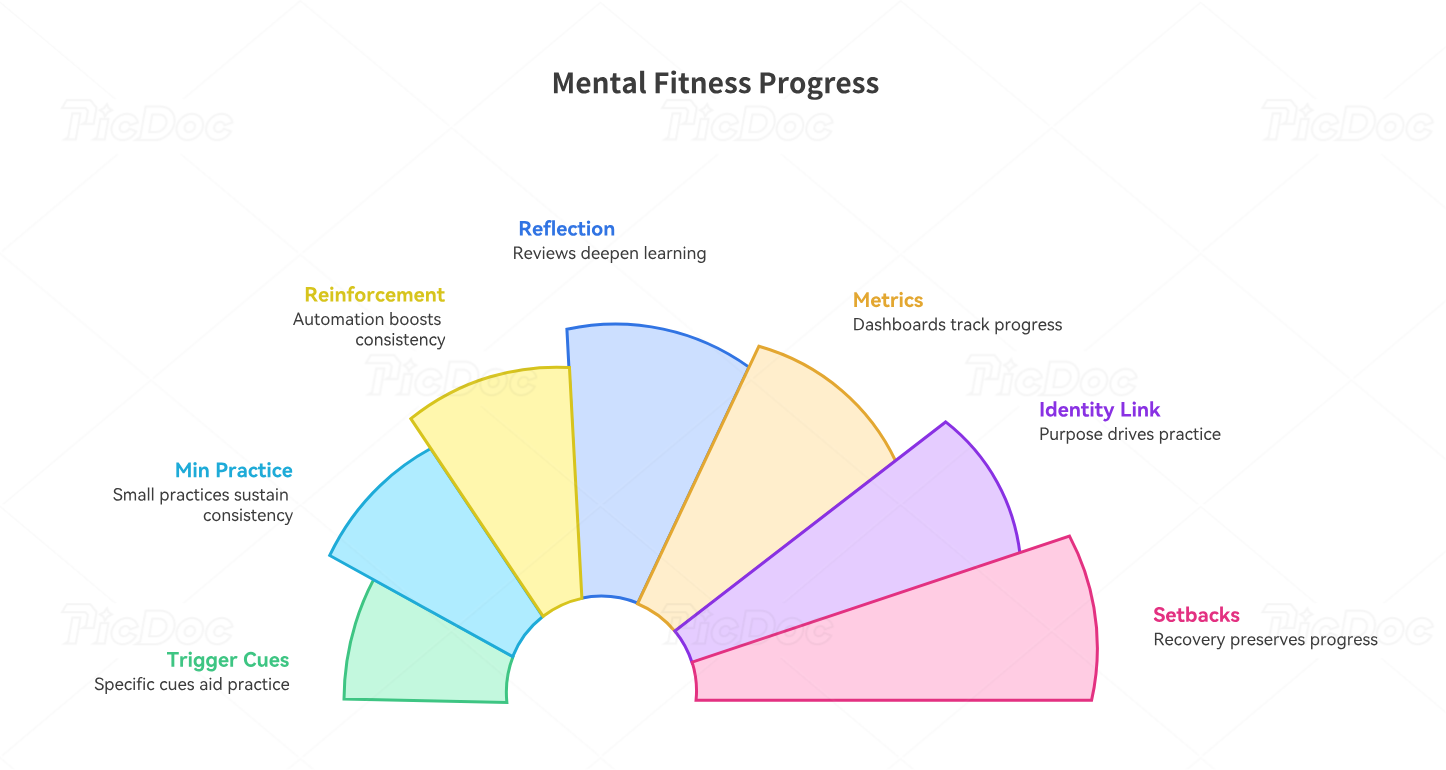
Coaches can begin with trigger-based practice. The client selects a recurring cue and attaches a brief mental-fitness response. Examples include:
After opening a difficult email, pause before replying.
When someone makes a request, take one breath before committing.
When self-critical language appears, label the Judge.
Before entering a high-pressure meeting, complete several sensory-attention repetitions.
After noticing perfectionistic revision, revisit the predetermined completion standard.
When a routine is missed, activate the recovery plan within twenty-four hours.
The cue should be visible and frequent enough to support learning. “Practice when stressed” leaves the instruction too vague. “Practice when I feel my jaw tighten during disagreement” gives the client a detectable signal. This precision strengthens client accountability, supports stress coaching, improves emotional agility, and helps coaches manage expectations.
The client also needs a minimum viable practice. Ambitious routines often collapse during the exact periods when mental fitness becomes most valuable. A two-minute daily exercise may work during a calm week. A ten-second practice may preserve continuity during travel, illness, caregiving demands, deadlines, or emotional strain. The minimum version protects the identity of someone who continues practicing under imperfect conditions.
Coaches can reinforce consistency through carefully designed coaching automation, broader business automation, useful coaching technology, and selected tools for coaching practices. A reminder should connect to a real behavior: “Before your 10 a.m. team meeting, identify the Saboteur most likely to appear and select one Sage response.”
Reflection turns repetition into learning. A five-question review can ask:
Which trigger occurred?
Which Saboteur pattern appeared?
How early did you notice it?
Which response did you practice?
What will you adjust next time?
This review improves metacognition and helps the coach distinguish several types of progress. The client may notice the pattern earlier, experience lower intensity, recover faster, reduce harmful behavior, or repair the impact more effectively. The Saboteur may continue appearing while its behavioral control declines substantially.
A useful progress dashboard can measure:
Trigger frequency
Early-recognition rate
Interruption-practice rate
Chosen-response rate
Recovery time
Relationship impact
Goal completion
Perceived stress
Confidence using the skill
Consistency across different settings
These measures create stronger evidence than a broad statement such as “I feel more positive.” They also support client retention, improve client experience, strengthen coaching case studies, and reveal opportunities for constructive feedback.
Mental fitness becomes especially powerful when linked to a valued identity. A client may practice pausing during conflict because they want to become a leader who creates clarity without intimidation. Another may interrupt people-pleasing because they want relationships built on honest consent. A health-coaching client may challenge the Judge because self-punishment repeatedly triggers extreme plans and abandonment.
Identity alignment connects PQ with life-purpose coaching, self-actualization coaching, life visioning, and holistic coaching. The practice gains significance beyond emotional relief; it becomes evidence of the person the client is deliberately building.
Setbacks should become part of the protocol. A client will sometimes recognize the Saboteur after sending the message, breaking the boundary, abandoning the routine, or escalating the disagreement. The recovery plan may include acknowledging impact, making a repair, recording the earlier cue, and rehearsing a better response. This approach strengthens resilience coaching, supports emotional intelligence, reduces all-or-nothing mindset patterns, and preserves progress during difficult situations.
5. Ethical Use, Measurement, and Common PQ Coaching Mistakes
PQ belongs within the coach’s competence, professional agreement, and scope of practice. Saboteur language can illuminate patterns while clinical symptoms may require assessment or treatment from an appropriately qualified professional. Persistent hopelessness, severe anxiety, trauma symptoms, disordered eating, substance dependence, impaired functioning, abuse, or safety concerns require careful referral decisions.
Coaches should understand mental health coaching boundaries, responsible emotional-crisis support, the NBHWC scope of practice, and the ICF Code of Ethics. Describing severe clinical distress as a strong Saboteur can minimize the client’s needs and delay appropriate care.
Assessment privacy also deserves attention. Saboteur scores can reveal sensitive information about fear, relationships, control, achievement, and self-perception. Coaches should explain how results will be stored, discussed, shared, and deleted. Organizational coaching requires particular care because employers may seek individual-level information. Aggregated program learning, coaching themes, and agreed development goals usually create safer reporting than exposing personal assessment details.
Digital tools must follow the same standards. The official PQ model uses app-guided learning and daily practice, while coaches may add portals, reminders, trackers, or AI-assisted summaries. Technology decisions should account for consent, confidentiality, access control, retention, and practical necessity. The principles behind coaching automation, legal requirements for coaches, effective coaching systems, and exceptional client experiences remain highly relevant.
Several common mistakes weaken PQ coaching.
Treating Saboteurs as fixed identities
Statements such as “You are a Pleaser” can make the pattern sound permanent. “A Pleaser response appeared when you feared disappointing your manager” keeps attention on context and behavior. Clients gain greater agency when they can observe a pattern without absorbing it into their identity.
This language supports strengths-based coaching, protects psychological safety, improves feedback quality, and strengthens transformational coaching.
Using labels before understanding context
A client’s control may reflect a current high-risk environment rather than a habitual Controller pattern. Hyper-vigilance may relate to genuine instability. Avoidance may protect the client from an unsafe confrontation. Coaches should investigate power, culture, resources, health, discrimination, caregiving, financial pressure, and environmental risk before reframing the response.
This contextual discipline aligns with holistic coaching, coaching through economic change, stress coaching, and ethical client expectation management.
Chasing positivity at the expense of valid emotion
Mental fitness should create greater response flexibility. Grief, anger, fear, disappointment, and sadness can contain essential information. Empathize and Explore may be more appropriate than rushing toward Activate. The client may need to process the meaning of an event before selecting an action.
This principle strengthens emotional agility, self-care coaching, crisis-sensitive support, and positive psychology coaching.
Relying on insight without contextual practice
A client can identify every Saboteur and continue behaving the same way. Each insight should connect to a trigger, brief practice, Sage question, behavioral response, and measurement method. Rehearsal during calm conditions prepares the skill; application during real conditions tests it.
This execution focus draws from habit formation, accountability coaching, health behavior change, and micro-coaching.
Promising neuroscience beyond the evidence
General neuroplasticity research supports the brain’s capacity to adapt through experience, and research on habits, mindfulness, cognitive training, and behavior change offers relevant mechanisms. Evidence of improvement on trained tasks can be stronger than evidence of broad transfer into unrelated areas. Coaches build greater trust by describing PQ as a structured mental-fitness and coaching framework while measuring each client’s real-world outcomes directly.
Professional development helps coaches use the model with greater precision. Relevant pathways include CPD accreditation, ongoing coaching certification maintenance, a documented certification portfolio, and awareness of common credentialing mistakes. Positive Intelligence also offers coach-specific training and a marketplace for qualified PQ coaches.
6. FAQs About Positive Intelligence and Mental-Fitness Coaching
-
PQ commonly refers to Positive Intelligence Quotient or Positivity Quotient within the Positive Intelligence framework. The official PQ Score is intended to reflect the relative strength of constructive response patterns compared with self-sabotaging ones. Coaches can use the concept alongside emotional intelligence coaching, behavior-change science, positive psychology, and client accountability. The score becomes most useful when linked to specific triggers, actions, relationships, and measurable outcomes.
-
The framework develops the Saboteur Interceptor, Sage, and Self-Command mental muscles. The first helps clients recognize habitual negative patterns. Self-Command builds the capacity to redirect attention through brief practices. The Sage muscle helps clients respond using Empathize, Explore, Innovate, Navigate, and Activate. These components can strengthen resilience coaching, mindset development, habit formation, and transformational coaching.
-
Clients may notice greater awareness within the first few sessions, while dependable behavioral change requires repeated practice across real triggers. Timing depends on pattern strength, practice frequency, environmental pressure, support, goal complexity, and the client’s willingness to experiment. Coaches should measure recognition speed, interruption use, behavioral response, recovery time, and real-world impact. Combining PQ with habit stacking, accountability coaching, expectation management, and client feedback creates a stronger implementation process.
-
Yes, these patterns can be explored through the Stickler, Pleaser, Judge, Controller, or Hyper-Achiever concepts, depending on the client’s triggers and motivations. Perfectionism work may include defining appropriate standards, limiting revision, tolerating visible imperfection, and measuring completion. People-pleasing work may involve delayed responses, capacity checks, boundary scripts, and tolerating another person’s disappointment. These interventions align with emotional agility, constructive feedback, safe coaching environments, and strengths-based coaching.
-
PQ can support health coaching when mental patterns interfere with sleep routines, movement, food decisions, stress regulation, self-care, recovery, or medical follow-through. A Judge pattern may trigger punitive health plans, while Restless or Avoider responses may undermine consistency. Coaches must remain within their training and applicable scope. The framework can complement health behavior change, lifestyle medicine coaching, preventive health coaching, and the NBHWC scope of practice.
-
Every exercise should connect to a current trigger and meaningful outcome. Rotate the application rather than constantly replacing the core skill. A sensory-attention practice can support conflict management on Monday, boundary setting on Wednesday, and setback recovery on Friday. Review what the client noticed, which response changed, and what impact followed. This applied approach supports micro-coaching, coaching automation, client-retention strategies, and credible coach-client transformation stories.
