
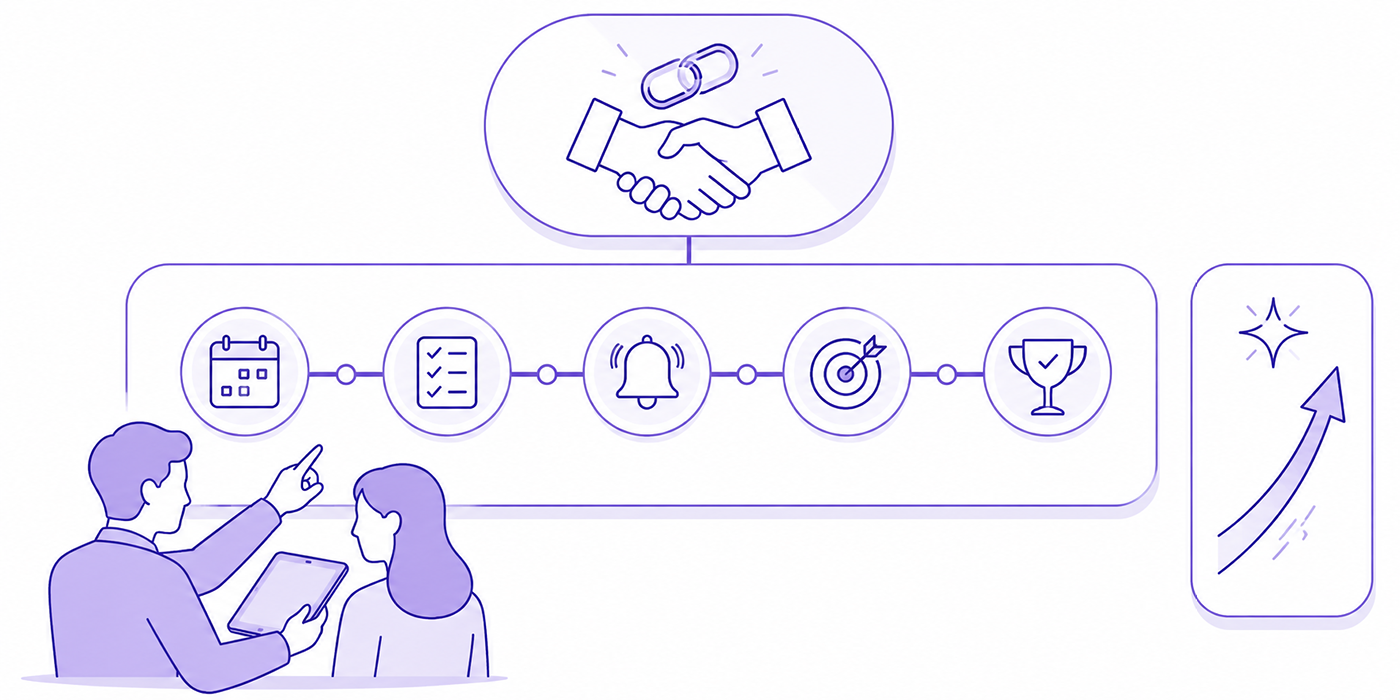
Clients rarely fail because they lack goals. Progress collapses when commitments remain vague, obstacles stay unexamined, and missed actions disappear between sessions. Accountability coaching closes that execution gap by turning intention into observable behavior, timely feedback, and intelligent course correction. The headline’s “triples” promise represents a practical multiplier rather than a universal numerical guarantee: strong accountability coaching makes every behavior-change strategy, habit-formation tool, and client-motivation technique more likely to produce consistent action.
1. Why Accountability Coaching Changes Client Results So Quickly
A coaching session can generate insight, confidence, and an ambitious plan. The client then returns to the same workload, environment, relationships, emotional triggers, and competing priorities that shaped their previous behavior. Without a system for protecting the commitment, the session’s momentum fades long before the next appointment.
Accountability changes that sequence. It defines exactly what the client will do, identifies the conditions required for completion, creates visible evidence, and establishes a review point. The client leaves with an operating agreement rather than an inspirational intention.
That distinction matters in a growing and increasingly competitive profession. The 2025 ICF Global Coaching Study reported approximately 122,974 coach practitioners worldwide and estimated annual coaching revenue of $5.34 billion. More coaches create greater access to professional support while raising client expectations around structure, differentiation, and measurable value.
A coach who offers encouragement can make a session feel valuable. A coach who develops reliable follow-through can demonstrate value through completed conversations, maintained boundaries, repeated habits, resolved decisions, and measurable movement toward the client’s goal. That delivery standard strengthens client retention, improves the coaching experience, produces credible transformation case studies, and creates stronger client referrals.
Accountability converts goals into executable commitments
“Work on my confidence” gives the client no clear action.
“Ask one question during Tuesday’s leadership meeting and record what happened afterward” identifies the behavior, context, deadline, and evidence.
The second commitment gives the coach something useful to review. Completion provides evidence that the client can act despite discomfort. Non-completion reveals a barrier that can be investigated through strength-based coaching, mindset development, emotional-intelligence coaching, or a more precise behavior-change analysis.
Each outcome produces information. That information prevents the coaching process from relying on memory, mood, or broad claims about progress.
Accountability exposes the real barrier
Clients often explain unfinished actions through a familiar label:
“I lacked motivation.”
“The week became busy.”
“I procrastinated.”
“I forgot.”
“I need more discipline.”
These explanations describe the surface. Effective accountability identifies the exact point where execution broke.
Perhaps the client intended to exercise before work while repeatedly going to bed too late. A planned networking message may remain unsent because the client cannot tolerate the possibility of rejection. A boundary conversation may be delayed because the proposed script feels too aggressive. A weekly review may fail because it contains twelve steps and requires uninterrupted time the client never has.
The coach can then replace generic encouragement with a targeted intervention. Habit design can reduce starting friction. Micro-coaching can support action at the moment of difficulty. Guided visualization can rehearse a demanding conversation. Constructive feedback can improve the client’s response after an unsuccessful attempt.
Accountability strengthens planning quality
A client’s commitment reveals how well the goal has been designed. Repeated failure can indicate excessive difficulty, weak relevance, environmental friction, unclear timing, insufficient support, or competing priorities.
Research on mental contrasting with implementation intentions supports this emphasis on translating goals into defined responses. A meta-analysis covering 21 studies and 15,907 participants found a small-to-medium positive effect on goal attainment. The method combines realistic obstacle recognition with plans specifying how the person will respond when those obstacles appear.
A coach can apply that principle by asking:
When will the action happen?
Where will it happen?
What will trigger the first step?
Which obstacle is most likely?
What will the client do when that obstacle appears?
What evidence will confirm completion?
When will the result be reviewed?
These questions improve habit-formation planning, strengthen client expectations, support responsible coaching automation, and make gamification strategies more meaningful.
Accountability provides a reason to act before motivation arrives
Motivation fluctuates with mood, energy, workload, sleep, stress, and perceived difficulty. A visible commitment reduces the number of decisions the client must remake. The action already has a time, standard, and review point.
The client still retains choice. Accountability creates an honest moment in which the client decides whether the commitment remains important enough to protect. When resistance appears, the coach investigates readiness, capacity, and relevance through client-centered feedback, stress-coaching strategies, relationship dynamics, and transformational coaching.
Accountability creates evidence that confidence can use
Confidence grows more reliably from completed action than repeated reassurance. A client who maintains one boundary, submits one application, completes three planned walks, or initiates one difficult conversation gains evidence of capability.
The coach should preserve that evidence. A progress log can record the action, obstacle, response, outcome, and lesson. Over time, the client sees patterns that support strength-based development, sharpen case-study documentation, improve client feedback, and make future setbacks easier to interpret.
Accountability becomes especially valuable in workplaces where engagement remains weak. Gallup reported that 20% of employees worldwide were engaged in 2025, with 64% classified as unengaged and 16% as actively disengaged. Coaches serving professionals and leaders therefore need systems that reconnect reflection with meaningful, observable action.
| Client Breakdown | Likely Hidden Barrier | High-Value Coaching Question | Accountability Design | Evidence to Review |
|---|---|---|---|---|
| The goal stays vague | The client has defined a feeling instead of a behavior | What would I physically see you doing differently? | Behavior-based commitment | Completed action with date and context |
| The client forgets | The action lacks a reliable cue | Which existing routine can trigger this action? | Cue-based habit plan | Completion rate after the selected cue |
| The week becomes too busy | The action has no protected time | Which commitment will move when this action enters your calendar? | Calendar protection | Scheduled blocks completed or renegotiated |
| The client starts late | The first step feels too large | What is the smallest useful action you could begin in five minutes? | Five-minute entry action | Time between cue and starting |
| The client overcommits | Approval seeking or unrealistic capacity estimates | What will this commitment cost during a difficult week? | Capacity-based agreement | Commitments accepted versus completed |
| The client reports “some progress” | The success standard was never defined | Which evidence would allow both of us to verify completion? | Evidence standard | Specific output, count, or recorded behavior |
| A habit disappears under stress | The plan only works under ideal conditions | What is the minimum version for your hardest day? | Fallback habit | Minimum action maintained during pressure |
| The client avoids feedback | Criticism has become a threat to identity | Which part of the feedback is factual, useful, or testable? | Feedback-processing review | One adjustment tested after feedback |
| The client agrees too quickly | The coach’s approval is driving the commitment | On a scale of one to ten, how willing are you to protect this action? | Autonomy check | Client-selected commitment and confidence rating |
| The action lacks meaning | The goal belongs to someone else’s expectations | What personally important outcome does this action support? | Values-linked commitment | Client’s stated reason and continued relevance |
| The client hides missed actions | Review conversations feel judgmental | How can we make incomplete actions safe to examine honestly? | Shame-free review | Accuracy and completeness of self-reporting |
| The goal keeps changing | Priorities remain unresolved | Which outcome would matter most if only one could improve? | Priority hierarchy | Weeks the primary goal remains stable |
| The client waits for confidence | Action is being treated as the result of confidence | Which manageable action could produce evidence of capability? | Evidence-building action | Actions completed despite discomfort |
| The client needs constant reminders | The system depends on the coach | How could your environment carry this reminder? | Automated cue system | Actions completed without direct coach prompting |
| The client makes excuses repeatedly | The commitment may exceed readiness or relevance | What are you protecting by leaving this action unfinished? | Resistance exploration | Barrier identified and plan redesigned |
| Perfection delays completion | The quality standard exceeds the task’s value | What standard would make this useful and complete? | Minimum completion standard | Time from starting to delivery |
| The client misses one day and quits | A lapse has been interpreted as total failure | What is your restart rule after one missed action? | Twenty-four-hour restart rule | Time required to resume the behavior |
| A difficult conversation is postponed | The client lacks language and rehearsal | What opening sentence would communicate the issue clearly? | Conversation rehearsal | Conversation initiated by agreed deadline |
| The client blames low motivation | The action contains unnecessary friction | Which step could be removed, prepared, or automated? | Friction reduction | Steps removed and completion improvement |
| The client tracks too much | Measurement has become another burden | Which single indicator best represents meaningful progress? | One-metric dashboard | Primary indicator reviewed consistently |
| The plan depends on other people | Control and influence have been confused | Which part of this outcome remains fully within your control? | Controllables plan | Client-controlled actions completed |
| The client becomes defensive | The review feels like a performance evaluation | What did this result teach us about the plan? | Learning-focused review | Useful lesson and next experiment recorded |
| The client has conflicting goals | Several outcomes compete for the same capacity | Which goal currently deserves protected resources? | Goal sequencing | Primary and deferred goals documented |
| The client wants daily coach contact | Self-trust or independent regulation remains weak | Which part of this support can you begin providing for yourself? | Graduated support plan | Frequency of independent follow-through |
| The client ignores reminders | The cue has lost relevance or visibility | What reminder would appear at the decision point? | Contextual reminder | Response rate after reminder redesign |
| Progress stops after early success | The next difficulty level was never defined | What challenge would expand this skill without overwhelming you? | Progressive challenge | Next-level behavior attempted and reviewed |
| The client faces an emotional crisis | Immediate safety or clinical support may take priority | What support is required right now, and who is qualified to provide it? | Referral and safety protocol | Appropriate support accessed |
| The coaching engagement ends without a plan | Accountability has remained attached to the coach | What system will continue reviewing this commitment after coaching? | Self-accountability transition | Thirty-day independent maintenance plan |
2. What Effective Accountability Coaching Actually Includes
Accountability coaching consists of several connected skills. A reminder covers only one small part of the process. Clients need commitment clarity, realistic planning, evidence, honest review, friction analysis, and a system they can eventually operate independently.
Commitment clarity
Every action agreement should answer six questions:
What exactly will the client do?
When will it happen?
Where will it happen?
What standard defines completion?
What evidence will be available?
When will the result be reviewed?
“I will work on my business” becomes:
On Wednesday from 10:00 a.m. to 11:00 a.m., I will draft the first 500 words of the sales page in my office and send the draft to the coach portal before 1:00 p.m.
That commitment provides enough precision to expose scheduling problems, starting friction, unclear standards, and avoidance. The same discipline improves high-ticket offer development, financial forecasting, coaching-business automation, and practice scaling.
Readiness calibration
A client can understand an action and still lack readiness to protect it. Before finalizing the agreement, ask the client to rate their commitment from one to ten.
A score below eight deserves exploration:
Which part feels unrealistic?
What competing responsibility could interfere?
Which emotion appears when you imagine starting?
Does the action feel personally meaningful?
How could the commitment become easier to protect?
Which support would improve your confidence?
Reducing the action may produce greater progress than preserving an impressive target the client will avoid. Calibrated agreements strengthen client trust, improve expectation management, support preventative health coaching, and reduce difficult client situations.
Obstacle planning
A plan should include the obstacle most likely to disrupt it. The coach can ask the client to complete this sentence:
When ______ happens, I will ______.
Examples include:
When my morning meeting runs late, I will complete the ten-minute version at lunch.
When I feel anxious before the phone call, I will read my opening sentence and dial within sixty seconds.
When travel interrupts my full routine, I will maintain the minimum action in my hotel room.
When I miss one day, I will restart at the next planned cue.
These implementation rules connect habit formation, behavioral coaching, stress-management strategies, and micro-coaching interventions.
Evidence selection
Evidence should match the action while respecting privacy. A completed draft, calendar entry, habit count, conversation date, reflection note, or self-rating may be sufficient.
Coaches should avoid collecting sensitive materials without a clear purpose, secure process, and client consent. Accountability never requires unrestricted access to medical records, private conversations, financial accounts, or personal devices.
Useful evidence is:
Directly connected to the commitment
Simple to produce
Easy to interpret
Proportionate to the goal
Securely handled
Chosen with the client
This discipline supports ethical coaching, appropriate scope of practice, responsible technology use, and compliance with relevant legal requirements.
Review cadence
The review should occur close enough to influence behavior. A client building a daily habit may need a brief check-in twice per week. A leader implementing a monthly strategic process may need a review after each cycle.
Possible cadences include:
End-of-session commitment confirmation
Automated reminder before the action
Two-minute completion check afterward
Weekly written reflection
Coaching-session review
Monthly progress evaluation
Program midpoint and completion assessments
The cadence should support action without overwhelming the client. Coaches can combine automation tools, structured micro-coaching, effective payment systems, and an intentional client experience.
Learning-based review
Every review should produce one of four outcomes:
Keep: The action worked and remains useful.
Scale: The action worked and the client is ready for greater difficulty.
Simplify: The action remains valuable while its current design creates excessive friction.
Replace: New information shows that another action would serve the goal better.
This approach keeps accountability responsive. Missed commitments become diagnostic evidence rather than moral judgments. The coach learns alongside the client, which improves feedback quality, strengthens behavior-change planning, increases client retention, and generates useful case-study data.
3. The COMMIT Framework for High-Impact Accountability Sessions
The COMMIT Framework gives coaches a repeatable process for converting a discussion into action while preserving the client’s autonomy.
C — Clarify the result
Start with the result the client wants from the coaching period. Ask what will change, why it matters, and how the client will recognize meaningful progress.
A client seeking “better work-life balance” may define the result as:
Finishing work by 6:30 p.m. four days per week
Protecting two evenings for family
Reducing weekend email checks
Maintaining three short movement sessions
Beginning Monday with a written priority plan
This translation creates a usable bridge between mindset coaching, relationship coaching, habit development, and preventative coaching.
O — Operationalize the next behavior
Select one behavior that can move the result forward before the next session. Define the cue, context, duration, completion standard, and deadline.
A useful commitment is small enough to execute within the client’s real week and meaningful enough to create new evidence. Coaches should resist turning every insight into an assignment. One well-designed action usually reveals more than five loosely defined tasks.
Operationalization benefits from micro-coaching principles, behavior-change science, gamification, and careful client expectation management.
M — Map predictable friction
Ask the client to imagine the moment when the action becomes difficult. Identify practical, emotional, environmental, social, and cognitive barriers.
Practical friction may involve time, location, money, equipment, or childcare. Emotional friction may involve anxiety, embarrassment, resentment, or fear of failure. Social friction may involve a manager, partner, colleague, or family expectation. Cognitive friction may involve unclear steps, decision fatigue, or perfectionism.
A friction map can draw on stress-coaching techniques, emotional intelligence, difficult-situation management, and constructive feedback.
M — Match the accountability mechanism
Choose support according to the client’s barrier.
A forgetful client may benefit from an automated cue. A client facing fear may need a pre-action message and conversation rehearsal. A client prone to overcommitment may need a strict cap on weekly actions. A highly independent client may prefer a private dashboard reviewed during sessions. A group participant may benefit from paired check-ins.
Common mechanisms include:
Calendar blocks
Habit trackers
Completion messages
Peer accountability
Written reflections
Automated reminders
Visual progress charts
Commitment contracts
Session-opening reviews
Environmental cues
The mechanism should feel proportionate and sustainable. Coaches can build it through coaching automation, must-have business tools, technology-supported coaching, and client-preference research.
I — Inspect evidence with curiosity
Begin the next review with facts:
What was the commitment?
What happened?
Which evidence is available?
Where did execution become difficult?
What helped?
What did the client learn?
Avoid opening with “Why didn’t you do it?” That wording can encourage justification and concealment. “Walk me through what happened from the moment you intended to start” produces a more useful behavioral sequence.
A curious review supports a safe coaching relationship, improves client feedback, strengthens ethical practice, and equips coaches for difficult conversations.
T — Tune the system
Use the evidence to change the plan. Adjust the action size, timing, cue, environment, support, metric, or goal priority.
A client who completed two of five planned workouts may need a three-session target. A client who delayed a networking message may need to draft it during the coaching session. A manager who ignored evening boundaries may need to change notification settings and communicate response times to the team.
Tuning prevents repeated failure from becoming normalized. It turns the coaching engagement into an adaptive system supported by habit redesign, client-experience improvement, business benchmarking, and transformation-focused coaching.
4. How to Create Accountability Without Shame, Control, or Dependence
Accountability works when clients remain honest, autonomous, and willing to examine uncomfortable evidence. Pressure, embarrassment, and surveillance damage those conditions.
Let clients own the commitment
The client should select or explicitly approve the action. A coach can challenge its quality, explore avoidance, and identify contradictions while leaving the final decision with the client.
Before closing the session, ask:
Does this action still feel worth doing?
What level of commitment are you choosing?
Which version fits your actual capacity?
How would you like me to review it?
What support feels useful?
Which support would feel intrusive?
These questions preserve ethical coaching standards, strengthen the coaching environment, improve client expectations, and prevent avoidable difficult-client situations.
Separate the person from the result
A missed commitment provides information about the plan, environment, readiness, emotional barrier, or competing priority. It carries no reliable verdict about the client’s worth, seriousness, or potential.
Use language such as:
“Which part became difficult?”
“Where did the plan lose contact with reality?”
“What were you feeling at the decision point?”
“What did you choose instead?”
“Which need did that alternative serve?”
“What design change would make the next attempt stronger?”
This approach supports emotional intelligence, constructive feedback, stress coaching, and strength-based development.
Avoid punishment-based systems
Financial penalties, public exposure, excessive messaging, and humiliating consequences can create short-term compliance while reducing honesty. Any consequence should remain proportionate, voluntary, relevant, and agreed in advance.
Natural consequences usually provide enough material. A missed planning session may create rushed work. An avoided conversation may prolong conflict. A skipped financial review may leave spending decisions unclear. The coach can help the client examine those effects through financial coaching, relationship coaching, economic-change planning, and behavior-change reflection.
Build honesty into the contract
During onboarding, explain that missed actions are expected to occur and should be reported accurately. Define how commitments will be recorded, what evidence may be requested, how data will be stored, and when the accountability approach can be changed.
A useful agreement can include:
The client chooses all final commitments
Progress reports should be accurate
Missed actions will be reviewed without humiliation
Sensitive evidence will be minimized
Digital communication has clear boundaries
Coaching may pause when another form of support becomes necessary
Accountability intensity can be revised by mutual agreement
These provisions connect with legal requirements for coaches, appropriate business setup, secure payment and administrative systems, and responsible coaching technology.
Reduce coach dependence intentionally
Accountability coaching should gradually transfer monitoring, reflection, and course correction to the client. The coach might initially provide reminders and structured reviews, then move toward client-generated reminders, personal scorecards, peer support, and independent weekly planning.
A four-stage transfer can work well:
Coach-led: The coach defines the review structure and prompts reflection.
Shared: The client submits evidence and helps interpret barriers.
Client-led: The client runs the review while the coach challenges blind spots.
Independent: The client maintains a self-accountability system after coaching.
This progression improves long-term client outcomes, supports ethical client retention, strengthens habit maintenance, and prevents the service from manufacturing unnecessary dependency.
Recognize scope and referral signals
Repeated non-completion can sometimes involve depression, severe anxiety, trauma, substance dependence, disordered eating, unmanaged attention difficulties, domestic abuse, medical concerns, or an immediate safety issue. Coaches should avoid interpreting every barrier as weak accountability.
A responsible practitioner understands the NBHWC scope of practice, prepares for emotional crises, builds a trusted referral network, and maintains education through CPD accreditation. Coaching can continue alongside appropriate professional care when roles and goals remain clear.

5. How to Package Accountability Coaching Into a Profitable Offer
Accountability carries strong commercial value because clients can understand the outcome. A defined offer helps them complete actions, maintain habits, finish projects, protect boundaries, or implement decisions within a specified period.
Choose a specific execution problem
“Accountability coaching for everyone” creates weak positioning. Select an audience whose unfinished actions have visible consequences.
Examples include:
New coaches who need to launch their first offer
Founders struggling to maintain weekly priorities
Professionals completing career transitions
Managers implementing leadership habits
Freelancers managing irregular schedules
Health-coaching clients building sustainable routines
Students preparing for certification examinations
Clients rebuilding structure after burnout
Sales professionals maintaining outreach
Creators finishing long-term projects
Specific audiences support stronger coaching-business positioning, more relevant client-preference research, sharper networking, and clearer high-ticket offers.
Define the accountable transformation
A useful positioning statement includes the audience, unfinished behavior, support mechanism, and measurable result.
Examples
I help newly certified coaches complete the weekly actions required to launch their first paid offer within twelve weeks.
I help overloaded managers build a weekly execution system that protects priorities, boundaries, and difficult conversations.
I help career changers complete applications, networking outreach, and interview preparation through structured weekly accountability.
These statements create a stronger commercial pathway than broad promises around motivation. The coach can connect the service with certification preparation, coaching-business tools, financial forecasting, and practice growth.
Build an accountability offer ladde
Execution Audit: A 60- to 90-minute session that identifies the goal, execution barrier, highest-leverage behavior, metric, and 14-day accountability plan.
Four-Week Follow-Through Sprint: A focused program for one project or habit using weekly sessions, brief check-ins, visible evidence, and a final maintenance plan.
Twelve-Week Accountability Intensive: A deeper program for complex goals requiring habit development, obstacle planning, confidence-building, and progressive difficulty.
Group Execution Lab: A cohort with shared planning sessions, peer accountability, weekly progress reviews, and coach-led barrier analysis.
Leadership Accountability Program: A workplace service focused on delegation, feedback, strategic priorities, decision completion, and communication commitments.
Maintenance Membership: A monthly structure for former clients who need periodic review, planning, and recalibration after completing the core program.
The offer should clearly state communication limits, response times, evidence requirements, missed-session policies, privacy practices, and circumstances requiring referral. Those decisions support payment-system clarity, legal preparation, client retention, and an exceptional client experience.
Use a focused accountability technology stack
A practical system may include:
Scheduling software
Secure coaching notes
A client progress dashboard
Automated reminders
A habit or task tracker
Short check-in forms
A private resource library
Payment and contract management
Video-session software
A simple reporting process
Each tool should remove friction or improve evidence. Excessive software can create another unfinished system. Review coaching automation strategies, technology’s coaching impact, essential business tools, and scalable automation practices before adding platforms.
Follow a 90-day launch plan
Days 1-15: Select one audience and identify the costly behavior they repeatedly delay, abandon, or execute inconsistently.
Days 16-30: Build the COMMIT Framework worksheets, intake form, coaching agreement, progress dashboard, communication policy, and referral process.
Days 31-45: Run a small beta with carefully screened clients. Record completion rates, friction patterns, preferred check-in methods, and dropout risks.
Days 46-60: Remove low-value assignments, refine the commitment process, improve reminder timing, and create a client-led maintenance system.
Days 61-75: Publish content addressing vague goals, motivation dependence, habit relapse, procrastination, shame, overcommitment, and inconsistent execution.
Days 76-90: Develop referral relationships, collect ethical testimonials, publish measurable coaching case studies, and open the refined program to a controlled number of clients.
Growth can then come through joint ventures, stronger industry networking, reliable financial forecasting, and disciplined practice scaling.
6. FAQs About Accountability Coaching
-
Accountability coaching helps clients translate goals into specific actions, anticipate obstacles, produce evidence, review results, and improve their execution system. The coach creates a structured environment in which commitments remain visible and missed actions become useful information.
The process often combines behavior-change science, habit formation, constructive feedback, and client-centered accountability.
-
No universal study guarantees that every client will achieve exactly three times the result. The phrase describes accountability’s multiplier effect across the coaching process. Better commitments improve execution, consistent reviews expose barriers earlier, and visible evidence supports faster course correction.
Results depend on the client’s readiness, goal quality, environment, available support, coach competence, and the suitability of the intervention. Coaches should use accurate marketing, establish measurable baselines, and document outcomes through client feedback, case studies, industry benchmarks, and ethical expectation management.
-
A reminder alerts the client that an action exists. Accountability coaching examines whether the action is relevant, realistic, properly timed, measurable, and supported by the client’s environment.
When completion fails, the coach explores friction, emotional resistance, competing priorities, unclear standards, and weak cues. The plan may then use micro-coaching, habit redesign, automation, or strength-based coaching.
-
Track the smallest set of indicators that accurately represents progress. Depending on the goal, these may include:
Planned actions completed
Completion rate
Time required to start
Recovery time after a lapse
Boundaries maintained
Conversations initiated
Applications submitted
Habit repetitions
Priority work completed
Independent follow-through
Obstacles identified
Plans successfully revised
Tracking should remain proportionate, secure, and useful. Strong measurement improves client accountability, feedback quality, case-study credibility, and the overall client experience.
-
The check-in cadence should match the action. Daily habits may benefit from lightweight tracking and one or two brief weekly reviews. Project milestones may require weekly check-ins. Leadership behaviors may be reviewed after relevant meetings or conversations.
Frequent contact should have a defined purpose. A short automated check may confirm completion, while a coaching session investigates patterns and decisions. Coaches can combine micro-coaching, responsible automation, structured habit tracking, and thoughtful client-retention systems.
-
Review the design before increasing pressure. Examine the goal’s relevance, the client’s readiness, action size, timing, cues, environment, emotional barriers, competing priorities, and support system.
Repeated non-completion may indicate that the wrong action has been selected. It may also reveal stress, anxiety, relationship pressure, health concerns, or needs outside coaching scope. A coach can use stress-coaching strategies, safe coaching practices, scope guidance, and an appropriate referral process.
