
Gamification Strategies: Keeping Clients Engaged and Motivated
Most client disengagement is not caused by laziness. It is caused by coaching systems that make progress hard to see and even easier to postpone. Coaches who already use interactive goal tracking tools, habit formation tools, coaching session templates, and custom coaching dashboards are already close to fixing the real problem.
Gamification is the layer that makes those systems harder to ignore and easier to repeat. When it is built on SMART goals, engaging coaching content, interactive communities, and coaching apps, it stops feeling gimmicky and starts improving follow-through, retention, and trust.
1. Why Gamification Works in Coaching When So Many Motivation Tactics Fail
Gamification works because it addresses the exact moment where most coaching programs break down: the silent gap between intention and action. A client leaves a session inspired, agrees with the plan, and still does nothing by Thursday because the plan does not compete well against stress, friction, fatigue, or distraction. That is why coaches who study how to actually change your client’s life in 2026, apply the neuroscience-based method every coach needs now, use powerful questioning techniques, and lean on the communication secret behind successful coaching consistently outperform coaches who depend on insight alone.
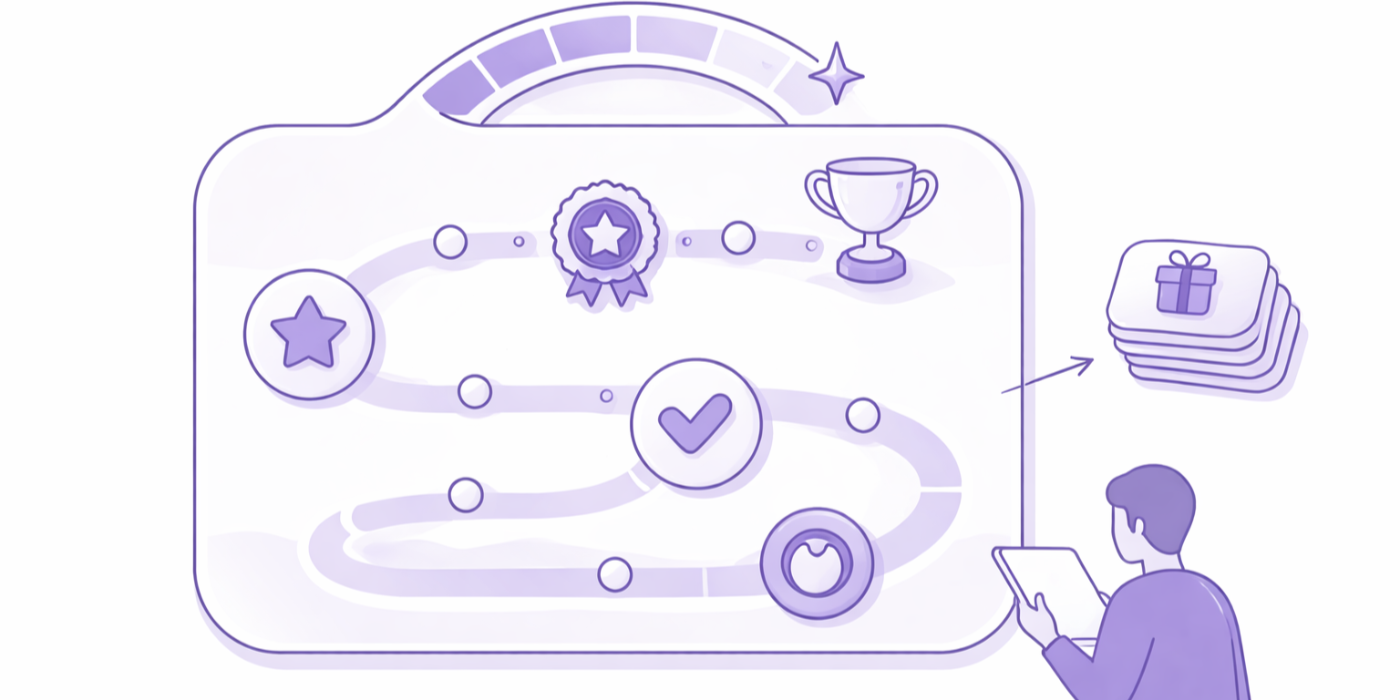
Used correctly, gamification is not about making adults collect stars like schoolchildren. It is about making effort visible, rewarding process before outcomes arrive, shrinking ambiguity, and increasing the emotional pull of next actions. A visible streak, a weekly challenge, a progress bar, a milestone unlock, or a “wins Friday” ritual can turn vague commitment into repeatable behavior. That is why it fits naturally beside the radical simplicity coaches are loving, strength-based coaching techniques, new data-proven coaching methods for maximum client success, and the 1 coaching technique for client breakthroughs.
The real psychological engine is simple. Clients stay engaged when they feel capable, connected, and in motion. Good gamification strengthens all three. It creates competence through visible progress, connection through shared rituals or accountability, and momentum through small wins that arrive faster than big outcomes. That is why the strongest systems blend positive psychology, a positive change model, trust-building principles, and client engagement systems instead of relying on inspiration speeches that wear off after 48 hours.
This matters because disengaged clients create pain far beyond missed check-ins. They create self-doubt, messy data, poor testimonials, weaker referrals, and a coaching experience that looks better in the session than it feels in real life. If your clients often say, “I know what to do, I just did not do it,” you do not have a knowledge problem. You have a design problem. And design is exactly where technology is completely transforming the coaching industry, balancing human touch with coaching automation, automating your coaching business, and best coaching software and platforms for client management become more than convenience tools. They become outcome tools.
| Goal | Gamification Lever | How to Use It | Start With | Best For |
|---|---|---|---|---|
| Onboarding completion | Welcome quest | Turn setup tasks into a 3-step launch sequence with a visible finish line. | One kickoff checklist | New clients who stall early |
| Early momentum | First-win ladder | Break the first 14 days into quick victories clients can finish fast. | 3 tiny milestones | Overwhelmed starters |
| Consistency | Daily streak tracker | Reward completion of one keystone behavior, not ten scattered ones. | One habit only | Clients who quit after week two |
| Visible progress | Progress bar check-ins | Convert vague progress into a percentage that moves weekly. | One main target | Clients who feel “nothing is changing” |
| Self-awareness | Reflection points | Award points for spotting triggers, barriers, and recovery patterns. | 2 prompts after setbacks | Emotion-driven clients |
| Positive reinforcement | Gratitude streak | Track evidence of wins so clients stop fixating only on what failed. | 3 wins every Friday | Negative self-talk loops |
| Identity shift | Identity badges | Name progress states around identity, not vanity metrics. | 3 badge names | Clients rebuilding confidence |
| Session energy | Weekly challenge | Replace passive homework with a clear action mission and reflection. | One mission per week | Clients bored by repetitive homework |
| Direction clarity | Milestone map | Show where they are, what is next, and what unlocks later. | Quarterly map | Clients who drift without structure |
| Confidence building | Confidence unlocks | Pair imagined success with real-world action checkpoints. | Short pre-action ritual | Anxious clients |
| Peer support | Peer shoutouts | Celebrate effort publicly with consent so action feels seen. | One community thread | Group programs |
| Workshop retention | Live challenge rounds | Use timed breakout tasks with immediate application and debrief. | 15-minute sprint | Workshops with low participation |
| Content usage | Resource unlocks | Release tools as clients complete milestones instead of dumping everything at once. | 3 unlock levels | Clients overwhelmed by content |
| Between-session action | Accountability nudges | Automate reminder prompts tied to action deadlines and wins. | 2 nudges weekly | Busy professionals |
| Behavior visibility | Behavior scorecard | Track inputs like sleep, check-ins, meals, or outreach, not just outcomes. | 3 lead indicators | Data-driven clients |
| Feedback loops | Pulse surveys | Use quick weekly ratings to spot disengagement before ghosting starts. | 3-question survey | At-risk clients |
| Recovery after misses | Streak rescue rule | Make comeback points easy so one bad day does not become a lost week. | 24-hour reset | All-or-nothing clients |
| Private competition | Personal best tracker | Have clients compete against their previous week, not other people. | Personal record metric | High achievers |
| Low-shame accountability | Consent-based check-ins | Let clients choose what can be shared, scored, or celebrated. | Consent question in onboarding | Sensitive or private clients |
| Real-time motivation | Wearable wins | Turn live data into mini goals and recovery prompts. | One tracked metric | Health behavior coaching |
| Remote engagement | Video challenge rounds | Use screenshare countdowns, reflection polls, and live action tasks. | One interactive block | Virtual sessions |
| Tool adoption | App-based reminders | Use app alerts for frictionless completion and faster reporting. | One app only | Tech-comfortable clients |
| Belonging | Community rituals | Create repeatable ceremonies that make participation feel expected and rewarding. | Wins Friday | Cohorts and memberships |
| Social proof | Testimonial celebration | Turn milestone wins into documented proof of growth. | One milestone story | Programs needing stronger retention and referrals |
| Deeper learning | Case-study levels | Have clients complete reflection levels based on real situations. | One scenario per month | Advanced clients |
| Retention management | Milestone triggers | Fire messages when clients hit inactivity, wins, or renewal points. | 3 trigger rules | Growing practices |
| Scalable support | Automation with human review | Let automation carry reminders while coaches handle nuance and emotion. | Human review checkpoints | High-volume programs |
| Skill reinforcement | Session replay rewards | Unlock reflection prompts after clients review key clips or notes. | One replay task | Clients who forget coaching decisions |
| Action clarity | Discovery diagnostic | Use question-based scoring to surface the next best move. | 5 diagnostic prompts | Clients stuck in confusion |
| Ethical protection | Trust safeguard rules | Set boundaries for comparison, data use, and public recognition. | Written policy | Every coaching format |
| Confidentiality | Private progress vault | Keep sensitive metrics visible to the client and coach only. | One private dashboard | High-trust coaching relationships |
2. Which Gamification Tactics Actually Matter and Which Ones Waste Time
The biggest mistake coaches make is copying visible features instead of solving invisible friction. They see badges, streaks, points, and leaderboards in apps, then paste those mechanics into their practice without asking what behavior they are supposed to improve. That is backward. The right starting point is not, “What would be fun?” It is, “Where are my clients leaking momentum?” If check-ins are late, use automated email sequences, CRM tools, and feedback tools. If action plans are too vague, tighten them with SMART Goals 2.0, session templates, powerful questioning techniques, and interactive exercises.
The second mistake is rewarding outcomes clients cannot fully control. If a client is rewarded only for weight loss, revenue, sleep perfection, or relationship harmony, you are creating a game most people will lose emotionally before they lose technically. Reward behaviors that lead toward outcomes instead. Reward meal prep, check-in completion, reflection quality, daily walks, difficult conversations attempted, or recovery speed after a miss. That is where habit formation tools, strength-based coaching, journaling tools, and guided imagery methods become far more powerful than empty “motivation” talk.
The third mistake is making gamification loud when it should be precise. Most adults do not need a circus. They need a clean system that tells them what matters, how they are doing, and what to do next when they slip. That is why the most effective gamified coaching experiences often feel calm. They use radical simplicity, custom dashboards, resource libraries, and virtual coaching tools to reduce noise instead of increasing it.
A strong coaching game has five non-negotiables. It must make progress visible. It must create fast wins. It must help clients recover after a miss. It must protect dignity. And it must connect every reward to a meaningful coaching outcome. That is why serious coaches ground their systems in coaching integrity, ethical coaching principles, professional boundaries, and understanding ethical responsibilities as a health and life coach. Gamification without ethics becomes manipulation quickly. Gamification with ethics becomes structure clients are grateful for.
3. How to Build a Gamified Coaching Journey Without Making It Feel Childish
Start by identifying one behavior that most strongly predicts results in your program. Not ten. One. If clients who check in twice weekly improve faster, build your first game around check-ins. If clients who prepare before sessions get more traction, build around prep completion. If clients who practice one daily habit stay longer, build around that. This is where how the world’s best coaches get results, how coaches reach mastery, why this skill determines your coaching success, and the coaching skill you didn’t know you needed become practical, not theoretical.
Then design the first two weeks around visible wins. Week one should feel winnable, not impressive. Too many coaches create an onboarding plan that looks ambitious and feels punishing. That is exactly how motivated clients become ashamed clients. Use session templates, goal tracking tools, client-friendly resource hubs, and free and premium coaching resources to make the first commitments friction-light and obvious. A client who completes three small tasks will trust your process faster than a client who fails one giant plan.
Next, create a scoring system clients can understand in under ten seconds. Complexity kills engagement. A clean weekly scorecard using three inputs is usually enough: completion, reflection, and responsiveness. Completion tells you whether they acted. Reflection tells you whether they learned. Responsiveness tells you whether they stayed connected. Those inputs sit beautifully inside custom dashboards, client relationship tools, remote coaching systems, and video coaching best practices.
After that, install a recovery loop. This is the piece most coaches miss. Every strong game anticipates failure and gives the player a way back in. Coaching should do the same. A missed day should trigger a smaller next action, not silent guilt. A missed week should trigger a re-entry challenge, not a shame spiral. A low-engagement month should trigger a diagnostic conversation, not passive hope. That is why surveys and feedback tools, emotional consent, ethical dilemma planning, and coaching confidentiality safeguards matter inside gamified systems just as much as points or progress bars do.
Finally, make wins socially meaningful where appropriate. In a one-to-one program, that may mean a private scorecard review and a named milestone. In a cohort, that may mean a community ritual, a challenge round, or a peer celebration thread. In a membership, that may mean unlocked tools, badges tied to identity shifts, or themed monthly missions. The best formats often combine interactive communities, interactive workshops, engaging coaching content, and gamification tools coaches are using for maximum engagement without ever making the client feel managed like a metric.
4. The Best Gamification Strategy Changes With the Type of Client You Serve
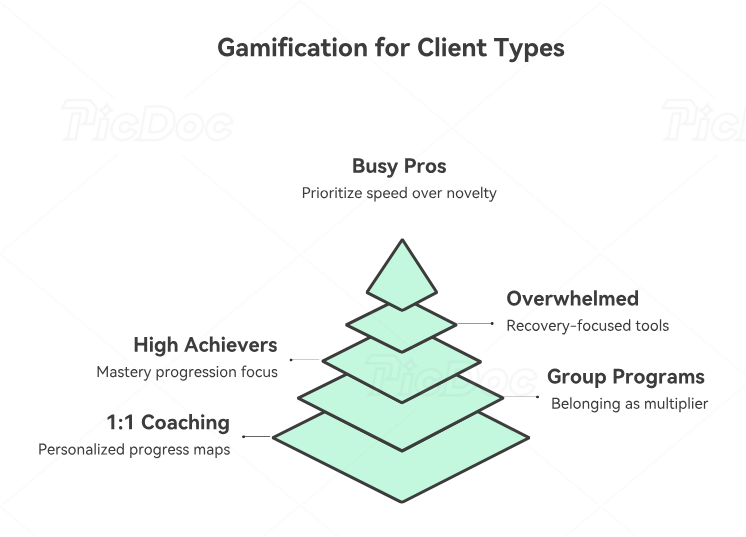
For busy professionals, speed and friction reduction matter more than novelty. They do not need elaborate challenge systems. They need tight action design, smart reminders, and proof that tiny actions still count. A visible streak tied to one keystone behavior, backed by automated email sequences, client dashboards, coaching apps, and virtual coaching tools usually beats complex point systems. Their pain point is not boredom. It is bandwidth.
For overwhelmed or discouraged clients, the best gamification is recovery-oriented. They need systems that reduce shame and make restarting feel normal. Public leaderboards are often disastrous here. Better tools include comeback points, one-step reset plans, reflection prompts, and milestone names that emphasize resilience rather than perfection. That is where the radical simplicity coaches are loving, daily journaling prompts, gratitude journal coaching, and affirmation cards become strategic, not soft.
For high achievers, gamification should focus on personal bests, skill refinement, and mastery progression. These clients are energized by measurable improvement, but they can also become performative or self-punishing if you structure the game poorly. They respond well to scorecards, levels, challenge rounds, and targeted diagnostic feedback inside wearable coaching systems, next-level wearable coaching, remote session effectiveness tools, and best coaching software platforms. Their biggest risk is optimizing the scoreboard while ignoring the life change. Your system must keep the scoreboard tied to the real goal.
For group programs and cohorts, belonging is the multiplier. Clients keep showing up when participation becomes part of the group identity. Weekly challenge themes, peer encouragement threads, shared rituals, collaborative unlocks, and milestone celebrations all work well when anchored in interactive online communities, interactive workshops, engaging coaching content, and the future model every coach needs to adopt by 2026. The mistake here is rewarding loud people while silently losing quieter clients. The fix is mixed participation pathways: visible options for the social clients and private pathways for those who engage more deeply offstage.
For one-to-one coaching, personalization is the advantage. A client-specific progress map feels more motivating than a generic badge wall. Use custom milestone language, private scorecards, tailored rituals, and review loops tied to the client’s story. That is why one-to-one gamification pairs so well with life mapping, the wheel of life reinvented, case study templates, and client session recording tools. The client should feel that the game reflects their life, not your template.
5. How to Measure Whether Gamification Is Improving Coaching Outcomes
Do not judge gamification by whether clients say it is “fun.” Judge it by whether it changes behavior. The first metric to watch is completion rate on the exact actions you care about most. If your program depends on check-ins, track check-in completion before and after the new system. If your program depends on habit repetition, track active days per week. If your program depends on reflection, track response quality and speed. These signals become easier to see when you use custom dashboards, feedback tools, coaching software, and CRM systems.
The second metric is retention quality, not just retention length. A client who pays for six months but disengages after month one is not a retention success. Watch for active participation across the program: response rate, session attendance, on-time completion, and the percentage of clients still acting between sessions in the back half of the engagement. This is where the future of client engagement, technology transforming coaching, why they’re changing the game for coaches, and why top coaches are obsessed stop being trend pieces and start becoming business logic.
The third metric is emotional carryover. Are clients showing up more confident, more honest, and less avoidant? Good gamification reduces dread and increases re-entry after misses. It should improve transparency, not suppress it. If clients start gaming the system, hiding misses, or performing for points, your structure is broken. Use emotional consent, trust-centered coaching, coaching integrity, and ethical coaching principles to keep the game aligned with reality.
The fourth metric is proof. Better engagement should create better stories. More completed action. More visible milestones. Better testimonials. Clearer case studies. Stronger referrals. Easier renewal conversations. That is why it is smart to connect gamified programs to testimonial capture systems, case study templates, building your coaching toolkit, and essential resources for coaching certification and credentialing. If the system is working, the evidence should become easier to collect, not harder.
6. FAQs
-
Start with one visible weekly score tied to one critical behavior. That is usually more effective than launching points, badges, streaks, a portal, and a challenge board all at once. A simple structure built on interactive goal tracking tools, coaching session templates, SMART goals, and habit formation tools gives you cleaner data and much better client adoption. If clients cannot explain the system back to you in one sentence, it is too complicated.
-
Points and badges are not the problem. Meaningless points and childish badges are the problem. Adults respond well when the symbol represents identity, progress, or mastery they actually value. A “Consistency Builder” milestone can work. A random cartoon trophy usually will not. Tie rewards to strength-based coaching, positive psychology, the neuroscience-based method every coach needs now, and how coaches can actually change client diets or any real-life outcome your program supports.
-
Use private progress by default, public recognition by consent, and recovery mechanics that make restarting normal. Avoid systems that punish misses harshly, expose sensitive data, or reward performative behavior over honest effort. Ethical gamification is built on coaching confidentiality, professional boundaries, ethical dilemma planning, and understanding ethical responsibilities as a coach. If a mechanic increases pressure but decreases honesty, remove it.
-
Reward behaviors first, consistency second, outcomes third. Behaviors are controllable. Consistency shows integration. Outcomes often lag behind both. If you reward only outcomes, clients will feel punished during normal plateaus. If you reward only effort, the program can drift into vague busyness. The strongest systems pair interactive exercises, powerful questioning, custom dashboards, and new data-proven methods so effort stays connected to meaningful progress.
-
You can often see early signals inside two to four weeks if the system targets a high-leverage behavior and is simple enough to adopt immediately. Look for better check-in rates, faster response time, more between-session completion, and reduced drop-off in weeks two through four. Larger changes in retention, renewals, and testimonial quality take longer. This is why coaches often combine automated coaching tools, client relationship management tools, community systems, and remote-session best practices to capture both short-term engagement and long-term outcomes.
-
They add mechanics before clarifying the behavior they want to increase. That leads to decorative gamification: plenty of activity, very little progress. The real sequence is behavior first, friction second, reward third, tracking fourth. When that order is respected, gamification reinforces coaching. When it is ignored, gamification distracts from coaching. The safest path is to build on the non-negotiable standards every coach must know, curating the perfect coaching toolkit, virtual coaching tools, and gamification tools coaches are using for maximum engagement, then simplify until clients actually use what you built.
