
Gig Economy Coaching: Capitalizing on Emerging Opportunities
The gig economy is not a side-hustle trend anymore. It is a pressure environment where freelancers, creators, contractors, and self-directed professionals must manage energy, focus, boundaries, client communication, and inconsistent income without the structure a normal workplace provides. For coaches, that creates serious demand—but only if they understand how technology is completely transforming the coaching industry, why the future model every coach needs to adopt is more operational, how the most profitable coaching niches are shifting, and why trust is the most valuable asset in coaching.
This article shows how to build a gig-economy offer people will actually pay for, renew, and refer by combining stronger positioning, better client engagement, smarter automation, sharper ethical boundaries, and clearer coaching outcomes.
1. Why Gig Workers Need Coaching More Than Traditional Employees Do
Gig workers live with a constant tax that salaried employees often underestimate: they must generate work, deliver work, recover from work, and market for future work at the same time. That means the real enemy is rarely “motivation.” It is fragmented attention, irregular routines, poor recovery, overcommitment, and decision fatigue. A coach who understands this can do far more than offer encouragement. They can help clients build the self-management systems that keep income, health, and performance from collapsing together. That is exactly where habit formation tools, interactive goal tracking tools, custom coaching dashboards, and coaching session templates stop being “nice extras” and become business-critical.
The opportunity is bigger than “career coaching for freelancers.” Gig workers buy coaching when coaching solves a costly pattern. A rideshare driver may need energy regulation and schedule discipline. A creator may need consistency, boundaries, and emotional resilience when audience response drops. A freelance designer may need decision support, client communication habits, and a repeatable workweek. A coach who can translate messy life strain into a structured improvement plan immediately becomes more valuable than a generic inspiration account. This is why curating the perfect coaching toolkit for every niche, using powerful client journaling tools, improving feedback systems, and learning powerful questioning techniques matter so much in this market.
The smartest coaches also realize that gig workers do not always describe their pain accurately. They may say, “I need discipline,” when the deeper issue is unstable sleep, blurred work hours, poor recovery, client over-accommodation, or no follow-through system. They may say, “I need more clients,” when the real leak is chaotic onboarding, inconsistent visibility, or offers that do not retain. Coaches who can separate surface complaints from operational bottlenecks win trust faster. That is one reason the coaching skill you didn’t know you needed, the communication secret behind successful coaching, strength-based coaching techniques, and how to actually change your client’s life are so relevant when serving independent workers.
| Gig Worker Segment | Main Friction | Coaching Offer | Best First Win | Best Monetization Angle |
|---|---|---|---|---|
| Rideshare drivers | Energy crashes and erratic work hours | Schedule, sleep, and stress-regulation coaching | Weekly driving window plan | Monthly accountability package |
| Delivery couriers | Burnout and poor routine control | Recovery, nutrition, and habit coaching | 2-anchor daily routine | Low-ticket recurring membership |
| Freelance designers | Deadline stress and inconsistent workflow | Focus and project rhythm coaching | Weekly production map | Retainer with async check-ins |
| Copywriters | Creative fatigue and client over-accommodation | Boundary and delivery-system coaching | Revision policy reset | Offer repositioning sprint |
| Developers | Sedentary overload and isolation | Performance, movement, and recovery coaching | Workday reset sequence | Premium behavior-change package |
| Virtual assistants | Client chaos and reactive scheduling | Workload, communication, and boundary coaching | Message-boundary template | Monthly support subscription |
| Online tutors | Fragmented calendar and mental fatigue | Session pacing and energy coaching | Teaching-day batching plan | Weekly planning retainer |
| Language tutors | Low retention and scattered marketing | Offer clarity and follow-through coaching | Client retention script | Group coaching cohort |
| Creators and influencers | Content inconsistency and emotional volatility | Creator resilience and workflow coaching | Posting rhythm plan | High-ticket monthly advisory |
| YouTubers | Burnout from production cycles | Energy, planning, and content-systems coaching | Simplified content cadence | Quarterly transformation program |
| Podcasters | Execution drag and promotion inconsistency | Habit and visibility coaching | Recording-week workflow | Monthly implementation support |
| Etsy sellers | Overwhelm from fulfillment and growth | Capacity and routine coaching | Order-day operating plan | Hybrid course + coaching |
| Shopify solopreneurs | Decision fatigue and poor consistency | Founder routine and accountability coaching | CEO hour structure | Premium weekly coaching |
| Real estate agents | Pipeline stress and emotional whiplash | Performance and resilience coaching | Prospecting habit ladder | Results-focused retainer |
| Mortgage brokers | Lead volatility and long-hour pressure | Recovery and execution coaching | Week-closing review system | Small group coaching |
| Independent sales reps | Rejection fatigue and inconsistency | Mental resilience and activity coaching | Daily scorecard | Leaderboard membership program |
| Photographers | Seasonal overload and admin backlog | Workflow and burnout-prevention coaching | Client pipeline map | Season-prep intensive |
| Wedding vendors | High-pressure periods and recovery failures | Stress and schedule coaching | Event-week recovery protocol | Peak-season package |
| Hair stylists | Physical strain and inconsistent rebooking | Energy and client-experience coaching | Rebooking habit system | Salon-pro growth program |
| Barbers | Long days and cashflow pressure | Routine, capacity, and discipline coaching | Appointment rhythm redesign | Monthly coaching membership |
| Makeup artists | Weekend overload and weak systems | Planning and energy-management coaching | Prep checklist workflow | Event-cycle coaching plan |
| Personal trainers | Schedule fragmentation and low leverage | Business habit and boundary coaching | Session block redesign | Coach-the-coach premium offer |
| Yoga instructors | Underpricing and exhaustion | Offer clarity and recovery coaching | Teaching load audit | Group accountability model |
| Travel nurses on contract | Disrupted routines and stress carryover | Transition and recovery coaching | Shift-recovery protocol | Short-term intensive package |
| Fractional executives | Context switching and depletion | Executive energy and focus coaching | Decision-filter framework | High-ticket advisory retainers |
| Consultants | Travel, stress, and client intensity | Performance and recovery coaching | Engagement-week rhythm | Corporate-sponsored coaching |
| Airbnb hosts | Always-on operations and reactive work | Systems and stress coaching | Response-window rules | Operational wellness package |
| Home service contractors | Physical load and admin neglect | Recovery and execution coaching | Morning planning ritual | Performance accountability retainer |
2. How to Pick a Gig-Economy Niche That Will Actually Pay You
The biggest mistake coaches make in this space is choosing a niche based on identity instead of urgency. “I want to coach freelancers” is too broad to sell. A better question is: which type of independent worker is already paying a tax for inconsistency, burnout, poor boundaries, weak routines, or emotional overload? You want clients whose pain is costly, recurring, and visible in their daily work. That is how you move from vague inspiration into a niche with economic teeth. The fastest path is to combine the most profitable coaching niches, coaching market growth opportunities, a thriving resource hub, and a sharper career roadmap for launching a coaching practice.
A high-value niche normally passes three tests. First, the client feels the problem every week. Second, the problem damages either income, wellbeing, or client retention. Third, the client can describe the pain in plain language. For example, “I take on too much and crash by Thursday” is more commercially useful than “I need mindset work.” “My work hours are swallowing my family life” is more saleable than “I feel off balance.” “I lose momentum when client feedback slows down” is more actionable than “I need confidence.” Coaches who can translate these pains into focused outcomes build faster traction, especially when they support the offer with case study templates, client testimonial capture systems, essential certification resources, and a clear explanation of how certification differentiates your coaching business.
Your offer should not promise vague transformation. It should solve a recurring operational problem. Think in terms like “build a stable workweek for creators,” “help freelancers stop overbooking and under-recovering,” or “help independent service providers protect income by fixing follow-through.” This is where many coaches underprice themselves. Gig workers do not pay premium fees for pep talks. They pay for relief from chaos, better decisions, stronger boundaries, and measurable improvement in how they function. That is why your positioning should connect to coaching integrity, non-negotiable professional standards, trust-building in your practice, and the future coaching model, not just branding language.
The simplest offer structure is often the strongest: one diagnosis, one primary behavior target, one weekly operating system, and one accountability layer. That is far more compelling than trying to solve every life problem at once. The coach who helps a freelancer consistently close the laptop on time, follow a real recovery protocol, and start every day with a clear priority system will often outperform the coach who promises “full life transformation.” Precision creates trust. Trust creates retention. Retention creates referrals. That is why smart coaches keep building from smart goals frameworks, interactive coaching exercises, resource libraries clients will love, and building your coaching toolkit with templates and checklists.
3. How to Design a Coaching Delivery Model Gig Workers Will Renew
Renewal in the gig economy comes from fit, not intensity. Independent workers do not always need more content or longer sessions. They need coaching that respects irregular schedules, emotional swings, and the reality that their weeks rarely look identical. That means your delivery model should be built around lightweight consistency. A weekly call plus daily friction-reducing support usually beats a “deep transformation” format that is hard to maintain. Coaches who win here often combine client relationship management tools, automated email sequences, goal tracking systems, and custom dashboards so clients never lose the thread between sessions.
A strong gig-worker coaching model usually includes four layers. First, an intake that surfaces their real bottleneck, not just what they complain about. Second, a weekly operating plan that turns insights into visible behaviors. Third, an async accountability rhythm so the client gets help between sessions, when their patterns actually show up. Fourth, a review system that tracks whether the coaching is improving work quality, energy stability, and follow-through. This is where surveys and feedback tools, client journaling tools, session recording tools, and video conferencing best practices stop being backend details and become part of the client experience.
Retention also improves when the client can feel momentum quickly. Do not wait six weeks for a breakthrough. Engineer a first win in seven days. That first win may be a sleep anchor, a “no work after this hour” rule, a clearer client messaging framework, or a pre-built weekly planning ritual. Once clients feel the relief of less chaos, they become more coachable. You can then deepen the work through gamification tools, interactive communities, interactive workshops, and virtual platforms for group support. That combination of structure and support is especially powerful for gig workers who often feel professionally alone.
Finally, remember that gig clients renew when coaching saves them friction they can feel. They stay when they become calmer, clearer, more consistent, and less self-defeating in their work rhythms. They do not stay because your framework sounds elegant. They stay because your process reduces chaos. That is why the best delivery systems keep blending technology that improves coaching outcomes, the best coaching apps professionals should know, client management software, and balancing human touch with automation.
4. How to Market Gig-Economy Coaching Without Sounding Generic
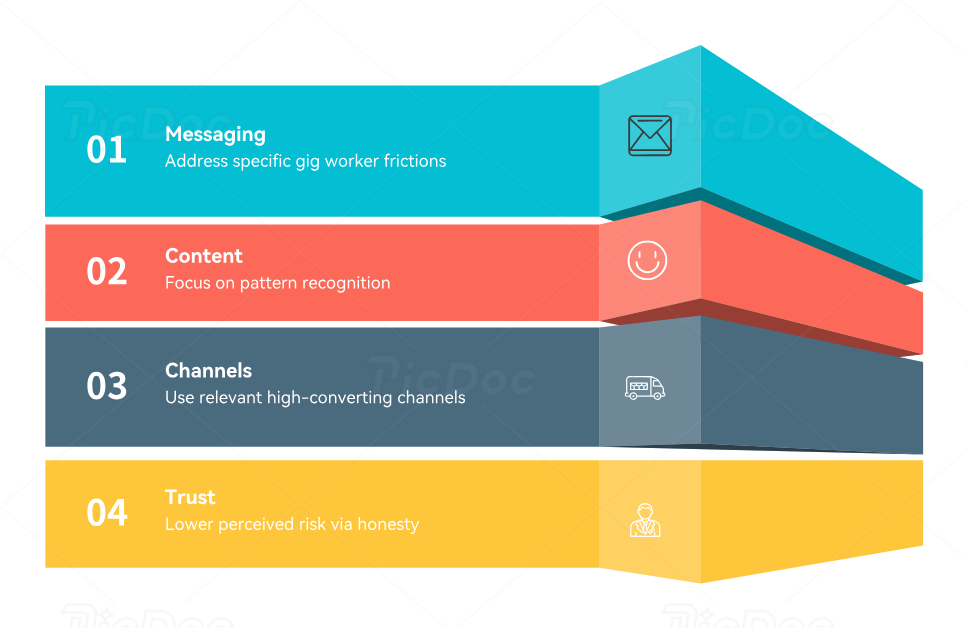
Most gig workers ignore vague coaching messaging because they are already drowning in vague advice. “Unlock your potential” means nothing when someone is losing work capacity to exhaustion, taking on bad-fit clients, or living in a cycle of feast-or-famine panic. Your marketing has to sound like it understands the pressure environment. The best messaging names the friction precisely: inconsistent work hours, emotional whiplash after cancellations, client communication overload, blurred boundaries, declining energy, and work that never mentally ends. That is why coaches who study how to create engaging coaching content, digital marketing tools for explosive growth, SEO tools for coaching websites, and YouTube channel growth for coaches tend to attract better-fit leads.
Your content should demonstrate pattern recognition, not just positivity. Write and speak about “how freelancers mistake overavailability for service,” “why creators lose consistency when everything depends on mood,” or “how independent workers quietly destroy their recovery on high-output weeks.” When prospects feel understood at that level, they assume you can help. Then use proof. Show what changed, what system was implemented, what boundary got installed, what weekly metric improved. You do not need outrageous before-and-after claims. You need operational clarity. That is where case study templates, testimonial systems, resource libraries, and free and premium resources that boost your practice become marketing assets, not just delivery assets.
The highest-converting channels are usually the ones closest to real behavior. Partnership referrals from accountants, coworking communities, creator groups, fitness networks, freelancer newsletters, and service-business communities often outperform broad “coach marketing” because they reach people already living the problem. Educational webinars, niche-specific email series, and small workshops can work extremely well when the topic is concrete enough. A session called “How to Stop Gig Work From Eating Your Evenings” will usually outperform “Mindset for Freedom.” This is why automated email sequences, interactive workshops, interactive communities, and practical content systems matter so much.
A final truth: gig workers are skeptical for good reason. Many have already bought courses, templates, or “productivity hacks” that created more guilt than change. Your marketing must therefore lower perceived risk. Be precise about scope. Be honest about who you help best. Explain what your process does and does not do. Anchor your authority in coaching integrity, ethical principles coaches cannot ignore, understanding ethical responsibilities, and certified coaches explaining whether certification is worth it. That kind of honesty converts more serious clients than hype ever will.
5. The Risks, Boundaries, and Credibility Rules That Matter in This Niche
Gig workers often arrive in coaching with financial stress, low recovery, and identity pressure tangled together. That makes this niche full of opportunity, but also full of risk for careless coaches. The first rule is simple: never promise income outcomes you cannot ethically control. A coach can improve habits, decision-making, workload boundaries, consistency, and resilience. A coach cannot guarantee revenue, platform growth, or client demand. Confusing those lines creates mistrust fast. Smart practitioners anchor their work in ethical coaching principles, coaching confidentiality, managing dual relationships, and how coaches avoid career-ending mistakes.
The second rule is to keep scope clean. Many gig workers bring health complaints, anxiety patterns, burnout symptoms, or relationship strain into the coaching space because their work structure worsens all of them. Coaches absolutely need compassion here, but compassion without scope control becomes liability. That is why emotional consent, professional boundaries, ethical responsibilities as a health and life coach, and trust-building standards are not side topics. In this niche, they are part of the product.
The third rule is that credibility must be visible. Gig workers buy faster when they can see that you understand their world and have a method strong enough to reduce chaos. Your credibility stack may include certification, a clear methodology, practical tools, case studies, structured onboarding, behavioral tracking, and clean communication. It should also include the ability to say no to problems outside your lane. Coaches who want to build long-term authority in this space should keep strengthening health coaching certification positioning, essential coaching skills, resources for continuous coaching education, and building a thriving coaching toolkit.
The final rule is balance. Gig workers need systems, but they do not want to feel managed like employees. Great coaching gives structure without turning into surveillance. It gives accountability without creating dependence. It uses automation tools, wearable technology, leveraging wearable tech for next-level coaching, and balancing human touch with automation to support the client, not crowd them. That distinction is what separates scalable coaching from shallow coaching.
6. FAQs
-
Yes, but only if they narrow the problem they solve. A new coach who tries to “coach freelancers on everything” will struggle. A new coach who helps one segment reduce one recurring pain can become useful quickly. Start with a focused operating problem, support it with case study templates, build a simple resource hub, strengthen your coaching toolkit, and use certification resources to build credibility.
-
The best buyers are usually those whose inconsistency is already costing them money, health, or client retention. Consultants, creators, real estate agents, fractional leaders, high-output freelancers, and independent service providers often understand the cost of chaos faster than lower-margin segments. That does not mean other segments cannot work. It means your offer has to match their economics. Study profitable coaching niches, market size and growth opportunities, best online health coach certification programs, and career-roadmap articles to position yourself well.
-
Tie your coaching to operational improvements the client can feel and track. Examples include fewer missed commitments, cleaner work hours, better recovery, more consistent output, improved client communication, lower stress spikes, and better adherence to priorities. Use goal tracking tools, dashboards, feedback systems, and journaling tools so the client can see movement without you making claims outside your control.
-
Hybrid is often the strongest model. One-on-one coaching gives precision, while group environments reduce isolation and lower price barriers. Many gig workers benefit from both: a private plan and a peer container that normalizes the struggle of self-managed work. The best hybrid programs often combine interactive workshops, community-building strategies, gamification, and virtual platforms so accountability does not depend on one call a week.
-
Start lean. You usually need a scheduling tool, a CRM, one communication channel, a simple dashboard, a feedback system, and one accountability layer. Add complexity only when the client experience clearly improves. Great delivery often comes from fewer tools used well, not more tools used badly. Build from CRM tools, automation tools, the best coaching apps, and video conferencing best practices before expanding.
-
General life coaching often stays broad. Gig-economy coaching must be operational. It should understand workload volatility, self-employment stress, blurred boundaries, irregular routines, and the emotional cost of unstable demand. The coach is not just helping the client “feel better.” They are helping them function better in a high-friction work environment. That is why this niche benefits from trust-centered coaching, clear communication, strong ethical standards, and technology-enhanced coaching models.
