
How Social Responsibility is Redefining the Coaching Industry
The coaching industry is changing because clients are no longer judging coaches only by charisma, credentials, or content quality. They are judging them by responsibility. They want to know how a coach handles trust, power, pricing, privacy, claims, inclusion, and real-world client vulnerability. That shift is not cosmetic. It changes how offers are built, how sessions are run, how marketing sounds, and how outcomes are measured.
In other words, social responsibility is no longer a side virtue. It is becoming a market filter, a trust signal, and a business model advantage for coaches who understand what modern clients actually need.

1. Social Responsibility Has Moved From Moral Bonus To Market Expectation
For a long time, many coaching businesses treated responsibility like branding polish. They talked about mission, empowerment, and impact, but still used vague claims, weak boundaries, thin consent practices, and marketing that pushed emotional pain harder than it protected people. That model is collapsing. Clients are more alert. They can see when a coach talks about transformation but ignores coaching integrity, skips ethical responsibilities as a health and life coach, overlooks emotional consent in every coaching session, weakens professional boundaries with coaching clients, or fails to protect coaching confidentiality. Trust now forms faster, but so does distrust.
This matters because coaching sits close to identity, behavior, health, stress, relationships, motivation, and self-worth. When a client hires a coach, they are not buying abstract advice. They are giving access to patterns they may be ashamed of, confused by, or exhausted from managing alone. A socially responsible coach understands that access is not permission to overstep. It is a duty to stay within scope, use the non-negotiable standards every coach must know, avoid career-ending coaching mistakes, solve ethical dilemmas coaches face, and build trust as the most valuable asset in coaching. Responsibility is not softness. It is disciplined restraint.
It is also changing what buyers reward. More clients now prefer coaches who explain process clearly, define scope early, avoid miracle language, and use coaching case study templates to demonstrate value honestly instead of promising life change in one slogan. They are drawn to coaches who use surveys and feedback tools, interactive goal tracking tools, custom coaching dashboards, and client journaling tools to create clarity rather than dependence. Social responsibility is redefining the industry because it changes the basic question from “Can this coach inspire me?” to “Can this coach hold influence responsibly?”
2. What Social Responsibility Actually Looks Like Inside A Coaching Practice
Social responsibility in coaching is not a slogan about changing the world. It is a series of operational choices that shape whether clients feel respected, safe, and genuinely supported. It shows up in how you onboard, what you promise, how you price, how you store data, how you follow up, and what you do when a client needs help beyond your scope. A coach can talk all day about impact, but if they do not use clear coaching session templates, ask stronger questions through powerful questioning techniques, protect privacy with client session recording tools, communicate process with effective coaching communication, and stay grounded in ethical coaching principles, they are leaving responsibility to chance.
One major piece is scope discipline. Socially responsible coaches do not act like substitute therapists, doctors, financial advisors, or crisis responders. They know when to coach, when to educate, when to pause, and when to refer out. That is why they value coaching confidentiality, take professional boundaries seriously, understand managing dual relationships, keep trust central, and build resource hubs that help clients get the right support faster. Clients should never have to guess whether a coach knows where coaching ends.
Another piece is accessibility. Social responsibility does not mean every coach must work for free. It means a coach thinks seriously about access. That can include lower-friction resources, group formats, education-first content, community support, lighter-touch offers, and better tools that reduce dependence on live hours alone. Coaches who understand interactive coaching exercises, building an interactive coaching community online, creating a coaching resource library clients will love, free and premium coaching resources, and best practices for interactive coaching workshops can widen impact without destroying their own sustainability. Responsibility is not anti-business. It is better business design.
And then there is dignity. Some coaching marketing still humiliates people into buying. It frames the client as lazy, broken, undisciplined, or secretly failing. Social responsibility rejects that. It uses language that confronts the problem without reducing the person. It builds plans through strength-based coaching techniques, positive psychology frameworks, appreciative inquiry, solution-focused brief coaching, and inner critic management techniques. A socially responsible coach does not just help clients change behavior. They help them do it without destroying self-respect.
3. The Business Model Is Changing Because Responsibility Changes What Clients Buy
One of the biggest misconceptions in coaching is that responsibility slows growth. In reality, it changes the kind of growth you can sustain. Clients are increasingly skeptical of hype, overpromising, vague spirituality, and “DM me for details” offers that hide structure. When they sense responsibility, they stay longer because the offer feels safer and more coherent. That means your business model has to prove responsibility at every layer: your sales page, your onboarding, your check-ins, your content, your referral logic, and your progress systems. Coaches who build around smart goals 2.0, habit formation tools, daily journaling prompts, life mapping, and gratitude journal coaching create visible client traction instead of selling emotional intensity.
It also changes pricing logic. A responsible coaching business usually has clearer tiers because it understands that not everyone needs or can afford the same depth of support. That can mean one-to-one work at the top, group coaching in the middle, self-paced education below that, and public value content at the top of the funnel. Coaches who pair automated email sequences, essential CRM tools, digital marketing tools, SEO tools for coaching websites, and YouTube channel growth for coaches with honest, stage-matched offers stop forcing everyone into the same expensive container. Social responsibility often makes monetization smarter, not smaller.
Just as important, responsibility changes retention. Clients do not stay because a coach is always available. They stay because the process is useful, clear, and humane. When a practice uses surveys and feedback tools, custom dashboards, interactive goal tracking, virtual coaching tools, and balancing human touch with coaching automation, the client does not feel managed. They feel supported. That difference is the future of responsible coaching businesses.
4. How To Build A Socially Responsible Coaching Brand Without Sounding Performative
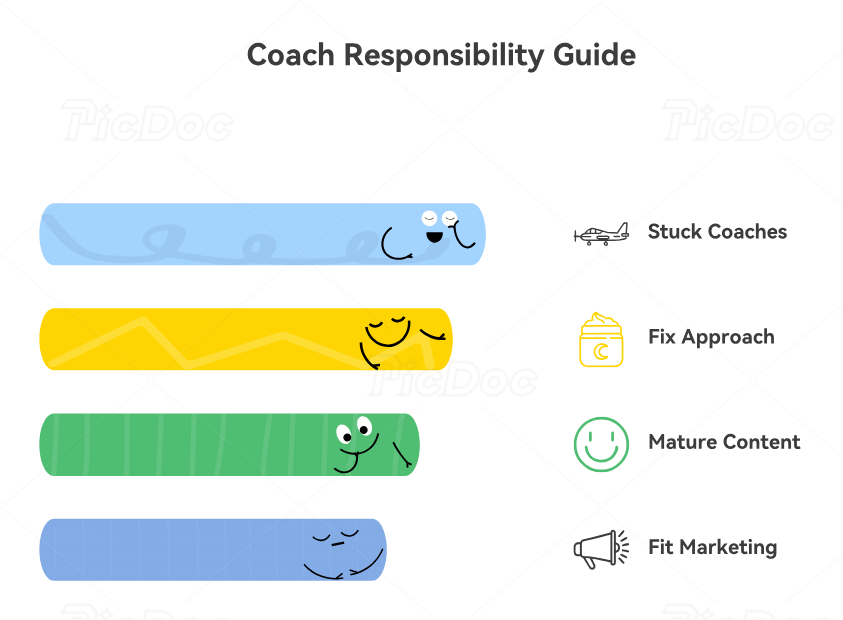
This is where many coaches get stuck. They know responsibility matters, but they communicate it badly. They make it sound like virtue theater instead of operational maturity. The fix is simple: stop announcing values you cannot prove. Show responsibility through systems. Instead of saying you are ethical, explain your consent process. Instead of saying you care deeply, show your scope statement. Instead of saying you are inclusive, show how your coaching toolkit for every niche, essential resources for coaching certification and credentialing, coaching resource hub, client testimonials capture system, and case study templates actually serve people better. Responsible brands are specific.
That also means your content must mature. Responsible content does not just trigger pain. It names friction, teaches clearly, respects nuance, and gives people a useful next step even if they never buy. Coaches who create engaging coaching content clients love, use video conferencing best practices, share must-have books for coaches, point audiences toward podcast resources that keep coaches ahead, and build templates and checklists into their coaching toolkit signal generosity without sacrificing authority. Social responsibility becomes visible when your audience feels informed rather than manipulated.
You should also design marketing around fit, not desperation. Not every lead should become a client. A socially responsible coach welcomes that reality because mismatched clients create worse results, harder conversations, weaker testimonials, and greater ethical risk. This is where which certification is right for you, best online health coach certification programs for busy professionals, launch your successful health coaching career, step-by-step guide to becoming a certified life coach, and health coaching certification choice matter indirectly too: good training helps coaches identify fit, limits, and risk faster. A socially responsible brand does not try to win everyone. It tries to serve the right people well.
5. The Biggest Opportunity: Responsibility Can Become Your Strongest Competitive Edge
As the coaching industry gets louder, responsibility becomes differentiating. Not because clients are looking for saints, but because they are tired of confusion. They are tired of coaches who borrow clinical language without clinical competence, push extreme routines without context, use AI carelessly, and promise emotional breakthroughs without structure. A coach who builds around how coaches reach mastery, the coaching skill you didn’t know you needed, the communication secret behind successful coaching, new data-proven coaching methods, and why top coaches are obsessed with better systems instantly feels more trustworthy than one who only sells inspiration. Responsibility sharpens positioning because it makes the offer feel safer and more serious.
It also opens new revenue paths. Socially responsible coaches are better positioned for partnerships, organizations, group work, educational products, and community-led models because they have process discipline. They can create virtual retreat platforms, build interactive workshops, run online coaching communities, develop resource libraries, and use best coaching software and platforms for client management because their business is not held together by personality alone. That makes them easier to trust at scale.
Most importantly, responsibility improves outcomes. When clients feel respected, they disclose more honestly. When boundaries are clear, sessions are cleaner. When pressure is reduced, follow-through often improves. When plans match life context, behavior change becomes more realistic. Coaches who blend wearable tech for next-level coaching, AI changes in client interactions, technology transforming the coaching industry, the future model coaches need to adopt, and the future of client engagement with ethics and humanity will define the next era. Social responsibility is not pulling coaching away from results. It is pushing coaching toward results that are more durable, more honest, and more worthy of trust.
6. FAQs
-
It means using your influence carefully. In practice, that includes clear scope, informed consent, fairer access, privacy protection, realistic claims, responsible referrals, and non-shaming communication. Coaches who apply ethical coaching principles, protect coaching confidentiality, respect emotional consent, define professional boundaries, and strengthen coaching integrity are practicing social responsibility even before they ever use the phrase.
-
No. It means designing access intelligently, not devaluing your work. A responsible practice can still be premium. The difference is that it may offer multiple entry points, better resources, clearer expectations, and more honest fit screening. Coaches who use automated email sequences, interactive goal tracking, resource hubs, group coaching communities, and digital marketing tools can expand access without collapsing margins.
-
By making the conversation operational instead of ideological. Show the systems. Explain your scope. Publish your communication standards. Clarify data handling. Describe who your offer is for and who it is not for. Use case study templates, resource libraries, client feedback tools, custom dashboards, and client testimonial systems to prove seriousness through delivery.
-
Operating outside scope while calling it service. Many coaches blur lines because they genuinely want to help, but good intentions do not remove risk. That is why ethical responsibilities as a coach, dual relationship management, career-ending mistakes to avoid, non-negotiable coaching standards, and trust-building practices matter so much. The fastest way to damage a coaching brand is to confuse care with competence outside your lane.
-
Yes, because it improves the conditions that make results possible. Clear expectations reduce friction. Better consent increases openness. Humane accountability reduces shame. Context-aware plans improve follow-through. Stronger tools keep progress visible. Coaches who use habit formation tools, smart goals 2.0, journaling tools for self-awareness, solution-focused brief coaching, and strength-based techniques often create more stable change because the process respects reality.
-
Start with four things: rewrite your claims, clarify your scope, tighten your consent process, and improve your between-session support. Then audit pricing access, client privacy, referral pathways, and your content tone. Use building your coaching toolkit, essential resources for credentialing, curating the perfect coaching toolkit for every niche, best coaching software and platforms, and balancing human touch with automation to build responsibility into the actual mechanics of your practice, not just the language around it.
