
Setting Up Your Coaching LLC: Essential Steps
Setting up a coaching LLC is one of the first serious moves that separates a casual practice from a protected, credible business. The filing matters, but the real value comes from the system around it: clean money separation, clear client agreements, ethical scope, professional boundaries, and a repeatable operating process. Coaches who skip those pieces often discover the problem later, when a refund dispute, confused client expectation, tax surprise, or documentation gap turns a simple business decision into a stressful mess. Use this as an educational checklist; state rules and tax decisions should be reviewed with your secretary of state, attorney, or tax professional because business structure affects taxes, paperwork, registration, and liability.
1. Build the LLC Around the Real Risks of Coaching
A coaching LLC should begin with a clear understanding of what you are actually protecting. Your biggest risks usually come from vague promises, unclear scope, sloppy payment systems, weak boundaries, loose documentation, and clients who assume coaching includes therapy, medical advice, financial advice, or crisis support. That is why LLC setup should connect directly to coaching integrity, professional boundaries, ethical responsibilities, and client trust.
The mistake many coaches make is treating the LLC as the finish line. They file articles of organization, receive confirmation, feel “official,” and continue operating with personal payment accounts, informal text-message agreements, inconsistent cancellation policies, and undocumented client commitments. That creates the exact kind of confusion that damages client relationships, weakens client expectations, and makes it harder to prove the value of your coaching case studies.
Start by writing a one-page business risk map before you file. List what you sell, who you serve, what outcomes you help clients work toward, what your service excludes, how clients communicate with you, what happens if they miss sessions, how refunds work, how you store notes, and how you respond when a client shows signs of emotional crisis. This connects the legal shell to real practice quality, especially if your niche touches stress management, burnout coaching, work-life balance, or mental health coaching.
Your LLC should also support your positioning. A health coach, life coach, relationship coach, executive coach, and financial coach may all use the same legal structure, but their risk language, disclaimers, client intake forms, and referral boundaries should look different. A coach using habit formation tools needs different documentation than a coach building relationship coaching, and a coach selling online programs needs different operating rules than someone offering high-touch virtual coaching.
| Setup Area | Coaching-Specific Decision | What To Prepare | Common Mistake | Helpful ANHCO Resource |
|---|---|---|---|---|
| Business name | Choose a name that can grow beyond one offer. | Search state database, domain availability, and social handles. | Picking a name tied to one tiny service. | Health coaching career roadmap |
| Coaching niche | Define who you serve before writing contracts. | One niche statement and three excluded areas. | Serving everyone and promising everything. | Profitable coaching niches |
| State filing | Decide where your business is legally based. | Secretary of state filing page, fee, annual report rules. | Filing in a trendy state without understanding foreign registration. | Life coach roadmap |
| Registered agent | Choose who receives official legal notices. | Agent name, address, renewal process. | Using a personal address without considering privacy. | Ethical coaching principles |
| Operating agreement | Create rules even for a single-member LLC. | Ownership, authority, profit handling, dissolution terms. | Assuming single-owner businesses need no written rules. | Clear professional boundaries |
| EIN | Separate federal tax identity from personal identity. | IRS application details and responsible party information. | Paying third-party sites for something the IRS offers free. | Payment systems |
| Bank account | Keep client revenue away from personal spending. | EIN, articles, operating agreement, business address. | Accepting coaching payments into personal accounts. | Financial forecasting |
| Bookkeeping | Track income by offer and expense by category. | Chart of accounts, receipt process, monthly review day. | Waiting until tax season to organize everything. | Coach tax guide |
| Insurance | Match coverage to services and client risk. | Professional liability, general liability, cyber/privacy review. | Assuming LLC protection replaces insurance. | Avoid career-ending mistakes |
| Client agreement | Define offer, scope, payment, cancellation, and communication. | Signed contract template and renewal terms. | Starting paid coaching through informal DMs. | Coaching confidentiality |
| Scope disclaimer | Clarify coaching versus therapy, medical care, or legal advice. | Plain-language scope statement in agreement and intake. | Using inspirational language that sounds like guaranteed treatment. | Ethical responsibilities |
| Refund policy | Decide how payments are handled when clients quit early. | Refund window, unused session rule, no-show terms. | Making refund decisions emotionally during conflict. | Difficult client conversations |
| Cancellation policy | Protect the calendar without sounding punitive. | Notice window, rescheduling limit, emergency exception. | Letting inconsistent clients drain capacity. | Accountability in coaching |
| Intake form | Collect enough detail to coach safely and responsibly. | Goals, constraints, referral red flags, consent language. | Asking too little and discovering scope issues late. | Surveys and feedback tools |
| Emotional consent | Ask permission before deeper reflection or sensitive exercises. | Consent language for sessions, worksheets, and follow-ups. | Pushing vulnerability before trust is established. | Emotional consent |
| Crisis protocol | Plan what happens when coaching crosses into urgent support needs. | Referral list, emergency language, documentation rule. | Trying to personally hold situations outside your scope. | Emotional crises |
| Client notes | Document decisions, action steps, and agreed boundaries. | Session note template and secure storage process. | Writing vague notes that cannot explain what happened. | Session templates |
| CRM | Track leads, clients, renewals, and follow-ups. | Pipeline stages and client status tags. | Running the business from memory. | CRM tools |
| Scheduling | Reduce missed sessions and calendar confusion. | Booking rules, buffer times, reminder automation. | Letting clients book anywhere and anytime. | Business automation tools |
| Payment processor | Make payment predictable and professional. | Invoice terms, subscription rules, failed payment process. | Chasing invoices after sessions have already happened. | Simple payment systems |
| Marketing claims | Promote outcomes without guaranteeing transformations. | Claim review checklist and testimonial permissions. | Using client results as universal promises. | Client testimonials |
| Certification display | Show credentials clearly and accurately. | Credential wording, issuing body, completion status. | Inflating training into licensure language. | List credentials correctly |
| Website policy pages | Create clarity before visitors become clients. | Terms, privacy, disclaimer, contact rules. | Selling through a site with unclear legal language. | Coaching website tools |
| Data privacy | Protect sensitive client information. | Storage rules, access limits, deletion process. | Keeping notes, worksheets, and messages scattered everywhere. | Protect client confidentiality |
| Offer structure | Package sessions so expectations stay concrete. | Session count, support channel, deliverables, timeline. | Selling “unlimited support” without boundaries. | Make coaching work consistently |
| Client dashboard | Give clients one place for goals, action steps, and progress. | Progress tracker, weekly recap, resource hub. | Letting clients lose the plan between sessions. | Custom coaching dashboards |
| Annual compliance | Keep the LLC active after formation. | Annual report date, state fee, license renewal calendar. | Missing renewals because nobody owns compliance. | Business benchmarking |
2. Choose the Right Name, Filing State, and Business Identity
Your LLC name should be professional enough for contracts, invoices, referrals, and partnerships. A name that sounds clever on social media can become a problem when you pitch organizations, appear in directories, or build a serious health coaching career. Before filing, check the state database, domain availability, social handles, and whether the name still makes sense if you expand from one-on-one coaching into online courses, coaching workshops, or a coaching resource hub.
Most coaches should think carefully before filing in a state they do not actually operate from. Popular “business-friendly” states can sound attractive, but a coach may still need to register as a foreign LLC in the home state where the business is run, clients are served, or revenue is managed. The cleaner question is: where is your real business presence? That answer affects registered agent choice, annual reports, tax accounts, local licensing, and how confidently you can build client trust, industry credibility, and a stable coaching practice.
Your professional identity should also match your scope. A “health optimization” brand needs careful language around nutrition, wellness, habit change, and referral boundaries. A “relationship coaching” brand needs stronger consent, confidentiality, and conflict language. A “career transition” brand needs clarity around advice, accountability, and client decision-making. The sharper your positioning, the easier it becomes to choose the right coaching toolkit, case study format, feedback process, and client experience.
3. File the LLC, Get the EIN, and Separate the Money
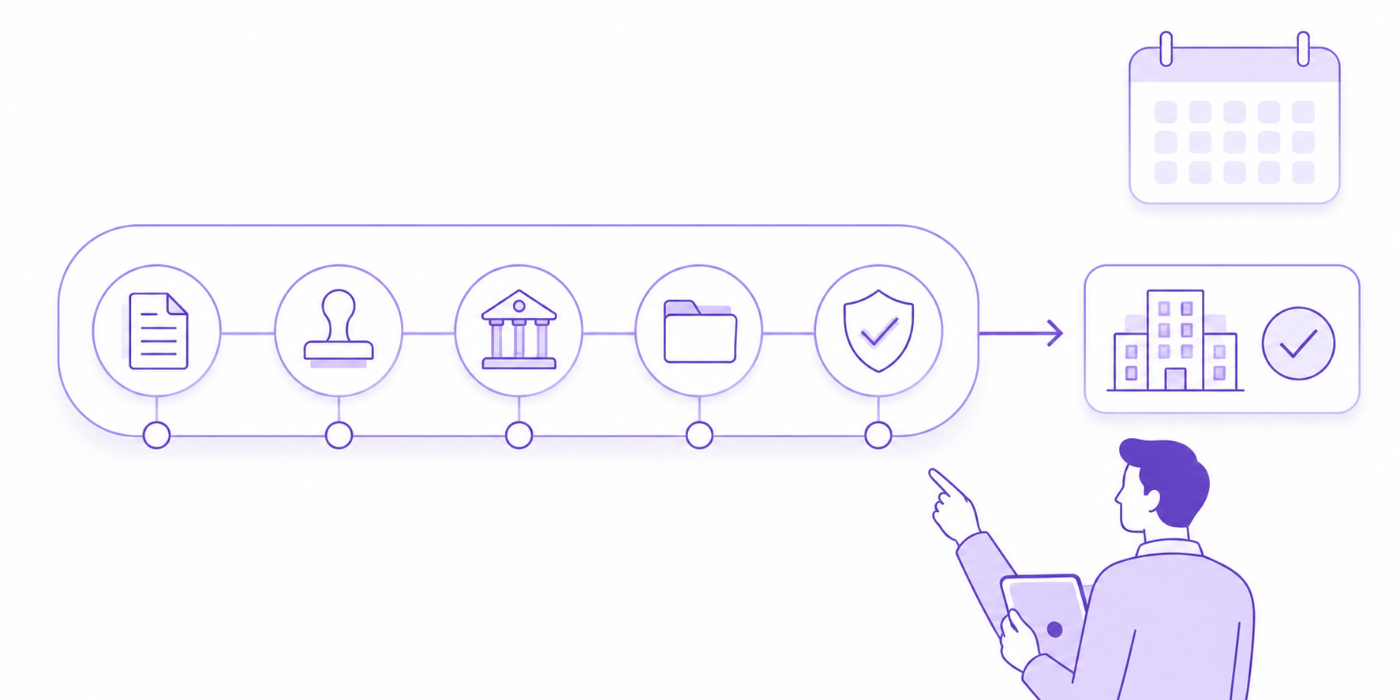
Once the name and state are clear, the technical setup usually moves through a predictable sequence: file articles of organization with the state, choose a registered agent, create an operating agreement, get an EIN when needed, open a business bank account, set up payments, and create a bookkeeping rhythm. The IRS explains that a single-member LLC is generally treated as disregarded from its owner for federal income tax unless it elects another classification, while an LLC with more than one member is generally treated as a partnership unless it elects corporate treatment.
The EIN step deserves special attention because coaches often overpay for it. The IRS states that businesses can get an EIN directly from the IRS for free, and approved online applications can receive the EIN immediately. That number helps you open a business bank account, work with payment processors, complete tax forms, and separate your coaching income from personal accounts. Pair that with payment systems, financial forecasting, tax planning, and business automation from the beginning.
Money separation is one of the simplest professionalism signals. Coaching revenue should land in the business account. Business expenses should be paid from the business account. Owner draws should be intentional. Subscriptions, ads, training, templates, software, insurance, and contractor payments should be categorized monthly. When this discipline is missing, coaches lose track of profit, underprice their offers, miss tax deductions, and make growth decisions based on bank balance feelings rather than data. That weakens business benchmarking, income forecasting, client retention planning, and offer strategy.
Build a clean financial workflow before your first busy month. Use one payment processor, one invoicing process, one receipt folder, one monthly review date, and one spreadsheet or bookkeeping tool that shows revenue by offer. A coach selling packages, memberships, group programs, retreats, and courses needs to know which offer produces profit without draining delivery capacity. That is where coaching automation, CRM tools, client dashboards, and digital marketing tools become operational assets instead of random apps.
4. Protect the Practice With Contracts, Boundaries, and Scope Language
Your LLC needs documents that match how coaching actually works. A strong client agreement should name the offer, session length, program duration, payment schedule, cancellation rules, refund terms, communication windows, confidentiality expectations, scope limits, client responsibilities, and what happens when the relationship needs to pause or end. This is where coaching confidentiality, professional boundaries, ethical dilemmas, and constructive feedback become practical business protection.
The most dangerous phrase in coaching is “I thought you meant…” A client may think unlimited messaging means daily support. A coach may think a package is nonrefundable. A client may assume nutrition coaching includes meal prescriptions. A coach may assume a missed session still counts. These gaps usually appear during stress, disappointment, or slow progress. Clear written terms protect the relationship before emotion takes over, especially in work involving client anxiety, burnout, grief and loss, or emotional intelligence.
Your agreement should also include a coaching scope statement in plain language. Say what coaching supports: goals, reflection, accountability, habit change, planning, motivation, behavior design, and progress review. Then name the services outside the relationship: therapy, diagnosis, medical treatment, legal advice, investment advice, emergency support, or crisis intervention. A coach with strong communication techniques, effective listening, powerful questioning, and emotional consent can set those limits without sounding cold.
Add a referral protocol before you need one. Decide what you will do if a client expresses self-harm thoughts, abuse concerns, severe mental distress, medical symptoms, or needs support outside your training. Keep local emergency resources, crisis lines, referral partners, and documentation rules available. Coaches lose confidence when they improvise in moments that require calm structure. A written protocol helps protect the client, the coach, and the business, while reinforcing safe coaching environments, trust-building, scope awareness, and career protection.

5. Turn the LLC Into a Real Operating System
After formation, your LLC needs a rhythm. Create a compliance calendar with state annual report dates, registered agent renewals, insurance renewal dates, tax deadlines, software renewals, contract review dates, credential renewal dates, and monthly bookkeeping reviews. A coaching business often feels chaotic because the owner tracks everything mentally. That works for a short time, then the business becomes a pile of forgotten follow-ups, expired tools, missed receipts, unclear client statuses, and unpaid invoices. A reliable operating system supports client management, automation, continuous education, and future-proof practice design.
Build your client workflow from first inquiry to offboarding. A strong process includes lead capture, discovery call notes, fit assessment, proposal, contract, invoice, intake form, baseline goals, session schedule, progress tracker, feedback checkpoint, renewal conversation, testimonial request, and offboarding recap. Each stage should have a template. Coaches who rely on charisma alone eventually deliver uneven experiences. Coaches who use session templates, goal tracking tools, journaling tools, and feedback tools create cleaner outcomes with less emotional labor.
The LLC should also support proof. If you want referrals, partnerships, premium pricing, and stronger conversion, you need a system for capturing outcomes ethically. That means asking for consent, documenting baseline problems, tracking client actions, collecting feedback, saving testimonials, and turning anonymized patterns into better content. This strengthens your client testimonials, case studies, marketing content, and networking strategy.
Finally, review your setup every quarter. Ask four questions: Are clients clear on what they bought? Is money separated and categorized? Are documents signed before delivery begins? Are your tools helping outcomes or creating noise? If the answer exposes a weak spot, fix the system before scaling. Growth magnifies whatever already exists. A clean LLC foundation makes it easier to add group coaching communities, gamification strategies, virtual retreats, and advanced coaching software without losing control.
6. FAQs About Setting Up a Coaching LLC
-
You can usually start exploring your offer, niche, and training before filing, but accepting paid clients raises the stakes. Once money, client agreements, payment systems, and liability exposure enter the picture, an LLC becomes worth serious consideration. Pair the filing decision with certification planning, client expectations, ethical responsibilities, and a clear career roadmap.
-
An LLC and insurance solve different problems. The LLC creates a business structure, while insurance can help with covered claims, defense costs, or professional liability issues depending on the policy. Coaches who discuss wellness, relationships, stress, grief, habits, or life transitions should review coverage carefully. This is especially important if your work includes emotional crises, stress coaching, relationship coaching, or client confidentiality.
-
Yes. Even a single-member coaching LLC benefits from an operating agreement because it records how the business is owned, managed, funded, paid, closed, and separated from the owner personally. It also helps banks, tax professionals, and future partners understand how the business is structured. Treat it as part of your business toolkit, alongside professional boundaries, payment systems, and client agreements.
-
Many coaching LLCs use an EIN to open a business bank account, separate tax identity, hire contractors or employees, and work with payment processors. The IRS provides EINs directly for free, and its online application can issue one immediately when approved. After getting the EIN, connect it to your bookkeeping system, payment workflow, financial forecast, and CRM process.
-
Open a business bank account, route client payments there, pay business expenses from that account, save receipts, and review categories monthly. Avoid paying personal bills from the business account or using personal cards for coaching tools whenever possible. Clean separation helps you understand profit, prepare taxes, price services, and make smarter growth decisions with business benchmarking, income planning, digital tools, and automation systems.
-
FinCEN states that entities created in the United States and their beneficial owners are currently exempt from BOI reporting requirements, while certain foreign companies may still have reporting obligations. Because this area has changed, coaches should check the current FinCEN page when forming or updating an LLC. Keep that review in the same compliance calendar as credential renewals, tax planning, insurance review, and business standards.
-
Prepare a client agreement, intake form, scope disclaimer, confidentiality language, cancellation policy, refund policy, payment terms, crisis referral protocol, testimonial consent form, and session note template. These documents make the coaching relationship clearer before emotions, missed sessions, slow progress, or payment issues appear. Strong documents support safe coaching environments, client accountability, effective communication, and lasting behavior change.
