
The Role of Accountability in Coaching Client Success
Accountability is one of the most misunderstood forces in coaching. Many clients hear the word and think pressure, surveillance, guilt, or someone checking whether they “did the homework.” Real accountability does something far more valuable. It turns intention into visible action, exposes avoidance before it becomes a pattern, and creates structure around the moments where motivation usually collapses.
That is why coaching outcomes improve when accountability is designed well. Clients do not fail only from lack of knowledge. They fail when clarity fades, friction rises, excuses sound reasonable, and no system catches the drift early enough. Strong accountability closes that gap and keeps progress alive long enough to become real.
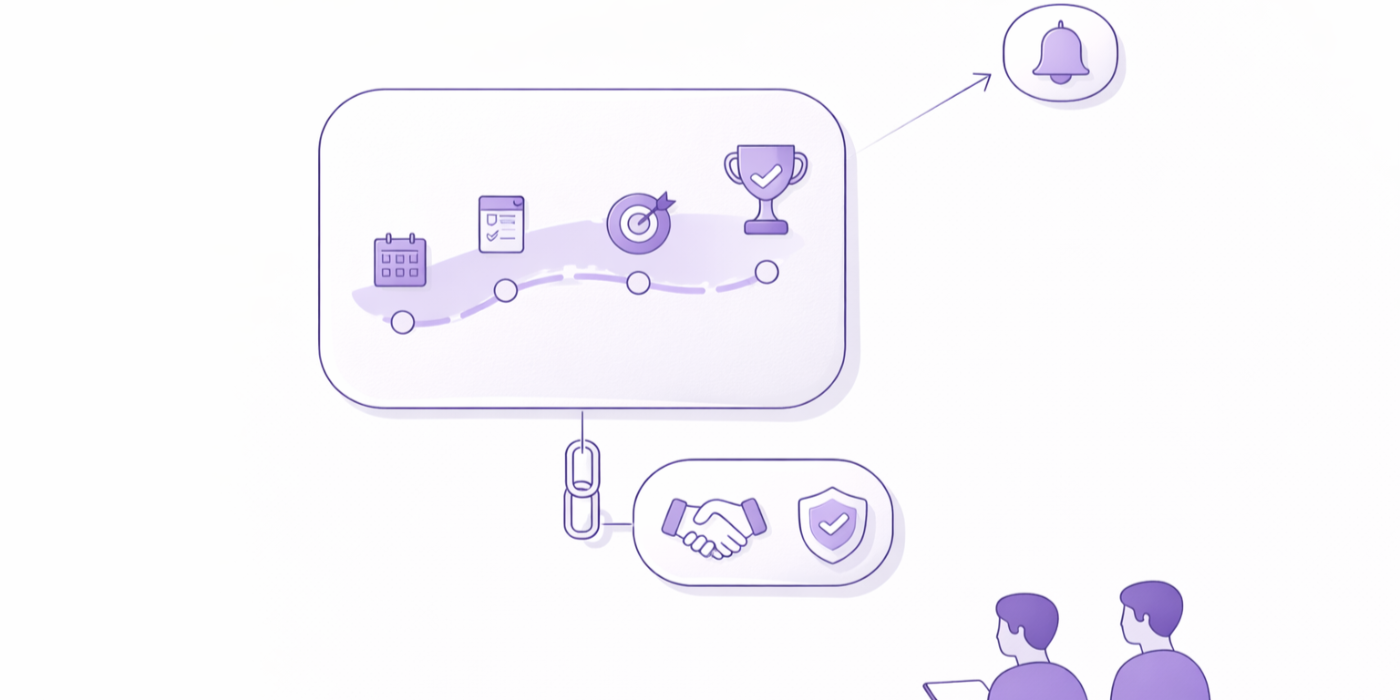
1. Why Accountability Changes Coaching Outcomes More Than Motivation Alone
Motivation is a weak long-term strategy. It is unstable, emotional, and vulnerable to stress, fatigue, family demands, self-doubt, poor planning, and the ordinary chaos of life. Clients often begin coaching with intense desire for change, but desire does not protect behavior once discomfort arrives. The person who wants to improve their health still skips the walk after a draining day. The client who wants stronger boundaries still says yes to avoid conflict. The professional who says they are ready for reinvention still delays the one conversation or task that would make the goal real.
This is where accountability becomes one of the most powerful tools a coach can use. It creates a structure that supports action after excitement fades. It makes commitments harder to romanticize and easier to measure. It reveals whether a goal is real, vague, performative, unrealistic, under-supported, or emotionally blocked. Coaches who understand how the worlds best coaches get results, how to inspire clients to take immediate action, interactive goal tracking tools that boost client success, smart goals 20 how top coaches set amp achieve client goals, and new data proven coaching methods for maximum client success know that change becomes believable when it is tracked, reviewed, and corrected in motion.
Clients rarely need more abstract encouragement. They need a system that catches drift early. Most coaching failures do not begin with total collapse. They begin with a skipped habit, then a missed check-in, then a vague story about being “busy,” then quiet embarrassment, then avoidance of the coach, then the slow death of momentum. Accountability prevents this downward slide by making small deviations visible before they become identity. A client who misses one action step and reviews it honestly can recover quickly. A client who disappears into unexamined avoidance may lose months.
Strong accountability also separates real barriers from convenient stories. Some clients say they want a result, but their follow-through shows that the goal is poorly defined, emotionally mismatched, or buried under competing priorities. Others genuinely want the change but have built no reliable bridge between intention and action. Accountability gives the coach data. Not theoretical data. Behavioral data. Did the client do what they said they would do? If not, where exactly did the plan fail? Was the step too large, too vague, too frequent, too emotionally loaded, or too disconnected from daily reality? This level of clarity aligns with coaching case study templates demonstrating your value effectively, using surveys and feedback tools to improve coaching outcomes, creating custom coaching dashboards for enhanced client experience, coaching session templates to boost your productivity instantly, and building your coaching toolkit essential templates and checklists.
Accountability matters for another reason: it strengthens self-trust. Many clients do not only struggle with behavior. They struggle with the private humiliation of making promises to themselves and repeatedly watching those promises fail. Each broken commitment leaves residue. They stop believing their own plans. They stop respecting their own calendar. They begin to treat effort as a temporary mood instead of a stable decision. Good accountability reverses that. It helps clients experience themselves as people who can decide, act, review, adjust, and continue. That shift can change far more than one goal. It can change identity.
| Client Goal | Typical Failure Point | Best Accountability Method | How to Use It | Start With | Best For |
|---|---|---|---|---|---|
| Daily habit consistency | Forgetting after busy days | Simple tracker | Mark one key action daily | One habit only | New clients |
| Exercise adherence | All-or-nothing thinking | Minimum standard rule | Set “floor” version of workout | 10 minutes | Perfectionists |
| Boundary setting | Fear of discomfort | Post-conversation review | Debrief each boundary attempt | One script weekly | People-pleasers |
| Nutrition follow-through | Poor planning | Prep checklist | Track shopping + prep steps | 2 prep actions | Busy parents |
| Career transition | Avoiding visible moves | Weekly proof-of-progress log | List applications, outreach, portfolio work | 3 proof items | Stalled professionals |
| Stress reduction | Inconsistent self-care | Scheduled recovery blocks | Calendar recovery like an appointment | 2 blocks weekly | Burned-out clients |
| Communication improvement | Avoiding hard talks | Conversation commitment plan | Set date, opener, intention | One conversation | Conflict avoiders |
| Morning routine | Overcomplicated plan | Anchor habit check | Attach routine to wake-up cue | 2-step ritual | Chaotic schedules |
| Client retention in coaching program | Low engagement between sessions | Midweek check-in form | Collect wins, misses, barriers | 3 questions | Ongoing programs |
| Weight-loss adherence | Weekend drift | High-risk day planning | Prepare Friday-Sunday plan in advance | One risky window | Clients with repeat lapses |
| Relationship repair | Delaying apology or follow-up | Repair deadline | Commit to response within 24 hours | One repair action | Emotionally avoidant clients |
| Business growth | Working only on easy tasks | CEO task scorecard | Track high-leverage actions weekly | 3 core metrics | Coaches and founders |
| Sleep improvement | Nighttime inconsistency | Shutdown routine log | Track pre-sleep behaviors | 2 non-negotiables | Overstimulated clients |
| Financial discipline | Avoiding money review | Weekly money meeting | Short recurring review slot | 15 minutes | Avoidant spenders |
| Confidence building | Waiting to feel ready | Action-before-confidence tracker | Log actions done while uncomfortable | One brave action | Low self-trust clients |
| Burnout recovery | Saying yes to everything | Boundary evidence log | Track each no, delegate, or deferral | 2 protections weekly | Over-functioners |
| Emotional regulation | Reactive communication | Trigger reflection form | Review what happened after conflict | One trigger map | Reactive clients |
| Writing or content production | Waiting for perfect conditions | Output commitment | Track volume, not mood | 3 short sessions | Creative clients |
| Job search | Research without applying | Application quota | Set weekly minimum applications | 3 applications | Overthinkers |
| Leadership development | Avoiding feedback conversations | Leadership action review | Track one courageous conversation weekly | One talk | Managers |
| Reducing procrastination | Emotional resistance at task start | Start-time accountability | Track when task begins, not just ends | 5-minute start | Chronic delayers |
| Habit replacement | Trigger blindness | Cue-response log | Track triggers before unwanted behavior | One recurring cue | Behavior-change clients |
| Time management | Reactive calendar use | Weekly planning audit | Review where time actually went | Three categories | Busy professionals |
| Program completion | Losing focus mid-program | Milestone scoreboard | Celebrate and review milestones | Monthly review | Long-term clients |
| Self-care recovery after relapse | Shame after setback | Recovery protocol | Review lapse within 24 hours | 3 recovery questions | Clients with relapse patterns |
| Nutrition awareness | Mindless eating windows | Context-based logging | Track context, not just food | Two high-risk situations | Emotional eaters |
| Relationship consistency | Only acting in crisis | Connection ritual tracking | Log appreciation or check-ins | Two touches weekly | Couples coaching clients |
| Learning new skills | Consuming without practice | Application log | Track where learning was used | One application point | Certification students |
| Reducing digital distraction | Mindless phone use | Screen trigger audit | Review time, triggers, substitutions | One no-phone block | Distracted clients |
| Identity change | Acting from old self-image | Evidence of new identity log | Track proof of becoming | 3 proofs weekly | Deep transformation work |
2. What Accountability Really Means in Coaching
Accountability is not a scolding mechanism. It is not the coach becoming an external parent for an underperforming client. It is not endless reminders. It is not emotional pressure disguised as support. In high-quality coaching, accountability is a deliberate system for turning commitments into behavior, behavior into feedback, and feedback into adjustment.
At its best, accountability includes five elements. First, there is a clear commitment. The client knows exactly what they are doing, how often, and by when. Second, there is visibility. The action is being tracked somewhere reliable. Third, there is review. Someone looks at what happened without pretending or softening the truth. Fourth, there is interpretation. The coach and client examine why the result occurred. Fifth, there is redesign. The next plan becomes smarter instead of louder. That architecture sits beneath automating your coaching business essential tech tools, essential crm tools to manage your coaching client relationships, coaching automation next-level tools to grow your business faster, creating custom coaching dashboards for enhanced client experience, and best coaching software amp platforms for client management in 2025.
A weak accountability system sounds like this: “Try to exercise more this week.” A strong one sounds like this: “Walk for fifteen minutes after lunch on Monday, Wednesday, and Friday. Message your completion in the tracker by 3 p.m. If you miss one, use the ten-minute floor version that evening.” One invites wishful thinking. The other creates behavioral reality.
Accountability also has to be emotionally intelligent. Some clients need more structure because they drift easily. Some need smaller commitments because shame explodes when they miss oversized goals. Some need faster check-ins because avoidance expands in silence. Some need fewer metrics because tracking itself becomes a perfectionistic trap. Coaches who understand must-know client preferences shaping the future of coaching, the future of client engagement 2026, how coaches reach mastery, why top coaches are obsessed, and how technology is completely transforming the coaching industry know that accountability must fit the human being, not just the spreadsheet.
There is another critical distinction: accountability should increase ownership, not dependency. The client should not succeed only because the coach is watching. That creates borrowed discipline. Effective accountability gradually teaches the client how to monitor themselves, tell the truth sooner, recover faster after misses, and build systems that survive between sessions. Good coaching uses accountability to create internal strength, not permanent external supervision.
This matters because many clients have a painful history with self-discipline. They have tried rigid routines, punishing self-talk, productivity hacks, and unrealistic plans. They do not need another brittle structure that works for six days and dies under stress. They need accountability that is honest, specific, humane, and strong enough to face reality without collapsing into guilt.
3. The Different Types of Accountability Coaches Should Use
Not every goal needs the same accountability model. Coaches lose effectiveness when they use one style for every client and every outcome. The best systems match the task, the emotional friction, the pace of the program, and the client’s actual failure pattern.
The first type is action accountability. This is the most basic form. The client commits to a visible behavior and reports completion. It works well for habit formation, practice consistency, outreach actions, scheduling, prep work, and foundational routines. It pairs naturally with habit formation tools helping clients achieve lasting change, effective strategies for reinforcing positive client behaviors, the role of accountability in coaching client success if published later, how to make it work every time, and the radical simplicity coaches are loving.
The second type is process accountability. This focuses less on outcome and more on whether the client followed the system that produces results. A client may not control immediate weight change, revenue, or external responses, but they can control food prep, outreach volume, sleep routine, study sessions, meeting practice, or conflict scripts. Process accountability is especially useful when clients get discouraged by slow outcomes and need to reconnect with the controllable behaviors that build them.
The third type is reflective accountability. This matters when the real obstacle is not task completion but pattern blindness. The client may need to review triggers, excuses, emotional dips, scheduling failures, decision points, or relational dynamics. Reflective accountability asks, “What happened, what got in the way, and what does this teach us?” This is where many breakthroughs occur. It complements daily journaling prompts the ultimate 2026 guide for coaches, powerful client journaling tools for deeper self-awareness, life mapping the ultimate 2026 guide for coaches, the neuroscience-based method every coach needs now, and inner critic management techniques the ultimate 2026 guide for coaches.
The fourth type is relational accountability. This is useful when clients succeed alone but fail in live situations involving conflict, boundaries, family, teams, or partnership. Here the client is not only accountable for a task. They are accountable for a conversation, a boundary, a repair, a check-in, or a new communication behavior. This style connects strongly to building deep trust how to strengthen your client relationships, communication techniques every coach should master, managing difficult client conversations with ease, conflict resolution strategies every coach needs, and effective listening techniques that transform client conversations.
The fifth type is identity accountability. This is advanced and extremely powerful. The client tracks proof that they are becoming the kind of person they say they want to be. The question shifts from “Did I complete the task?” to “What evidence did I create this week that I am becoming more disciplined, honest, calm, consistent, boundaried, or courageous?” Identity accountability helps clients move beyond checkbox behavior into self-concept change. It fits beautifully with how to actually change your clients life in 2026, the 1 coaching technique for client breakthroughs, why this skill determines your coaching success, how one method is revolutionizing coaching, and strength-based coaching techniques that skyrocket client success.
4. How to Build an Accountability System Clients Will Actually Follow
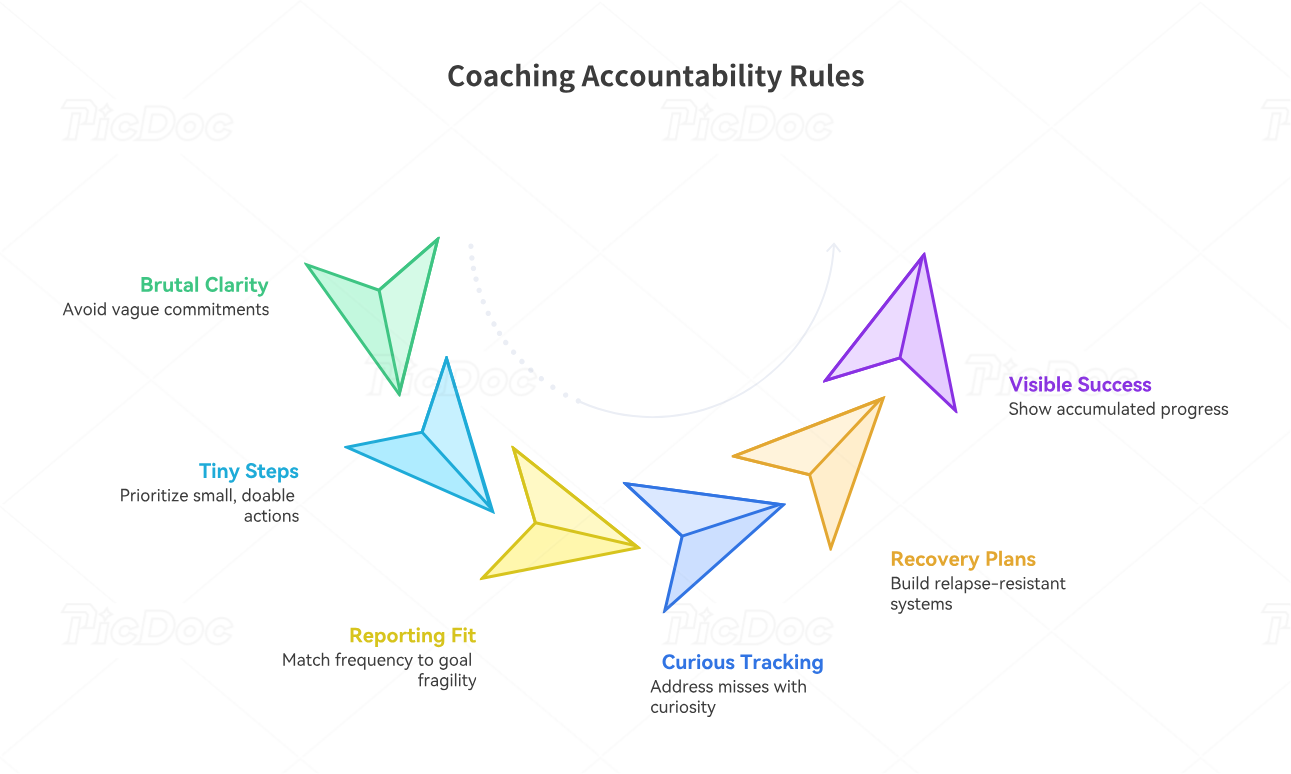
The first rule is brutal clarity. Never leave a session with a commitment that sounds inspirational but behaves like fog. “Be more consistent” is unusable. “Track lunch choices on weekdays” can live. “Have better boundaries” dies on contact with reality. “Say no to one low-priority request before Friday” can be coached. Clarity is not administrative detail. It is the difference between an action and a fantasy.
The second rule is reduce the action to the smallest step that still counts. Coaches often destroy accountability by assigning steps that belong to the client’s ideal self instead of their current capacity. A client who has failed for months does not need a heroic plan. They need a believable one. Tiny actions build credibility. Credibility builds momentum. Momentum can handle expansion later. This logic is deeply aligned with how to actually empower clients real results, the coaching skill you didnt know you needed, why coaches need it more than ever 2026, how coaches can actually change client diets, and preventative health coaching how this shift will dominate the industry.
The third rule is match the reporting frequency to the fragility of the goal. High-risk goals need shorter loops. A client with chronic inconsistency may need daily or midweek reporting. A stable client working on a lower-friction habit may only need weekly review. Silence is dangerous when avoidance is already active. Coaches should not confuse freedom with supportlessness.
The fourth rule is track misses with curiosity, not softness. When a client misses the commitment, the conversation should be direct. What happened? Where did the plan break? What feeling, circumstance, or thought interrupted the step? What would make next week more likely to succeed? Avoiding this conversation trains dishonesty. Turning it into shame trains disappearance. The skill is honest pressure without humiliation.
The fifth rule is build recovery into the system. Many clients believe missing once means they failed. Coaches should teach relapse-resistant accountability. Include floor versions, catch-up rules, restart scripts, and next-step plans before the miss happens. That way a lapse becomes a planned moment of adaptation, not a full collapse of self-respect.
The sixth rule is make success visible. Clients often under-feel their progress because they do not see it accumulating. Show streaks, completion rates, behavioral proof, identity evidence, milestone markers, and before-versus-now contrasts. Visibility creates reinforcement. Reinforcement makes repetition easier. This is one reason gamification strategies keeping clients engaged and motivated, interactive coaching exercises to keep clients motivated, gamification tools coaches are using for maximum engagement, how to build an interactive coaching community online, and how to create engaging coaching content clients love can strengthen accountability when used with restraint.
5. Common Accountability Mistakes That Quietly Sabotage Client Success
One major mistake is confusing reminders with accountability. Reminders can help, but they do not create ownership by themselves. A client can ignore ten reminders and still remain unchanged. Accountability begins where action is reviewed and interpreted, not where notifications are sent.
Another mistake is making commitments too ambitious in order to feel impressive. Oversized plans create emotional theater and behavioral failure. The client leaves energized, then misses the goal, feels weak, and starts hiding. A smaller commitment completed consistently is more valuable than a dramatic promise that explodes on the first difficult day.
A third mistake is letting clients report effort instead of evidence. “I really tried” can be sincere and still useless if the action was not visible. Coaches should care about effort, but effort must be translated into behavior, attempts, reps, conversations, submissions, logs, or other proof. Otherwise the coaching process becomes emotionally persuasive and behaviorally empty.
A fourth mistake is failing to distinguish inability from unwillingness. Some clients need a redesigned system because life constraints, emotional overload, or skill gaps make the current step unrealistic. Others are hiding behind endless redesign to avoid discomfort. The coach has to tell the difference. That discernment is part of real professional strength.
A fifth mistake is using accountability in a way that recreates old shame dynamics. Some clients have histories of criticism, control, or chronic failure. They still need structure, but the tone matters. If accountability feels like being judged by authority, they may comply briefly and then disappear. Coaches should create firmness without humiliation, candor without contempt, and responsibility without emotional punishment.
A sixth mistake is keeping accountability external for too long. The ultimate aim is self-accountability. The client should become someone who notices drift early, tells the truth fast, re-engages quickly, and adjusts without drama. Coaching should train that muscle until the person can carry it into work, health, relationships, money, and every other domain where success depends on consistent action.
6. FAQs
-
Accountability matters because clients often know what to do long before they do it consistently. It turns goals into visible commitments, catches avoidance early, and creates a feedback loop that helps the coach and client adjust before momentum dies. It closes the gap between intention and behavior.
-
The coach’s role is to help the client define clear commitments, track them visibly, review results honestly, identify what blocked follow-through, and redesign the next step intelligently. A strong coach does not simply remind. A strong coach helps the client build a system that produces repeatable action.
-
Healthy accountability is specific, supportive, honest, and behavior-based. It creates pressure to follow through without humiliating the client. It focuses on commitments, evidence, barriers, and adjustments. It strengthens ownership instead of creating dependence on the coach.
-
That depends on the client and the goal. Fragile habits, high-risk behaviors, and clients with strong avoidance patterns often need shorter loops such as daily or midweek check-ins. Lower-risk goals and more stable clients may do well with weekly review. The right frequency is the one that prevents drift without creating overload.
-
Repeated misses are valuable data. The issue may be vagueness, oversizing, emotional resistance, competing priorities, low readiness, poor planning, or hidden fear. The coach should not just repeat encouragement. The coach should diagnose the exact failure point and redesign the commitment from there.
