
Understanding Client Anxiety and Stress: Coaching Strategies That Work
An anxious client rarely needs more information first.
They usually need containment, better sequencing, and a coach who can tell the difference between discomfort that leads to growth and overload that shuts reflection down. In real practice, stress changes attention, memory, follow-through, sleep, eating, conflict patterns, and the client’s ability to use even strong advice. Coaches who understand that shift create calmer sessions, stronger trust, and more durable change. This guide breaks down how to recognize anxiety in coaching, respond without overstepping, structure sessions that reduce overwhelm, and help clients regain traction when stress keeps hijacking progress.
1. Why Anxiety Changes The Entire Coaching Equation
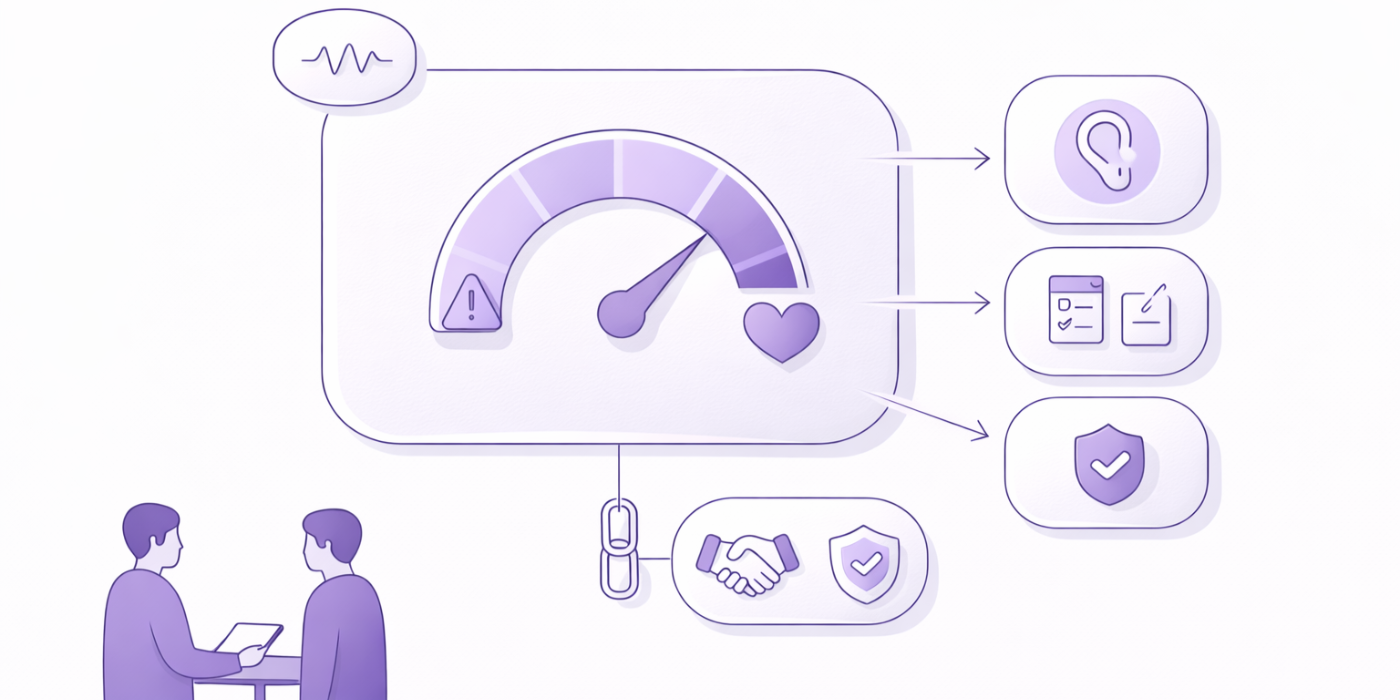
A stressed client does not process coaching the same way a regulated client does. Under pressure, attention narrows, threat scanning rises, and even simple next steps can feel loaded with consequence. That is why coaching built only on motivation talk often underperforms. The client may agree with everything in session, then freeze the moment real life pushes back. Strong coaches understand this gap and work it directly through pacing, emotional safety, and structure. That principle sits behind creating a safe coaching environment, building deep trust, effective listening techniques, and the communication secret behind successful coaching.
Anxiety also distorts the coach’s read of the client. What looks like resistance may be overload. What looks like procrastination may be fear of emotional cost. What looks like poor commitment may be a plan that ignored energy, sleep, conflict, caregiving strain, or decision fatigue. Coaches who keep treating every missed action as a discipline issue damage trust fast. Better practice comes from combining powerful questioning techniques, communication techniques every coach should master, managing difficult client conversations, and techniques for maintaining professional boundaries.
The real shift is this: anxious clients need coaching that reduces unnecessary load while still preserving agency. That means fewer moving parts, clearer decisions, more explicit consent, better emotional naming, tighter follow-through design, and stronger repair after setbacks. Coaches already using stress management techniques, mindfulness and meditation techniques for emotional coaching, how to inspire clients to take immediate action, and effective strategies for reinforcing positive client behaviors usually see better adherence for one reason: the plan respects the nervous system instead of fighting it.
| Signal In Session | What It Often Means | Risk If Missed | Best Coaching Response | Helpful First Question |
|---|---|---|---|---|
| Fast speech | Activated nervous system, urgency, fear of losing control | Surface-level coaching and rushed commitments | Slow the pace and summarize often | “What feels most urgent right now?” |
| Blanking out | Overload, shame, cognitive fatigue | Client feels “bad at coaching” | Reduce options and shorten reflection | “Would one small starting point feel easier?” |
| Jumping topics | Fragmented attention, unprocessed stress | Sessions feel productive but change stalls | Create one-thread focus | “Which one issue is driving the others?” |
| Overexplaining | Self-protection, fear of judgment | Trust never deepens | Validate before redirecting | “What part of this feels hardest to say plainly?” |
| Perfectionistic plans | Control-seeking under anxiety | Fast relapse after one imperfect day | Design minimum viable actions | “What would the low-pressure version look like?” |
| Repeated apologizing | Shame, hypervigilance, relational fear | Client hides setbacks | Normalize honesty and repair | “What are you worried I might think?” |
| Physical restlessness | Somatic stress, agitation | Reflection stays cognitive and detached | Use grounding before problem-solving | “What is your body doing right now?” |
| Missed follow-through | Capacity gap, not always motivation gap | Coach labels client inconsistent | Audit friction and recovery barriers | “Where did the plan break in real life?” |
| Late cancellations | Avoidance, overload, emotional dread | Dropout risk rises | Lower entry pressure and rebuild safety | “What makes showing up hard lately?” |
| “I should know this” language | Harsh inner critic | Insight becomes self-attack | Separate standards from shame | “What standard are you holding yourself to?” |
| Binary thinking | Threat mode, rigidity | Extreme decisions and all-or-nothing behavior | Introduce middle paths | “What exists between total success and total failure?” |
| Seeking constant reassurance | Low internal trust, high uncertainty | Coach becomes emotional crutch | Build self-trust rituals | “How would you answer this for yourself on a calm day?” |
| Tearfulness at simple prompts | Stress load already full | Coach pushes too deep too soon | Stabilize before deeper work | “What feels heaviest in your week?” |
| Anger spikes | Threat response, unmet needs, fear | Misread as resistance only | Explore pressure and boundaries | “What feels violated, blocked, or unsafe here?” |
| Difficulty deciding | Decision fatigue, fear of consequences | Client leaves with vague intentions | Narrow to two viable choices | “Which option costs less energy this week?” |
| Constant productivity talk | Worth tied to output | Burnout worsens during coaching | Probe identity beneath performance | “Who are you when output drops?” |
| Conflict avoidance | Fear of rupture, people-pleasing | Stress source stays untouched | Rehearse hard conversations | “What conversation are you delaying?” |
| Poor sleep reports | High activation, rumination | Plans exceed real capacity | Adjust expectations and habits accordingly | “What becomes harder for you after poor sleep?” |
| Stress eating or appetite loss | Dysregulated coping | Coach gives generic behavior advice | Link patterns to triggers and timing | “What happens right before that shift?” |
| Emotional numbness | Shutdown, depletion | Coach mistakes flatness for calm | Use gentle body-based check-ins | “What feels distant or muted lately?” |
| Catastrophizing | Threat amplification | Planning becomes panic management | Reality-test without invalidating | “What is the feared outcome, and how likely is it?” |
| Hyper-responsibility | Boundary problems, guilt load | Client keeps absorbing others’ chaos | Clarify roles and limits | “What is yours to carry, and what is not?” |
| Low eye contact | Shame, overwhelm, fatigue, culture/context factors | Coach assumes disengagement | Reduce pressure and ask consent | “Would it help to slow down or approach this differently?” |
| Overcommitting | Fear of disappointing others | Week collapses under unrealistic promises | Set constraint-based goals | “What can you complete even on a hard day?” |
| Needing exact scripts | Anxiety around uncertainty | Short-term relief, low adaptability | Give structure plus decision rules | “What part needs a script, and what part needs practice?” |
| Comparing self constantly | Threat to self-worth | Client abandons personal pace | Re-anchor to personal metrics | “What result would count as progress for your real life?” |
| Ghosting after breakthrough | Vulnerability hangover, fear of change | Coach mistakes progress for dropout only | Plan post-session recovery steps | “What tends to happen after emotionally intense sessions?” |
2. How To Assess Anxiety Without Turning The Session Into Therapy
A coach’s job is not diagnosis. A coach’s job is to notice patterns that affect goals, behavior, communication, and follow-through. That distinction protects both the client and the practice. One of the best ways to assess anxiety in coaching is to focus on functional impact. Ask how stress changes sleep, appetite, conflict, concentration, decision-making, recovery, and consistency. That keeps the conversation practical while honoring what the client is carrying. This approach aligns with understanding ethical responsibilities as a health & life coach, coaching confidentiality, the ultimate guide to ethical coaching principles, and why emotional consent matters in every coaching session.
Use layered questions instead of one dramatic prompt. Start with what is visible: “What has felt heaviest this week?” Move to impact: “What becomes harder when stress is high?” Then narrow toward coaching relevance: “Where is anxiety interfering with the plan we built?” This creates useful data without pushing clients into premature exposure. It also works well with coaching session templates, interactive goal tracking tools, using surveys and feedback tools, and coaching case study templates.
Coaches should also watch for scope limits. Panic symptoms, persistent trauma responses, severe functional impairment, active safety concerns, or symptoms that clearly need clinical care call for referral support and careful boundary holding. A coach can still help with routines, accountability, and communication after referral, yet the role must stay clean. This is where how coaches can support clients during emotional crises, how coaches can support clients with PTSD and trauma, coaching clients through grief and loss, and how to set clear professional boundaries with coaching clients become essential reading, not optional extras.
3. Coaching Moves That Calm The Client Without Making Them Dependent On You
The best calming strategies in coaching do two things at once: they reduce immediate overwhelm and increase the client’s own capacity to respond well next time. That is why endless reassurance is weak practice. It relieves the moment and trains dependency. Better moves include emotional labeling, narrowing the focus, slowing the timeline, reducing options, and distinguishing facts from feared stories. These methods connect naturally with the art of powerful questioning in coaching, conflict resolution strategies every coach needs, effective coaching communication for NBHWC certification, and the neuroscience-based method every coach needs now.
One strong tactic is the “name, normalize, narrow, next step” sequence. Name what is happening: “You sound pulled in five directions.” Normalize the stress response without minimizing it: “That makes sense given how much is landing on you.” Narrow: “Which one pressure point is creating the most spillover?” Then choose a next step small enough to survive a bad day. This mirrors the strengths behind solution-focused brief coaching, strength-based coaching techniques, SMART goals 2.0, and the role of accountability in coaching client success.
Another high-value move is helping the client separate a stress-management goal from the life goal itself. A client trying to improve nutrition while juggling poor sleep, workplace conflict, and decision fatigue may need a “reduce friction at 7 p.m.” goal before a food-behavior goal. A client avoiding exercise may first need a “leave work without rumination for 20 minutes” target. Coaches who get this sequence right often outperform more knowledgeable coaches who keep pushing tactics into chaos. That logic fits how coaches can actually change client diets, helping clients manage work-life balance successfully, effective strategies for coaching clients through burnout, and the importance of self-care coaching for client mental health.
4. Session Structures That Reduce Overwhelm And Increase Follow-Through
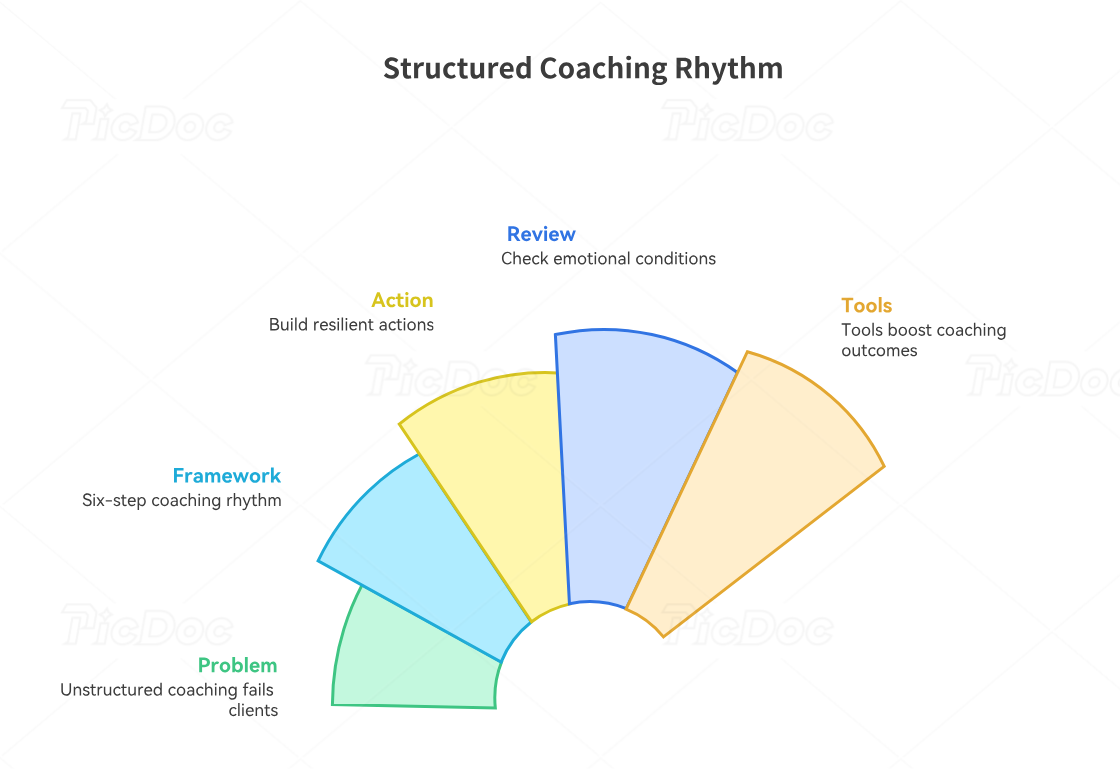
A stressed client benefits from a repeatable session rhythm. Unstructured coaching can feel warm in the moment and still fail badly between sessions. A better frame is simple: regulate, clarify, prioritize, shrink, commit, review recovery obstacles. Start with a quick nervous-system check-in. Move into what happened since last session. Identify one core problem. Build one action that is specific, realistic, and resilient. End by asking what could derail it and what support rule will keep it alive. This rhythm works beautifully with interactive coaching exercises, building your coaching toolkit, curating the perfect coaching toolkit for every niche, and creating custom coaching dashboards.
The action step must be built for turbulence, not ideal conditions. Coaches often ask, “What will you do this week?” and accept a polished answer. The better question is, “What can still happen on a day when your energy drops, your schedule changes, or anxiety spikes?” That one shift saves plans from fantasy. It is also why habit formation tools, automating your coaching business, coaching automation, and essential CRM tools can raise outcomes when used to reduce friction instead of flooding clients with touchpoints.
Follow-through improves further when the coach reviews not only the task but the emotional conditions around the task. Ask where the client will be, what time window exists, what feeling usually shows up first, and what interruption tends to derail the action. Then build a response rule. Example: “If dread rises before the call, I will do a two-minute grounding practice and send the email draft instead of postponing everything.” This is far more effective than generic accountability and pairs well with managing client expectations, building deep trust, how to make it work every time, and how the world’s best coaches get results.
5. Common Mistakes Coaches Make With Anxious Clients
One damaging mistake is pushing insight when the client needs stabilization. A beautiful question asked at the wrong nervous-system state lands like pressure. Another is praising oversized goals that clearly come from panic, guilt, or perfectionism. Coaches sometimes reward ambition when they should be evaluating sustainability. Stronger judgment comes from coaching integrity, the non-negotiable standards every coach must know, why trust is the most valuable asset in coaching, and how coaches avoid career-ending mistakes.
A second mistake is overidentifying with rescue. Coaches working with distressed clients can slip into over-availability, blurred boundaries, or subtle emotional caretaking that weakens autonomy. The client starts looking to the coach for regulation on demand. The coach gets drained. Results become fragile. Better practice uses clear expectations, limited channels, explicit escalation boundaries, and self-trust building in every exchange. This aligns with techniques for maintaining professional boundaries with clients, managing dual relationships, ethical dilemmas coaches face and how to solve them gracefully, and coaching confidentiality.
A third mistake is treating stress tools as the whole answer. Breathwork, journaling, reframing, and reflection prompts are useful, yet many clients stay anxious because their life design keeps producing the same overload. The hidden problem may be poor boundaries, impossible calendars, conflict avoidance, financial strain, sleep erosion, or a work identity built on constant urgency. The coach who only hands out calming techniques misses the machine generating the fire. Better support often includes daily journaling prompts, life mapping, inner critic management techniques, and the wheel of life reinvented alongside hard conversations about workload, relationships, and standards.
6. FAQs
-
Look at severity, persistence, and functional impact. Coaching can address habits, routines, communication, and goal pursuit under stress. Referral becomes important when symptoms are intense, persistent, trauma-linked, safety-related, or clearly beyond coaching scope. Keep the language practical, stay compassionate, and use boundary-informed support modeled in how coaches can support clients during emotional crises, understanding ethical responsibilities as a health & life coach, the ultimate guide to ethical coaching principles, and how to set clear professional boundaries with coaching clients.
-
Stop reading it as simple noncompliance. Audit the emotional and logistical failure points. Ask what moment the plan usually collapses, what feeling appears first, and what recovery rule could preserve a smaller version of the action. Then redesign the goal for a hard day, not a perfect day. This is where interactive goal tracking tools, habit formation tools, the role of accountability in coaching client success, and how to inspire clients to take immediate action become far more useful than another motivational talk.
-
They help, but they are rarely enough on their own. Grounding lowers the emotional temperature so the client can think and choose better. Lasting change still requires better sequencing, realistic commitments, reduced friction, clearer boundaries, and honest identification of the life conditions producing chronic stress. Combine grounding with strategy through mindfulness and meditation techniques for emotional coaching, stress management techniques every coach should know, helping clients manage work-life balance successfully, and effective strategies for coaching clients through burnout.
-
Build calm, then hand capability back. Use reflective questions that help clients generate their own answers, create between-session tools they can use without you, define communication boundaries clearly, and praise self-trust rather than coach dependence. A healthy coaching relationship increases internal stability instead of outsourcing it. That principle fits coaching integrity, building deep trust, techniques for maintaining professional boundaries, and why emotional consent matters in every coaching session.
-
Start with goals that reduce spillover and increase predictability. Good examples include improving sleep transition routines, preparing for one avoided conversation, reducing evening decision fatigue, building a simple food fallback plan, creating a post-work decompression ritual, or using one grounding tool before high-stress tasks. These goals create traction fast because they hit the mechanisms feeding anxiety. They pair well with how coaches can actually change client diets, powerful client journaling tools, strength-based coaching techniques, and new data proven coaching methods for maximum client success.
-
Keep it simple and containing. Reflect what you notice, slow the pace, ask permission, and reduce the cognitive load immediately. A useful pattern is: “There is a lot here. We can slow this down. Would it help to stay with one piece, or take a brief grounding pause first?” That response preserves dignity and control. Coaches can sharpen this skill through effective listening techniques, communication techniques every coach should master, managing difficult client conversations with ease, and creating a safe coaching environment.
