
How to Give Constructive Feedback Clients Actually Listen To
Most clients do not resist feedback because they hate growth. They resist feedback because it feels vague, personal, badly timed, or emotionally unsafe. Coaches who understand the communication secret behind successful coaching, build around why trust is the most valuable asset in coaching, use how to actually empower clients real results, and structure sessions with coaching session templates to boost your productivity instantly make feedback easier to hear and far more likely to change behavior.
Constructive feedback is one of the clearest separators between average coaching and transformational coaching. If a client cannot hear what is sabotaging their progress, they keep repeating the same pattern with better intentions and worse frustration. Coaches who sharpen powerful questioning techniques that transform coaching sessions, use interactive goal tracking tools that boost client success, rely on strength-based coaching techniques that skyrocket client success, and stay grounded in coaching integrity building trust and credibility in your practice turn feedback into one of their strongest results drivers.
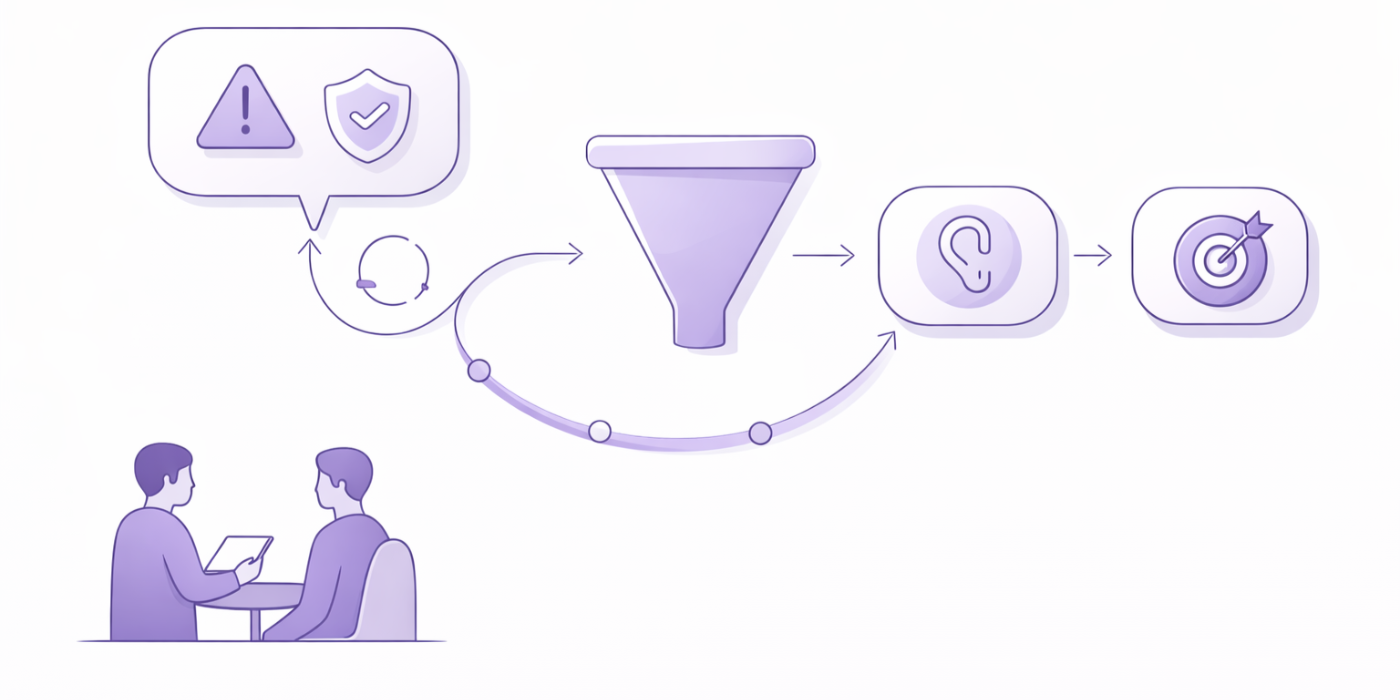
1. Why Clients Stop Listening the Moment Feedback Starts Feeling Heavy
Clients listen to feedback when it feels useful. They shut down when it feels like judgment dressed up as coaching. That is why coaches who study why emotional consent matters in every coaching session, apply how to set clear professional boundaries with coaching clients, understand why coaches must avoid this trap, and remember the coaching skill you didn’t know you needed usually land feedback better than coaches who simply “tell the truth” without thinking about reception.
One of the biggest problems is identity-based feedback. When a coach says, “You are undisciplined,” the client hears a character attack. When the coach says, “Your plan is collapsing in the same part of the week every time,” the client hears a pattern. That distinction changes everything. Coaches who rely on new data proven coaching methods for maximum client success, refine goals through smart goals 20 how top coaches set and achieve client goals, surface evidence with creating custom coaching dashboards for enhanced client experience, and review trends with using surveys and feedback tools to improve coaching outcomes have a much easier time staying behavior-specific.
Timing is another reason feedback gets ignored. A client who has just admitted failure, guilt, avoidance, or embarrassment is often not ready for blunt correction. They need emotional steadiness first. Coaches who use appreciative inquiry the ultimate 2026 guide for coaches, lean on solution-focused brief coaching sfbc the ultimate 2026 guide for coaches, build awareness with powerful client journaling tools for deeper self-awareness, and simplify next steps through the radical simplicity coaches are loving know how to stabilize the moment before challenging the pattern.
Clients also stop listening when feedback is too broad to act on. “Be more consistent” sounds true and changes nothing. “You stop following through when your day loses structure after lunch” gives the client something concrete to work with. Coaches who connect feedback to habit formation tools helping clients achieve lasting change, sharpen self-observation with daily journaling prompts the ultimate 2026 guide for coaches, organize support using building your coaching toolkit essential templates and checklists, and reinforce patterns through interactive coaching exercises to keep clients motivated create feedback that clients can actually use in real life.
The final issue is emotional contamination from the coach. Frustrated coaches often deliver feedback with accumulated irritation in their tone. Even when the words are technically right, the client hears disappointment, superiority, or pressure. Coaches anchored in the ultimate guide to ethical coaching principles you cant ignore, committed to the non-negotiable standards every coach must know, aware of how coaches avoid career-ending mistakes, and careful about coaching confidentiality how to protect your clients and your practice keep feedback clean enough to serve the client rather than the coach’s frustration.
| Situation | What Usually Fails | Better Constructive Feedback | Main Risk | Useful Resource |
|---|---|---|---|---|
| Missed weekly goals | “You are not serious.” | “Your goals sound strong in session, but your week is not protecting them.” | Shame | SMART Goals 2.0 |
| Skipped check-ins | “You disappeared again.” | “You go silent when you feel behind, so we need an easier re-entry system.” | Withdrawal | Goal tracking tools |
| Late arrivals | “You do not respect the process.” | “Your transition into session is breaking down before we even begin.” | Defensiveness | Session templates |
| Overcommitting | “You sabotage yourself.” | “You keep building plans that your current life cannot sustain.” | Hopelessness | Radical simplicity |
| Defensiveness | “You never take feedback.” | “I notice you explain quickly when the conversation gets uncomfortable.” | Escalation | Communication skill |
| Perfectionism | “You overthink everything.” | “You delay action until the plan feels flawless, and that delay is costing momentum.” | Stagnation | Make it work every time |
| Avoiding hard conversations | “You are passive.” | “You keep choosing short-term comfort over long-term relief.” | Avoidance | Interactive exercises |
| Weak boundaries | “You let people walk over you.” | “Your yes is automatic even when your capacity is already overdrawn.” | Resentment | Boundary guide |
| Negative self-talk | “You are too hard on yourself.” | “Your inner language turns punishing the moment progress becomes imperfect.” | Shame spiral | Inner critic tools |
| Inconsistent habits | “You need discipline.” | “Your habit depends on motivation instead of a stable cue.” | Drop-off | Habit tools |
| All-or-nothing resets | “You quit too fast.” | “One imperfect day keeps turning into a full collapse.” | Self-blame | Change strategy |
| People-pleasing | “You care too much what people think.” | “You keep protecting other people’s comfort at your own expense.” | Identity collapse | Empowerment work |
| Shallow reflection | “You are not going deep enough.” | “You describe events well, but the decision pattern underneath them stays blurry.” | Low insight | Journaling tools |
| Low follow-through | “You lack discipline.” | “Your commitment is strongest in session and weakest when friction appears.” | Loss of confidence | Feedback tools |
| Excuse loops | “You always have an excuse.” | “Your explanations are real, but they are also blocking problem-solving.” | Resistance | Solution-focused coaching |
| Goal drift | “You keep changing your mind.” | “You switch goals when discomfort rises, and that resets your momentum.” | Instability | Life mapping |
| Victim framing | “You blame everyone else.” | “The pressure is real, but your own leverage keeps disappearing from the story.” | Powerlessness | Empowerment lens |
| Hidden resentment | “You are bitter.” | “Your resentment is rising where your boundaries never got spoken.” | Relationship damage | Boundary work |
| Low confidence | “You need more belief.” | “Your confidence keeps dropping because you are not collecting evidence of progress.” | Discouragement | Custom dashboards |
| Overanalysis | “You live in your head.” | “You keep processing the plan instead of testing the plan.” | Inaction | Simplicity |
| Missed sessions after setbacks | “You run when it gets hard.” | “You withdraw from support right when structure would help most.” | Ghosting | CRM tools |
| Weak preparation | “You come unprepared.” | “Your sessions become more useful when you bring one specific example instead of general frustration.” | Wasted sessions | Templates and checklists |
| Ignoring wins | “You focus only on the negative.” | “You erase progress so quickly that your motivation never gets reinforced.” | Motivation loss | Gratitude practice |
| Weak decision-making | “You are indecisive.” | “You wait for certainty, and that delay keeps feeding avoidance.” | Stall-outs | Neuroscience-based method |
| Passive participation | “You want me to do the work.” | “You are waiting for the perfect instruction when ownership needs to rise.” | Dependency | Mastery mindset |
| Emotional flooding | “You are too reactive.” | “This topic overwhelms your thinking fast, so we need a steadier way to process it.” | Shutdown | Emotional consent |
| Repeating same story | “We already talked about this.” | “The story is familiar, but the experiment afterward keeps staying the same.” | Stuck loops | Data-proven methods |
| Underreporting reality | “You are not being honest.” | “I think shame is making it harder for you to tell the full truth here.” | Trust rupture | Coaching integrity |
| Relying on motivation | “You are inconsistent.” | “Your progress still depends on inspiration instead of a protected system.” | Instability | Habit systems |
| Comparison spirals | “Stop comparing yourself.” | “Comparison is draining energy that should be going into your own measurable progress.” | Discouragement | Strength-based coaching |
| Resisting structure | “You need more discipline.” | “You want freedom, but the lack of structure keeps reproducing the same chaos.” | Resistance | Session structure |
2. What Constructive Feedback Is Actually Made Of
Constructive feedback is not random truth-telling. It has structure. Coaches who are strong at it usually follow a sequence: observation, impact, permission, exploration, redesign. That sequence becomes much easier to execute when it is supported by coaching session templates to boost your productivity instantly, sharpened through powerful questioning techniques that transform coaching sessions, informed by using surveys and feedback tools to improve coaching outcomes, and made visible through creating custom coaching dashboards for enhanced client experience.
Observation comes first because it keeps the conversation factual. “For the last three weeks, your hardest task has been scheduled in the same part of the day where your follow-through keeps collapsing.” That is much stronger than “You always do this.” Coaches who ground themselves in how to actually change your clients life in 2026, sharpen judgment through why this skill determines your coaching success, focus leverage through the 1 coaching technique for client breakthroughs, and study how the worlds best coaches get results learn how to spot and phrase patterns cleanly.
Impact comes next because clients need to know why the pattern matters. Feedback becomes more compelling when it names the cost. “That pattern is not just lowering your output. It is weakening your self-trust every time you repeat it.” Coaches who connect their work to why trust is the most valuable asset in coaching, reinforce agency through how to actually empower clients real results, track behavior with interactive goal tracking tools that boost client success, and stabilize identity with strength-based coaching techniques that skyrocket client success tend to make this step land much harder.
Permission matters because hard truths are heard better when clients are not cornered. A simple question like, “Can I reflect something I think is getting expensive for you?” changes the emotional tone of the room. Coaches who respect why emotional consent matters in every coaching session, practice the communication secret behind successful coaching, stay grounded in coaching integrity building trust and credibility in your practice, and maintain how to set clear professional boundaries with coaching clients create enough safety for honest conversations to keep moving.
Exploration is where feedback stops being performative and starts becoming useful. The coach needs to understand what is underneath the pattern. Is the client overloaded, ashamed, confused, frightened, perfectionistic, resentful, or emotionally flooded? Coaches who use appreciative inquiry the ultimate 2026 guide for coaches, explore deeper drivers with transactional analysis ta the ultimate 2026 guide for coaches, untangle self-attack through inner critic management techniques the ultimate 2026 guide for coaches, and build awareness using powerful client journaling tools for deeper self-awareness usually find far better leverage than coaches who jump straight to advice.
Redesign is the last step, and it is what makes feedback constructive instead of merely insightful. Insight without redesign produces nodding and no change. Coaches who rebuild action through smart goals 20 how top coaches set and achieve client goals, install cues through habit formation tools helping clients achieve lasting change, lower friction through interactive coaching exercises to keep clients motivated, and simplify execution with building your coaching toolkit essential templates and checklists turn hard conversations into forward motion.
3. What Great Feedback Sounds Like Inside a Real Coaching Session
The best feedback is direct without sounding punishing. It is clear without sounding superior. It is challenging without making the client feel trapped. Coaches who sharpen the coaching skill you didnt know you needed, train through essential coaching skills for icf credentialing, improve delivery with effective coaching communication for nbhwc certification, and understand detailed review of nbhwc coaching competencies usually develop stronger phrasing because they stop treating feedback like improvisation.
A highly effective pattern is to name the contradiction. “You keep saying calm matters to you, but your week is still built around urgency.” Another is to name the hidden cost. “Every time you wait for the perfect mood before starting, your confidence drops because you are teaching yourself that action requires inspiration.” Another is to name the protective strategy underneath the behavior. “It sounds like overpreparing is helping you avoid being seen trying.” Coaches who combine solution-focused brief coaching sfbc the ultimate 2026 guide for coaches, apply the neuroscience-based method every coach needs now, reinforce through how the positive psychology framework is revolutionizing coaching in 2026, and keep clients resourced with strength-based coaching techniques that skyrocket client success tend to do this especially well.
Collaborative feedback also gets better results than one-directional correction. Questions like “What part of this feels most true?” or “What makes this difficult to hear?” or “What would make this easier to work on during the week?” keep the client engaged instead of pinned down. Coaches who focus on how to actually empower clients real results, study how the worlds best coaches get results, improve retention through the future of client engagement 2026, and support momentum with interactive goal tracking tools that boost client success often create stronger ownership in the room.
It also helps to name progress inside the feedback. Clients tolerate discomfort much better when they know the coach is seeing them fairly. “You are more aware than you were a month ago. The next step is acting earlier, before the pattern fully takes over.” That kind of feedback lands because it is accurate and motivating at the same time. Coaches who reinforce evidence through gratitude journal coaching the ultimate 2026 guide for coaches, support identity through affirmation cards the ultimate 2026 guide for coaches, organize support with creating a coaching resource library your clients will love, and collect proof using client testimonials capture the ultimate 2026 guide for coaches know how to balance challenge and reinforcement.
The final move is narrowing the correction to one clear behavioral change. Most clients do not need seven improvements. They need the highest-leverage adjustment. Coaches who work through the radical simplicity coaches are loving, build systems from how to make it work every time, keep engagement high with interactive coaching exercises to keep clients motivated, and refine the loop using using surveys and feedback tools to improve coaching outcomes understand that one usable shift creates more progress than ten brilliant observations.
4. The Mistakes That Make Feedback Correct but Useless
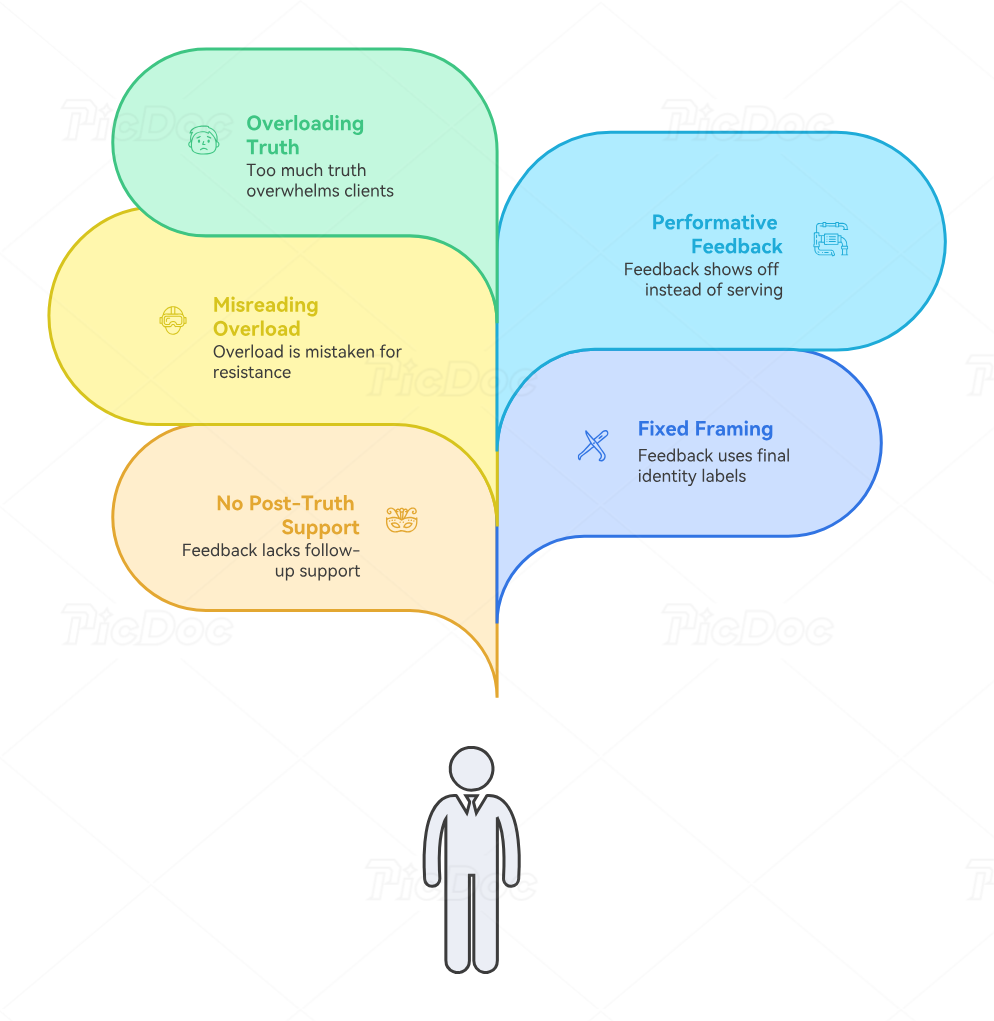
One common mistake is stacking too much truth into a single conversation. Coaches often see five things at once and try to name all five. The client leaves with emotional weight and no clean next step. Coaches who improve sequencing through how coaches reach mastery, focus on leverage with how to actually change your clients life in 2026, create turning points through the 1 coaching technique for client breakthroughs, and design support using curating the perfect coaching toolkit for every niche know how to prioritize the one feedback point that matters most.
Another mistake is using feedback to display insight. Some coaches get attached to being the person who “sees through everything.” Clients feel that immediately. Feedback starts sounding performative. Strong coaches stay centered on service. They are shaped by coaching integrity building trust and credibility in your practice, regulated by the ultimate guide to ethical coaching principles you cant ignore, guided by the non-negotiable standards every coach must know, and protected by how coaches avoid career-ending mistakes.
A third mistake is misreading overload as resistance. The client may not need tougher accountability. They may need a smaller target, a more realistic trigger, a lighter plan, or a cleaner way to restart after a miss. Coaches who read the data through using surveys and feedback tools to improve coaching outcomes, visualize patterns with creating custom coaching dashboards for enhanced client experience, manage consistency through essential crm tools to manage your coaching client relationships, and support follow-through with automated email sequences the ultimate 2026 guide for coaches usually catch this sooner.
Another damaging mistake is fixed framing. “You are avoidant” sounds final. “You avoid early discomfort, and that pattern is costing you momentum” sounds workable. Coaches who think developmentally through why coaches are embracing this positive change model, reframe growth with how the positive psychology framework is revolutionizing coaching in 2026, use strength-based coaching techniques that skyrocket client success, and preserve agency with how to actually empower clients real results keep feedback changeable instead of identity-crushing.
The last mistake is ending the conversation at truth instead of support. Once the feedback lands, the client needs a scaffold. Coaches who follow feedback with interactive goal tracking tools that boost client success, simplify execution using building your coaching toolkit essential templates and checklists, reinforce action with interactive coaching exercises to keep clients motivated, and layer support through creating a coaching resource library your clients will love keep the client from leaving the session with insight overload and no traction.
5. How to Turn Feedback Into a Competitive Advantage in Your Coaching Practice
Feedback becomes a business advantage when it is not just a personal talent but a repeatable part of the client experience. The first step is setting expectations in onboarding. Clients should know from the start that coaching will include honest reflection, respectful challenge, pattern recognition, and collaborative redesign. Coaches who embed this into coaching case study templates demonstrating your value effectively, organize support with comprehensive guide to building a thriving coaching resource hub, prepare clients using how to create engaging coaching content clients love, and deliver well online with virtual coaching tools boosting your remote session effectiveness create better buy-in before the first difficult conversation ever happens.
The next step is collecting patterns systematically. Coaches should not depend only on memory. Better data creates better feedback. That is why strong practices use powerful client journaling tools for deeper self-awareness, review signals with using surveys and feedback tools to improve coaching outcomes, surface trends through creating custom coaching dashboards for enhanced client experience, and preserve learning with client session recording tools the ultimate 2026 guide for coaches. Clean pattern data makes feedback feel fair rather than reactive.
A feedback-strong practice also teaches clients how to reflect better. Clients who can identify what happened, what triggered it, how they responded, what it cost, and where they still had leverage make coaching more precise. Coaches who build this skill using daily journaling prompts the ultimate 2026 guide for coaches, structure self-review with life mapping the ultimate 2026 guide for coaches, rehearse alternatives with visualization and guided imagery proven methods every coach needs, and broaden self-awareness through the wheel of life reinvented strategies for coaching mastery create clients who are easier to coach and more likely to improve.
This skill also drives retention. Clients stay when they feel challenged in a way that increases clarity instead of shame. They renew when sessions keep surfacing the exact patterns that cost them peace, consistency, and progress. Coaches who turn those moments into value proof through client testimonials capture the ultimate 2026 guide for coaches, document growth with coaching case study templates demonstrating your value effectively, expand reach through digital marketing tools coaches need for explosive growth, and position around outcomes via how the worlds best coaches get results make feedback one of the strongest reasons clients keep paying attention.
The coaches who become known for excellent feedback are usually the coaches clients describe as deeply useful. Their sessions feel honest without being unsafe. Their insights feel sharp without feeling punishing. Their clients often say some version of the same thing: “They tell me what I need to hear in a way I can actually use.” That reputation grows when it is supported by the communication secret behind successful coaching, strengthened by how coaches reach mastery, protected by coaching integrity building trust and credibility in your practice, and scaled through launch your successful health coaching career complete roadmap.
6. FAQs
-
Constructive feedback points to a specific pattern, explains why it matters, and helps the client redesign their response. Critical feedback usually sounds global, identity-based, or emotionally loaded. Coaches who anchor delivery in powerful questioning techniques that transform coaching sessions, sharpen tone through the communication secret behind successful coaching, respect readiness via why emotional consent matters in every coaching session, and protect trust through why trust is the most valuable asset in coaching are usually heard far better.
-
Direct feedback works best when the pattern is repeated, visible, and materially hurting results. Questions still matter because they help the client process instead of feeling pinned down. Strong coaches blend both by using coaching session templates to boost your productivity instantly, clarifying patterns with solution-focused brief coaching sfbc the ultimate 2026 guide for coaches, checking evidence through interactive goal tracking tools that boost client success, and improving timing with using surveys and feedback tools to improve coaching outcomes.
-
Start with observation, ask permission, keep the language behavior-based, and stay curious about what makes the feedback hard to hear. Defensive clients often soften when they feel respected rather than cornered. Coaches can support this through why emotional consent matters in every coaching session, hold the relationship with coaching integrity building trust and credibility in your practice, stabilize limits through how to set clear professional boundaries with coaching clients, and deepen awareness using powerful client journaling tools for deeper self-awareness.
-
They say too much at once and leave the client with emotional heaviness instead of one usable correction. Feedback works better when it ends with one high-leverage change supported by smart goals 20 how top coaches set and achieve client goals, reinforced through habit formation tools helping clients achieve lasting change, simplified with building your coaching toolkit essential templates and checklists, and practiced through interactive coaching exercises to keep clients motivated.
-
Yes. Clients stay when difficult conversations consistently create clarity, action, and measurable progress instead of shame and confusion. Feedback becomes a retention driver when it is reinforced by the future of client engagement 2026, turned into proof through client testimonials capture the ultimate 2026 guide for coaches, documented using coaching case study templates demonstrating your value effectively, and positioned around outcomes through how the worlds best coaches get results.
-
Study your phrasing, collect better pattern data, ask permission more often, cut generalities, and always redesign behavior before the session ends. Coaches improve fastest when they build this skill through how coaches reach mastery, strengthen fundamentals with essential coaching skills for icf credentialing, refine delivery with effective coaching communication for nbhwc certification, and support consistency through building your coaching toolkit essential templates and checklists.
