
Inspiring Case Studies of Successful Coach-Client Transformations
The coaching industry gets crowded with promises fast. What cuts through that noise is transformation that can be traced, understood, and repeated. Real coach-client success rarely comes from one breakthrough session, one motivational speech, or one perfect worksheet. It usually comes from accurate diagnosis, behavior design, trust, accountability, emotional safety, and the coach’s ability to respond to resistance without losing direction.
That is why case studies matter so much. They show what change actually looks like when a coach helps a client move from confusion to clarity, avoidance to action, burnout to recovery, or self-doubt to measurable progress. Done well, they also reveal the invisible mechanics behind success: what the coach noticed, what the client resisted, what system was introduced, and what shifted the outcome.
1. Why Case Studies Matter More Than Generic Coaching Advice
Advice is cheap in coaching. Almost every platform is full of “be consistent,” “ask better questions,” “hold clients accountable,” and “create action plans.” The problem is that none of those phrases show what good coaching looks like under pressure. Case studies do. They reveal how a coach applies skill in messy reality, which is why they pair naturally with how the world’s best coaches get results, how coaches reach mastery, the coaching skill you didn’t know you needed, and the non-negotiable standards every coach must know.
They also build trust in a way theory cannot. A potential client may enjoy your content, but they decide whether to hire you based on whether they believe you can navigate real obstacles. Case studies make that belief easier. They show how a coach handled self-sabotage, relapse, indecision, shame, inconsistent communication, unrealistic expectations, or boundary issues. That is where coaching case study templates: demonstrating your value effectively, why trust is the most valuable asset in coaching, building deep trust: how to strengthen your client relationships, and coaching integrity: building trust and credibility in your practice become business-critical, not optional reading.
For coaches, case studies sharpen judgment. They train pattern recognition. You begin to notice the difference between a client who lacks motivation and one who lacks specificity. You spot the gap between emotional overwhelm and practical disorganization. You see how a stalled client may not need more encouragement at all. They may need smaller commitments, cleaner boundaries, or a different accountability structure. That mindset overlaps strongly with new data-proven coaching methods for maximum client success, strength-based coaching techniques that skyrocket client success, how to inspire clients to take immediate action, and effective strategies for reinforcing positive client behaviors.
Most importantly, case studies make transformation concrete. They move coaching away from vague inspiration and into visible mechanisms. They answer the questions serious clients and serious coaches both ask: What was the real problem? What was the turning point? What did the coach do differently? What system held the change in place? What made the result sustainable? Those are the same deeper questions beneath how to actually empower clients: real results, the 1 coaching technique for client breakthroughs, powerful questioning techniques that transform coaching sessions, and the art of powerful questioning in coaching.
2. Case Study Patterns That Separate Strong Coaching From Superficial Coaching
The first pattern is accurate problem definition. In weak coaching, the presenting issue is accepted too quickly. A client says they lack discipline, and the coach starts talking about accountability. A client says they lack confidence, and the coach starts talking about mindset. A client says they are overwhelmed, and the coach hands them a planner. Strong coaching digs deeper. It asks whether the true issue is shame, fatigue, role overload, poor boundaries, grief, identity conflict, or unrealistic planning. That is why effective listening techniques that transform client conversations, communication techniques every coach should master, managing difficult client conversations with ease, and the communication secret behind successful coaching are far more foundational than they first appear.
The second pattern is right-sized intervention. Successful coaches do not respond to every problem with maximal intensity. They know when a client needs deep reflection and when they need a simpler system. They know when to use solution-focused brief coaching: the ultimate 2026 guide for coaches, when to lean on appreciative inquiry: the ultimate 2026 guide for coaches, when to introduce transactional analysis (TA): the ultimate 2026 guide for coaches, and when a client may simply need a cleaner habit structure from habit-formation tools helping clients achieve lasting change.
The third pattern is emotional safety without passivity. High-value case studies show coaches who can create enough safety for honesty without letting the session become circular. This matters in work involving shame, grief, burnout, fear, trauma-adjacent dynamics, and repeated self-abandonment. The client must feel seen, but movement must still happen. That balance is tied closely to why emotional consent matters in every coaching session, coaching clients through grief and loss: compassionate strategies, effective strategies for coaching clients through burnout, and how coaches can support clients with PTSD and trauma.
The fourth pattern is visible reinforcement. Transformations last when the coach builds a structure around them. The case study is rarely “the client had one insight and everything changed.” The stronger version is “the client had one insight, then the coach supported it with check-ins, behavioral prompts, journaling, measurement, reflection, and cleaner commitments.” This is why interactive goal-tracking tools that boost client success, using surveys and feedback tools to improve coaching outcomes, powerful client journaling tools for deeper self-awareness, and creating custom coaching dashboards for enhanced client experience make case studies more repeatable and more credible.
3. Five High-Value Coach-Client Transformation Case Studies
Case Study 1: From Burnout and Quiet Resentment to Sustainable Boundaries
A mid-career client came into coaching saying she wanted “better balance,” which sounded ordinary on the surface. In early sessions, it became clear that balance was not the real issue. She was trapped in a pattern of overfunctioning. She absorbed slack from coworkers, stayed available for family beyond her capacity, and interpreted rest as irresponsibility. She was not disorganized. She was structurally over-permissive with other people and deeply harsh with herself.
The coach did not begin with time management. That would have been shallow. Instead, the work focused on emotional permission, values, and boundaries. Sessions drew on ideas aligned with techniques for maintaining professional boundaries with clients, how to set clear professional boundaries with coaching clients, helping clients manage work-life balance successfully, and mindfulness and meditation techniques for emotional coaching. The turning point came when the client realized that exhaustion was not proof of commitment. It was evidence of unexamined agreements.
The coach then translated insight into behavior. The client practiced one refusal script, created one protected evening each week, and reviewed resentment spikes as data rather than personal failure. Over time, her sleep improved, emotional volatility dropped, and work did not collapse the way she feared. The transformation succeeded because the coach identified the real driver and built the smallest possible structure around it.
Case Study 2: From Repeated Diet Failure to Calm, Measurable Health Progress
A health coaching client arrived with years of stop-start nutrition efforts behind him. He described himself as “lazy,” “bad with discipline,” and “always ruining it at night.” The coach refused to coach the self-criticism. Instead, the coach looked at the pattern. The client was under-eating earlier in the day, working through stress, delaying meals, and using late-night food as decompression. The problem was not weak character. The problem was a system built for backlash.
The coach used a gradual intervention inspired by how coaches can actually change client diets, preventative health coaching: how this shift will dominate the industry, how to actually change your client’s life in 2026, and the radical simplicity coaches are loving. Instead of giving a rigid meal plan, the coach structured only three anchor behaviors: earlier protein intake, one preplanned afternoon snack, and a five-minute decompression routine before evening eating decisions. The client tracked context, not calories, for two weeks.
That distinction mattered. Tracking context showed the client what triggered the behavior. Once the issue became legible, shame loosened. Late-night episodes reduced, energy improved, and the client’s sense of agency rose because success no longer depended on white-knuckling. The case study is powerful because it shows how real transformation often begins when a coach rescues a client from a false story about themselves.
Case Study 3: From Career Paralysis to Visible Forward Motion
One client came to coaching after months of talking about a career shift but taking almost no action. She had consumed books, videos, and podcasts. She had journaled extensively. She had researched paths, certification options, and job titles. Yet she had done almost nothing visible. The presenting issue sounded like confusion, but the coaching process uncovered a more uncomfortable truth: she was using research to avoid exposure.
The coach’s move was to shift the client from information gathering to self-evidence. The intervention reflected principles found in step-by-step guide: how to become a certified life coach, launch your successful health coaching career: complete roadmap, best online health coach certification programs for busy professionals, and which certification is right for you. Instead of “figuring it all out,” the client had to complete a weekly exposure sequence: one informational conversation, one visible piece of professional output, and one application-related action.
The turning point came when the client realized that uncertainty was shrinking only after action, never before it. Her confidence did not arrive in advance. It followed proof. Within two months, she had updated her positioning, reached out to peers, and begun making decisions from experience instead of fantasy. The deeper lesson here is that many clients do not need more clarity before movement. They need movement to generate clarity.
4. Two More Transformation Stories That Reveal What Great Coaches Actually Do
Case Study 4: From Self-Doubt and Broken Promises to Self-Trust
A client entered coaching with an unusually painful pattern: she no longer trusted herself. She had made too many promises she did not keep. Morning routines, workout plans, journaling streaks, deadlines, social plans, sleep goals, and financial commitments had all become evidence against her. By the time she entered coaching, her real fear was not failing again. It was discovering that she had become permanently unreliable.
The coach avoided the common mistake of trying to “motivate” her. That would have deepened the cycle. Instead, the coach focused on commitment calibration, drawing on concepts aligned with why this skill determines your coaching success, why this skill determines your coaching success - 1, smart goals 2.0: how top coaches set & achieve client goals, and how to make it work every time. The client’s weekly commitments were made deliberately smaller than she wanted. The goal was not ambition. The goal was integrity.
That shift changed everything. She began completing promises because they were honest, not performative. Each kept commitment became proof. Each proof point slightly repaired identity. Within weeks, the client’s language changed from “I always fall off” to “I can trust myself with small things again.” That sentence was the real transformation. The visible habits mattered, but the deeper success was rebuilding the relationship between intention and self-belief.
Case Study 5: From Helpful Sessions to Measurable Coaching ROI
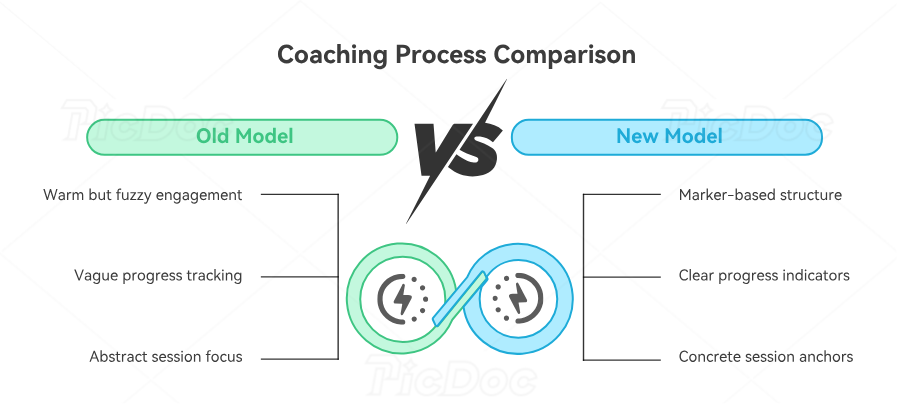
A coach working with a long-term client realized the engagement was warm but fuzzy. The client loved the sessions, felt supported, and kept renewing. Yet when asked what had tangibly changed, both parties struggled to answer precisely. This is one of the most dangerous soft spots in coaching. A relationship can feel productive while staying too vague to prove value, improve delivery, or refine strategy.
The coach responded by restructuring the process around visible markers. The change was informed by benchmarking your coaching business: industry standards & insights, using surveys and feedback tools to improve coaching outcomes, client testimonials capture: the ultimate 2026 guide for coaches, and comprehensive guide to building a thriving coaching resource hub. The client selected three indicators of progress: reduced conflict avoidance at work, higher weekly recovery time, and completion of one strategic leadership action each week.
The coaching immediately sharpened. Sessions became less abstract because they had anchors. Progress became discussable. Blind spots emerged faster. Wins became easier to name. By the end of the quarter, the client had more confidence, clearer behavioral evidence, and stronger advocacy for the coaching process itself. The case proves that transformation becomes more powerful when it can be seen, named, and measured.
5. How Coaches Can Create Their Own Powerful Transformation Case Studies
Start by documenting the client’s true starting point, not the polished one. Many coaches record the complaint but miss the deeper condition. “Needs accountability” is too weak. “Makes ambitious plans when emotionally activated, then collapses under normal life friction” is more useful. “Needs confidence” is too vague. “Waits for emotional certainty before taking visible action” is better. Coaches who want stronger case studies should think this way from the first session, especially when informed by detailed review of NBHWC coaching competencies, effective coaching communication for NBHWC certification, essential coaching skills for ICF credentialing, and common pitfalls in the NBHWC certification exam.
Next, isolate the intervention that mattered most. Case studies become weak when they turn into laundry lists of everything the coach did. Strong ones identify the decisive move. Was it a reframing? A boundary script? A habit redesign? A better question? A consent practice? A measurement system? A simplification of the goal? This level of clarity fits naturally with the neuroscience-based method every coach needs now, why coaches are embracing this positive change model, how one method is revolutionizing coaching, and how the positive psychology framework is revolutionizing coaching in 2026.
Then capture the turning point honestly. The turning point is not always dramatic. Sometimes it is a sentence. Sometimes it is a week of small follow-through. Sometimes it is the first time a client describes a setback without shame. Sometimes it is the moment they stop trying to win approval and begin acting from values. Coaches who can identify these moments write better case studies because they understand change better. This complements inner critic management techniques: the ultimate 2026 guide for coaches, life mapping: the ultimate 2026 guide for coaches, gratitude journal coaching: the ultimate 2026 guide for coaches, and daily journaling prompts: the ultimate 2026 guide for coaches.
Finally, include the evidence of change. This does not always have to be dramatic numbers. It can be better attendance, cleaner decision-making, reduced rumination, stronger boundary language, more stable habits, renewed energy, fewer missed commitments, or visible professional action. What matters is that the change is specific and tied to the coaching process. Coaches who get this right strengthen their marketing, their reflection, their client onboarding, and their delivery at the same time. That is why how certification differentiates your health coaching business, health coach certification credentials: how to list on your resume, certified health coaches reveal: is certification really worth it, and health coaching certification: how to choose the right program all connect back to proof, credibility, and visible value.
6. FAQs
-
A persuasive case study shows the client’s real starting point, the deeper obstacle beneath the obvious complaint, the coach’s key intervention, the turning point, and the measurable result. It feels persuasive when the reader can see the logic of change. That is why coaching case study templates: demonstrating your value effectively, why trust is the most valuable asset in coaching, new data-proven coaching methods for maximum client success, and how to actually empower clients: real results are so useful in shaping stronger stories.
-
Strong case studies need emotional truth because transformation is rarely mechanical. At the same time, they need restraint, consent, and relevance. Include the emotional drivers that clarify the coaching process, not private details that create unnecessary exposure. This balance aligns with why emotional consent matters in every coaching session, coaching confidentiality: how to protect your clients and your practice, understanding ethical responsibilities as a health & life coach, and the ultimate guide to ethical coaching principles you can’t ignore.
-
Track only enough to make progress visible. Too many metrics dilute attention. Three to five meaningful indicators usually work better than a crowded dashboard. The best metrics map directly to the client’s goals and behavioral patterns. That idea fits with interactive goal-tracking tools that boost client success, creating custom coaching dashboards for enhanced client experience, using surveys and feedback tools to improve coaching outcomes, and benchmarking your coaching business: industry standards & insights.
-
Yes. A newer coach does not need volume to produce useful case studies. They need observation quality. Even one well-documented client journey can reveal strong coaching judgment if the problem, intervention, and result are clearly described. This is especially helpful alongside best online health coach certification programs for busy professionals, how to quickly earn a health coach certification online, step-by-step guide: how to become a certified life coach, and launch your successful health coaching career: complete roadmap.
-
The biggest mistake is making the coach the hero instead of making the coaching process legible. Readers do not need a self-congratulatory story. They need clarity on what changed and why it worked. That is why case studies improve when coaches focus on client reality, behavioral mechanics, and specific outcomes, informed by how the world’s best coaches get results, how coaches reach mastery, the 1 coaching technique for client breakthroughs, and powerful questioning techniques that transform coaching sessions.
-
Because insight alone does not survive real life very well. Transformation usually requires reinforcement: smaller commitments, visible tracking, emotional safety, better timing, simpler systems, and support between sessions. Coaches who understand that design better results. That is the logic beneath interactive coaching exercises to keep clients motivated, gamification tools coaches are using for maximum engagement, automated email sequences: the ultimate 2026 guide for coaches, and the future of client engagement 2026.
