
Turning Client Feedback into Massive Coaching Business Growth
Client feedback can become one of the strongest growth systems in a coaching business, but only when it is collected, interpreted, and acted on with precision. A client’s frustration, hesitation, skipped session, glowing comment, stalled goal, or quiet withdrawal can reveal what your offer, communication, delivery, onboarding, pricing, accountability, and marketing need next. Coaches who learn to read feedback deeply can improve client trust, sharpen coaching communication, build stronger client outcomes, and create growth that feels earned.
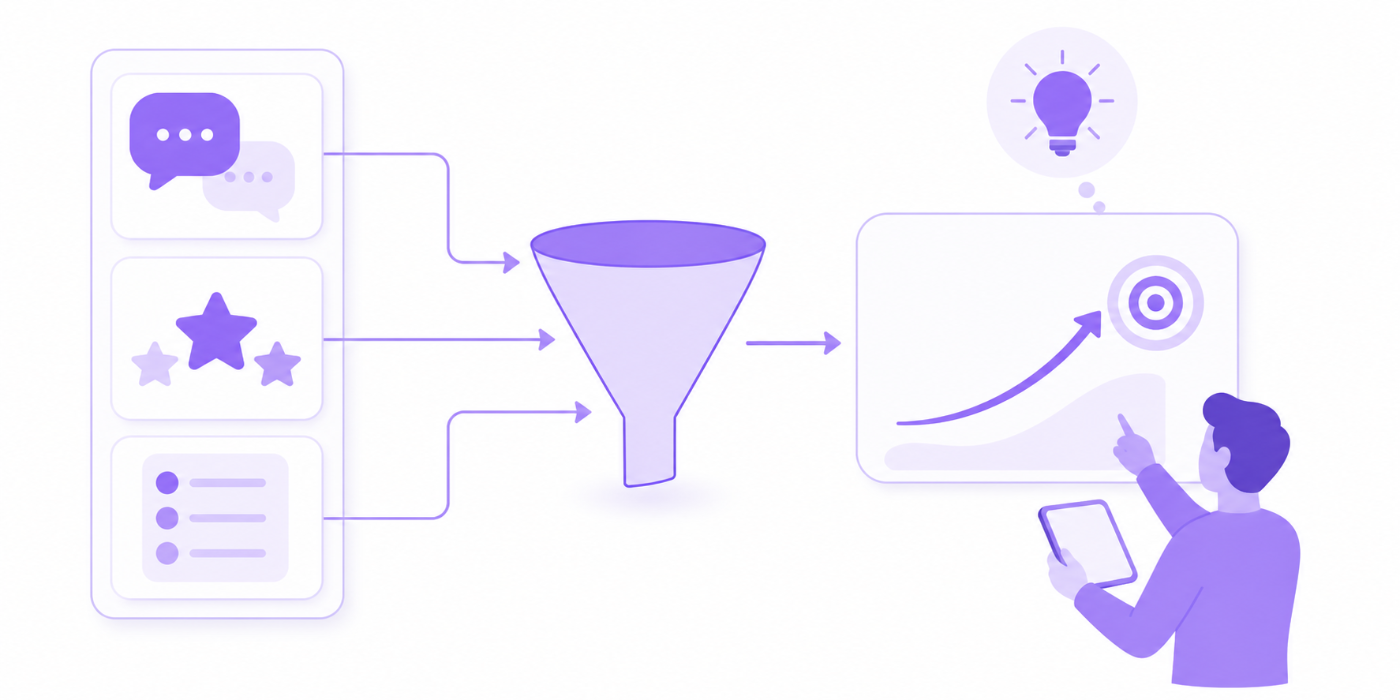
1. Why Client Feedback Becomes Growth Only When It Changes the Business
Most coaches ask for feedback too late. They wait until the package ends, send one polite survey, receive vague answers, and call it “market research.” That creates a dangerous blind spot: the client may have been confused in week two, overwhelmed in week four, disengaged in week six, and already emotionally checked out before the coach ever asked what was happening. Real feedback strategy begins earlier, especially in businesses built around client engagement, accountability, habit formation, and behavior change.
The first shift is seeing feedback as business intelligence. When a client says, “I loved the sessions, but I struggled between calls,” they are pointing to a delivery gap. That may mean your package needs stronger interactive goal tracking tools, better weekly check-in forms, more practical coaching templates, or clearer expectation management. When a client says, “I did not know what to do after the session,” they are identifying a next-step failure, not a motivation problem.
Good feedback also exposes hidden revenue leaks. A coach may think prospects are objecting to price, when the real problem is weak proof. Another may think clients need more content, when they actually need simpler implementation. This is why coaching case studies, client testimonials, business credibility, and clear certification positioning matter. Feedback tells you where trust breaks before the sale, during delivery, and after the result.
The business growth comes from closing those gaps fast. If clients feel lost, you improve onboarding. If they feel unsupported, you strengthen between-session contact. If they feel judged, you repair your safe coaching environment. If they feel their goals are too abstract, you rebuild the process around SMART goals, powerful questioning, and constructive feedback.
| Feedback Signal | What It Usually Reveals | Growth Move | Best ANHCO Resource |
|---|---|---|---|
| “I forgot the action step.” | Weak session closure | Create a written recap ritual | coaching session templates |
| “I know what to do, but I do not do it.” | Accountability gap | Add check-ins and action tracking | accountability in coaching |
| “The plan feels too big.” | Overdesigned change plan | Reduce to one behavior lever | habit formation in coaching |
| “I need more reminders.” | Between-session drop-off | Automate nudges carefully | automated email sequences |
| “I felt embarrassed sharing that.” | Safety issue | Repair emotional consent and pacing | emotional consent |
| “I did not understand the goal.” | Vague outcome framing | Define proof of progress | SMART goals |
| “I liked the coaching but cannot explain the result.” | Unclear transformation language | Build measurable case studies | coaching case study templates |
| “I almost quit halfway.” | Retention risk | Identify the friction point by week | managing client expectations |
| “I wanted more structure.” | Delivery inconsistency | Standardize your core framework | coaching standards |
| “I wanted more flexibility.” | Over-rigid framework | Add client-choice pathways | empower clients |
| “The dashboard helped me stay focused.” | Visible progress increases adherence | Make dashboards part of your offer | custom coaching dashboards |
| “The journal helped me notice patterns.” | Reflection creates self-awareness | Add guided journaling prompts | client journaling tools |
| “I wish I had examples.” | Client needs modeling | Add resource library assets | coaching resource library |
| “I would recommend you, but I do not know who fits.” | Referral message is unclear | Define ideal client triggers | client magnet strategy |
| “Your emails kept me going.” | Nurture content supports behavior | Turn support emails into retention assets | coaching automation |
| “I felt seen.” | Relational trust is converting | Protect your listening process | trust in coaching |
| “I needed more direct feedback.” | Client wants honest challenge | Improve feedback delivery | constructive feedback |
| “I needed gentler pacing.” | Client capacity was missed | Add stress and anxiety checks | client anxiety and stress |
| “The group kept me motivated.” | Community increases momentum | Build peer rituals | interactive coaching community |
| “I want a shorter option.” | Offer ladder opportunity | Add micro-coaching entry point | micro-coaching |
| “I need deeper support.” | Premium package opportunity | Create higher-touch offer | CRM tools for coaches |
| “I liked the exercises.” | Experiential learning works | Add more interactive practices | interactive coaching exercises |
| “I need proof this works.” | Sales trust gap | Show outcomes, testimonials, and process | client testimonials capture |
| “The sessions felt repetitive.” | Framework has become stale | Add deeper diagnostic questions | powerful questioning techniques |
| “I did better after we simplified.” | Simplicity drives compliance | Use fewer metrics and stronger habits | radical simplicity |
| “I wish I knew what success looked like.” | Progress language is missing | Define milestones before delivery | coaches get results |
| “Your boundaries helped me feel safer.” | Professional structure builds trust | Make boundaries explicit in onboarding | professional boundaries |
2. Build a Feedback Engine That Finds Money, Friction, and Trust Gaps
A strong feedback engine has four checkpoints: intake, early progress, midpoint friction, and completion. Intake feedback tells you what the client fears before they invest. Early progress feedback tells you whether onboarding worked. Midpoint feedback reveals silent resistance. Completion feedback gives you proof, language, testimonial material, referrals, and offer improvement. This is where surveys and feedback tools, client relationship management, coaching dashboards, and goal tracking systems become growth infrastructure.
At intake, ask questions that reveal urgency and buying logic: “What has made this problem expensive emotionally, physically, professionally, or relationally?” “What have you already tried?” “What would make this coaching feel worth the investment?” These questions help you shape your offer around real pain, which strengthens health coaching business positioning, certification credibility, niche selection, and client transformation stories.
At the early progress point, the goal is to catch confusion before it becomes shame. Ask: “What part of the plan felt easiest to follow?” “Where did the plan break in real life?” “What did you avoid telling me?” That last question can save a coaching relationship. Clients often hide the truth because they do not want to disappoint the coach. A professional feedback system protects honesty through emotional consent, ethical coaching principles, safe coaching environments, and effective communication.
Midpoint feedback should be direct because this is where revenue leaks quietly form. A client who is 50% satisfied may finish the package and never renew. A client who is 70% satisfied may say kind things but send no referrals. A client who is 90% satisfied may become a case study, testimonial, referral source, and repeat buyer. This is why coaches need client testimonial capture, case study writing, feedback-based business growth, and industry insight tracking.
A simple midpoint scorecard can ask clients to rate clarity, confidence, support, momentum, and relevance from 1 to 5. Any score below 4 needs a follow-up question. “What would make this a 5?” is more valuable than “Are you satisfied?” because it creates a specific improvement path. This approach supports client motivation, positive behavior reinforcement, action-taking, and lasting change.
3. Turn Feedback Into Better Offers, Stronger Retention, and Cleaner Client Results
Feedback becomes business growth when it changes the offer. If five clients say they needed more help between calls, you may need a voice-note option, habit tracker, email sequence, dashboard, community thread, or shorter check-in session. If clients keep asking for examples, you may need a resource hub. If they keep describing overwhelm, your program may need fewer assignments and tighter sequencing. Growth comes from making the offer easier to complete, easier to understand, and easier to recommend through coaching automation, resource libraries, client journaling, and habit formation tools.
The highest-value feedback usually sits behind uncomfortable patterns. If clients praise your empathy but fail to complete actions, your sessions may feel emotionally satisfying while producing weak execution. If clients love your worksheets but avoid difficult conversations, your tools may be substituting for coaching depth. If clients say they “just need discipline,” you may need stronger work around inner critic management, client anxiety, emotional intelligence coaching, and burnout support.
Feedback should also shape retention. Many coaches lose clients because the renewal conversation arrives as a surprise. A better system tracks client progress, names what has changed, identifies the next growth edge, and frames renewal as a continuation of momentum. That requires custom dashboards, case study documentation, client expectation management, and clear coaching boundaries.
Use a three-layer feedback review after every client milestone. First, ask what changed in the client’s behavior, identity, environment, or relationships. Second, ask what part of your coaching created that shift. Third, ask what almost prevented the result. The third answer is often the most profitable because it shows you what future clients will struggle with. That insight can improve preventative health coaching, mental health coaching, relationship coaching, and work-life balance coaching.
The strongest coaches treat feedback like product development. They look for patterns across clients, update the framework, test the change, measure the result, and refine again. This keeps the business from becoming stale. It also strengthens confidence because the coach is no longer guessing what the market wants. They are building from client evidence, which supports future-proof coaching practices, client preference trends, technology-enhanced coaching, and business growth tools.
4. Use Feedback for Marketing Without Sounding Desperate
Client feedback should make marketing sharper, not louder. The best copy often comes from the client’s exact language: “I knew what to eat, but I kept sabotaging myself at night,” “I needed someone to help me slow down without letting me quit,” or “I finally understood why my old routines collapsed every stressful week.” These lines are stronger than generic promises because they carry lived pain. They can shape coaching content clients love, SEO tools for coaching websites, YouTube growth for coaches, and digital marketing systems.
Turn recurring client phrases into landing page sections. If clients say they felt overwhelmed by options, create a section about simplifying the first step. If they say they were scared of judgment, create a section about safety and pacing. If they say they had tried other programs and felt abandoned, explain your between-session support. This type of marketing is built from trust, coaching integrity, ethical responsibility, and professional standards.
Testimonials should also be captured with structure. A weak testimonial says, “She was amazing.” A useful testimonial says what the client struggled with before coaching, what shifted during the process, what result became visible, and what felt different about the coach’s method. Ask testimonial questions that create specificity: “What were you worried about before starting?” “What changed that surprised you?” “What part of the coaching helped you follow through?” “Who would you recommend this to?” These questions strengthen testimonial capture, case study credibility, client transformation stories, and business differentiation.
Case studies should go deeper than before-and-after. They should show the client’s starting friction, coaching diagnosis, intervention, adjustment, measurable progress, and next maintenance step. A health coach may show how one client moved from inconsistent meal planning to a repeatable weekday system. A life coach may show how a client moved from scattered decisions to a values-based weekly planning ritual. This connects feedback with behavior change science, solution-focused coaching, appreciative inquiry, and positive psychology coaching.
Marketing built from feedback also protects against inflated claims. Coaches should avoid promising guaranteed outcomes, exaggerated transformations, or emotional rescue. Use client language ethically, ask permission, remove identifying details when needed, and keep claims tied to real coaching scope. This protects confidentiality, professional boundaries, ethical dilemmas, and coaching credibility.
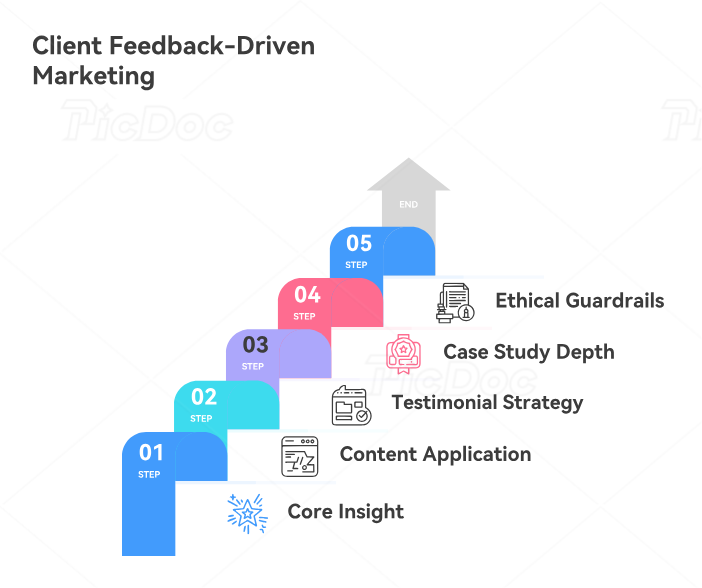
5. Make Feedback Operational: Scripts, Scorecards, and Weekly Review Rituals
The simplest way to operationalize feedback is to give every client journey a feedback calendar. Week 0 checks readiness. Week 2 checks clarity. Week 4 checks friction. Week 6 checks momentum. The final week captures results, language, referrals, and next-step opportunities. This keeps client truth from arriving too late. It also gives the coach a clean rhythm for improving client management, automated systems, coaching dashboards, and feedback tools.
Use three scripts. First, the safety script: “Your honest feedback helps me support you better, and it will never be used to shame you.” This matters when clients carry fear, perfectionism, or past failure. Second, the specificity script: “Please describe one moment, tool, question, or part of the plan that helped or created friction.” Third, the action script: “I will use this to adjust the next step, not simply collect your opinion.” These scripts support safe coaching environments, emotional coaching, client anxiety support, and constructive feedback skills.
A weekly review ritual keeps the business from drowning in scattered comments. Create five feedback buckets: conversion, onboarding, delivery, retention, and proof. Every client comment should land in one bucket. “I was unsure whether this was for me” goes into conversion. “I did not know where to find the worksheet” goes into onboarding. “The habit tracker helped” goes into delivery. “I want another three months” goes into retention. “I finally stopped restarting every Monday” goes into proof. This supports resource hubs, client dashboards, interactive tools, and business benchmarking.
Each Friday, choose one client friction point and one business improvement. The client friction point may be “clients keep skipping check-ins.” The business improvement may be “rewrite the check-in to take three minutes.” The following week, test whether response rates improve. This disciplined approach prevents feedback from becoming emotional noise. It turns feedback into a growth loop across client engagement, gamification strategies, coaching automation, and coaching software.
The final operational move is a quarterly feedback audit. Review all surveys, testimonials, missed renewals, objections, cancellations, wins, and repeated phrases. Ask: What promise is attracting clients? What part of delivery creates the most trust? What friction keeps returning? What result do clients value most? What language should update the website? What should be removed from the offer? This audit improves career sustainability, business growth, future coaching trends, and professional development.
6. FAQs: Turning Client Feedback Into Coaching Business Growth
-
A coach should collect feedback at intake, early progress, midpoint, completion, and follow-up. The key is matching the question to the stage. Intake feedback should reveal goals, fears, expectations, and decision criteria. Early feedback should identify confusion. Midpoint feedback should expose friction before renewal risk increases. Completion feedback should capture results, language, testimonials, and referrals. Follow-up feedback should show whether the change lasted. This supports client success, habit maintenance, feedback tools, and case study development.
-
The best questions ask for moments, obstacles, and decisions. Use prompts like: “What part of the coaching helped you take action?” “Where did the process feel unclear?” “What almost made you quit?” “What changed in your daily life?” “What would you tell someone considering this program?” These questions create useful data for testimonials, client communication, coaching case studies, and marketing strategy.
-
Negative feedback becomes useful when it is separated from identity. A client saying “I needed clearer next steps” means the system needs a clearer recap process. A client saying “I felt overwhelmed” means the pacing needs review. A client saying “I wanted more accountability” means the offer may need check-ins or tracking. Coaches should treat feedback as data for professional standards, constructive feedback, client expectations, and business improvement.
-
Feedback increases retention because it allows the coach to fix friction while the client is still emotionally invested. If a client feels confused, unsupported, rushed, or under-challenged, a midpoint feedback process can repair the experience before the package ends. Retention improves when clients see that their coach listens, adjusts, and keeps progress visible. This works especially well with coaching dashboards, accountability systems, goal tracking tools, and CRM systems.
-
Client feedback becomes marketing copy when repeated client phrases reveal the real buying pain. If clients keep saying they felt overwhelmed, ashamed, inconsistent, unsupported, or tired of restarting, those phrases should shape website sections, email topics, social posts, case studies, and sales calls. The coach should use this language ethically and connect it to real process, proof, and scope. This strengthens coaching content, SEO for coaching websites, testimonial capture, and business credibility.
-
The biggest mistake is collecting feedback without changing anything. Clients can feel when their responses disappear into a form. That damages trust, weakens engagement, and makes future feedback less honest. A better approach is to tell clients what changed because of their input: “Several clients wanted simpler weekly action steps, so I rebuilt the check-in.” That turns feedback into trust. It also improves client engagement, safe coaching environments, professional boundaries, and long-term coaching results.
