
Why Micro-Coaching Is the Next Big Thing for Rapid Client Results
Most coaching plans fail for one brutal reason: the client does not need more insight, they need faster traction between real-life moments. Long sessions can create clarity, but clarity alone does not carry someone through the Tuesday afternoon craving, the post-meeting shutdown, the bedtime spiral, or the “I’ll start next week” excuse. Micro-coaching closes that gap.
That is why micro-coaching is becoming such a powerful delivery model. It gives coaches a way to create momentum through small, well-timed interventions, tighter accountability, and lower resistance. When it is built correctly, it improves follow-through, strengthens trust, reduces drop-off, and helps clients feel progress sooner than traditional session-only coaching ever could.
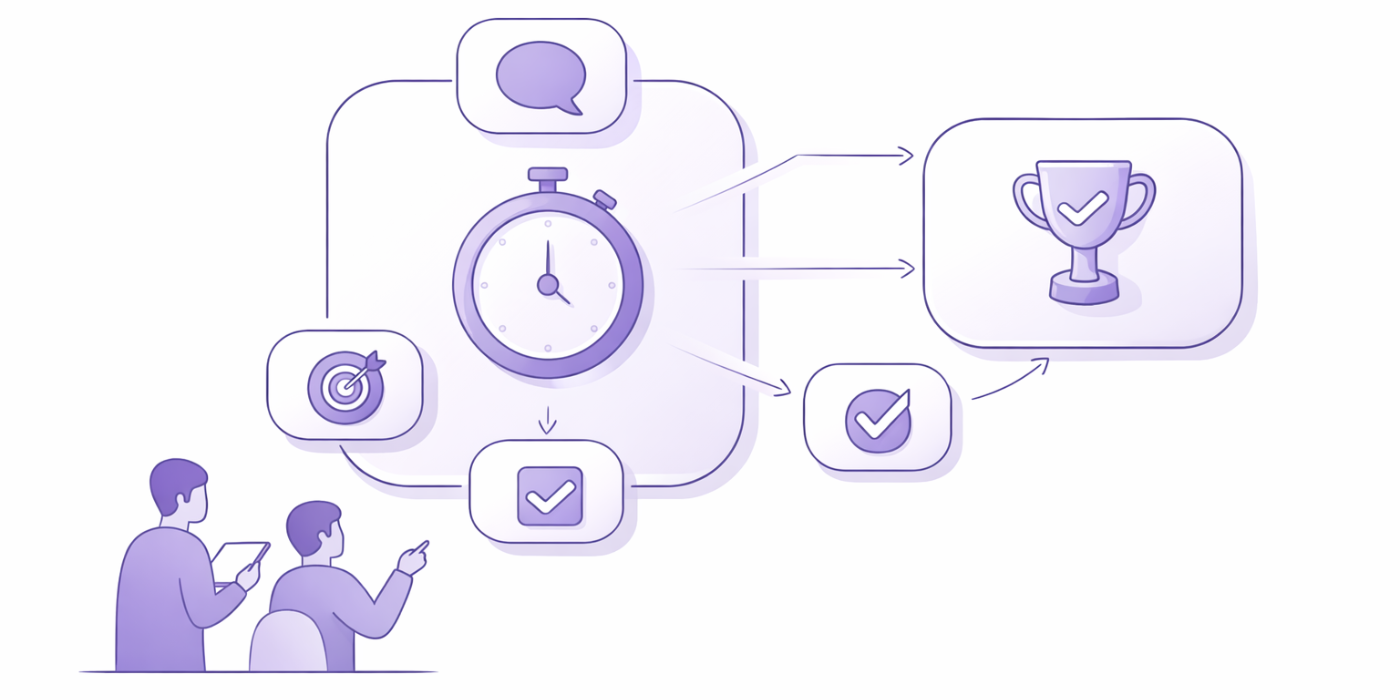
1. Why Micro-Coaching Fits the Way Clients Actually Change
Micro-coaching works because behavior change rarely happens inside the session. It happens in the tiny, messy decision points that appear after the session ends. A client does not transform while describing a goal. They transform when they choose the better lunch after a stressful call, send the hard boundary text, go for the walk they wanted to avoid, or interrupt a self-defeating pattern before it takes over. That is exactly why coaches who study how to actually change your clients life in 2026, how the worlds best coaches get results, new data proven coaching methods for maximum client success, and strength-based coaching techniques that skyrocket client success are shifting toward more frequent, lighter-touch support.
The old assumption was that bigger transformation required bigger sessions. In practice, many clients need smaller coaching units delivered at the right time. That is especially true for busy professionals, overwhelmed parents, emotionally flooded clients, and anyone whose biggest issue is not lack of knowledge but lack of consistent execution. Coaches already seeing this trend in the future of client engagement 2026, must-know client preferences shaping the future of coaching, future-proof your coaching practice top trends to watch, and state of coaching industry 2026-27 trends and opportunities revealed understand that clients increasingly value support that feels responsive, usable, and easy to act on.
Micro-coaching also lowers emotional friction. A client may resist a 60-minute deep dive because they feel ashamed, disorganized, or mentally exhausted. They are far less likely to resist a two-minute voice note, a one-question check-in, a three-step reset prompt, or a short accountability touchpoint. That makes micro-coaching highly compatible with effective listening techniques that transform client conversations, the communication secret behind successful coaching, communication techniques every coach should master, and how to inspire clients to take immediate action.
Another major advantage is retention. Clients stay longer when they can feel the coaching working in real time. They do not want to wait three weeks to notice a benefit. They want proof this week. Micro-coaching creates more visible wins, more touchpoints, more reasons to stay engaged, and more opportunities to reinforce progress. That aligns closely with gamification strategies keeping clients engaged and motivated, interactive coaching exercises to keep clients motivated, habit formation tools helping clients achieve lasting change, and effective strategies for reinforcing positive client behaviors.
Micro-coaching is not a downgrade from real coaching. It is a delivery evolution. Coaches who combine it with coaching session templates to boost your productivity instantly, interactive goal tracking tools that boost client success, creating custom coaching dashboards for enhanced client experience, and using surveys and feedback tools to improve coaching outcomes are not reducing quality. They are bringing coaching closer to the exact moments when change either happens or falls apart.
| Client Goal | Micro-Coaching Move | How to Use It | Start With | Best For |
|---|---|---|---|---|
| Morning consistency | Wake-up check-in | Client sends one line before first distraction | 3 weekdays | Habit builders |
| Nutrition follow-through | Meal decision prompt | Coach sends decision filter before lunch | One meal daily | Emotional eaters |
| Stress interruption | 90-second reset audio | Use before reactive coping behavior | Save in phone | Burned-out clients |
| Boundary setting | Script review | Coach edits one text or email draft | One live situation | People pleasers |
| Movement adherence | Action trigger message | Message sent right before planned walk | 10-minute walk | Sedentary professionals |
| Sleep routine | Evening shutdown cue | Prompt starts bedtime sequence | Single cue | Screen-overuse clients |
| Self-awareness | One-question reflection | Client answers after trigger event | 1 question | Avoidant clients |
| Mood regulation | Check-in scale | Client rates state from 1–10 twice daily | AM + PM | High-stress clients |
| Decision clarity | Two-option sort | Coach narrows choices in real time | Binary choice | Overthinkers |
| Work-life boundaries | End-of-day exit ritual | Client completes 3-step closeout | Weekdays only | Remote workers |
| Craving control | Delay + replace prompt | Coach guides 10-minute pause | One craving window | Snack-driven routines |
| Confidence building | Micro-win capture | Client logs one proof of progress daily | 7 days | Discouraged clients |
| Habit restart after relapse | No-shame reboot plan | Coach replies with next best step only | 24-hour reset | All-or-nothing thinkers |
| Hydration | Anchor pairing | Tie water intake to existing habit | 2 anchors | New health clients |
| Break procrastination | Five-minute launch | Coach prompts tiny starter action | 5 minutes | Perfectionists |
| Emotional eating awareness | Pause question | “What happened right before this urge?” | Before snacking | Reactive clients |
| Energy management | Midday audit | Client reports energy leaks and fixes one | 1 leak daily | Executives |
| Conflict preparation | Pre-conversation rehearsal | Coach helps shape calm opening line | 1 script | Relationship clients |
| Mindset reframing | Thought swap text | Client sends limiting thought, coach reframes | One pattern | Inner critic work |
| Journal consistency | Single-prompt journaling | Use one focused prompt per day | 3 prompts weekly | Reflective clients |
| Food planning | Friction removal review | Coach helps simplify prep obstacles | One bottleneck | Chaotic schedules |
| Post-session follow-through | 24-hour action recap | Coach sends only the next step | 1 action | Forgetful clients |
| Burnout prevention | Capacity score | Client rates bandwidth before committing | Before yes/no decision | High-achievers |
| Habit stacking | Trigger mapping | Pair new action with existing routine | One stack | Beginners |
| Client trust | Midweek support touchpoint | Coach checks progress before setback grows | 1 message | New clients |
| Relapse prevention | Risk window planning | Identify likely failure moment in advance | One trigger | Weekend strugglers |
| Social accountability | Public commitment lite | Client shares one goal with chosen person | Trusted partner | Isolation-prone clients |
| Weekly review | Three-point audit | Wins, misses, next step in one form | Friday review | Accountability clients |
| Motivation recovery | Why reminder ping | Coach echoes client’s own reason for change | Low-motivation days | Ambivalent clients |
| Session depth | Pre-session question | Client arrives with one real issue, not a vague update | 24 hours before session | Talkative but unfocused clients |
2. Where Micro-Coaching Produces the Fastest and Most Visible Results
Micro-coaching is not equally effective for every goal. It produces the fastest results when the client’s challenge is execution friction, decision fatigue, inconsistent follow-through, or environment-triggered behavior. That is why it works so well in behavior-driven niches such as habit change, stress management, burnout prevention, confidence building, food consistency, self-regulation, and accountability. Coaches who have explored stress management techniques every coach should know, effective strategies for coaching clients through burnout, helping clients manage work-life balance successfully, and the importance of self-care coaching for client mental health already know that success often depends on what happens between sessions.
It is especially effective when a client needs support in moments of vulnerability. A full weekly call cannot protect the client from a Thursday evening crash, a social pressure moment, a panic-driven choice, or a shame spiral after a setback. Micro-coaching can. That is why this model pairs so naturally with mindfulness and meditation techniques for emotional coaching, coaching clients through grief and loss compassionate strategies, how coaches can support clients with PTSD and trauma, and mental health coaching inside the fastest growing niche of the decade when the coaching stays within ethical scope and focuses on support, reflection, and action.
Another high-return use case is habit installation. Long sessions are useful for uncovering patterns, but habits are built through repetition in the same context again and again. Micro-coaching lets the coach influence cue design, simplify the next action, catch the client before avoidance wins, and reinforce success while it is still emotionally fresh. That is exactly the kind of work supported by smart goals 20 how top coaches set and achieve client goals, how to make it work every time, why its the hidden goldmine of coaching, the 1 coaching technique for client breakthroughs, and powerful questioning techniques that transform coaching sessions.
Micro-coaching also shines in programs where clients have a history of ghosting. Many coaches make the mistake of interpreting ghosting as lack of commitment. Often it is a mix of shame, overwhelm, poor system design, and too much cognitive load. A client who avoids a 60-minute session may still answer a three-question check-in or a one-word progress prompt. That makes micro-coaching useful for reducing attrition, increasing re-engagement, and preserving trust. Coaches who are serious about building deep trust how to strengthen your client relationships, why trust is the most valuable asset in coaching, coaching integrity building trust and credibility in your practice, and techniques for maintaining professional boundaries with clients can use micro-coaching to make support feel lighter without becoming vague or intrusive.
The biggest mistake is using micro-coaching for goals that still require deeper exploration, identity work, values clarification, or complex emotional processing. Micro-coaching is not a replacement for depth. It is a force multiplier for implementation. It works best when paired with strong session work, clear boundaries, precise goals, and a delivery structure shaped by curating the perfect coaching toolkit for every niche, building your coaching toolkit essential templates and checklists, essential CRM tools to manage your coaching client relationships, and automating your coaching business essential tech tools.
3. How to Build a Micro-Coaching System That Actually Gets Results
The first rule of micro-coaching is that it must be specific enough to act on and small enough to complete under stress. Vague support does not create rapid results. “Stay on track this week” is weak. “Text me a photo of your lunch before you eat Tuesday through Friday” is usable. “Remember your boundaries” is forgettable. “Before replying, wait 10 minutes and send me your first draft” is actionable. Coaches who understand how to actually empower clients real results, the coaching skill you didnt know you needed, why coaches must avoid this trap, and how coaches reach mastery know that client progress comes from precision, not inspiration.
The second rule is timing. Micro-coaching creates outsized value when it appears close to the behavior itself. The coach needs to identify the client’s decision windows: before meals, after work, before bedtime, after difficult conversations, when energy crashes, during commute transitions, or immediately after a setback. That timing intelligence improves dramatically when the coach uses powerful client journaling tools for deeper self-awareness, daily journaling prompts the ultimate 2026 guide for coaches, life mapping the ultimate 2026 guide for coaches, and gratitude journal coaching the ultimate 2026 guide for coaches to spot where momentum usually collapses.
The third rule is response design. A strong micro-coaching response is short, calming, and strategically narrow. It does not dump five ideas on a dysregulated client. It chooses the next best move. It might be a reflection, a reframe, a tiny action, or a script. This is where managing difficult client conversations with ease, conflict resolution strategies every coach needs, the art of powerful questioning in coaching, and effective coaching communication for nbhwc certification become practical assets rather than theory.
The fourth rule is systemization. Micro-coaching becomes exhausting when the coach tries to invent every check-in from scratch. It becomes scalable when the coach builds repeatable assets: response templates, decision trees, trigger-specific prompts, micro-surveys, onboarding rules, and weekly review workflows. That is why strong delivery systems often rely on automated email sequences the ultimate 2026 guide for coaches, best coaching software and platforms for client management in 2025, virtual coaching tools boosting your remote session effectiveness, the 10 best coaching apps every professional should know, and gamification tools coaches are using for maximum engagement.
The fifth rule is scope. Micro-coaching needs clean expectations around response times, emergencies, message length, acceptable topics, and what happens when a client goes silent. Without those rules, support can become fuzzy, draining, and ethically messy. Coaches should build the model on top of understanding ethical responsibilities as a health & life coach, why emotional consent matters in every coaching session, how to set clear professional boundaries with coaching clients, and coaching confidentiality how to protect your clients and your practice.
4. The Biggest Mistakes Coaches Make When Trying Micro-Coaching
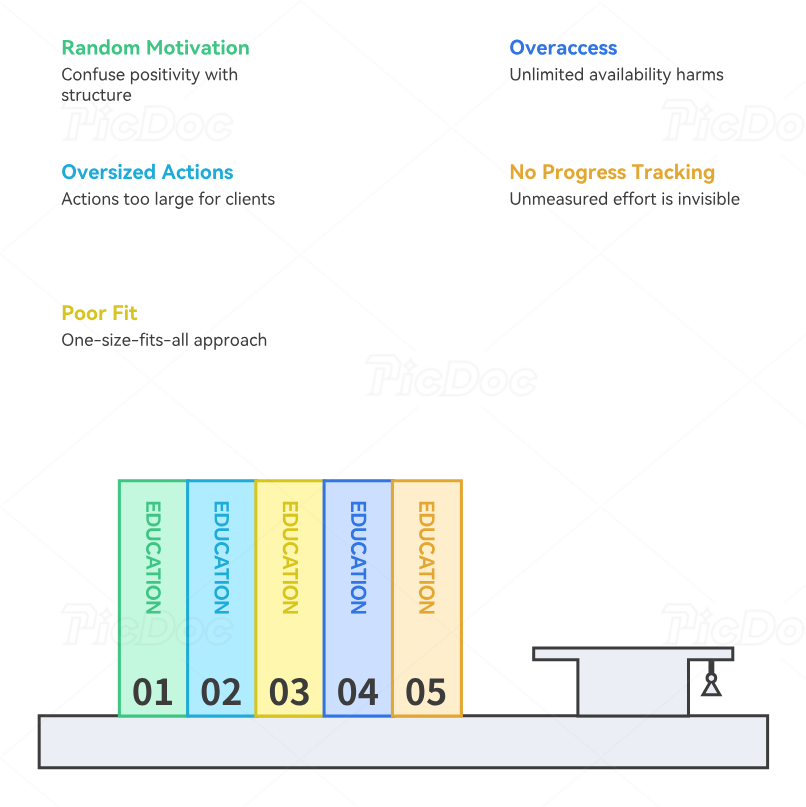
The most common mistake is turning micro-coaching into random motivation. A few encouraging messages do not equal a delivery model. Clients do not need more “You got this.” They need targeted support that helps them make a decision, complete an action, recover from a miss, or reflect on what broke. Coaches who confuse positivity with structure usually get weak outcomes, uneven engagement, and poor retention. A better standard comes from the non-negotiable standards every coach must know, benchmarking your coaching business industry standards and insights, comprehensive guide to building a thriving coaching resource hub, and coaching case study templates demonstrating your value effectively.
The second mistake is making the micro-action too large. Coaches often think a small action must still feel impressive. It should not. It should feel almost embarrassingly doable. The client who has failed ten morning routines does not need a six-step protocol. They need one reliable action tied to one cue. The client who is emotionally eating does not need a perfect meal plan in the moment. They need one pause question and one replacement behavior. That design philosophy aligns with the radical simplicity coaches are loving, solution-focused brief coaching sfbc the ultimate 2026 guide for coaches, appreciative inquiry the ultimate 2026 guide for coaches, and visualization & guided imagery proven methods every coach needs.
The third mistake is poor fit. Some clients love voice notes. Others prefer forms, text prompts, or app-based nudges. Some need daily touchpoints for two weeks. Others need three precise interventions around known risk windows. Coaches who use a one-size-fits-all system lose effectiveness fast. The smarter move is matching the micro-coaching channel to the client’s communication style, resistance pattern, and lifestyle constraints through essential resources for coaching certification & credentialing, virtual retreat platforms coaches are using successfully, how to build an interactive coaching community online, and best practices for creating interactive coaching workshops.
The fourth mistake is overaccess. Micro-coaching is powerful because it is light, timely, and bounded. It breaks when coaches silently offer unlimited emotional availability. That creates dependency, resentment, and scope confusion. The client begins treating the coach as an always-on regulator rather than a structured support partner. Healthy micro-coaching uses clear lanes, defined communication windows, and escalation rules grounded in managing dual relationships essential ethics for coaches, the ultimate guide to ethical coaching principles you cant ignore, how coaches avoid career-ending mistakes, and techniques for maintaining professional boundaries with clients.
The fifth mistake is failing to measure progress. When micro-coaching is not tracked, it becomes invisible labor. The coach works hard, but the client cannot see the pattern of improvement and the coach cannot prove value. Smart coaches track response rates, action completion, relapse recovery time, win frequency, and the gap between planned action and executed action. That is where creating custom coaching dashboards for enhanced client experience, using surveys and feedback tools to improve coaching outcomes, interactive goal tracking tools that boost client success, and client testimonials capture the ultimate 2026 guide for coaches become commercially important, not just operationally useful.
5. How to Package, Price, and Position Micro-Coaching Without Underselling It
Micro-coaching should not be marketed as “less coaching.” It should be positioned as faster implementation support, real-world accountability, or in-the-moment behavior coaching. The value is not in the number of minutes. The value is in the number of friction points removed. A five-minute intervention that prevents a weekend derailment can be more valuable than a full hour of theory. Coaches who understand coaching automation next-level tools to grow your business faster, how technology is completely transforming the coaching industry, how artificial intelligence is changing client interactions forever, and balancing human touch with coaching automation for optimal results can frame micro-coaching as a premium outcome enhancer rather than a budget add-on.
There are three strong ways to package it. First, as a layer inside a flagship coaching program. This works when the client still needs deep sessions but would benefit from midweek accountability, trigger-based support, and recap prompts. Second, as a short sprint offer for one behavior, such as stress recovery, food consistency, boundary setting, or morning routine installation. Third, as a retention or continuity offer after a full coaching package ends. Instead of dropping clients into silence, you give them a structured lighter-touch container that preserves progress. This makes micro-coaching highly compatible with launch your successful health coaching career complete roadmap, step-by-step guide how to become a certified life coach, mental health coaching career guide building a thriving practice, and becoming a relationship coach your ultimate career pathway.
Pricing should reflect responsiveness, specialization, and outcome leverage. Coaches often underprice this model because the touchpoints are short. That misses the point. Clients are paying for behavior change support delivered at the exact moments they need it. The more clearly you define the target outcome, the better you can price it. “Unlimited support” is weak positioning. “Ten business-day micro-coaching sprint to rebuild your post-work eating routine” is much stronger. “Four-week boundary execution support with same-day weekday response and pre-conversation script review” is stronger still. That level of offer clarity is strengthened by digital marketing tools coaches need for explosive growth, youtube channel growth for coaches the ultimate 2026 guide for coaches, seo tools for coaching websites the ultimate 2026 guide for coaches, and how to create engaging coaching content clients love.
To position it well, speak directly to the client’s private frustration. They know what to do. They do not do it consistently. They start strong and fade. They feel stupid for needing support with “small” things. They disappear when ashamed. They want results without another giant system to manage. Micro-coaching meets that reality. It helps clients win where change is usually lost: in the tiny moments that look insignificant but decide everything. That is exactly why it belongs in the future delivery model described across the future model every coach needs to adopt by 2026, why coaches need it more than ever 2026, why theyre changing the game for coaches, and why top coaches are obsessed.
6. FAQs About Micro-Coaching for Rapid Client Results
-
Micro-coaching is a coaching delivery model built around short, targeted interventions between or instead of longer sessions. These interventions can include check-ins, voice notes, short reflections, decision support, accountability prompts, or response templates tied to specific behavior moments. Its purpose is not to replace deep coaching altogether, but to increase follow-through where clients usually lose momentum.
-
No. It works across health, life, mindset, relationship, executive, and behavior-change coaching. It is especially effective wherever clients struggle with consistency, self-regulation, emotional reactivity, avoidance, or real-world execution. The key is using it for action support, not trying to force complex processing into tiny interactions.
-
That depends on the goal, the client’s resistance pattern, and the intensity of the habit change. For many clients, three to five touchpoints per week is enough. For short behavior sprints, daily support may work well. The better question is not frequency alone, but whether each touchpoint occurs near a meaningful decision window.
-
Use systems. Build repeatable prompts, set message boundaries, define response times, and create a clear scope for what support includes. Micro-coaching becomes draining when every reply is improvised and every client has unrestricted access. It becomes sustainable when it is templated, time-boxed, and outcome-focused.
-
The strongest tools are the ones that reduce friction for both coach and client. That can include messaging platforms, intake forms, simple habit trackers, check-in automations, dashboards, shared notes, and voice note workflows. The best tech stack is the one clients will actually use consistently, not the one with the most features.
-
Yes, because it helps clients feel supported in the moments where they usually fail alone. Faster wins create stronger buy-in. More frequent proof of progress creates better trust. Clients stay longer when the coaching feels alive in their actual week rather than confined to a calendar slot.
-
Frame it around outcomes, not message count. Prospects do not care about how many nudges you send. They care that they will have support when motivation drops, stress spikes, avoidance starts, or a habit is about to break. Sell the reduction in friction, the increase in follow-through, and the speed of visible wins.
