
Creating an Effective Coaching Certification Portfolio
A coaching certification portfolio proves more than course completion. It shows how you think, how you coach, how you document growth, and how safely you handle real client work. A strong portfolio helps with certification review, credential applications, job interviews, niche positioning, and client trust. It connects your coaching credentials, ethical coaching responsibilities, client case study evidence, and professional development into one organized body of proof.

1. Build Your Portfolio Around Evidence, Reflection, and Coaching Standards
An effective coaching certification portfolio should show how your training became real coaching behavior. Many new coaches collect certificates, worksheets, and session notes, then wonder why the portfolio feels flat. The missing piece is connection. A reviewer, employer, mentor, or client should be able to see how your health coach certification, life coach certification, coaching competencies, and ethical coaching principles show up inside your actual practice.
The strongest portfolios are built around four proof categories: competency evidence, client-process evidence, reflective evidence, and professionalism evidence. Competency evidence shows skills such as effective listening, powerful questioning, constructive feedback, and communication techniques. Client-process evidence shows how you onboard, set goals, track progress, review barriers, and support behavior change. Reflective evidence shows what you learned from sessions, mistakes, supervision, feedback, and practice recordings. Professionalism evidence shows boundaries, confidentiality, consent, scope, referral awareness, and continuing education.
A certification portfolio should also protect client privacy. Use anonymized case studies, remove identifying details, avoid screenshots with personal information, and summarize sensitive situations with care. This matters deeply for coaches working around client anxiety and stress, grief and loss, emotional crises, and trauma-aware support. A beautiful portfolio can damage trust if it exposes client stories carelessly.
Start with a portfolio map before gathering files. Create sections for your credential goal, coaching philosophy, training record, competency reflections, anonymized client examples, session tools, progress tracking methods, ethics documents, testimonials, feedback summaries, CPD record, and growth plan. This structure helps you avoid a messy folder that looks active yet proves little. It also helps you connect your portfolio to certification differentiation, resume credential presentation, career roadmap planning, and coaching credibility.
2. Choose Evidence That Shows Coaching Skill Instead of Paperwork Volume
A portfolio becomes effective when every item answers a clear question: what does this prove about your coaching practice? Reviewers and future clients care less about the number of files and more about the quality of evidence. A stack of certificates can show effort, while a well-written case reflection shows skill, judgment, ethics, and client-centered thinking. This is why your portfolio should connect certification resources, coaching competencies, powerful questioning, and client transformation evidence.
For each evidence piece, add a short annotation. The annotation should explain the context, the skill demonstrated, the decision you made, the ethical consideration involved, and what you would improve next time. For example, an anonymized session note can show effective listening, accountability design, goal tracking, and positive behavior reinforcement if you explain how the note guided the client’s next action.
Client case studies deserve special care. A strong case study should include the client’s starting challenge, coaching goal, readiness level, barriers, tools used, behavior shifts, feedback, and next steps. Use broad labels such as “mid-career professional,” “new parent,” or “burned-out team lead” instead of details that reveal identity. Focus on the coaching process rather than dramatic claims. Strong portfolios use case studies to show how behavior change, habit formation, stress management, and work-life balance coaching were handled in real situations.
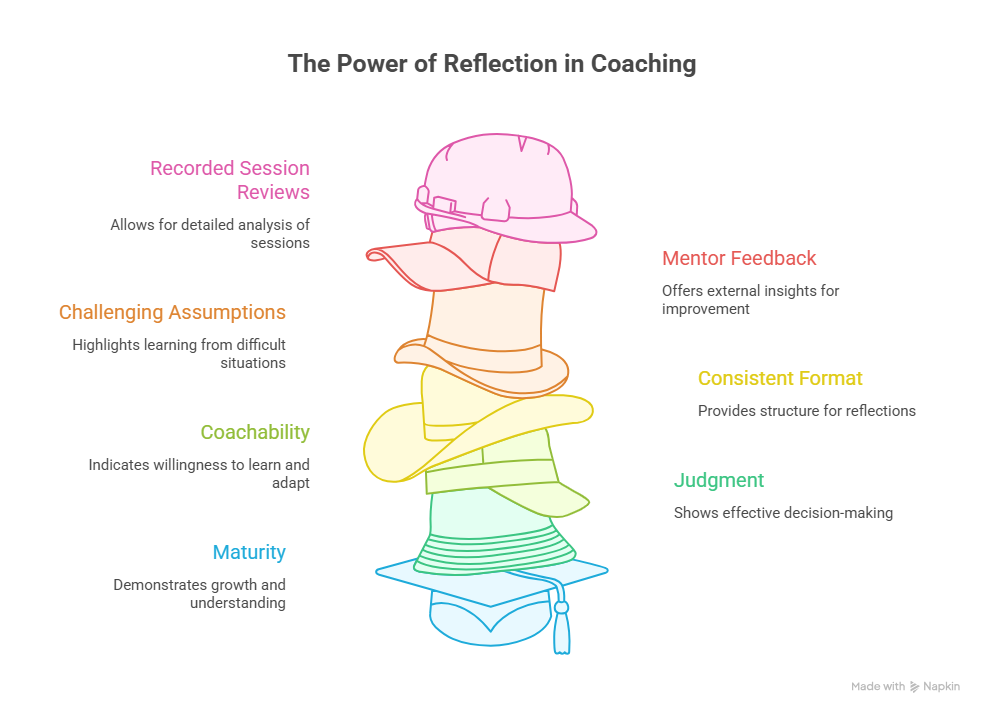
You should also include imperfect evidence when it teaches something valuable. A reflection on a difficult session can demonstrate maturity if it shows self-awareness, feedback integration, and stronger future practice. Many coaches try to make the portfolio look flawless, then remove the very proof that shows growth. A reviewer wants to see how you respond when a client misses action steps, resists accountability, becomes emotional, misunderstands scope, or struggles with motivation. These moments can show your use of managing difficult conversations, conflict resolution, inner critic management, and safe coaching environments.
3. Organize Your Portfolio So Reviewers Can Find Proof Fast
A great portfolio should feel easy to review. If someone has to open ten folders to understand your training, ethics, client work, and reflections, the portfolio loses authority. Use a clean structure with a cover page, table of contents, section dividers, file naming rules, and short evidence summaries. This makes the portfolio feel professional and helps you repurpose it for resume credentials, career pathway planning, relationship coaching positioning, and health coaching career development.
Use a simple folder system: 01 Credential Goal, 02 Training Record, 03 Competency Evidence, 04 Client Process, 05 Ethics and Boundaries, 06 Feedback and Testimonials, 07 Reflective Practice, 08 Continuing Education, and 09 Professional Growth Plan. Inside each folder, use consistent file names: date, category, short description, version. This structure supports coaching resource library design, resource hub building, coaching toolkit organization, and client management systems.
The portfolio should include a one-page evidence index. This index can list each competency or requirement, the portfolio item that proves it, and a short note explaining relevance. This prevents the common mistake of assuming reviewers will connect the dots themselves. For example, if you include a goal-setting worksheet, explain how it demonstrates SMART goal design, client accountability, client motivation, and long-term behavior change.
Digital presentation matters. If your portfolio is online, use clear menus, locked client files, PDF exports, and anonymized examples. If it is submitted as a document, keep it visually clean, numbered, and easy to skim. Avoid visual clutter, mismatched fonts, huge screenshots, and long blocks with no explanation. A clean portfolio can also become a business asset later through client testimonials, case study marketing, digital marketing tools, and coaching website SEO.
4. Use Reflection to Prove Maturity, Judgment, and Coachability
Reflection is one of the most valuable parts of a coaching certification portfolio because it shows how you learn from practice. A coach who can describe what happened, what they noticed, what choice they made, what impact it had, and what they will change next has stronger professional judgment. Reflection connects your evidence to real growth. It also supports coaching mastery, effective coaching communication, coaching skills for credentialing, and continuous coaching education.
Use a consistent reflection format. Start with the session context, then describe the client goal, the moment that required judgment, the skill you used, the ethical factor, the client response, your self-assessment, and the next improvement. This helps you move beyond “the session went well” into actual evidence. For example, a reflection could show how you handled silence through effective listening, used powerful questioning, protected emotional consent, and ended with a practical accountability plan.
Reflection should also include moments that challenged your assumptions. Maybe you offered too many options and the client froze. Maybe you moved to action before exploring resistance. Maybe the client wanted advice when coaching called for inquiry. Maybe a boundary question appeared late because expectations were unclear earlier. These reflections can demonstrate skill when you connect them to professional boundaries, managing expectations, constructive feedback, and ethical responsibilities.
Mentor feedback and recorded-session reviews add depth. Use feedback themes rather than dumping raw notes. Write what the mentor observed, what competency it relates to, where it appears in your session sample, and what action you took afterward. This turns feedback into evidence of coachability. It also shows that your learning continues through session recording tools, coaching communication standards, non-negotiable coaching standards, and future coaching practice development.
5. Turn Your Portfolio Into a Career and Business Asset
A certification portfolio should support more than a credential application. With the right structure, it can help you apply for coaching roles, build a website, create case studies, improve sales calls, strengthen your niche, and communicate your value. The same evidence that helps certification reviewers can help clients understand why your coaching process works. This is especially useful when building authority through certification differentiation, client testimonials, case study credibility, and coaching business growth.
Create two versions of your portfolio: a full private version and a public-facing professional version. The full version can include detailed reflections, anonymized session notes, mentor feedback, competency maps, and training records. The public version can include your bio, credentials, coaching philosophy, niche focus, approved testimonials, sample resources, and general case study summaries. This supports coaching website marketing, SEO tools for coaching websites, coaching content creation, and networking authority.
Your portfolio can also clarify your niche. When you review your strongest evidence, patterns will appear. You may see that your best work is with burnout, habit change, career transitions, emotional intelligence, wellness routines, relationship communication, or financial behavior. Those patterns can guide your positioning, offers, content, and continuing education. A coach can use portfolio evidence to make better decisions about profitable coaching niches, mental health coaching growth, relationship coaching pathways, and financial coaching careers.
Use the portfolio during sales and discovery calls carefully. You can reference your process, show a sample goal tracker, explain your approach to behavior change, or share anonymized transformation patterns. This gives prospects confidence without overwhelming them. Your portfolio becomes proof that your coaching has structure, safety, and follow-through. It supports stronger client trust, better client experience, clearer client engagement, and stronger coaching retention.
Keep the portfolio alive after certification. Update it every quarter with new learning, revised templates, stronger case examples, feedback themes, testimonials, niche insights, and CPD records. A stale portfolio becomes a storage folder. A living portfolio becomes a professional operating system. It can help you maintain continuous education, track industry trends, improve client preferences strategy, and prepare for future coaching certification trends.
6. FAQs About Creating a Coaching Certification Portfolio
-
A coaching certification portfolio should include your credential goal, training record, coaching philosophy, competency evidence, anonymized client examples, session templates, practice-hour log, feedback summaries, ethics statement, confidentiality process, boundary policy, reflection logs, testimonials, continuing education record, and growth plan. Each item should prove something specific about your coaching practice. Strong portfolios connect credentialing resources, coaching competencies, session templates, and ethical coaching standards.
-
Write a coaching case study with anonymized client context, the client’s main goal, baseline challenge, coaching approach, tools used, barriers encountered, progress evidence, client feedback, and next steps. Keep the focus on process and learning instead of making dramatic promises. A strong case study shows your use of behavior change science, habit formation, goal tracking, and case study structure.
-
Protect confidentiality by removing names, locations, workplaces, dates, screenshots, personal health details, family identifiers, and any combination of facts that could reveal the client. Use composite or heavily anonymized summaries when needed. Ask for written permission before using testimonials or client-approved outcomes publicly. This aligns with coaching confidentiality, client trust, ethical responsibilities, and professional boundaries.
-
A portfolio should be long enough to prove the required competencies and organized enough to review quickly. A concise portfolio with clear annotations is stronger than a huge file dump. Use a table of contents, evidence index, and short summaries so each section has a purpose. A strong structure can draw from resource hub planning, coaching toolkit organization, client dashboard thinking, and credential application planning.
-
Testimonials can strengthen a portfolio when they are specific, consent-based, and connected to clear client outcomes. Use testimonials that mention progress, clarity, confidence, accountability, habit change, or client experience. Avoid vague praise that says little about your coaching skill. A stronger testimonial process can be built with client testimonial capture, client feedback tools, client experience strategy, and case study credibility.
-
Update your portfolio at least quarterly. Add new training, revised templates, stronger case reflections, feedback themes, testimonials, updated policies, and continuing education records. Regular updates keep your portfolio useful for certification, business growth, and professional development. This habit supports continuous coaching education, future-proofing your practice, coaching industry trends, and coaching mastery.
-
A well-built portfolio can support client acquisition when you turn private evidence into public-facing proof. Use your coaching philosophy, credentials, sample tools, approved testimonials, anonymized transformation summaries, and process explanations on your website or sales materials. This helps prospects understand how your coaching works. It can support digital marketing, SEO for coaching websites, client trust, and certification differentiation.
