
Joint Ventures for Coaches: How to Double Your Reach Overnight
Most coaches try to grow by posting harder, discounting harder, or waiting for referrals that arrive too slowly. Joint ventures solve a different problem: they place your offer in front of people who already trust someone else. When built with coaching integrity, clear professional boundaries, and a real client outcome, a JV can compress months of audience-building into one smart collaboration. The key is choosing the right partner, protecting trust, and turning one shared campaign into a repeatable growth system.
1. Why Joint Ventures Work When Ads, Referrals, and Posting Alone Feel Too Slow
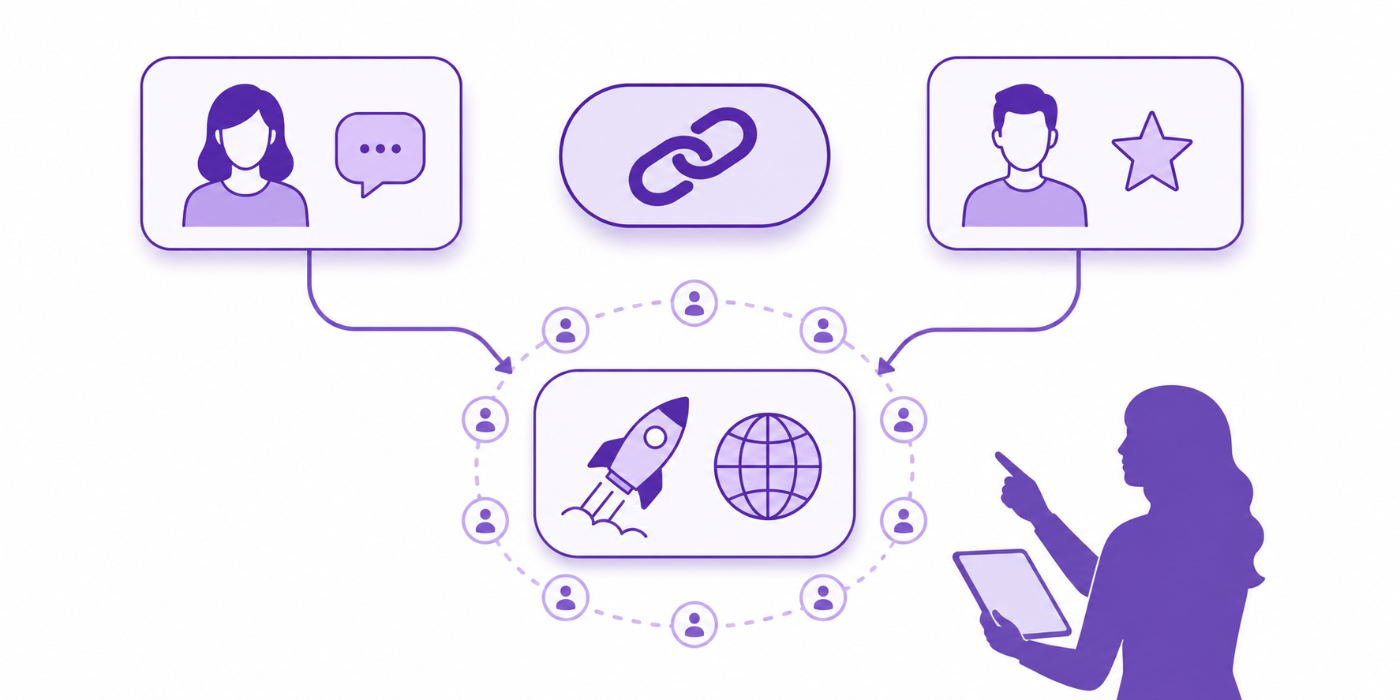
A joint venture works because attention is borrowed from a trusted source instead of earned from zero. A cold audience still needs to discover you, understand you, believe you, and remember you at the exact moment they need help. A partner’s audience has already crossed three of those bridges. They know the host, they open the host’s emails, they attend the host’s webinars, and they often accept recommendations faster when the offer fits their current struggle. That is why smart coaches treat JV strategy as part of networking for industry influence, not as a random favor exchange.
The mistake struggling coaches make is asking for “exposure” before they have a clean value proposition. Exposure multiplies what already exists. If your niche is muddy, your promise is vague, your client journey is scattered, or your proof is weak, a bigger audience only reveals the weakness faster. Before approaching anyone, sharpen your positioning through a clear coaching career roadmap, stronger client transformation case studies, and a simple pathway that makes the next step obvious.
A coach with 800 followers can outperform a coach with 80,000 followers when the JV partner controls a concentrated trust pool. A dietitian with a small email list of high-intent women with insulin resistance may drive more qualified calls than a broad wellness influencer with passive engagement. A therapist, gym owner, HR consultant, fertility educator, chiropractor, corporate wellness lead, or online course creator can become a growth multiplier when the audience has a pain your coaching solves. The strategic coach looks for urgency, fit, and timing before follower count.
Joint ventures also reduce the emotional tax of solo marketing. Constant posting can make coaches feel ignored, especially when they are excellent in sessions but weaker at distribution. A JV gives you context, borrowed credibility, and a reason to teach. Instead of shouting, you are introduced. Instead of begging, you are invited. Instead of pushing, you are solving a problem inside a relationship. That shift supports trust-based coaching growth, stronger client engagement, and more sustainable digital marketing for coaches.
The hard truth is that most coaches waste partnership opportunities by treating them like one-off events. They do one Instagram Live, get a few compliments, and call it “brand awareness.” Serious JV growth has assets: a topic, a registration page, a follow-up sequence, a partner briefing, tracking links, testimonials, sales call notes, conversion metrics, and a second offer for people who were interested but not ready. That is where coaching automation, CRM tools, and automated email sequences turn a single collaboration into a machine.
| Partner Type | Best JV Angle | Audience Pain Point | First Offer to Test | Risk to Control |
|---|---|---|---|---|
| Registered dietitian | Habit follow-through after nutrition planning | Clients know what to eat but cannot sustain routines | Habit formation workshop | Avoid giving medical nutrition advice outside scope |
| Personal trainer | Mindset, accountability, recovery, identity change | Clients start programs then disappear after setbacks | Accountability reset session | Keep coaching separate from exercise prescription |
| Therapist or counselor | Goal support for stable, non-clinical growth areas | Clients need structure between deeper emotional work | Safe goal-setting clinic | Screen carefully and avoid therapy language |
| Corporate HR team | Burnout prevention and practical wellbeing routines | Employees are tired, distracted, and under-supported | Burnout prevention training | Protect employee confidentiality and consent |
| Yoga studio | Stress habits, nervous system routines, consistency | Members feel calmer in class but struggle outside it | Mindfulness coaching series | Do not overpromise mental health outcomes |
| Chiropractic clinic | Lifestyle adherence, sleep routines, movement habits | Patients stop doing the basics after appointments | Action plan consult | Stay away from clinical diagnosis claims |
| Fertility educator | Stress, routines, confidence, emotional steadiness | Clients feel overwhelmed by uncertainty and timing | Stress coaching mini-session | Use supportive language, not outcome guarantees |
| Financial coach | Health habits for people under money stress | Clients sabotage routines when finances feel chaotic | Money and wellness planning session | Keep financial advice inside partner’s lane |
| Relationship coach | Communication, boundaries, shared routines | Clients lose health momentum during relationship stress | Couples habit alignment class | Avoid mediating complex conflict without training |
| Life coach | Health identity, goal clarity, daily execution | Clients want direction but lack a practical system | Life-health reset workshop | Make roles distinct so clients know who does what |
| Executive coach | Energy management for high performers | Leaders are functional but exhausted | Executive wellness audit | Tie benefits to behavior, not vague peak performance |
| Course creator | Implementation support after education | Students buy courses but fail to apply lessons | Implementation sprint | Clarify revenue share and customer ownership |
| Podcast host | Expert interview with a listener worksheet | Listeners consume advice but rarely execute it | Podcast action guide | Avoid sounding like a sales pitch for 45 minutes |
| YouTube educator | Challenge, breakdown, or coaching demonstration | Viewers need a next step after learning | YouTube coaching challenge | Use clear disclaimers and a simple CTA |
| Online community owner | Member-only workshop or accountability challenge | Members need structure after discussion threads | Community coaching sprint | Respect group rules and moderator expectations |
| Wellness retreat host | Pre-retreat preparation and post-retreat integration | Guests feel inspired but lose momentum after returning home | Retreat integration package | Create follow-up boundaries before the event |
| Meal prep business | Behavior support for customers buying healthier food | People order meals but still struggle with routines | Meal routine coaching class | Avoid nutrition claims beyond general coaching |
| Sleep consultant | Habit design, stress triggers, evening routines | Clients understand sleep hygiene but cannot keep it | Behavior change session | Keep medical sleep concerns referred out |
| Health tech app | Human accountability around app data | Users track data but do not translate it into action | Wearable data coaching clinic | Do not interpret clinical metrics as diagnosis |
| Local physician office | General wellness support after medical visits | Patients leave with advice but little behavior support | Preventive health habits class | Use referral-safe language and clear scope |
| Moms’ group leader | Energy, routines, self-care, realistic habit repair | Members feel buried under everyone else’s needs | Self-care coaching clinic | Avoid shaming overloaded clients |
| Career coach | Health routines during career transition | Clients neglect their body during job stress | Work-life balance workshop | Keep offer practical, not motivational fluff |
| Membership site owner | Monthly guest training with a private action tracker | Members need implementation, not more content | Goal tracking session | Define data access and communication rules |
| Certification educator | Career readiness, client acquisition, practice building | Students earn credentials but do not know how to grow | Certification-to-clients training | Do not compete with the educator’s core offer |
| Client portal software | Teach coaches how to improve retention with tech | Coaches lose clients due to scattered follow-up | Coaching dashboard masterclass | Keep platform endorsement transparent |
| Local wellness event organizer | Mini-talk, diagnostic worksheet, and follow-up funnel | Attendees leave inspired but unsupported | Interactive workshop | Capture consent before adding attendees to email lists |
| Niche influencer | Problem-specific challenge with measurable action | Followers trust the influencer but need coaching depth | Client magnet challenge | Reject vanity metrics without audience fit |
| Past client with an audience | Story-led referral event or testimonial interview | Their audience relates to the before-and-after journey | Testimonial-led training | Get written consent and protect private details |
| Professional association | Member education session with clear practice tools | Members want credible, usable development | Credentialing resource session | Match standards, language, and ethics expectations |
| Newsletter operator | Sponsored lesson, quiz, or checklist | Readers skim advice but need a decision tool | Checklist lead magnet | Track clicks, opt-ins, and booking quality separately |
2. Choose Partners Who Already Own the Trust You Need
The best JV partner already serves the person you want to coach, but solves a different part of that person’s problem. That difference matters. A direct competitor creates confusion. A complementary partner creates momentum. A health coach focused on burnout recovery may partner with an HR consultant, a leadership coach, a sleep educator, or a productivity expert. A coach helping women rebuild habits after major life transitions may partner with a therapist, community leader, fitness studio, or nutrition educator. The overlap should feel natural enough that the audience thinks, “Of course these two belong together.”
Use three filters before you approach anyone: audience fit, trust level, and offer timing. Audience fit asks whether the partner’s people actually have the problem you solve. Trust level asks whether the partner’s recommendation influences behavior, not just views. Offer timing asks whether the audience is close enough to pain that they will act soon. These filters are stronger than follower count, especially when you are building profitable coaching niches, testing client preferences, or planning future-proof coaching practice.
A poor JV partner says, “My audience loves wellness.” A strong JV partner says, “My audience is made of corporate women aged 35–50 who struggle with fatigue, inconsistency, stress eating, and calendar overload.” Specific pain lets you design a specific collaboration. The narrower the partner’s audience, the easier it becomes to name the pain, write the workshop title, build the worksheet, choose the follow-up sequence, and craft the call-to-action. Vague collaborations die because everyone sounds nice and nobody feels personally called out.
You also need to examine brand behavior. A partner who overpromises, spams their list, ignores consent, mishandles client stories, or pushes medical claims can damage your reputation faster than a bad ad campaign. Their audience will connect their conduct with your standards. That is why every JV should be filtered through ethical coaching responsibilities, coaching confidentiality, and emotional consent in coaching. Trust borrowed carelessly becomes trust burned publicly.
Your first outreach should be specific, short, and partner-centered. Do not ask, “Would you like to collaborate?” That forces the other person to invent the idea. Say, “I noticed your audience talks often about stress eating after long workdays. I can host a 40-minute practical session for them on building a two-minute evening reset that reduces decision fatigue and supports consistency. You would look like the person who brought them a solution they can use tonight.” This kind of approach shows respect for their audience and mirrors the clarity found in strong coaching communication.
The goal is to make the partner feel safe. They are lending you trust they worked hard to earn. Give them the topic, audience fit, session outcome, time commitment, promotional copy, ethical boundaries, and follow-up plan. When a partner sees that you have thought through the entire experience, you stop looking like someone asking for access and start looking like someone protecting their reputation. That difference gets replies.
3. Build an Offer That Makes the Partner Look Good
A JV offer should make the partner look generous, strategic, and selective. If the audience feels sold to, the partner loses social capital. If the audience feels helped, the partner gains authority. Build the offer around a painful, immediate problem their people already complain about. “Improve your health” is too broad. “Stop losing your evening routine after one stressful workday” is sharper. “Build a three-step recovery plan after a week of missed habits” is even better. Specificity turns attention into action.
The best JV format depends on trust temperature. For a cold borrowed audience, start with education and diagnosis. A webinar, mini-workshop, checklist, quiz, or live coaching demonstration helps people see their own problem before they evaluate your service. For a warm audience that already knows you through repeated introductions, a private invite to a consult, challenge, or small-group sprint can work. For a partner with high authority and strong list loyalty, a co-branded intensive or referral pathway can drive serious revenue. Match the offer to the relationship stage.
Build a “partner-safe” promise. That means the promise is attractive without sounding reckless. A health coach can promise a framework, audit, plan, or habit system. A health coach should be careful with language that implies guaranteed medical results, diagnosis, treatment, or disease reversal. This protects the audience, the partner, and your own practice. If your business depends on credibility, every JV should reinforce non-negotiable coaching standards, safe coaching environments, and clear coaching boundaries.
Your lead magnet should be tied to the session outcome. If the JV is about burnout, offer a weekly energy leak audit. If the JV is about nutrition follow-through, offer a meal decision map. If the JV is about habit inconsistency, offer a two-trigger habit repair checklist. Random PDFs create weak leads because they do not continue the conversation. Strong assets act like bridges into your paid pathway. They also help you collect insight through surveys and feedback tools, organize follow-up in coaching dashboards, and support future client case study templates.
Agree on the conversion path before promotion begins. Who owns the registration page? Who sends reminders? Who answers questions? Who follows up? Will there be an affiliate commission, referral fee, flat fee, or no money exchanged for the first test? Will the partner receive anonymized performance data? Will the replay be available? Will the event mention your paid offer? Will the partner introduce you live? These details prevent awkwardness later. They also make your coaching business feel more professional than the average informal collaboration.
Create partner assets in advance. Give them a short email, a long email, three social captions, three story slides, a one-line bio, a headshot, a registration link, and a short explanation of why the session matters. When partners have to write everything themselves, promotion becomes a burden. When you hand them clean assets, they can support you quickly. This is where content clients love, interactive coaching exercises, and coaching resource libraries become growth infrastructure.
4. Run the First Collaboration Like a Conversion System
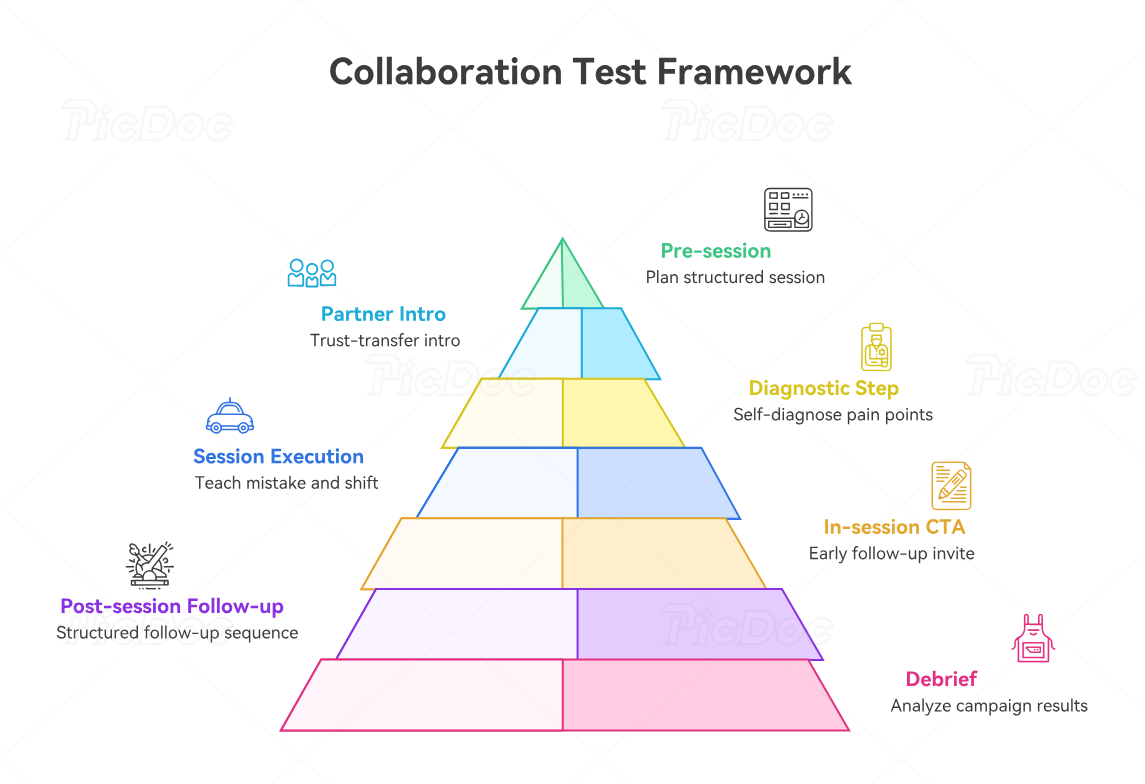
The first collaboration should be treated like a controlled test, not a performance. You are testing partner fit, audience pain, message strength, attendance quality, conversion path, and follow-up behavior. A coach who only asks, “Did people like it?” misses the bigger business question. People can love a workshop and still never book. Track registrations, attendance rate, chat engagement, poll responses, lead magnet downloads, consult bookings, show-up rate, close rate, and referral quality. Data turns “nice exposure” into business intelligence.
Structure the session around one painful mistake and one practical shift. For example, “Why your clients keep falling off their habits after a stressful day — and how to build a recovery routine that starts in two minutes.” That title does more than educate. It names the pain, explains the failure pattern, and suggests relief. Inside the session, teach the mistake, show the cost, give a framework, walk through an example, and invite the audience into a next step. That approach supports powerful questioning, constructive feedback clients hear, and behavioral coaching strategies.
Use a diagnostic moment before your pitch. Ask attendees to identify which pattern is costing them most: unclear goals, weak triggers, emotional eating, poor sleep routines, inconsistent accountability, people-pleasing, decision fatigue, or burnout. When people diagnose themselves, they become more receptive to help. A generic pitch feels like pressure. A diagnosis-based invitation feels like the logical next step. This is also how strong coaches create client self-awareness without making people feel exposed or judged.
The partner introduction matters more than many coaches realize. A cold bio is weak. A trust-transfer introduction is powerful. Ask the partner to explain why they invited you, what specific problem you help solve, and how the session fits the audience’s needs. One sentence can change the entire room: “I asked this coach to teach today because many of you know what to do, but you have told me you struggle to keep doing it when life gets heavy.” That introduction frames your authority through the audience’s existing pain.
Follow-up should begin before the session ends. Invite attendees to download the worksheet, answer a short reflection, book a call, or join a limited challenge. Then send a same-day recap, a next-day pain-point email, a two-day case example, and a final invitation. This sequence should be helpful even for people who never buy. Strong follow-up proves you are organized, not desperate. It also supports exceptional client experiences, client feedback loops, and payment systems that keep clients happy.
After the campaign, debrief with the partner. Share what worked, what questions came up, what the audience seemed most concerned about, and what could improve next time. Do not hide weak numbers. A serious partner respects clarity. If registration was strong but attendance was poor, adjust reminders. If attendance was strong but bookings were weak, sharpen the call-to-action. If bookings were strong but closes were weak, examine fit or offer structure. One debrief can turn a modest first JV into a larger second campaign.
5. Turn One JV Into a Repeatable Referral Engine
A single JV can become a long-term referral engine when you create memory, assets, and proof. Most coaches disappear after the event and wonder why the relationship fades. Stay visible without being needy. Send the partner a thank-you note, audience insights, anonymized feedback, testimonial snippets, replay performance, and one idea for a future collaboration. Make them feel the collaboration created value beyond the immediate sales result.
Build a partner file for every serious JV. Include the partner’s audience profile, best-performing angles, objections, registration numbers, buyer concerns, language used in chat, and follow-up results. Over time, you will see patterns. Maybe HR partners produce bigger groups but slower corporate sales. Maybe local studios produce fewer leads but higher trust. Maybe podcast listeners convert after three emails, while webinar attendees convert on calls. This is how you move from guessing to forecasting through coaching business benchmarking, financial forecasting, and coaching market opportunity analysis.
Create tiers of partners. Tier one partners have high audience fit, strong trust, repeat potential, and clean communication. Tier two partners are useful for visibility but need a better offer or clearer audience. Tier three partners are polite connections with low conversion potential. This prevents emotional decision-making. A coach who treats every opportunity equally becomes exhausted. A coach who ranks partners protects time, energy, and reputation.
Turn client success into partner proof. When a referred client gets results, document the journey ethically and with consent. Show the partner how their referral helped someone take action, rebuild consistency, improve follow-through, or regain confidence. That makes the partner more willing to refer again. It also gives you stronger assets for client testimonial capture, case study credibility, and trust-building client relationships.
The strongest JV engines have recurring formats. A monthly partner workshop, quarterly challenge, annual summit, private office-hours session, referral lunch-and-learn, or co-branded checklist can become part of your growth calendar. Recurrence reduces launch effort because the structure already exists. You only adjust the topic, asset, and audience pain. This works especially well when paired with coaching session templates, virtual coaching tools, and video conferencing best practices.
Protect the relationship with clear rules. Write down referral fees, commission terms, promotional expectations, client ownership, refund handling, confidentiality expectations, intellectual property rights, replay use, and conflict resolution. Friendly agreements become messy when money starts moving. Clarity is kindness in business. It also keeps your JV strategy aligned with ethical dilemmas coaches solve, dual relationship management, and career-ending mistake prevention.
A strong JV strategy should eventually create a partner pipeline. Every month, identify five possible partners, research three deeply, approach two, run one collaboration, and debrief every result. That simple cadence can outperform random content bursts because it compounds relationships. Over six months, you may have six tested partners, several referral sources, multiple reusable workshops, stronger proof, and a clearer sense of where your market responds. That is how “overnight reach” becomes long-term authority.
6. FAQs
-
The fastest format is usually a partner-hosted workshop with a narrow pain point, live interaction, a worksheet, and a direct invitation to a consult or short coaching sprint. It works faster than a casual social media Live because there is a clearer reason to register, attend, participate, and act. Pair it with automated email follow-up, a strong coaching toolkit, and a simple goal tracking tool so the audience experiences value before the sales conversation.
-
Use affiliate commissions when the partner actively promotes a digital offer, group program, or scalable coaching package. Use referral fees when the partner introduces qualified individual clients. Keep the terms written, simple, and transparent. Decide whether payment happens after purchase, after the refund window, or after the first paid month. Align everything with coaching ethics, client confidentiality, and your own business payment systems.
-
Lead with the partner’s audience, not your need for growth. Mention the specific pain you can help their people solve, the format you propose, the outcome attendees will leave with, and the work you will handle for promotion. A strong message might say: “Your audience often talks about burnout and inconsistent routines. I can host a practical 40-minute session on rebuilding energy habits after stressful workdays and provide the worksheet, registration copy, and follow-up resources.” That approach reflects effective coaching communication and stronger industry networking.
-
Pursue enough to create momentum without damaging follow-through. For most solo coaches, five researched prospects per month, two outreach messages per week, and one live collaboration per month is a strong starting cadence. More volume can create sloppy communication, weak customization, and poor partner experience. Track everything in a client relationship CRM, review results through business benchmarks, and refine offers based on client feedback.
-
Bring a complete idea. Desperation sounds like, “Can I get in front of your audience?” Professionalism sounds like, “I can help your audience solve this urgent problem, and I will make the experience easy for you.” The more prepared you are, the more the partner sees you as an asset. Build credibility with certification credentials, coaching standards, and strong client experience design.
-
Track partner promotion effort, registration rate, attendance rate, audience engagement, lead magnet downloads, booking rate, sales call show-up rate, close rate, refund rate, and referred client quality. Also track qualitative signals: chat questions, objections, language patterns, and emotional pain points. Those insights help you improve future client engagement, strengthen digital marketing tools, and choose better coaching growth opportunities.
-
Risk appears when roles blur, claims get exaggerated, client privacy is mishandled, or money terms are vague. A JV with a therapist, doctor, dietitian, or wellness provider can be powerful, but each person’s scope must remain clear. Never imply diagnosis, treatment, or guaranteed outcomes when your role is coaching support. Use written agreements, informed consent, referral boundaries, and careful language grounded in ethical responsibilities, professional boundaries, and trust-centered coaching.
