
Must-Have Tools for Starting a Coaching Business
Starting a coaching business gets difficult when your tools are scattered, your client notes live in five places, invoices are manual, and your follow-up depends on memory. The right tool stack helps a new coach look professional before the business feels big. It supports client trust, clean professional boundaries, stronger client engagement, smoother coaching automation, and a better path toward building a thriving coaching practice.
1. Start With a Lean Coaching Tool Stack Before Buying Everything
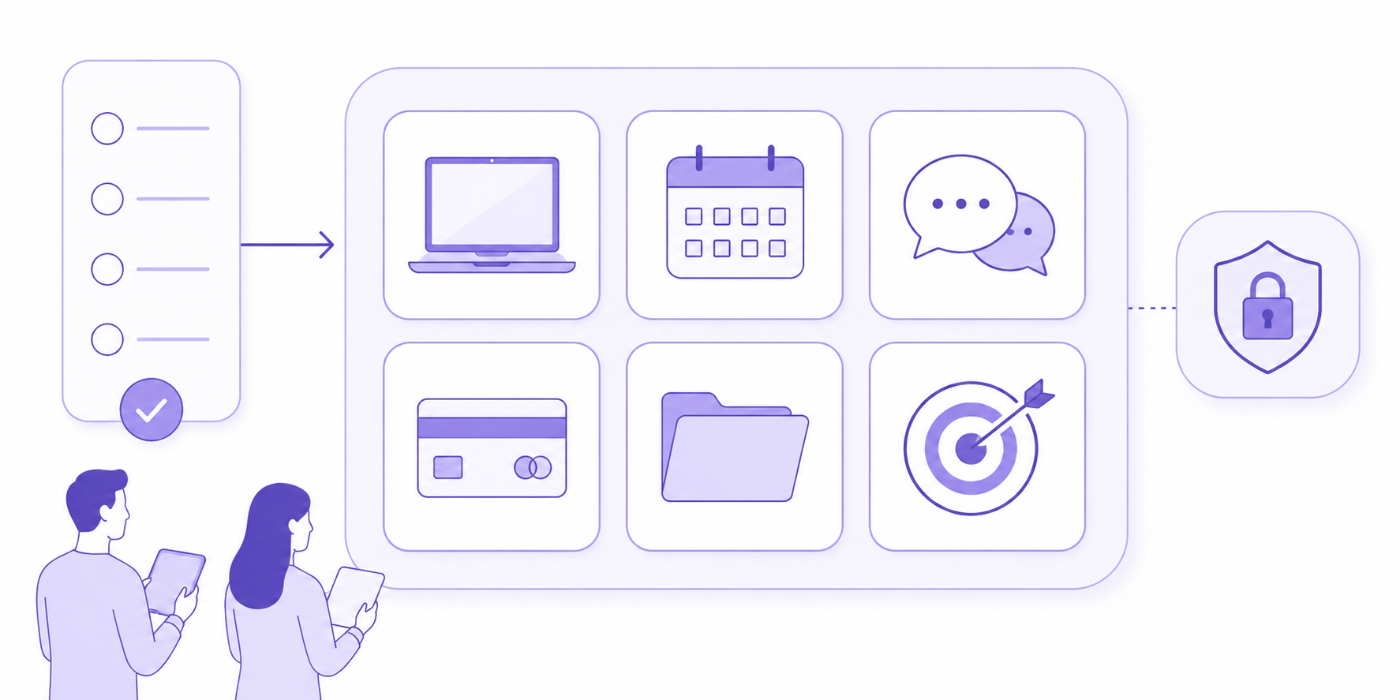
New coaches often lose time inside the wrong problem. They compare ten platforms, buy apps they barely use, and build complicated workflows before they have a clear client journey. A smart coaching business starts with a lean tool stack that supports the core experience: attract the right lead, book the call, collect payment, onboard the client, run sessions, track progress, communicate clearly, request feedback, and retain the relationship. This is where coaching software platforms, essential CRM tools, payment systems, and automated email sequences become practical business infrastructure.
The best first stack should remove friction from the client experience. A prospect should understand your offer, schedule a call, receive reminders, sign an agreement, pay easily, access resources, and know exactly what happens next. When that flow feels messy, the client senses risk before the first session even begins. Coaches who want stronger retention should connect their tools to client trust, coaching integrity, coaching confidentiality, and ethical coaching principles from day one.
Start with categories instead of brand names. You need a website or landing page, scheduling tool, video meeting tool, client management system, payment processor, intake form, contract system, email platform, file library, note-taking system, progress tracker, feedback form, testimonial capture process, and basic bookkeeping support. This keeps your decisions grounded in function. A coach building a health coaching career, a life coaching practice, a relationship coaching business, or a mental health coaching niche may use different tools, yet the operational backbone stays similar.
The goal is control. If you cannot quickly find client goals, payment status, session history, action steps, renewal date, and feedback, your business will leak trust. That leak becomes missed follow-up, forgotten promises, weak renewals, and awkward client conversations. A clean tool stack gives you memory, structure, and consistency. It also makes it easier to use coaching dashboards, interactive goal tracking tools, habit formation tools, and surveys and feedback tools without overwhelming the client.
2. Client Management Tools That Make You Look Professional From Day One
Client management is the heart of a coaching business tool stack because it controls the experience after someone says yes. A new coach may be able to deliver a powerful session, yet the business can still feel amateur if onboarding emails are late, payment links are confusing, forms are missing, and next steps are vague. A client management system should organize the full relationship: prospect stage, intake answers, goals, signed agreement, payment status, session notes, accountability actions, progress reviews, feedback, testimonials, and renewal timing. That makes CRM tools, coaching software platforms, client dashboards, and client experience systems essential early investments.
The first tool to build is a client record. It can be simple at the beginning, but it must be complete enough to protect quality. Include the client’s main goal, deeper motivation, past attempts, support preferences, boundaries, communication rules, risk flags, habits being tracked, weekly action steps, wins, barriers, and renewal date. This protects the coach from relying on memory. It also helps clients feel remembered, which strengthens deep client trust, effective listening, client accountability, and managing client expectations.
Your onboarding tool matters because onboarding sets the emotional tone. New clients often arrive with hope and skepticism at the same time. They may have failed diets, abandoned routines, missed personal goals, or paid for support that felt generic. A strong intake form should ask what they want, what keeps getting in the way, what they have already tried, what kind of support helps, what kind of support shuts them down, and what would make the coaching relationship feel valuable. These questions connect beautifully with powerful questioning, emotional consent, safe coaching environments, and client anxiety and stress support.
Scheduling tools also do more than save time. They reduce friction, prevent missed calls, and make the coach’s boundaries visible. Use reminders, buffer time, cancellation rules, timezone settings, intake questions, and confirmation emails. A coach who allows chaotic scheduling teaches clients that the relationship has loose edges. A coach who uses clean scheduling reinforces professional boundaries, communication techniques, coaching automation, and virtual coaching effectiveness.
Payment tools should be set up before a coach starts selling seriously. Every coach needs a reliable way to send invoices, collect package payments, manage subscriptions, track failed payments, and separate business income from personal money. Payment confusion creates silent tension. Clients feel uncomfortable asking how to pay, and coaches feel uncomfortable chasing money. Clean systems support payment simplicity, stronger financial forecasting, better tax preparation, and more confident coaching business growth.
3. Marketing and Sales Tools That Turn Attention Into Booked Calls
A coaching business needs visibility, but visibility without a conversion path becomes exhausting. Posting daily without a lead magnet, booking link, email follow-up, or offer page can make a coach feel busy while the business stays quiet. The right marketing tools turn attention into trust, trust into conversation, and conversation into clients. Start with a clear landing page, one strong offer, one lead capture tool, one email sequence, one booking link, and one content schedule. That foundation supports digital marketing tools, SEO for coaching websites, coaching content creation, and networking strategies.
Your website should answer four questions quickly: who you help, what problem you solve, how your coaching works, and what the visitor should do next. New coaches often hide behind vague language because they fear narrowing the audience. That vagueness weakens trust. A stronger page says exactly who the offer is for, which outcomes it supports, what the process includes, and how to begin. This is especially important for coaches entering profitable coaching niches, building a health coaching certification path, developing a life coaching career, or positioning through coaching credentials.
Email marketing is one of the most important tools for a new coach because many prospects need time before they book. A strong welcome sequence can introduce your story, clarify your method, share a client scenario, address objections, and invite a discovery call. It keeps your business alive after someone downloads a checklist or attends a workshop. Coaches can pair automated email sequences with client testimonials, coaching case studies, and resource hub strategy to build trust before the sales call.
Sales tools should make decisions easier for the right client. Use a discovery call form, offer comparison page, FAQ page, package breakdown, and clear payment link. A confused prospect delays. A pressured prospect retreats. A prepared prospect can decide calmly because the value, structure, boundaries, and next step are clear. This ties into high-ticket coaching offers, certification credibility, coaching integrity, and client trust.
Content tools should help you publish consistently without turning your coaching business into a content treadmill. Build a simple content calendar around pain points, mistakes, mini-teachings, client scenarios, habit tips, boundary lessons, mindset shifts, and behind-the-scenes coaching process. Use your posts to educate, qualify, and invite. The most useful content often grows from real coaching problems: missed follow-through, low motivation, unclear goals, burnout, emotional eating, poor self-care, relationship stress, or work-life tension. This gives you natural ways to connect habit formation, burnout coaching, self-care coaching, and work-life balance coaching to your offers.
4. Coaching Delivery Tools That Improve Sessions, Accountability, and Results
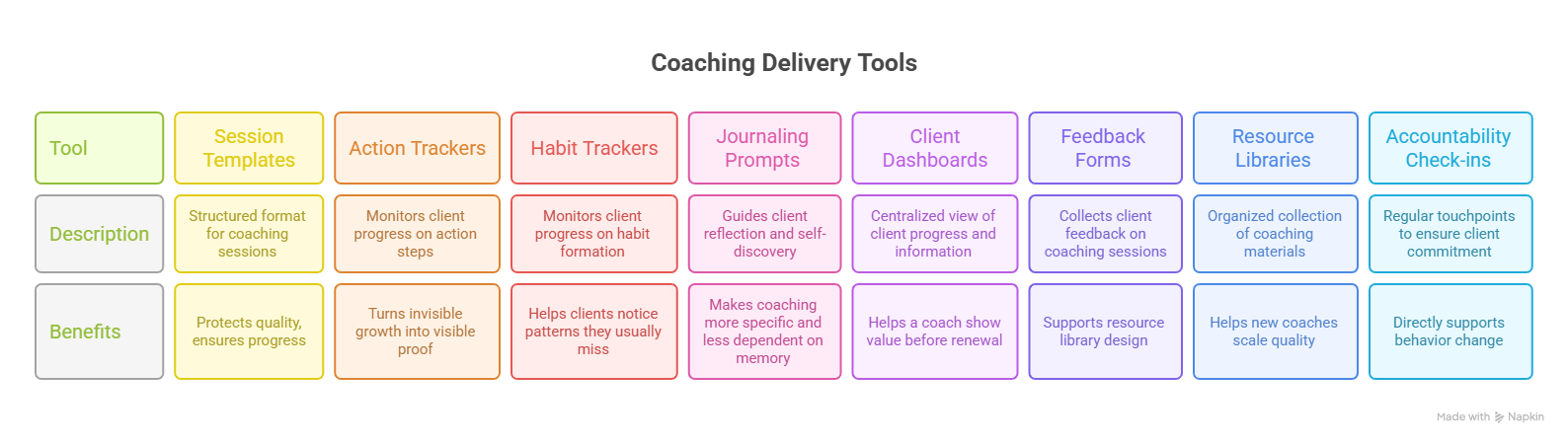
Delivery tools should help clients change between sessions. A coach can run an excellent call, but the client’s life happens after the call ends. That is where old habits, stress, family pressure, work deadlines, self-doubt, and decision fatigue attack the plan. Delivery tools should turn insight into action. The strongest early tools include session templates, action trackers, habit trackers, journaling prompts, client dashboards, feedback forms, resource libraries, and simple accountability check-ins. These directly support behavior change, habit formation, client accountability, and lasting transformation.
A session template protects quality. It helps the coach move from check-in to insight, from insight to decision, and from decision to action. Without structure, sessions can become pleasant conversations that feel good but produce weak follow-through. A useful session template includes client state, previous commitment, wins, barriers, pattern noticed, coaching focus, key question, action step, support needed, and next check-in. This works well with coaching session templates, powerful questioning techniques, effective listening, and constructive feedback.
A progress tracker turns invisible growth into visible proof. Clients often improve gradually, then underestimate the change because it feels normal by the time it arrives. Track baseline behaviors, weekly actions, emotional shifts, barriers, recovery speed, confidence language, and repeated wins. This helps a coach show value before renewal and helps the client stay motivated during difficult weeks. Progress tracking pairs naturally with interactive goal tracking, coaching dashboards, case study templates, and positive behavior reinforcement.
Journaling tools are especially useful because they help clients notice patterns they usually miss. Use prompts around triggers, values, self-talk, energy, decision points, boundaries, gratitude, and identity. A client who writes for three minutes after a tough moment can bring sharper material into the next session. This makes the coaching more specific and less dependent on memory. Journaling can connect with client journaling tools, daily journaling prompts, gratitude journal coaching, and inner critic management.
Resource libraries help new coaches scale quality without repeating the same explanation every week. Build a small library of worksheets, checklists, reflection prompts, session prep pages, recovery plans, habit planners, and boundary scripts. Keep it organized by client problem, rather than dumping files into a random folder. A client dealing with stress should find stress tools quickly. A client struggling with communication should find conversation prompts quickly. This supports resource library design, building a coaching toolkit, stress management techniques, and communication coaching.
5. Operations, Finance, and Automation Tools That Keep the Business Stable
The back end of a coaching business determines how long the coach can sustain the front end. Many coaches love sessions and dislike operations, so they delay bookkeeping, tax planning, policies, renewal tracking, and systems documentation. That delay becomes stress when invoices are late, expenses are unclear, client records are messy, and income swings month to month. A serious coaching business needs operational tools for payments, bookkeeping, forecasting, contracts, policies, automation, client records, and review cycles. These tools connect directly to financial forecasting, coach tax planning, payment systems, and business benchmarking.
Bookkeeping should begin before the business feels busy. Track revenue by offer, expenses by category, payment fees, software subscriptions, taxes, refunds, renewal rates, and lead sources. A coach who knows these numbers can make cleaner decisions about pricing, capacity, and marketing. A coach who avoids them may confuse gross income with actual profit. Financial clarity also helps with profitable niche decisions, high-ticket offers, coaching market growth, and state of coaching trends.
Automation should protect human attention, not replace human care. Automate confirmations, reminders, onboarding emails, payment receipts, feedback requests, resource delivery, renewal reminders, and testimonial prompts. Keep personal coaching moments personal: insight reflections, difficult feedback, emotional repair, boundary conversations, and progress reviews. This balance matters because clients want convenience and human presence. Coaches can learn from coaching automation, balancing automation with human touch, AI in client interactions, and technology transforming coaching.
Ethics tools should sit inside the operating system. Every coach needs a scope statement, confidentiality policy, informed consent language, referral process, emergency disclaimer, cancellation policy, data storage process, and boundaries around messaging. These are protective tools, especially when clients bring grief, trauma, anxiety, burnout, relationship stress, or crisis-level concerns into sessions. Coaches should align tools with ethical responsibilities, emotional consent, coaching clients through grief, and supporting emotional crises.
A new coach should also create a monthly business review dashboard. Track leads, calls booked, calls converted, active clients, revenue collected, retention rate, referrals, testimonials, content published, email list growth, and client feedback patterns. This reveals the business truth quickly. Maybe marketing is working but sales calls are weak. Maybe clients love the sessions but referrals are never requested. Maybe renewals are low because progress reviews happen too late. This kind of review supports feedback-driven growth, client retention strategy, future-proof coaching practice, and client preference trends.
6. FAQs About Must-Have Tools for Starting a Coaching Business
-
A new coach should start with a landing page, scheduling tool, video platform, CRM, payment processor, intake form, contract system, session note template, progress tracker, and email follow-up system. These tools cover the full first-client journey from discovery to delivery. Once the basics work, the coach can add coaching dashboards, resource libraries, goal tracking tools, and automation systems without building unnecessary complexity.
-
An all-in-one platform can help when it combines scheduling, payments, client notes, forms, resources, and progress tracking in a clean client experience. A new coach can also start with separate simple tools if the workflow is organized. The key is making sure the client journey feels smooth. Coaches should compare coaching software platforms, CRM tools, payment systems, and client management automation based on workflow fit.
-
The best tool for getting clients is a simple conversion system: a clear offer page, strong lead magnet, booking link, email sequence, and follow-up process. Social media attention helps, but the system needs to turn interest into conversations. Coaches should combine digital marketing tools, SEO tools for coaching websites, coaching content strategy, and networking strategies to create consistent lead flow.
-
Tools help retention by making progress visible, follow-up consistent, resources easy to access, and feedback easy to share. A client who can see wins, understand the next step, and access support between sessions is more likely to continue. Retention improves with client feedback tools, habit tracking, client dashboards, and client experience systems.
-
The most professional tools are the ones clients directly experience: polished scheduling, clean onboarding, secure payment, clear contracts, organized resources, session summaries, and consistent follow-up. These make a new business feel stable and trustworthy. Coaches should prioritize professional boundaries, coaching confidentiality, coaching integrity, and client trust before adding flashy tools.
-
A new coach should spend enough to remove friction from selling, delivering, and collecting payment, while keeping monthly subscriptions manageable. Start with essential tools, then upgrade when client volume requires it. The early focus should be revenue clarity, client experience, and consistent delivery. Use financial forecasting, tax planning, business benchmarking, and profitable niche analysis to decide which tools deserve investment.
