
How to Maintain Your CPD Coaching Certification
Maintaining your CPD coaching certification becomes much easier when you treat renewal as a professional evidence system instead of a deadline panic. Coaches lose time, money, and credibility when certificates sit in email folders, learning choices feel random, or renewal rules are checked too late. A strong CPD plan connects continuous coaching education, ethical coaching responsibilities, client trust, and stronger coaching outcomes into one simple rhythm you can maintain every month.
1. Build a CPD Renewal System Before the Deadline Starts Pressuring You
The biggest CPD maintenance problem usually appears months before renewal season. A coach takes a webinar, downloads a certificate, attends a workshop, listens to a training replay, reads a research update, and assumes everything will be easy to find later. Then the renewal window opens, the certifying body asks for evidence, and the coach realizes their professional development is scattered across inboxes, screenshots, payment receipts, browser bookmarks, and half-finished course dashboards. That disorganization weakens confidence fast, especially for coaches who already struggle with credentialing paperwork, certification portfolio evidence, and professional coaching standards.
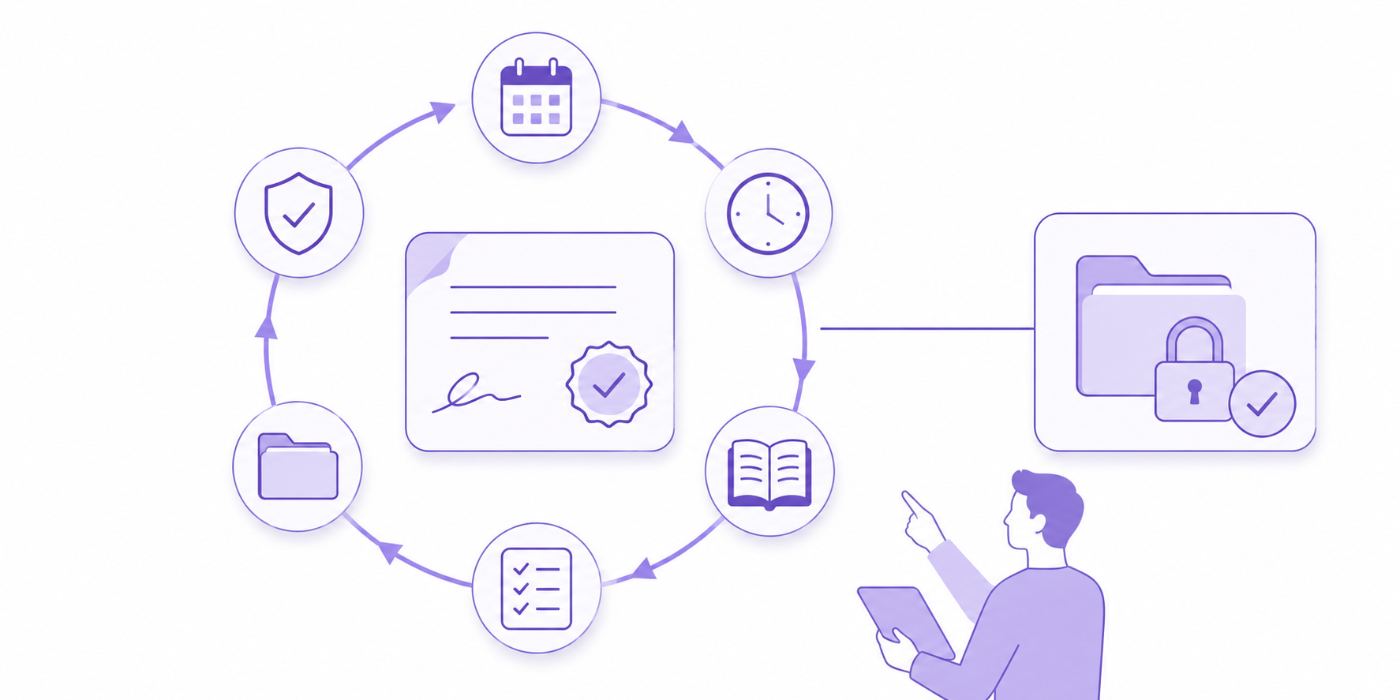
Start by building a simple CPD renewal folder with five sections: certificates, learning logs, reflection notes, client-application examples, and renewal rules. The certificates section proves attendance. The learning log shows dates, providers, topics, hours, and relevance. The reflection notes explain what changed in your coaching practice. The application examples show how learning improved session design, boundaries, communication, assessment, or follow-through. The renewal rules section stores the exact maintenance requirements from your certification provider, which protects you from relying on memory when rules, categories, or accepted evidence formats shift. This system supports CPD-accredited life coach certification, health coach certification credentials, and essential coaching resources because it keeps your proof organized before pressure arrives.
A useful CPD system also prevents weak learning choices. Coaches sometimes collect hours just to protect the credential, then wonder why their sessions still feel flat, clients still disappear, or discovery calls still feel awkward. Maintenance should strengthen the business and the practice at the same time. That means choosing development that supports your actual coaching niche, such as mental health coaching, relationship coaching, financial coaching, habit formation, or preventative health coaching. The renewal folder gives you visibility, so you can see whether your learning is balanced or accidentally built around whatever free webinar appeared first.
2. Choose CPD Activities That Strengthen Your Coaching Practice, Not Just Your Certificate
A strong CPD plan should cover three lanes: compliance, competence, and commercial strength. Compliance protects your certification by meeting renewal requirements. Competence improves how you coach clients through resistance, stress, motivation dips, emotional pressure, behavior change, and habit design. Commercial strength helps your practice survive through clearer positioning, better systems, stronger retention, and cleaner client experience. Coaches who only collect generic certificates often feel busy but underdeveloped. Coaches who build a focused CPD pathway become easier to trust, easier to refer, and easier to differentiate in a crowded market where clients compare health coach certification options, online life coach certification routes, certification salary expectations, and real certification value.
Use a 40-40-20 rule to choose CPD intelligently. Spend about 40% of your learning on your direct coaching skill set, such as effective coaching communication, constructive client feedback, strength-based coaching techniques, and solution-focused brief coaching. Spend another 40% on your niche and client population, such as stress, wellness behavior, relationships, career transition, lifestyle design, or preventative health. Spend the remaining 20% on practice infrastructure, including CRM tools for coaching clients, custom coaching dashboards, client journaling tools, and feedback tools that improve outcomes.
The most valuable CPD activities usually produce an immediate coaching upgrade. A training on emotional consent should change how you ask permission before deeper work, which connects directly to why emotional consent matters. A training on boundaries should improve your contract language, response-time policy, and referral decisions, which supports coaching integrity. A training on client anxiety should change the pace of goal-setting when clients are overwhelmed, which strengthens your ability to manage client expectations. CPD should leave a footprint in your real practice, otherwise it becomes professional decoration.
Weak CPD choices create another hidden problem: they make renewal feel meaningless. If a coach completes random courses that never appear in their session notes, client check-ins, onboarding sequence, case studies, or feedback process, the certification stays alive while the practice stays average. Strong CPD connects learning to delivery. After every training, ask four questions: What coaching risk does this reduce? What client outcome does this improve? What session behavior should I change? What evidence can I keep? Those questions tie CPD to client transformation case studies, accountability in coaching, exceptional client experiences, and business growth through feedback.
3. Document Your Learning So Renewal, Audits, And Client Trust Become Easier
Documentation is where many coaches quietly damage their own credibility. They complete legitimate learning but cannot prove it cleanly. They attend high-quality sessions but forget the provider name. They record hours but miss dates. They save certificates but never write reflection notes. They take excellent ethics training but cannot show how it influenced their consent process, referral policy, or session structure. A certification provider may only request basic evidence, but a serious coach should build a stronger record because organized documentation also supports professional credibility, certification interview confidence, credential listing accuracy, and coaching business benchmarking.
Your CPD log should include seven fields: activity title, provider, date completed, number of hours or credits, category, proof file location, and practice application. The practice application field matters most because it converts learning into professional judgment. A coach who writes “Completed webinar on habit formation” has a thin record. A coach who writes “Updated client action plans to include trigger, friction, reward, and weekly review prompts after habit formation training” has a stronger professional artifact. That kind of record connects CPD to habit formation in coaching, interactive goal tracking, client accountability, and lasting behavioral change.
A monthly CPD review takes 20 minutes and prevents renewal chaos. Open your log, add any new learning, attach proof, write one practical reflection, and decide one client-facing improvement for the next month. That improvement could be a better intake question, a clearer boundary statement, a new journaling prompt, a revised progress review, or a cleaner follow-up email. Over a year, this creates a visible growth trail. It also gives you stronger material for client testimonials capture, coaching case studies, resource hub development, and your broader coaching toolkit.
Good documentation also protects against the panic that comes from mixing personal growth content with formal CPD. Coaches often read books, attend talks, listen to podcasts, join peer groups, and complete formal courses. Some of those activities may count toward renewal, and some may only support informal development. Keep both, but label them clearly. Use categories such as accepted CPD, supporting learning, supervision or mentoring, practice improvement, and business development. This avoids inflated claims and keeps your record honest, which supports coaching integrity, ethical responsibilities, legal awareness for coaches, and career-saving standards.
4. Turn CPD Into Better Sessions, Better Boundaries, And Better Client Results
The real value of CPD shows up inside the coaching relationship. A maintained certificate may reassure clients, but improved coaching behavior keeps them engaged. After each CPD activity, translate the learning into one practical change. If the topic was neuroscience, adjust how you explain habit loops, stress responses, or decision fatigue through a coaching-safe lens. If the topic was positive psychology, strengthen how you help clients identify strengths, evidence, wins, and resilience patterns. If the topic was boundaries, revise your onboarding language and session agreements. This connects CPD to positive psychology coaching, neuroscience-based coaching methods, safe coaching environments, and trust-centered coaching.
A practical CPD transfer process has three steps. First, write the core skill you learned in plain language. Second, choose where it belongs in your client journey: discovery call, intake form, goal-setting session, accountability check-in, progress review, renewal conversation, or exit reflection. Third, create one asset from it. That asset may be a checklist, script, worksheet, dashboard field, journaling prompt, session question, or client email. This is how CPD becomes visible. It also supports custom coaching dashboards, daily journaling prompts, client session recording tools, and weekly coaching feedback systems.
For example, a coach who completes CPD in motivational interviewing or communication should update their questioning habits. Instead of rushing into advice, they might add reflective listening checkpoints, permission-based suggestions, and client-led action commitments. A coach who completes CPD in stress management might add pacing questions before assigning habits. A coach who completes CPD in ethics might create clearer referral language and emotional consent prompts. These changes protect the client and the coach while strengthening outcomes. They also align with client anxiety strategies, empowering clients toward real results, the top coaching technique for breakthroughs, and how coaches actually change client diets when health behavior is part of the work.
CPD should also improve your confidence in difficult moments. Coaches lose trust when they overpromise, give advice outside scope, blur emotional boundaries, ignore readiness, or push accountability when the client needs regulation first. Strong professional development gives you better judgment under pressure. That judgment shapes when to slow down, when to refer, when to challenge, when to ask permission, when to document concerns, and when to adjust the coaching plan. This is where renewal becomes more than administration. It becomes professional maturity linked to handling difficult client situations, coaching through economic changes, career-ending mistake prevention, and future-proof coaching practice.

5. Avoid The CPD Maintenance Mistakes That Quietly Damage Credibility
The first major mistake is waiting until the final quarter of the renewal cycle. Deadline-driven CPD usually leads to rushed choices, low relevance, poor reflection, and weak evidence. A coach may technically complete enough activity but still miss the deeper purpose of maintaining certification: staying sharp, safe, current, and useful to clients. Set calendar reminders at the start, midpoint, and final review stage of your cycle. Add one short monthly CPD task to your admin routine. This pairs well with coaching automation, business systems for coaches, coaching business growth tools, and scalable coaching practice habits.
The second mistake is choosing CPD that looks impressive but solves the wrong problem. If your clients struggle with consistency, training in habit formation may matter more than another broad mindset webinar. If clients resist feedback, communication training may matter more than a branding course. If your practice has high drop-off after month one, retention systems and accountability training deserve priority. Your CPD plan should target the friction points already visible in your coaching practice. Use client feedback, session notes, drop-off patterns, and discovery call objections to guide your learning. That turns maintenance into strategy and connects directly to client retention strategies, gamification for engagement, micro-coaching for rapid results, and client preferences shaping coaching.
The third mistake is keeping evidence without reflection. Certificates prove completion, but reflection proves development. A renewal folder filled only with certificates says you attended. A folder with reflections, session changes, tools, and case notes shows that learning shaped your practice. Write three sentences after every CPD activity: what I learned, what I changed, and what I will monitor. This simple habit builds a renewal record that can also support coaching case study templates, client success proof, coaching toolkit development, and resource hub creation.
The fourth mistake is treating CPD as private administration instead of a trust signal. Clients do not need your entire renewal file, but they do need confidence that you are current, ethical, and serious about improvement. Your website, consultation scripts, profile, resume, and client onboarding materials should communicate ongoing professional development with accuracy and restraint. Say what you maintain, what you study, and how it supports clients. Avoid inflated claims, vague superiority, or credential language your provider does not permit. This helps with resume credential listing, certification differentiation, high-ticket coaching credibility, and networking as a coach.
The fifth mistake is ignoring business and ethics CPD because client-facing techniques feel more exciting. A coach can have excellent session energy and still create risk through poor consent language, unclear contracts, messy payment systems, weak data handling, inconsistent scope, or unclear refund terms. CPD maintenance should protect the full practice, not only the session. Include legal basics, ethical refreshers, documentation, payment workflows, and business operations in the learning mix. That kind of maintenance supports legal requirements for coaches, setting up a coaching LLC, tax planning for coaches, and financial forecasting for coaching income.
6. FAQs: How To Maintain Your CPD Coaching Certification
-
Review your certification requirements at the start of every renewal cycle, again at the midpoint, and once more before submission. This protects you from relying on old assumptions about accepted hours, categories, evidence rules, or renewal timelines. Keep a saved copy of your provider’s current requirements in your CPD folder, then compare your log against it monthly. This habit pairs well with CPD certification planning, credentialing process awareness, certification portfolio building, and professional standards for coaches.
-
Keep certificates, completion emails, receipts, transcripts, attendance confirmations, course descriptions, learning objectives, reflection notes, and proof of how the learning affected your practice. The safest evidence file shows what you completed, when you completed it, who provided it, how many hours or credits it included, and why it was relevant to your coaching role. A strong evidence system also supports continuous coaching education, certification resources, coaching case study development, and client trust signals.
-
Choose CPD that solves a real practice problem. Look at where clients get stuck: unclear goals, inconsistent habits, stress, resistance, low engagement, weak accountability, poor follow-through, or confusion about boundaries. Then choose learning that improves your ability to handle that exact issue. A focused CPD plan may include behavior change science, habit formation tools, client engagement strategies, and constructive feedback skills.
-
Some certification providers may accept business-related learning, while others may limit CPD to coaching competencies, ethics, supervision, or specialist knowledge. Check your provider’s rules before counting business training toward renewal. Even when business training does not count formally, it can still strengthen your practice by improving onboarding, payments, retention, communication, and client experience. Useful development areas include CRM tools, payment systems, digital marketing tools, and coaching automation.
-
Create a renewal calendar with monthly learning targets, quarterly evidence reviews, and one final submission check. Even one hour of organized CPD admin each month can prevent the stressful scramble that leads to weak course choices and missing documentation. Use automation, reminders, and a single evidence folder so every certificate and reflection lands in the right place immediately. This supports automating your coaching business, must-have coaching tools, practice scaling systems, and future-proof coaching habits.
-
CPD helps clients when the coach applies learning to real sessions. A course on boundaries should improve consent and scope. A course on behavior change should improve action planning. A course on stress should improve pacing. A course on feedback should improve difficult conversations. The client feels the benefit through clearer structure, safer coaching, better accountability, and more relevant support. That is why strong CPD should connect to client results, accountability in coaching, safe coaching environments, and successful coach-client transformations.
