
Handling Difficult Client Situations Like a Pro
Difficult client situations rarely explode out of nowhere. They usually build through missed expectations, unclear boundaries, emotional overload, weak follow-up, or a coaching plan that stopped matching the client’s real life. A skilled coach handles these moments with structure, empathy, and documentation, while protecting coaching trust, professional boundaries, and ethical coaching standards. The goal is to repair momentum without rescuing, overexplaining, blaming, or letting one tense session define the whole relationship.
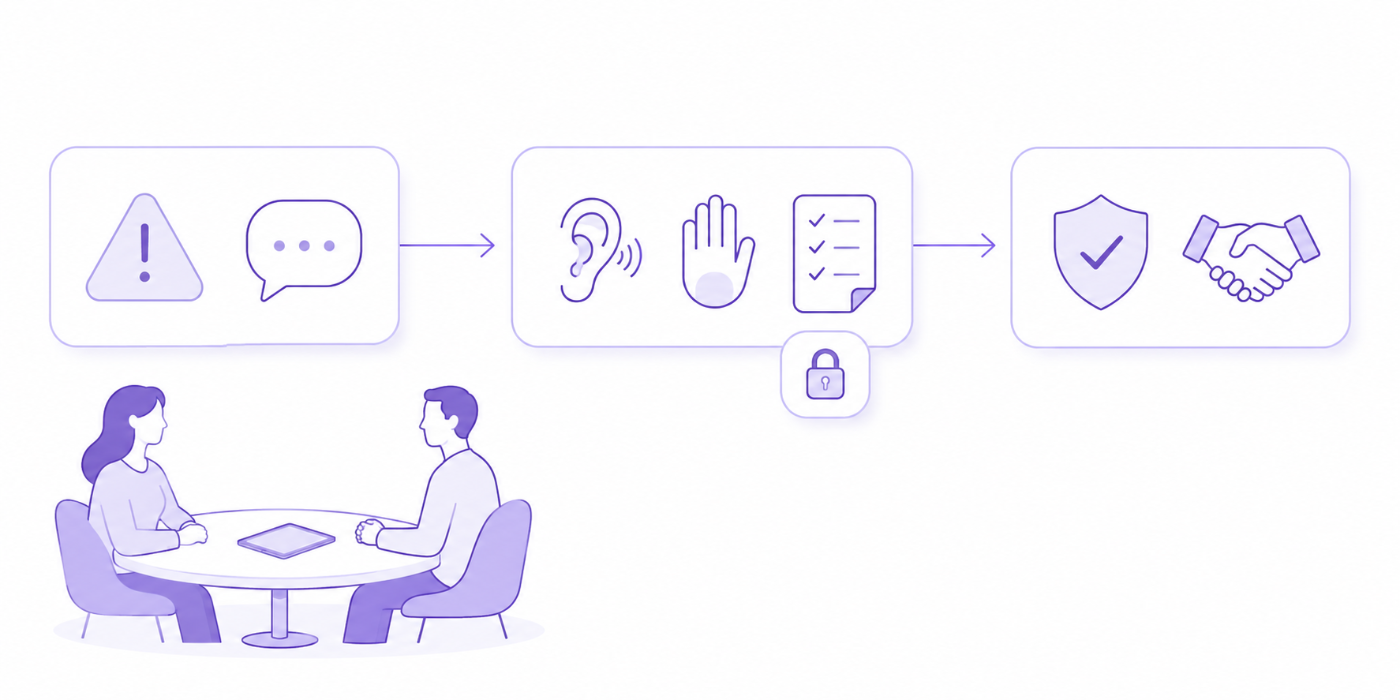
1. Why Difficult Client Situations Escalate Faster Than Coaches Expect
Difficult client moments escalate when the coach reacts to the surface behavior instead of the pressure underneath it. A client who cancels repeatedly may be overwhelmed, ashamed, under-supported, unclear about value, or quietly questioning the plan. A client who challenges every suggestion may be protecting themselves from disappointment. A client who pushes boundaries may never have understood the container. A coach who has studied effective listening techniques, powerful questioning, and client anxiety strategies can respond to the real issue instead of wrestling with symptoms.
The biggest mistake is personalizing the client’s dysregulation. When a client becomes defensive, misses tasks, argues with feedback, or goes silent, many coaches instantly question their own ability. That anxiety can lead to over-coaching, discounting, chasing, long apologetic messages, or lowering standards to keep the client comfortable. Professional response starts with calm assessment. The coach asks: What changed? What was unclear? What expectation was missed? What support is needed? What boundary must be restated? That approach protects client motivation, coaching integrity, and the safe coaching environment.
Many difficult situations come from weak setup. If your onboarding promises transformation without defining client responsibility, the client may expect rescue. If your session notes lack clear next steps, the client may feel abandoned between sessions. If your feedback style is too soft, the client may miss the seriousness of the pattern. If your communication rules are vague, the client may message at night, request extra support, or expect immediate replies. These are design problems, which means they can be repaired through coaching session templates, client dashboards, and accountability systems.
A professional coach separates compassion from compliance. Compassion means you listen carefully, validate the client’s experience, and adjust the plan when life demands it. Compliance means you abandon the coaching agreement to avoid discomfort. A client can be struggling and still need clear standards. A client can feel disappointed and still need responsibility. A client can be emotional and still need respectful communication. This distinction keeps the work grounded in ethical coaching principles, emotional consent, and constructive feedback.
| Client Situation | Likely Hidden Issue | Coach Response | Use This Tool | Boundary to Protect |
|---|---|---|---|---|
| Client repeatedly cancels sessions | Low priority, avoidance, schedule overload | Review commitment, timing, and session value | Expectation reset | Cancellation policy |
| Client ghosts between sessions | Shame, overwhelm, unclear next step | Send a short check-in with one concrete action | Accountability framework | No chasing beyond agreed follow-up |
| Client argues with every suggestion | Fear of failure or low trust | Ask what feels unsafe or unrealistic | Reflective listening | Respectful tone |
| Client wants instant results | Anxiety, desperation, poor timeline expectations | Define leading indicators and realistic milestones | Goal tracking | Outcome claims |
| Client shares a crisis mid-session | Need beyond coaching scope | Stabilize, pause agenda, refer appropriately | Crisis support protocol | Scope of practice |
| Client requests therapy-level support | Unmet clinical or emotional need | Clarify coaching role and suggest referral | Trauma-aware referral | Clinical boundaries |
| Client sends long emotional messages | Urgency, reassurance-seeking, unclear support rules | Acknowledge and redirect to session container | Message policy | Response time |
| Client blames the coach for slow progress | Disappointment, low ownership, vague progress tracking | Review actions, barriers, and measurable evidence | Feedback survey | Shared responsibility |
| Client overshares beyond session focus | Need for safety or emotional processing | Validate, summarize, and return to coaching goal | Emotional consent | Session agenda |
| Client refuses homework | Task mismatch, fear, overloaded life | Shrink the action and redesign the trigger | Habit formation | Client ownership |
| Client asks for constant advice | Low confidence, dependency pattern | Use questions before recommendations | Powerful questions | Coach-as-rescuer dynamic |
| Client pushes for discounts | Budget concern or value doubt | Restate offer value and payment options | Payment systems | Pricing integrity |
| Client challenges credentials | Trust gap or fear of wasting money | Explain training, scope, and method calmly | Credential clarity | Authority without defensiveness |
| Client compares you to another coach | Unclear differentiation | Clarify your method, container, and outcome path | Differentiation | Professional confidence |
| Client misses payments | Financial issue, avoidance, unclear policy | Pause service according to written agreement | Payment workflow | Service access |
| Client wants guaranteed outcomes | Fear, urgency, buying hesitation | Promise process, support, and standards | Professional standards | Guarantee language |
| Client dominates the session | Need for control or unstructured agenda | Time-box sharing and summarize decisions | Session template | Session structure |
| Client shuts down emotionally | Overload, shame, fear of judgment | Slow the pace and offer choice | Safety practices | Emotional pressure |
| Client wants you to decide for them | Low self-trust or fear of consequences | Use decision criteria and reflection | Empowerment coaching | Client agency |
| Client breaks confidentiality expectations | Unclear agreement or poor judgment | Restate privacy rules and document the incident | Confidentiality policy | Privacy |
| Client involves family members unexpectedly | Boundary blur or support confusion | Clarify consent, roles, and communication rules | Dual relationship check | Consent |
| Client returns after disappearing | Guilt, renewed urgency, unstable routine | Restart with a re-entry audit | Reset plan | Fresh commitment |
| Client becomes hostile | Escalated frustration or unsafe communication | Pause, name the standard, end if needed | Conflict resolution | Safety and respect |
| Client says coaching is not working | Value gap, wrong goal, weak measurement | Audit goals, behaviors, barriers, and fit | Feedback review | Honest evaluation |
| Client expects emergency availability | Misunderstood service container | Restate communication hours and crisis resources | Crisis protocol | Availability |
| Client wants nutrition or medical advice | Confusion about coaching scope | Support behavior change and refer clinical questions | Diet coaching scope | Medical limits |
| Client keeps repeating the same pattern | Wrong trigger, reward, environment, or support | Map the behavior loop and redesign one variable | Behavior change map | Practical experimentation |
| Client demands extra unpaid support | Entitlement, anxiety, unclear package limits | Restate package scope and offer paid options | Package clarity | Unpaid labor |
| Client wants to quit after a setback | All-or-nothing thinking | Normalize relapse learning and create a recovery plan | Positive reinforcement | Progress realism |
| Client praises you but avoids action | Comfort with insight, resistance to execution | Tie every insight to a specific next behavior | Immediate action | Action orientation |
2. Triage the Situation Before You Try to Fix It
The fastest way to mishandle a difficult client is to treat every problem with the same response. A missed homework task needs redesign. A hostile message needs a boundary. A trauma disclosure needs referral awareness. A billing dispute needs policy clarity. A disappointed client needs an evidence-based review. Triage gives you a professional sequence: stabilize the moment, identify the category, assess scope, choose the response, document what happened, and follow up inside the agreed container. This process turns emotional pressure into structured judgment.
Start by asking whether the situation is about safety, scope, standards, or strategy. Safety issues involve crisis, self-harm concerns, threatening behavior, abuse disclosures, or urgent distress requiring resources beyond coaching. Scope issues involve therapy, medical advice, nutrition prescriptions, diagnosis, legal advice, or crisis counseling. Standards issues involve disrespect, cancellations, nonpayment, confidentiality breaches, or communication boundary violations. Strategy issues involve poor follow-through, unclear goals, low motivation, weak habits, or misaligned coaching plans. Each category connects to different tools, from emotional crisis support to professional boundary techniques to habit formation tools.
When emotion is high, slow the session down. A coach can say, “Let’s pause for a moment and make sure we understand what is happening before we choose the next step.” That line gives the client dignity and gives the coach space. Then reflect the pattern: “You are feeling frustrated because you expected faster progress, and the last two weeks made the plan feel unrealistic.” Reflection lowers defensiveness because the client feels heard. After that, move into assessment: “What part of the plan broke first: time, energy, confidence, clarity, or support?” This kind of sequence uses effective coaching communication, listening techniques, and solution-focused coaching.
Documentation is part of client care. After a difficult session, write what happened, what the client expressed, what you clarified, what was agreed, what resources were shared, and what follow-up is needed. Keep notes factual, plain, and respectful. Avoid emotional labels like “manipulative” or “lazy.” Use observable language: “Client reported feeling overwhelmed and missed three agreed actions.” This protects continuity, especially when you are using client session recording tools, custom dashboards, or coaching resource hubs.
A pro also knows when to pause the coaching agenda. If a client arrives dysregulated, grieving, panicked, or angry, forcing the original plan can damage trust. The coach may shift to grounding, reflection, choice, and referral support. With grief, trauma, emotional crisis, or severe burnout, the coach should stay within supportive coaching and refer beyond scope when needed. This is where training in grief coaching support, burnout coaching, and PTSD-aware coaching limits becomes essential.
3. Use Repair Conversations Instead of Defensive Explanations
A repair conversation is a structured dialogue that restores clarity, responsibility, and trust. It starts with the client’s experience, moves into evidence, clarifies the coaching agreement, and ends with a concrete decision. Defensive explanations usually make the coach sound anxious. Repair conversations make the coach sound grounded. The difference is visible in language. Instead of saying, “I already told you this in onboarding,” say, “Let’s revisit the agreement so we both know what support looks like from here.” That protects deep client trust, coaching standards, and client experience.
Use a five-part repair framework: acknowledge, clarify, assess, decide, document. Acknowledge the emotional reality without accepting a false accusation. Clarify the facts without sounding cold. Assess the gap between agreement and experience. Decide what changes, continues, pauses, or ends. Document the next step. This framework works for complaints, missed expectations, shaky motivation, repeated cancellations, and boundary confusion. It also aligns beautifully with client feedback systems, surveys that improve outcomes, and case study thinking.
For a client who says, “This is not working,” the pro response is direct: “Let’s look at that carefully. We’ll review the goal, the actions taken, the barriers that showed up, and whether the current plan still fits.” That sentence avoids panic and moves the client into evidence. Then ask, “Which part feels most broken: the goal, the pace, the support, the strategy, or your capacity right now?” This question prevents vague disappointment from swallowing the session. It also creates a better path toward behavior change, client empowerment, and real client results.
For a client who keeps missing action steps, lower the friction before raising the pressure. Ask what made the task too heavy, where the trigger failed, what emotion appeared before avoidance, and what smaller version could happen on a bad day. Many clients need “minimum viable follow-through,” especially during stress. A tiny action that survives real life often beats a perfect plan that collapses by Wednesday. Coaches who understand habit formation, positive reinforcement, and immediate action can convert failure patterns into practical experiments.
For a client who becomes rude, the response needs warmth and steel. Try: “I want to support you, and I need our conversation to stay respectful. We can pause for two minutes, or we can reschedule when this feels easier to discuss.” That statement gives choice while protecting the container. If hostility continues, end the session and document the incident. Respect is a working condition, not a luxury. Strong coaches practice conflict resolution, difficult conversations, and career-ending mistake prevention before pressure hits.
4. Protect Boundaries Without Making the Client Feel Rejected
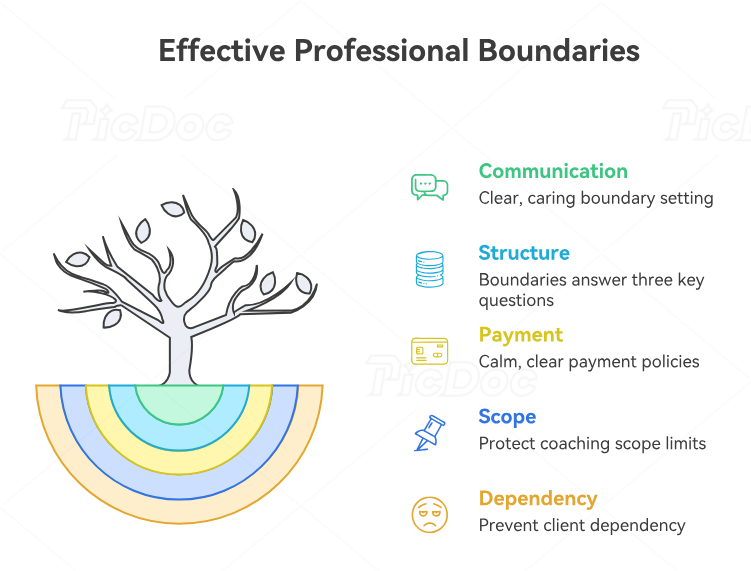
Boundaries fail when they sound like punishment. Professional boundaries should sound like clarity, care, and consistency. A client who requests extra messaging may be anxious, but the answer can still be firm: “I want your support to be useful and sustainable, so message reviews happen inside the weekly check-in form and our session agenda.” This type of sentence protects the coach’s time while giving the client a reliable path. It supports professional boundaries, client trust, and coaching confidentiality.
Every boundary should answer three questions: what is allowed, what happens instead, and why it helps the client. “I do not provide emergency support by text” is incomplete. A stronger version is: “For urgent safety concerns, use local emergency resources or your licensed provider. For coaching questions, send them through the weekly form so we can address them with full attention.” That wording protects scope while giving the client direction. It also reflects ethical responsibilities, emotional crisis support, and safe coaching structure.
Payment boundaries require the same calm. Coaches often create resentment by continuing services after missed payments, then becoming frustrated when the client expects more flexibility. A clean policy should explain due dates, failed payment handling, pause rules, refunds, upgrades, downgrades, and package access. This keeps money conversations from becoming emotional power struggles. Strong payment systems protect both parties and connect directly to coaching business payment workflows, financial forecasting, and coaching business benchmarking.
Scope boundaries are especially important for health and life coaches. A client may ask, “What supplement should I take?” “Is this a trauma response?” “Should I stop my medication?” “Can you tell my partner why they are wrong?” These questions can pull a coach into risky territory. A strong response is: “That question belongs with a licensed medical or mental health professional. I can help you prepare questions for that provider and support the behavior changes you choose after receiving appropriate guidance.” This preserves health coaching scope, mental health coaching awareness, and ethical coaching practice.
Strong boundaries also prevent dependency. A client who needs the coach to approve every decision may feel safer in the moment, yet long-term dependency weakens transformation. The coach’s job is to build the client’s decision-making capacity. Use frameworks, reflection prompts, values checks, and tiny experiments. Ask, “What would you choose if you trusted your own data from the last two weeks?” or “Which option matches the person you are trying to become?” This supports client empowerment, life mapping, and journaling prompts.
5. Turn Difficult Situations Into Better Systems
Every difficult client situation should improve your coaching system. If three clients misunderstand your messaging policy, your onboarding is unclear. If clients repeatedly miss action steps, your habit design may be too ambitious. If clients complain about value, your progress tracking may be weak. If clients push for extra support, your packages may lack clear tiers. Difficult moments are operational feedback. Coaches who study these patterns build stronger offers, better communication, and more resilient client experiences.
Create a “difficult situation review” after each incident. Record the trigger, the client’s concern, your response, the outcome, and what system needs improvement. Then update one asset: onboarding checklist, agreement, welcome email, session agenda, progress tracker, feedback form, payment policy, referral list, or boundary script. This habit transforms discomfort into professional growth. It also strengthens coaching resource libraries, client feedback systems, and custom coaching dashboards.
Use prevention scripts before conflict appears. During onboarding, say: “At some point, life may interrupt your plan. When that happens, our goal is to adjust quickly instead of disappearing or judging the setback.” This one sentence normalizes repair. Also explain what happens if the client misses sessions, loses motivation, faces emotional overwhelm, wants extra messaging, or needs help beyond coaching scope. Prevention reduces shame because clients know setbacks have a pathway. It supports managing expectations, transformational coaching, and lasting behavior change.
Build escalation levels for common problems. Level one is a reminder. Level two is a reset conversation. Level three is a written boundary. Level four is a service pause or referral. Level five is termination according to agreement. When coaches lack escalation levels, they either tolerate too much or overreact too quickly. A documented sequence keeps responses fair, consistent, and less emotionally draining. This protects coaching integrity, dual relationship management, and ethical dilemma handling.
The best client recovery systems include feedback loops. Ask clients at key points: What feels most useful? What feels unclear? Where are you losing momentum? What support would make follow-through easier? Which part of the process feels too heavy? These questions catch dissatisfaction before it becomes resentment. They also make the client feel involved in the coaching design. That creates stronger retention, better testimonials, and cleaner case studies through client testimonials capture, case study credibility, and loyalty-building client experiences.
Coaches also need self-review. After a hard client conversation, ask yourself: Did I stay inside scope? Did I listen before correcting? Did I protect the agreement? Did I document facts? Did I avoid rescuing? Did I offer a clear next step? Did I refer when needed? This turns difficult work into mastery. Professional growth comes from reviewing pressure moments honestly, then strengthening the method through continuous coaching education, coaching toolkit development, and future-proof coaching practice.
6. FAQs
-
Start by lowering threat. Reflect what you hear, ask what feels inaccurate or hard to receive, then connect the feedback to the client’s stated goal. A useful line is: “I want this feedback to support your goal, so let’s slow down and identify which part feels uncomfortable.” This keeps the conversation collaborative while still direct. Coaches should practice constructive feedback, effective listening, and powerful questioning before difficult moments happen.
-
Treat missed action as data. Ask where the plan broke: time, energy, confidence, clarity, environment, or emotional resistance. Then shrink the action until it can survive a bad day. A client who cannot do a 40-minute routine may still complete a two-minute reset, one journal prompt, or one meal decision. Build from consistency before intensity. Use habit formation, behavior change science, and goal tracking tools.
-
Use kind clarity: “I want your support to stay useful and sustainable. Coaching questions are reviewed during our agreed check-in window, and urgent safety concerns should go to emergency or licensed support resources.” This protects the client from expecting unavailable care and protects the coach from burnout. The same policy should appear in onboarding, agreements, and welcome materials. Strengthen this through professional boundaries, confidentiality practices, and safe coaching environments.
-
Refer when the client needs diagnosis, treatment, crisis care, trauma therapy, medical advice, medication guidance, legal guidance, or specialized support outside your training. You can still support the client with goal clarity, preparation questions, behavior planning, and follow-through after they receive appropriate guidance. Referral is a sign of professionalism. It protects the client, the coach, and the relationship. Review emotional crisis support, PTSD and trauma boundaries, and ethical coaching responsibilities.
-
Move the conversation from blame to evidence. Review the original goal, actions taken, missed steps, obstacles, support provided, and measurable progress. Ask, “What part of the process feels least aligned right now?” This gives the client a way to express disappointment without turning the session into accusation. Then decide whether to adjust the goal, change the plan, increase accountability, or discuss fit. Use client feedback tools, accountability coaching, and client expectation management.
-
Document facts, decisions, referrals, agreements, and follow-up steps. Write neutrally and avoid emotional judgments. For example: “Client reported frustration with progress, identified missed action steps due to work stress, agreed to a smaller daily routine, and requested a check-in form.” Clear documentation helps continuity and protects the professional container. It also helps coaches improve systems through coaching dashboards, session templates, and resource hubs.
-
State the communication standard once, offer a pause or reschedule, and end the session if hostility continues. A calm script is: “I want to continue this productively, and the conversation needs to stay respectful. We can pause or reschedule.” Document what happened afterward. Repeated hostility may justify ending the relationship according to your agreement. Prepare for these moments with conflict resolution strategies, difficult conversation skills, and career mistake prevention.
