
Franchising Your Coaching Method: Step-by-Step Guide for Rapid Growth
Franchising your coaching method can turn personal expertise into a scalable growth system, but only when the method is clear enough to teach, protect, measure, and repeat. Coaches who want rapid expansion need more than demand; they need operating standards, brand rules, training assets, ethical guardrails, and a delivery model that keeps client outcomes strong. A franchise-ready method grows from coaching mastery, client trust, professional boundaries, and repeatable coaching results.
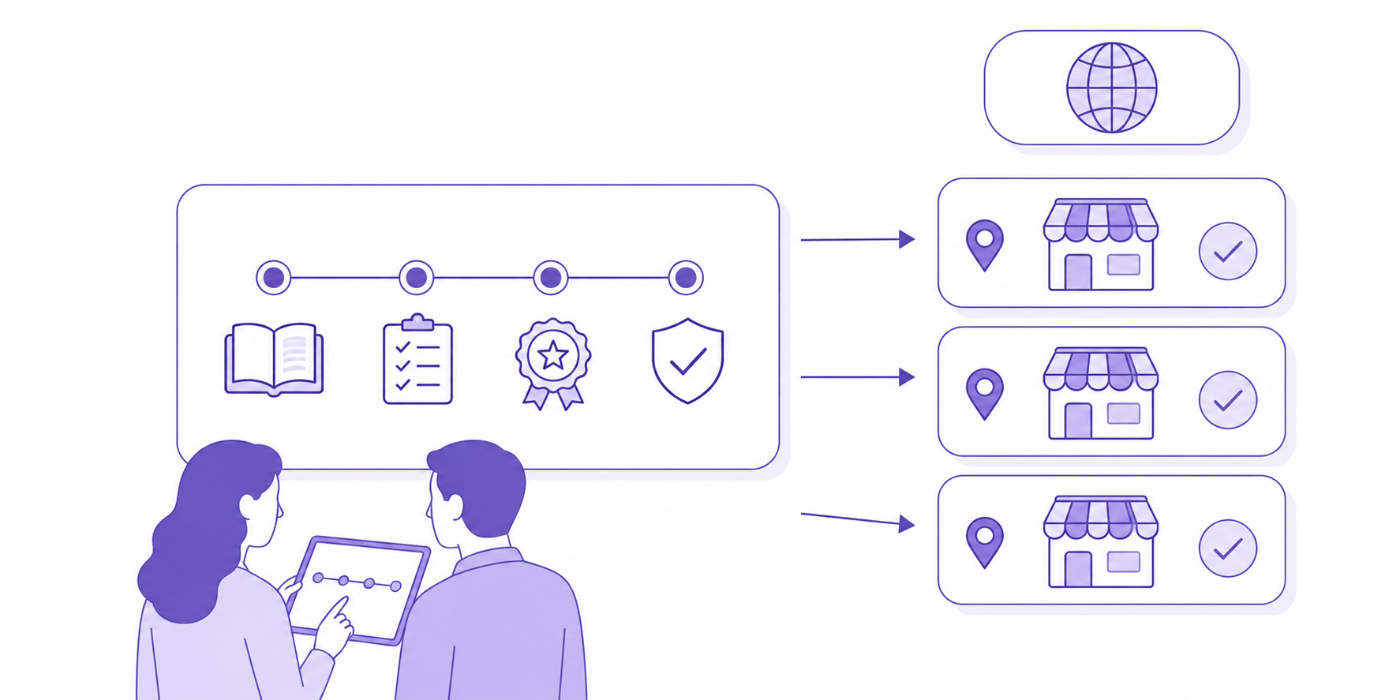
1. Turn Your Coaching Method Into a Replicable Operating System
A coaching method becomes franchise-ready when another trained coach can deliver it without guessing what to say, what to measure, how to handle client resistance, or where the client journey should go next. The founder’s first job is to translate instinct into structure. That means documenting the intake process, client pathway, session rhythm, progress markers, feedback loops, referral points, and communication standards. A strong method should connect coaching session templates, powerful questioning techniques, client accountability, and behavior change science into a repeatable operating system.
The first step is naming your transformation model. Franchisees need a simple way to explain what the method does, who it serves, and why it works. For example, a health coach may build a “90-Day Energy Reset Method,” while a life coach may build a “Decision Confidence Framework.” The name should communicate the outcome without exaggeration. Strong method positioning grows from profitable coaching niches, client preference trends, future-proof coaching strategy, and coaching market insights.
The second step is building your client journey in phases. A franchisee should know what happens during discovery, onboarding, assessment, goal design, implementation, review, renewal, and completion. Each phase needs clear objectives, coach actions, client actions, tools, warning signs, and success indicators. This prevents the franchise from becoming a loose collection of personal styles. Method clarity can be strengthened through goal tracking tools, custom coaching dashboards, client feedback tools, and coaching resource hubs.
The third step is identifying what makes your method protectable. A generic “coaching program” will be hard to franchise because buyers need a reason to pay for your system instead of creating their own. Your protectable edge may be a signature assessment, a branded worksheet sequence, a coaching protocol, a client dashboard, a niche-specific toolkit, a training certification, or a proprietary way of diagnosing client patterns. This brand value becomes stronger when paired with coaching toolkit design, case study templates, testimonial capture, and certification differentiation.
2. Build the Franchise Model: Brand, Curriculum, Delivery, and Licensing
The franchise model should define what the franchisee is buying. They may be buying a brand, a curriculum, a client acquisition system, a training certification, a technology stack, territory rights, ongoing supervision, marketing assets, and access to a proven method. Each part needs documentation because vague promises create weak operators and frustrated clients. A strong model draws from coaching resource library design, online course systems, virtual coaching tools, and coaching automation.
Start with the brand layer. Franchisees need approved language for the origin story, mission, ideal client, method promise, values, visual tone, website copy, discovery calls, and local marketing. Without brand rules, each franchisee will describe the method differently, which weakens trust across the network. The brand layer should also define how franchisees use credentials, testimonials, logos, client stories, and professional claims. This supports health coach credential clarity, coaching integrity, trust and credibility, and ethical coaching principles.
Then build the curriculum layer. Franchisees should learn the founder’s method through modules, practice drills, competency checks, role-play scenarios, client case reviews, and graded delivery standards. The curriculum should teach both the “what” and the “why” behind the method. A coach who understands the principle behind a tool can adapt ethically without damaging the process. This is where essential coaching skills, NBHWC competencies, effective coaching communication, and coaching certification resources become useful training anchors.
Delivery rules matter as much as curriculum. Decide whether the franchise will offer one-on-one coaching, group coaching, corporate programs, online courses, workshops, memberships, retreats, or hybrid packages. Each format needs its own scope, pricing logic, staffing needs, technology requirements, quality checks, and client success measures. A group model may require facilitation training, while a premium one-on-one model may require deeper assessment skill. Strong delivery design can use interactive workshops, virtual retreat platforms, video conferencing practices, and client engagement trends.
Franchising also needs legal and financial structure. A coach should work with qualified franchise counsel and financial advisors before selling rights, charging royalties, assigning territories, licensing trademarks, or collecting franchise fees. The strategy should define upfront fees, ongoing royalties, required software costs, marketing contributions, renewal terms, quality obligations, termination standards, and support expectations. These decisions affect both speed and sustainability, so founders should pair growth ambition with financial forecasting, payment systems, tax planning awareness, and benchmarking insights.
3. Protect Quality With Training, Standards, and Audits
Rapid growth becomes dangerous when the founder mistakes demand for readiness. A coaching franchise can attract eager operators, but enthusiasm will never replace training. Franchisees need certification standards, supervised practice, live assessment, written exams, mock sessions, case review, and ongoing support. Quality control should begin before the first client is served. A franchise built around client trust needs strong foundations in coaching standards, safe coaching environments, professional boundaries, and confidentiality practices.
The strongest franchises create a coach competency rubric. The rubric should measure listening quality, question precision, ethical scope, session structure, emotional safety, feedback skill, progress tracking, documentation accuracy, and client follow-through support. This gives franchisees a clear growth path and gives the founder a consistent way to evaluate delivery. A coach who struggles with challenge, boundaries, or accountability can be supported before client trust suffers. Useful foundations include effective listening, constructive feedback, managing difficult conversations, and conflict resolution.
Documentation should be practical rather than ceremonial. Franchisees need checklists they will actually use: intake checklist, session note template, referral checklist, progress review form, client risk escalation process, renewal conversation guide, and testimonial request template. This keeps the system usable during busy weeks. It also helps the brand capture evidence of outcomes without depending on memory. Strong documentation connects with client session tools, client testimonials, case study templates, and custom coaching dashboards.
Quality audits should review client outcomes, franchisee behavior, marketing claims, session delivery, documentation, retention, refunds, complaints, and testimonial quality. The audit should feel like performance coaching for franchisees, with clear expectations and improvement plans. Founder-led supervision, peer review groups, monthly office hours, and continuing education can keep standards high while giving operators room to improve. A healthy quality culture benefits from interactive coaching communities, continuous education, client feedback growth, and exceptional client experiences.
4. Create the Sales, Onboarding, and Support Engine for Franchisees
Franchise growth depends on attracting the right operators, not simply the most interested buyers. A franchisee should understand coaching ethics, client service, local marketing, sales conversations, operations, and follow-through. The founder should create an application process that screens for values, communication style, business readiness, coaching skill, financial capacity, and willingness to follow systems. This protects the brand from poor-fit operators and supports stronger growth through coaching integrity, client trust, business benchmarking, and coaching business growth.
The franchisee sales process should feel consultative. Prospective operators need to understand the method, market opportunity, investment requirements, daily work, support structure, quality expectations, and realistic timeline for growth. Overselling the opportunity will create future conflict. Strong recruitment should reveal the work behind the brand, including lead generation, client management, documentation, community building, and local reputation development. This process can be supported by networking strategy, digital marketing tools, SEO tools for coaches, and content clients love.
Franchisee onboarding should have a first 30-day, 60-day, and 90-day plan. The first month should focus on brand immersion, training completion, tech setup, practice sessions, local market preparation, and launch planning. The second month should focus on lead generation, supervised delivery, client onboarding practice, and quality review. The third month should focus on performance data, refinement, testimonial capture, and retention systems. This launch plan pairs well with automated email sequences, CRM tools, payment systems, and virtual coaching tools.
The support engine should continue after launch. Franchisees need office hours, performance reviews, marketing campaigns, updated training, script libraries, client handling guides, community calls, and troubleshooting channels. The founder should track which franchisees produce strong outcomes and identify why. Those insights can improve training, sales pages, onboarding, and client experience across the network. A mature support engine grows through client feedback systems, coaching automation, interactive communities, and future coaching trends.

5. Scale Rapidly Without Diluting the Client Experience
The biggest danger in rapid franchising is dilution. One weak operator, inflated promise, sloppy intake, or mishandled client complaint can damage the whole brand. Growth should move through controlled pilots before broad expansion. Start with a small number of operators who can test the method in different markets, client types, or delivery formats. Review client outcomes, franchisee workload, marketing performance, retention, refund requests, and operational bottlenecks before adding more locations. Sustainable scale depends on client experience design, trust building, ethical coaching principles, and feedback-driven growth.
Scaling also requires a founder transition. The founder moves from being the primary expert to being the standard-setter, trainer, auditor, brand strategist, and network leader. This can feel uncomfortable because the founder’s identity may be tied to personal client results. The new role is to make the method strong enough that results can happen through others. That leadership shift is easier when the founder uses coaching mastery principles, leadership through client outcomes, resource hub design, and technology-supported coaching.
The client experience should remain consistent across every franchisee touchpoint. The first inquiry, consultation, intake, first session, check-in, progress review, renewal conversation, and testimonial request should feel aligned with the same brand promise. Consistency does not require robotic coaching. It requires shared standards with room for coach personality inside the method. Clients should feel the brand’s values in how they are welcomed, challenged, supported, protected, and celebrated. This can be strengthened through communication techniques, safe coaching environments, progress tracking, and positive reinforcement.
Rapid growth also needs honest numbers. Track franchisee acquisition cost, training cost, support hours, average client value, retention rate, client completion rate, refund rate, lead conversion, royalty revenue, franchisee profitability, and founder workload. These numbers show whether the model is truly scalable or simply exciting. Expansion should increase brand strength, client outcomes, and operator success at the same time. Coaches can manage this growth through financial forecasting, industry standards, coaching market forecasts, and future-proof practice planning.
6. FAQs: Franchising Your Coaching Method for Rapid Growth
-
Your method is ready when it can be documented, taught, measured, protected, and delivered by trained coaches with consistent client experience. You should have clear phases, repeatable tools, ethical boundaries, client proof, training materials, and quality standards. If your method still depends heavily on instinct, start by building session templates, coaching toolkits, case study proof, and client feedback systems.
-
Document the client journey, intake process, session structure, coaching tools, sales script, marketing language, boundaries, confidentiality rules, referral process, pricing, technology stack, onboarding sequence, and quality audit system. Every document should help franchisees deliver with less confusion and more consistency. Strong documentation can be built from coaching resource hubs, client dashboards, automated email sequences, and professional standards.
-
The right model depends on your growth goals, control needs, legal obligations, support capacity, brand protection needs, and revenue plan. Franchising usually requires deeper legal structure and brand control, while licensing or certification may fit a lighter expansion model. Work with qualified counsel before selling rights or collecting fees. Strategy planning should include financial forecasting, payment systems, business benchmarks, and ethical coaching practices.
-
Create training, certification standards, required tools, approved scripts, brand guidelines, client journey maps, audit scorecards, and continuing education. Give franchisees enough structure to protect outcomes and enough coaching judgment to serve real clients well. The balance comes from clear standards and ongoing support. Helpful systems include coach competency development, constructive feedback, quality-focused client feedback, and coaching communities.
-
Franchisee training should include method philosophy, client journey, ethics, scope, intake, session delivery, tools, documentation, sales, local marketing, technology, client retention, difficult conversations, and quality audits. Include role-play, mock sessions, case studies, quizzes, supervised practice, and launch support. Strong training can draw from effective listening, powerful questioning, coaching communication, and continuous coaching education.
-
Show a clear method, market demand, training support, brand credibility, marketing assets, technology systems, client proof, and realistic financial expectations. Serious operators want a system they can trust, not just a name they can use. Build confidence with testimonial capture, case studies, digital marketing tools, and coaching industry trends.
