
Epigenetics is becoming a magnet for bold wellness claims, expensive biological-age tests, and promises that lifestyle choices can “switch genes on and off.” Coaches need a sharper standard. The field can strengthen preventative health coaching, deepen the science of behavior change, improve habit formation strategies, and support more personalized lifestyle coaching. Credible practice begins with accurate interpretation, disciplined scope boundaries, and interventions measured through real client outcomes.
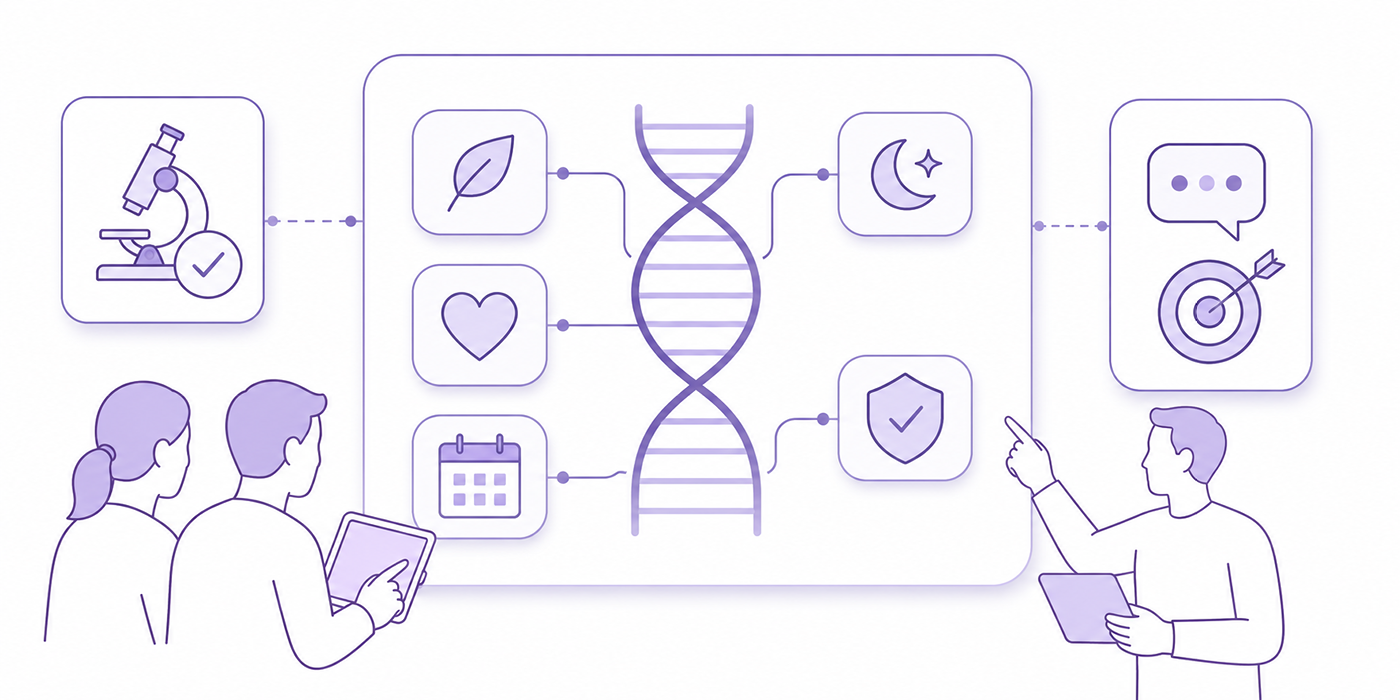
1. What Epigenetics Actually Means for Coaches
Epigenetics studies changes in gene regulation that occur without altering the underlying DNA sequence. Chemical modifications involving DNA, DNA-associated proteins, and regulatory processes can influence when genes are more or less active within particular cells. DNA methylation is one widely studied mechanism, alongside histone modifications and regulatory RNA activity. Coaches can use this concept to explain that biology responds dynamically to development, aging, environment, and exposure. Claims that a single affirmation, food, supplement, or coaching session directly “rewrites DNA” exceed what the science can support.
The practical coaching relevance sits inside the relationship between daily behavior and long-term health. Physical activity, sleep routines, nutrition patterns, smoking exposure, alcohol use, stress load, social conditions, and environmental factors can influence physiology through numerous interacting pathways. Epigenetic regulation may participate in some of those pathways. A coach can therefore combine habit formation tools, client accountability systems, anxiety and stress coaching, guided imagery techniques, and behavioral transformation strategies around one responsible message: repeated behavior creates biological consequences, while individual outcomes remain influenced by genetics, environment, access, medical status, and chance.
This distinction matters because clients often arrive with genetic fatalism. They may believe a family history of diabetes, cardiovascular disease, depression, obesity, or dementia makes their future inevitable. Another client may interpret epigenetics as proof that complete biological control is available through sufficient discipline. Both beliefs can produce harm. Fatalism reduces action, while exaggerated control creates guilt when symptoms persist. Coaches should build realistic agency through strength-based coaching, careful client expectation management, practical micro-coaching, supportive emotional intelligence coaching, and an emotionally safe coaching environment.
Epigenetic clocks require particular caution. These tools use patterns of DNA methylation to estimate chronological age, mortality-related risk, physiological aging, or the pace of aging, depending on how each clock was constructed. HorvathAge, PhenoAge, GrimAge, GrimAge2, and DunedinPACE measure related yet distinct phenomena. Different clocks can produce different conclusions from the same person, tissue, or intervention. Blood-cell composition, population characteristics, laboratory processing, algorithm design, and the health outcomes used during training can all affect interpretation. Research comparisons increasingly favor newer clocks for disease-association studies, though researchers still describe biological aging as lacking one universal gold-standard measure.
For coaches, an epigenetic-age result should function as background information supplied by the client, never as a diagnosis, treatment target, or verdict on personal worth. A result reading “six years older” cannot reveal exactly which behavior caused it, which organ system is affected, or what precise intervention will change it. Coaches should redirect attention toward validated health behaviors, functional outcomes, and appropriate medical follow-up. That approach supports ethical coaching practice, responsible scope-of-practice decisions, stronger constructive feedback, clearer client experiences, and better coaching case studies.
The biggest coaching pain point emerges when sophisticated language replaces useful action. Clients do not benefit from hearing that stress “methylates genes” when they still lack a workable bedtime, a realistic movement routine, a plan for preparing food, or a strategy for requesting support. The coach’s responsibility is to convert biological context into one repeatable behavior. This requires coaching automation, focused habit tracking, effective client feedback systems, suitable coaching technology, and a recovery plan for inevitable disruption.
Epigenetics in Coaching: 30 Claims, Evidence Limits, and Safe Coaching Responses
| Claim or Client Question | Scientific Interpretation | Coach-Safe Response | Useful Action | Red Flag to Avoid |
|---|---|---|---|---|
| “Can I change my genes?” | Behavior does not rewrite the inherited DNA sequence. | Explain that health behaviors can influence physiology and some gene-regulation processes. | Select one modifiable behavior connected to the client’s goal. | Promising genetic reprogramming. |
| “Can coaching turn healthy genes on?” | Gene regulation is tissue-specific, context-dependent, and biologically complex. | Use gene expression as background education rather than a guaranteed outcome. | Track behavior, symptoms, function, and medical indicators. | Assigning one behavior to one gene. |
| “My family has diabetes, so I will get it.” | Family history can affect risk without determining an individual outcome. | Separate inherited risk from controllable prevention behaviors. | Build a physician-aligned movement, nutrition, sleep, and monitoring plan. | Minimizing legitimate genetic risk. |
| “Lifestyle gives me complete control.” | Health emerges from biology, behavior, healthcare, environment, and social conditions. | Build agency around controllable actions while acknowledging limits. | Create a control, influence, and acceptance map. | Blaming clients for illness. |
| “My biological age is older than me.” | Epigenetic age is an algorithmic estimate whose meaning depends on the clock used. | Encourage clinical interpretation before changing health decisions. | Review established health behaviors and existing medical advice. | Treating the result as a diagnosis. |
| “Can I reverse my biological age?” | Some studies report changes in certain clocks, with variable and often small effects. | Frame the goal around healthspan, function, and sustainable behavior. | Measure energy, fitness, sleep regularity, and adherence. | Guaranteeing a younger test score. |
| “Which epigenetic clock is best?” | Clocks are trained for different purposes and can disagree. | Refer technical interpretation to qualified researchers or clinicians. | Ask what clock was used, why, and how results will guide care. | Comparing scores from incompatible tests. |
| “Should I retest every month?” | Short-term variation may reflect noise, cell composition, or assay differences. | Discourage compulsive testing and focus on stable behaviors. | Use weekly process measures instead. | Building anxiety around minor score changes. |
| “Exercise changes DNA methylation.” | Exercise interventions can affect methylation patterns, though results vary. | Recommend movement for established health and functional benefits. | Build frequency gradually around ability and medical guidance. | Prescribing exercise to target specific methylation sites. |
| “Which workout makes genes younger?” | No universal workout produces a predictable individual epigenetic outcome. | Personalize around safety, preference, capacity, and consistency. | Track minutes, strength, mobility, or recovery. | Using an epigenetic claim to sell one exercise method. |
| “Can food repair my epigenome?” | Diet affects health through many mechanisms, including pathways involving gene regulation. | Use evidence-based dietary patterns and stay within scope. | Choose one meal-level improvement the client can maintain. | Claiming a food erases harmful epigenetic marks. |
| “Do methyl-donor supplements reverse aging?” | Supplement effects depend on dose, health status, interactions, and study design. | Refer supplement decisions to an appropriately qualified professional. | Document the product and encourage medication-interaction review. | Prescribing supplements from a test score. |
| “Does poor sleep age my genes?” | Sleep is linked with health and biological-aging pathways, though individual causality is complex. | Focus on regularity, opportunity, environment, and clinical sleep concerns. | Create one consistent wake-time target. | Using fear to force perfect sleep. |
| “Does stress damage my DNA?” | Stress responses affect multiple biological systems; DNA damage and epigenetic regulation are distinct concepts. | Use precise language and assess stress sources. | Reduce one recurring demand or strengthen one recovery resource. | Calling every stressful experience cellular damage. |
| “Can breathing exercises change gene expression?” | Mind-body practices may influence stress physiology; precise gene-level claims remain context-dependent. | Present breathing as a regulation and recovery tool. | Measure perceived tension before and after practice. | Promising molecular healing from one technique. |
| “Did trauma alter my genes?” | Trauma can affect health and behavior through many pathways; individual epigenetic conclusions require specialized evidence. | Validate the impact while staying within coaching scope. | Support routines, resources, boundaries, and clinical referral. | Interpreting trauma through unverified gene claims. |
| “Did I inherit my parent’s trauma epigenetically?” | Human transgenerational epigenetic inheritance remains difficult to establish conclusively. | Explore family learning, relationships, beliefs, and present-day patterns. | Identify one current pattern the client wants to change. | Presenting inherited trauma biology as confirmed fact. |
| “Can positive thinking repair epigenetic damage?” | Positive cognition can support coping and action; direct molecular repair claims are unsupported. | Connect mindset work to observable behavior. | Use realistic reframing followed by one concrete step. | Making clients responsible for thinking away illness. |
| “Does gratitude slow aging?” | Gratitude may support well-being and relationships; epigenetic effects are not individually predictable. | Use gratitude when it fits the client’s emotional readiness. | Record one specific source of support. | Using gratitude to suppress distress. |
| “Can social connection affect biology?” | Social conditions and relationships are associated with many health pathways. | Assess the quality, safety, and availability of support. | Plan one specific request or meaningful interaction. | Assuming every relationship is protective. |
| “My score proves I am unhealthy.” | A single biomarker cannot summarize total health. | Place the result beside symptoms, function, clinical history, and established markers. | Prepare questions for the client’s healthcare professional. | Allowing one number to define identity. |
| “My score improved, so the plan worked.” | Change may reflect intervention effects, normal variation, or measurement differences. | Review multiple outcomes before drawing conclusions. | Compare adherence, function, symptoms, and clinical markers. | Claiming causation from one before-and-after test. |
| “My score worsened, so I failed.” | A test change does not establish personal failure. | Remove moral judgment and investigate context. | Review illness, stressors, adherence, testing conditions, and support. | Using shame as motivation. |
| “Can an app personalize my epigenetic plan?” | Algorithms are limited by data quality, training populations, and validation. | Use apps for organization rather than medical interpretation. | Track behaviors the client has chosen with informed consent. | Outsourcing clinical judgment to software. |
| “Should my coach store my raw test report?” | Genomic and biomarker information can be highly sensitive. | Collect only information necessary for the coaching service. | Use secure systems and written retention policies. | Uploading reports into unsecured tools. |
| “Can you interpret my methylation panel?” | Interpretation may require laboratory, genetics, aging, and clinical expertise. | Explain the coaching boundary clearly. | Refer to the ordering clinician or qualified specialist. | Guessing from a commercial dashboard. |
| “Can epigenetics identify my perfect diet?” | Current tests cannot reliably determine one universally optimal personal diet. | Base coaching on medical needs, preferences, access, and adherence. | Test one realistic nutrition behavior. | Overpromising precision nutrition. |
| “Why can’t I maintain the recommended plan?” | Knowledge rarely removes environmental, financial, emotional, and practical barriers. | Investigate friction before adding information. | Simplify the behavior and redesign the environment. | Calling the client unmotivated. |
| “Does poverty affect biological aging?” | Social and economic conditions can shape exposure, stress, healthcare access, and health behavior. | Include structural constraints in the coaching assessment. | Build the best available plan within current resources. | Reducing health inequality to personal choices. |
| “What should an epigenetics-informed coach measure?” | Coaching measures should reflect the client’s behavior and functional goal. | Use one process measure and one meaningful outcome measure. | Review data at an agreed interval and adjust. | Making epigenetic age the sole success metric. |
2. What the Science Supports and Where Coaches Must Slow Down
The strongest foundation for epigenetics-informed coaching remains familiar: regular movement, nutritious eating patterns, restorative sleep opportunities, reduced tobacco exposure, appropriate alcohol decisions, social support, stress-management resources, and access to healthcare contribute to health. Epigenetic research may help explain part of the biological response to these conditions. It does not replace the extensive clinical and public-health evidence supporting them. This keeps the coach focused on preventative health strategies, nutrition and lifestyle coaching, habit-building science, client accountability, and sustainable behavior-change planning.
Exercise research illustrates both the promise and the limitations. A 2024 systematic review of randomized controlled trials found that many exercise interventions were associated with changes in global or gene-specific DNA methylation, though the included studies differed in population, duration, exercise type, tissue sampling, and analytical methods. A 2025 population study also found associations between higher physical activity and younger estimates across several epigenetic clocks. These findings support movement as a valuable health behavior. They cannot tell an individual coach which methylation sites will change or guarantee that a client’s biological-age score will improve.
Lifestyle-intervention trials provide similarly measured reasons for interest. The CALERIE trial found that two years of caloric restriction produced a small slowing in DunedinPACE while several other epigenetic-age measures showed no significant change. A three-year DO-HEALTH analysis reported small effects from omega-3 supplementation across some clocks, with effect estimates equivalent to only several months and varying by measure. A 2026 randomized trial in frail older adults associated a multidomain lifestyle intervention with favorable changes in some aging markers and functional outcomes. The appropriate conclusion is that certain interventions may affect selected epigenetic measures under defined conditions. The clinical significance, durability, generalizability, and individual predictability continue to require careful study.
Coaches should therefore separate three levels of evidence. Established health value includes behaviors supported by broad outcome evidence, such as movement, smoking cessation support, sleep care, and appropriate nutrition. Emerging biomarker evidence includes studies showing associations or modest intervention-related changes in DNA methylation measures. Speculative personalization includes selecting a supplement, mindset exercise, diet, or training program because a commercial report claims it will modify a particular gene pathway. This hierarchy improves client feedback conversations, protects mental health coaching boundaries, supports responsible health-coaching scope, and reduces credentialing mistakes.
Epigenetic clocks can provide valuable population-level research signals. Newer studies have linked longitudinal changes in some clocks with mortality risk and compared numerous clocks across disease outcomes. Population prediction still differs from individual treatment guidance. A biomarker that stratifies risk across thousands of participants may remain too imprecise for telling one client what to eat next Tuesday. Coaches should place functional measures first: walking tolerance, strength, sleep regularity, energy stability, habit adherence, social participation, stress recovery, and completion of medically recommended care.
Context also matters biologically. A 2026 systematic review and meta-analysis found that socioeconomic position and racialized social conditions were associated with certain epigenetic-aging measures, while clock generations differed in sensitivity and correlations between clocks were modest. These findings reinforce a crucial coaching principle: health behavior occurs inside housing, income, work schedules, discrimination, caregiving demands, food access, neighborhood safety, and healthcare availability. An epigenetics-informed coach should strengthen socially responsible coaching, adapt to client preferences, manage economic barriers, and avoid turning structural disadvantage into a motivation problem.
Language becomes the coach’s first safety tool. Say “this behavior supports health through several biological pathways” rather than “this behavior switches off your disease genes.” Say “some studies report changes in specific epigenetic markers” rather than “science proves you can reverse aging.” Say “your family history may affect risk” rather than “your genes are your destiny.” Precise language strengthens professional coaching credibility, builds client trust, improves difficult client conversations, and supports stronger certification interviews.
3. The EPI-ACT Framework for Epigenetics-Informed Coaching
A coach needs a process that turns complex science into simple, ethical action. The EPI-ACT framework provides six decisions: establish the outcome, place the client in context, identify one behavior lever, architect the action, check the response, and transfer ownership. It fits alongside transformational coaching, habit formation, accountability coaching, efficient micro-coaching, and practical coaching automation.
Establish the outcome
Begin with a functional result rather than a molecular ambition. “Improve my epigenetic age” provides no clear behavior or lived benefit. “Walk upstairs with less breathlessness,” “maintain a consistent wake time,” “prepare lunch at home four days each week,” or “recover from work stress before bedtime” creates a coachable target. Ask why the outcome matters, how the client will recognize progress, and whether medical input is needed. This step improves client expectation management, strengthens safe coaching practice, supports preventative coaching, and generates credible case-study outcomes.
Create a baseline using one process measure and one outcome measure. A sleep goal might track the percentage of nights the client begins winding down by 10:30 p.m. alongside morning alertness rated from one to ten. A movement goal might track completed walks alongside perceived exertion or walking duration. A stress-recovery goal might track use of a decompression routine alongside the time needed to feel settled after work. This two-layer structure improves coaching benchmarks, supports gamified engagement, strengthens client feedback, and reduces dependence on expensive biomarker tests.
Place the client in context
Map the conditions around the behavior before discussing motivation. Ask about work hours, caregiving, pain, medication effects, food access, sleep environment, finances, cultural preferences, social support, neighborhood safety, emotional load, and previous attempts. A night-shift worker needs a different sleep strategy from a daytime employee. A parent feeding several people needs a different nutrition plan from someone cooking alone. A client with mobility limitations needs a movement plan aligned with clinical guidance. Context-aware coaching strengthens client-centered experiences, relationship coaching skills, emotional intelligence, and socially responsible practice.
Use three columns: control, influence, and constraint. The client may control when the phone leaves the bedroom, influence how the family handles evening noise, and face an uncontrollable rotating work schedule. Coaching should invest effort according to that map. This prevents the demoralizing pattern in which clients repeatedly fail plans built for an imaginary life. It also supports constructive feedback, client retention, coaching through economic change, and thoughtful client-preference planning.
Identify one behavior lever
Select the behavior with the best combination of relevance, feasibility, safety, and spillover value. A client requesting ten simultaneous “anti-aging” changes may need one stable anchor. A consistent wake time can influence sleep scheduling and morning routines. A ten-minute walk after lunch can support movement and provide a predictable transition. Preparing one protein- and fiber-containing breakfast may reduce rushed decisions later. The coach should avoid prescribing medical diets, supplements, or exercise intensity beyond competence. This approach integrates nutrition and lifestyle knowledge, habit science, scope awareness, and behavior-change strategy.
Score possible behaviors from one to five across four questions: How strongly does this behavior connect to the desired outcome? How safe is it within the client’s health context? How easy is it to repeat during a difficult week? How much confidence does the client have in completing it? The highest-scoring intervention becomes the first experiment. This decision tool reduces scattered action plans and improves client accountability, micro-coaching results, gamification strategies, and coaching technology use.
Architect the action
Define the action through six elements: cue, behavior, minimum version, environment, obstacle response, and tracking method. “Exercise more” becomes: “After finishing lunch on Monday, Wednesday, and Friday, walk for ten minutes. Complete two minutes on low-energy days. Keep walking shoes beside the desk. Use the indoor corridor when weather interferes. Mark completion in the weekly check-in.” This architecture turns habit formation into an executable system, supports coaching automation, improves follow-through, and strengthens client engagement.
The minimum version deserves special attention. Clients influenced by longevity culture often create maximal plans involving restrictive diets, intensive workouts, numerous supplements, elaborate sleep routines, and constant tracking. Complexity produces early enthusiasm and rapid collapse. The minimum version preserves continuity during fatigue, travel, illness, caregiving emergencies, and demanding work periods. A two-minute behavior protects identity and makes resumption easier. This approach improves client retention, mindset shifts, difficult-client support, and sustainable practice outcomes.
Check the response and transfer ownership
Review adherence, ease, physical response, emotional response, contextual friction, and unintended consequences. Ask what the client completed, what made completion possible, where the plan broke, and what should change. A plan that improves adherence while increasing pain, anxiety, food preoccupation, exhaustion, or compulsive tracking requires immediate adjustment and possibly referral. This review process strengthens client feedback systems, emotional-crisis awareness, safe coaching environments, and responsible mental health coaching.
Transfer ownership by asking the client to explain the plan, the reason behind it, the obstacle response, and the rule for making adjustments. Clients become dependent when the coach remains the only person capable of interpreting progress. A strong epigenetics-informed service increases the client’s ability to evaluate health claims, communicate with healthcare professionals, choose sustainable behaviors, and recover after setbacks. That level of ownership supports future-proof coaching, client loyalty, practice scalability, and credible coaching leadership.
Poll: What Is Your Biggest Barrier to Using Epigenetics Responsibly in Coaching?
4. The Ethical Boundaries That Protect Clients and Coaches
The first boundary concerns medical interpretation. A coach can ask what a report means to the client, how it affects motivation, and what questions the client wants to take to a healthcare professional. The coach should avoid explaining disease risk, prescribing treatment, diagnosing accelerated aging, or changing medication and supplement decisions. A written referral process belongs beside legal requirements for coaches, scope-of-practice education, coaching certification preparation, and ethical-code mastery.
The second boundary concerns trauma. Clients may encounter online claims that anxiety, abuse, famine, grief, or family trauma has been biologically inherited through several generations. Human transgenerational epigenetic inheritance remains difficult to prove because direct exposure, shared environments, genetics, pregnancy effects, family behavior, culture, socioeconomic conditions, and epigenetic reprogramming complicate interpretation. Mammalian evidence remains contested, and researchers continue to debate the standards required to establish true transgenerational transmission. Coaches can explore inherited narratives and current family patterns without presenting an unverified molecular explanation as fact.
A responsible response might be: “Your family history may shape beliefs, stress responses, relationships, opportunities, and health behavior in several ways. We can work with the patterns affecting your life today.” This protects the client’s experience while preventing biological storytelling from becoming destiny. It also aligns with emotional intelligence coaching, relationship coaching, anxiety and stress strategies, emotional-crisis support, and a safe coaching environment.
The third boundary concerns supplements and restrictive interventions. An epigenetic report may recommend methylated vitamins, omega-3 products, fasting, calorie restriction, detoxification, cold exposure, heat exposure, or intensive exercise. The coach must assess whether discussing these recommendations falls within training, credential, jurisdiction, and insurance coverage. The existence of an intervention study does not convert a protocol into a universal coaching recommendation. Participant age, health status, medication use, dosage, adherence, side effects, comparator groups, and outcome measures all influence applicability. Responsible coaches connect nutrition education, health-coaching scope, client expectation management, and professional referral.
The fourth boundary concerns biological-age anxiety. Some clients will transform a biomarker into a judgment about discipline, attractiveness, mortality, or personal failure. Coaches should screen for compulsive tracking, escalating restriction, excessive exercise, supplement stacking, repeated testing, fear of normal aging, and distress that interferes with daily functioning. Replace score chasing with healthspan-oriented outcomes such as mobility, strength, connection, cognitive engagement, sleep consistency, and participation in meaningful activities. This supports positive client experiences, mental health coaching boundaries, constructive feedback, and stronger client retention.
The fifth boundary concerns privacy. Raw genomic files, laboratory reports, biological-age scores, disease-risk estimates, medication information, and family history can carry significant sensitivity. Collect the minimum information needed, explain why it is being recorded, secure access, set a deletion schedule, and avoid uploading reports to general-purpose tools without understanding their privacy terms. Consent should also cover anonymized case studies and marketing use. These practices strengthen coaching business systems, legal preparation, practice automation, and ethical case-study development.
The final boundary concerns marketing. Avoid phrases such as “reverse your genes,” “erase inherited trauma,” “turn off obesity genes,” “repair your epigenome,” “reprogram your DNA,” or “guarantee a younger biological age.” A credible promise describes the service the coach controls: evidence-informed education, behavior design, accountability, barrier reduction, progress review, and referral coordination. Transparent positioning improves high-ticket coaching offers, strengthens coaching credibility, supports client loyalty, and protects long-term business growth.

5. How to Build an Epigenetics-Informed Coaching Service for 2026–27
Position the service around a practical result. “Epigenetic coaching” can sound advanced while leaving the client unsure what they are purchasing. Clearer positioning might focus on sustainable longevity habits, health-risk behavior support, recovery routines for high-stress professionals, or adherence coaching for clinician-recommended lifestyle plans. The science becomes the educational foundation, while the service remains rooted in preventative health coaching, behavior-change methods, accountability systems, and personalized habit formation.
Build the intake around five categories. First, collect the client’s functional goal. Second, record relevant medical guidance without interpreting it. Third, assess current behavior and environmental barriers. Fourth, identify emotional responses to family history, genetic information, or biological-age results. Fifth, confirm consent, scope, and referral needs. This intake supports client expectation management, improves safe coaching environments, prevents credentialing mistakes, and creates a stronger certification portfolio.
Design packages around behavior cycles rather than information sessions. A useful twelve-week program might include baseline assessment, one priority behavior, environmental redesign, weekly check-ins, obstacle planning, recovery rules, progress review, and maintenance preparation. Educational content can explain epigenetics in plain language, though most session time should address adherence and context. Clients usually need help implementing familiar recommendations more than they need another lecture. This structure supports micro-coaching, coaching automation, gamification, client retention, and profitable practice scaling.
Use a four-part dashboard. Track the behavior completed, the client’s confidence, the functional outcome, and any safety concern. For example, a movement dashboard could record walking sessions, confidence in continuing, walking duration before fatigue, and pain changes. A sleep dashboard could record wind-down adherence, confidence, morning alertness, and signs requiring medical evaluation. A stress dashboard could track recovery practice, perceived control, time to settle, and escalating distress. These measures produce stronger industry benchmarks, more credible client transformation stories, useful client feedback, and responsible coaching technology use.
Create a referral network before accepting biomarker-driven clients. Useful partners may include primary-care clinicians, registered dietitians, qualified exercise professionals, licensed mental health professionals, genetic counselors, sleep specialists, and clinicians experienced in healthy-aging medicine. Define the issue each professional handles, how referrals are made, what information the client must authorize, and how coaching can resume afterward. A strong network supports professional influence, joint ventures, mental health coaching, legal compliance, and better client experiences.
Continue updating your evidence standards. Epigenetic research moves quickly, while commercial claims often move faster. Before repeating a headline, inspect whether the evidence comes from cells, animals, observational human research, or a randomized intervention. Check sample size, population, tissue, duration, clock used, effect size, conflicts of interest, and whether the result changed a meaningful health outcome. This appraisal process strengthens continuing professional development, supports CPD certification maintenance, improves coaching credential portfolios, and prepares coaches for emerging industry trends.
The strongest competitive advantage in 2026–27 will come from restraint and translation. Clients can already find dramatic gene claims online. They need professionals who can reduce fear, expose exaggeration, respect medical boundaries, and convert reliable health guidance into behavior that survives real life. That standard strengthens future-proof coaching practices, improves client retention strategies, builds premium coaching offers, and creates sustainable coaching-business growth.
6. Frequently Asked Questions About Epigenetics in Coaching
-
Epigenetics describes processes that help regulate how cells use genetic information while leaving the DNA sequence unchanged. Different cells use different parts of the same genome, and regulatory patterns can respond to development, aging, health conditions, and environmental exposures. Coaches can use this knowledge to explain biological adaptability without claiming complete control. The practical conversation should return to behavior-change science, habit formation, preventative health coaching, and measurable client accountability.
-
Coaches can explain that behavior and environmental exposure may influence biological pathways involving gene regulation. The statement needs context because effects vary across tissues, populations, behaviors, timeframes, and health conditions. A coach should avoid predicting which genes will change in an individual client or presenting gene-expression change as the primary reason a behavior is worthwhile. Established outcomes such as improved function, energy, fitness, sleep consistency, and adherence provide stronger coaching targets. This approach supports constructive feedback, client expectation management, lifestyle coaching, and ethical scope-of-practice decisions.
-
Their accuracy depends on the question being asked. Some clocks estimate chronological age closely, while others were trained to predict mortality-related risk, physiological status, or aging pace. Results can differ because clocks use different methylation sites, algorithms, populations, and outcomes. Blood-cell composition and laboratory variation can also influence interpretation. These tools have meaningful research value, though one score should not guide medical decisions or define a client’s health. Coaches should emphasize client feedback systems, health behavior tracking, professional referrals, and functional outcomes.
-
Some controlled studies have reported favorable changes in selected DNA-methylation clocks following dietary, physical-activity, supplement, or multidomain interventions. Other clocks in the same studies may show little or no change, and reported effects are often modest. Researchers still need to establish durability, clinical importance, and applicability across populations. Coaches should promise support for sustainable behavior and health-related function. They should avoid guaranteeing reversal of biological age. This protects client trust, improves high-ticket coaching ethics, strengthens case-study credibility, and supports future-proof practice.
-
Supplement recommendations can involve contraindications, medication interactions, dosing, laboratory interpretation, medical conditions, pregnancy, and nutrient deficiencies. Coaches should operate within the limits of their credential, jurisdiction, and professional insurance. When a commercial report recommends methylated vitamins, omega-3 products, antioxidants, or other compounds, the client should review the recommendation with an appropriately qualified healthcare professional. Coaching can then support adherence to an approved plan. This approach aligns with health-coaching scope, nutrition exam preparation, legal requirements, and ethical client expectation management.
-
Human evidence remains complex and inconclusive. Researchers must separate epigenetic transmission from genetics, pregnancy exposure, shared environment, family behavior, cultural learning, socioeconomic conditions, and direct exposure of reproductive cells. Extensive epigenetic resetting also occurs during reproduction and early development. Coaches can acknowledge intergenerational family patterns while avoiding claims that a client’s current difficulty was biologically inherited through a specific epigenetic mechanism. This supports relationship coaching, emotional intelligence, anxiety support, and responsible mental health referrals.
