
Preventive health coaching targets the costly space between knowing a health risk and consistently acting on it. Clients may understand what needs to change while struggling with exhaustion, conflicting advice, poor routines, environmental friction, and repeated setbacks. By combining preventive health coaching, behavior-change science, habit-formation tools, and client accountability, coaches can solve a persistent implementation problem while building recurring, measurable, and highly scalable services.
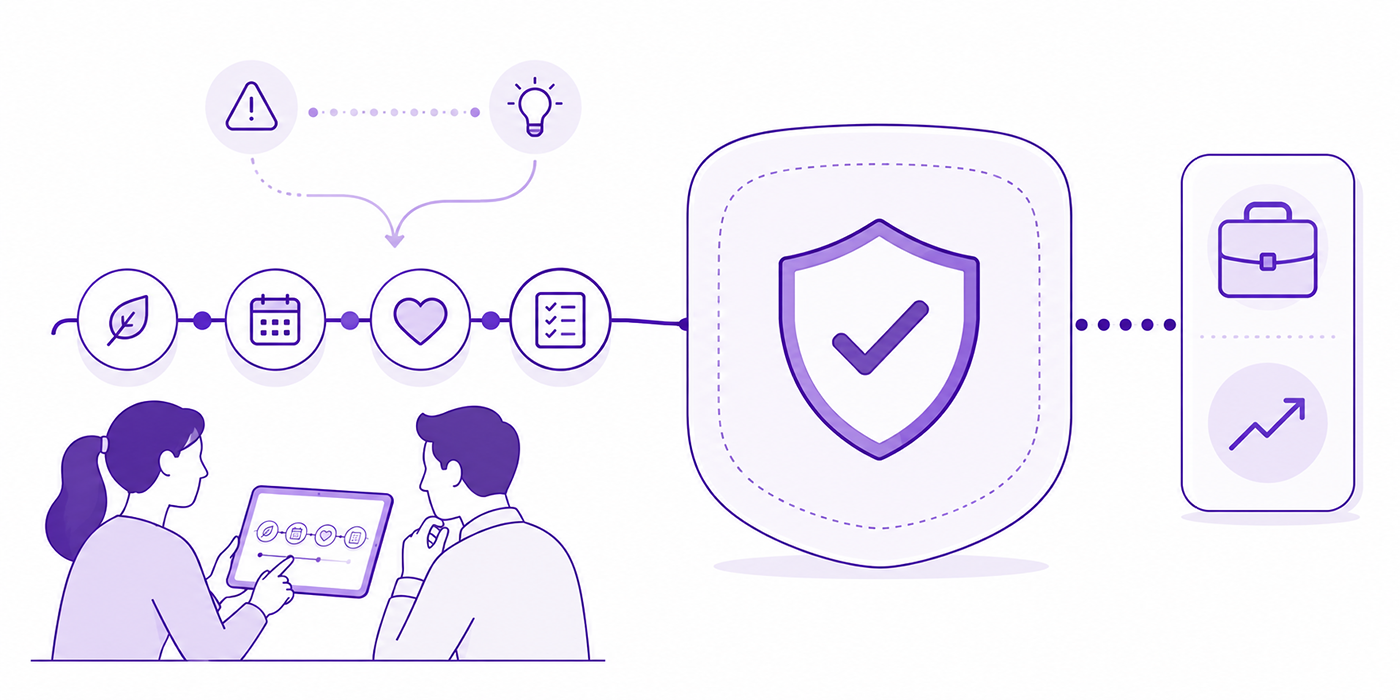
1. Why Preventive Health Coaching Solves an Expensive Problem
Preventive health coaching helps clients reduce modifiable health risks, follow appropriate professional guidance, and establish sustainable behaviors before avoidable problems become more disruptive. The coach focuses on motivation, goal selection, environmental design, self-management, accountability, and recovery after setbacks. This approach draws from transformational coaching strategies, stress-management coaching, strengths-based coaching, and constructive feedback methods.
The demand is rooted in a major global burden. The World Health Organization reported that noncommunicable diseases caused at least 43 million deaths in 2021, representing 75% of deaths unrelated to pandemics. Cardiovascular diseases, cancers, chronic respiratory diseases, and diabetes accounted for most premature noncommunicable-disease deaths. Tobacco use, physical inactivity, harmful alcohol use, unhealthy diets, and air pollution remain important risk factors.
The financial pressure is equally significant. The CDC reported in May 2026 that 90% of the United States’ $5.3 trillion in annual healthcare expenditures involve people with chronic and mental health conditions. It also estimated that more than 40 million Americans have diabetes, another 115.2 million have prediabetes, and diagnosed diabetes produced approximately $640 billion in medical costs and lost productivity in 2022.
These numbers expose the commercial opportunity without turning coaches into clinicians. Healthcare professionals can screen, diagnose, prescribe, treat, and determine clinical priorities. Coaches can help clients implement suitable recommendations through behavior-change planning, accountability structures, safe coaching relationships, and realistic expectation management.
The implementation gap is where many preventive efforts collapse. A client may leave a medical appointment with clear recommendations and enter a life that makes those recommendations difficult to follow. Their workplace rewards skipped breaks. Their household resists dietary changes. Their sleep is disrupted by caregiving. Their neighbourhood may provide limited opportunities for safe movement. Their finances may make specialist support difficult to access.
A coach creates value by uncovering the actual barrier instead of repeating the recommendation. This requires emotional-intelligence coaching, client-preference analysis, habit-design expertise, and micro-coaching interventions.
Consider a client who has been advised by a qualified professional to increase physical activity. The surface problem appears to be exercise adherence. Deeper exploration may reveal joint discomfort awaiting clinical assessment, embarrassment in public fitness spaces, a history of extreme routines, childcare constraints, or an all-or-nothing belief that ten minutes of movement is worthless.
Each barrier requires a different solution. A coach might support a referral for unresolved pain, help the client identify private movement options, build a childcare agreement, or develop minimum, standard, and expansion versions of an approved activity. This process uses mindset-shift coaching, relationship-coaching principles, client anxiety strategies, and behavioral accountability.
The niche becomes commercially powerful because prevention produces recurring behavioral needs. Clients rarely require one conversation about sleep, food, movement, stress, screening adherence, or social support. They need a process for choosing actions, testing them, identifying friction, adjusting the system, and maintaining progress during demanding periods.
That recurring need supports client-retention strategies, exceptional coaching experiences, automated client support, and gamified engagement systems. The coach can build longer engagements while helping clients develop independence rather than dependence.
| Client Situation | Preventive Priority | High-Value Coaching Intervention | Measurable Progress Marker | Related ANHCO Resource |
|---|---|---|---|---|
| The client receives several health recommendations and feels overwhelmed. | Prioritisation and action sequencing. | Rank recommendations by clinical importance, readiness, and implementation difficulty. | One professionally appropriate action starts within seven days. | Behavior-change science |
| The client repeatedly starts extreme health routines. | Reduce all-or-nothing behavior. | Create minimum, standard, and expansion versions of the approved behavior. | The minimum version is used during difficult weeks. | Habit-formation tools |
| Prediabetes risk has been identified by the clinical team. | Support an established prevention plan. | Translate approved nutrition, movement, sleep, and monitoring guidance into routines. | Completion of agreed behaviors and clinical follow-up appointments. | Preventive health coaching |
| The client understands nutrition guidance but cannot implement it. | Reduce food-environment friction. | Audit shopping, preparation, household resistance, work patterns, and backup meals. | Approved meal behaviors are completed consistently. | Nutrition and lifestyle topics |
| Work demands repeatedly destroy sleep routines. | Create stronger shutdown boundaries. | Identify workload triggers, communication expectations, and an achievable evening cutoff. | Planned work-stop time is respected several evenings weekly. | Stress-coaching strategies |
| The client abandons exercise after missing one session. | Improve recovery after disruption. | Create a 24-hour restart rule and a five-minute recovery action. | Average restart time decreases. | Accountability coaching |
| The client feels judged during health conversations. | Increase psychological safety. | Use permission-based questions, reflective listening, and non-moral language. | The client reports barriers more honestly and specifically. | Safe coaching environments |
| A family member undermines every attempted lifestyle change. | Strengthen practical social support. | Prepare one specific request, boundary, or shared household agreement. | The agreed support behavior occurs consistently. | Relationship coaching |
| The client has accumulated several unused health apps. | Simplify digital tracking. | Select one behavior metric and one outcome metric linked to the coaching goal. | Tracking continues without creating distress or confusion. | Technology and coaching |
| Health goals depend on daily motivation. | Create reliable cues and environmental support. | Attach the behavior to an established routine and prepare resources in advance. | The behavior begins after its selected cue. | Habit formation in coaching |
| The client has little time between medical appointments. | Maintain momentum between clinical visits. | Use brief check-ins focused on barriers, adherence, and next actions. | Fewer unresolved implementation problems accumulate. | Micro-coaching |
| Repeated dieting has damaged the client’s confidence. | Rebuild self-efficacy without prescribing nutrition. | Identify existing strengths, previous successes, and realistic commitments. | Confidence and commitment completion improve. | Strengths-based coaching |
| The client hides lapses before coaching sessions. | Make setbacks usable data. | Replace confession-style reviews with factual trigger and recovery analysis. | Setbacks are discussed earlier and more accurately. | Constructive feedback |
| The client is highly anxious about future illness. | Separate appropriate prevention from compulsive monitoring. | Clarify controllable actions, professional follow-up, and limits on self-tracking. | Health behaviors continue with lower monitoring distress. | Client anxiety support |
| The client attends screenings inconsistently. | Support appropriate preventive-care adherence. | Identify logistical barriers and create reminders for clinician-recommended appointments. | Recommended appointments are scheduled and attended. | Coaching automation |
| Caregiving responsibilities consume the client’s capacity. | Protect minimum self-care behaviors. | Build a low-capacity plan and identify practical support resources. | One essential behavior survives demanding periods. | Expectation management |
| Remote work has increased inactivity and isolation. | Restore movement and social connection. | Add movement cues, meeting boundaries, and recurring human contact. | Sedentary time decreases and meaningful contact increases. | Emotional-intelligence coaching |
| The client uses food, alcohol, or screens to manage stress. | Develop healthier coping awareness. | Map triggers, immediate rewards, alternative actions, and referral needs. | The client uses a selected alternative before the automatic behavior. | Transformational coaching |
| A wearable produces large amounts of confusing data. | Translate data into one useful decision. | Review trends, context, and the smallest relevant adjustment. | The client can explain how data informs action. | Coaching technology |
| The client has a clinician-approved medication plan but forgets doses. | Support adherence without advising on medication. | Develop reminders, routines, and a protocol for discussing concerns with the prescriber. | Adherence improves according to the established clinical plan. | NBHWC scope of practice |
| Financial pressure limits access to preferred health resources. | Build a realistic resource strategy. | Identify lower-cost options, community services, and essential priorities. | The plan remains affordable for the agreed period. | Financial coaching principles |
| The client wants to change five behaviors at once. | Prevent overload and early failure. | Select one keystone behavior using impact, readiness, and feasibility. | The first behavior stabilises before expansion. | Mindset shifts |
| Previous programs ignored the client’s cultural context. | Increase relevance and respect. | Adapt implementation around family structures, food traditions, values, and access. | The client reports stronger ownership of the plan. | Client preferences |
| The client cannot see progress quickly enough. | Make leading indicators visible. | Track action completion, confidence, friction reduction, and recovery speed. | Progress remains visible before long-term outcomes emerge. | Gamification strategies |
| The client’s goals were selected by someone else. | Build personally meaningful motivation. | Connect clinically appropriate priorities with the client’s own values and life goals. | The client can explain why the behavior matters personally. | Guided visualization |
| A demanding travel schedule disrupts every routine. | Create portable preventive behaviors. | Design travel versions of movement, sleep, stress, and food routines. | Core behaviors continue during travel weeks. | Future-proof coaching |
| The client depends on the coach for every decision. | Strengthen self-management. | Transfer decision rules, review skills, and planning ownership to the client. | The client adjusts behaviors independently. | Exceptional client experiences |
| The coach cannot demonstrate program value. | Build credible outcome evidence. | Collect baseline, behavioral, capacity, and maintenance indicators. | Case studies show specific changes and appropriate limitations. | Coaching case studies |
| One-to-one delivery has reached capacity. | Expand without weakening support. | Move education and routine reviews into cohorts while preserving escalation pathways. | More clients are served with stable outcomes and workload. | Scale a coaching practice |
| The client’s symptoms or distress exceed the coaching relationship. | Protect safety through referral. | Pause unsuitable coaching work and connect the client with qualified care. | The referral is documented and followed through appropriately. | Supporting emotional crises |
This matrix supports client-centered behavior change. Screening, diagnosis, treatment, prescribing, medical nutrition therapy, exercise prescription, and interpretation of clinical data remain with appropriately qualified professionals.
2. Why the Niche Has Such Strong Profit Economics
The strongest interpretation of “most profitable” concerns business structure rather than a universal income guarantee. Preventive health coaching combines a large addressable audience, recurring client needs, measurable behavioral outcomes, multiple referral channels, long program lifecycles, and delivery formats that extend beyond one-to-one sessions.
A 2025 CDC analysis found that 76.4% of American adults reported at least one of 12 selected chronic conditions in 2023, representing approximately 194 million people. The prevalence included nearly six in ten young adults, eight in ten midlife adults, and nine in ten older adults. More than half of adults reported multiple chronic conditions.
A coach cannot claim that every member of this population is an appropriate coaching client. The figures still demonstrate the scale of the prevention and self-management challenge. Millions of people must navigate nutrition, movement, sleep, stress, screening, medication adherence, social support, and healthcare follow-up across many years.
This creates demand for preventive coaching programs, long-term habit support, client accountability systems, and technology-enabled coaching.
Preventive problems create recurring demand
Some coaching niches revolve around one event. A client prepares for an interview, makes a decision, or completes a short transition. Preventive health behaviors continue throughout life and must adapt to changing work, family, finances, age, mobility, health guidance, and environment.
A client who creates a reliable walking routine may later need support with travel, caregiving, injury recovery under professional guidance, sleep disruption, workplace pressure, or declining motivation. The coach can provide maintenance check-ins, targeted intensives, group programs, and alumni support.
These extensions strengthen client retention, improve coaching-business forecasting, support micro-coaching services, and create opportunities for automated coaching support.
The buyer can extend beyond the individual client
Preventive health coaching can be purchased by individuals, employers, healthcare organisations, community groups, professional associations, clinics, wellness platforms, and benefit providers. Each buyer has a different reason for investing.
Individuals may want greater energy, confidence, independence, or consistency. Employers may care about engagement, absenteeism, workforce wellbeing, and retention. Healthcare organisations may want stronger adherence, improved patient engagement, or additional behavior-change capacity. Community organisations may need accessible support for specific populations.
Multiple channels reduce dependence on one source of clients. Coaches can combine professional networking, strategic joint ventures, coaching-business benchmarking, and client-referral experiences.
Prevention programs can be standardised responsibly
The educational and implementation components of preventive health coaching can often be structured into repeatable pathways. Coaches can standardise onboarding, readiness assessments, barrier audits, habit-design worksheets, progress reviews, restart plans, and maintenance tools.
Personal judgement remains essential when clients have complex conditions, significant distress, unusual constraints, or referral needs. The program architecture can still reduce preparation time, create consistent quality, and make delegation or group delivery more practical.
Standardisation connects with coaching automation, profitable practice scaling, gamified client engagement, and method franchising principles.
Measurable behaviors strengthen perceived value
Broad promises such as “feel healthier” are difficult to price and defend. Preventive coaching can track specific leading indicators without claiming clinical outcomes.
Possible indicators include:
Percentage of agreed behaviors completed.
Number of clinician-recommended appointments scheduled.
Average time required to restart after disruption.
Frequency of planned movement.
Consistency of sleep-supporting routines.
Number of environmental barriers removed.
Confidence in managing known triggers.
Use of approved medication-reminder systems.
Frequency of support conversations.
Ability to create an independent weekly plan.
These measures create stronger client transformation stories, more persuasive coaching case studies, better client feedback systems, and clearer high-ticket coaching offers.
Institutional prevention models validate structured behavior support
The Medicare Diabetes Prevention Program demonstrates that structured prevention services can operate through recognised suppliers, defined curricula, eligibility standards, coach requirements, billing processes, and multiple delivery formats. CMS changes effective from January 2026 extended several distance-learning flexibilities and allowed testing of asynchronous online delivery through the end of 2029.
This example does not make every independent coach eligible for reimbursement. It shows that prevention-focused behavior programs can become formalised within large healthcare systems when they meet specific recognition, supplier, documentation, and delivery requirements.
Coaches should study such models alongside NBHWC scope requirements, coaching legal requirements, certification portfolio development, and credentialing-error prevention.
3. The Coaching Model That Produces Repeatable Prevention Outcomes
A profitable program requires more than a collection of wellness topics. The coach needs a method that explains how clients move from risk awareness to sustainable self-management.
The following six-stage model combines behavior-change science, habit-formation systems, client accountability, and constructive feedback.
Stage 1: Establish scope, readiness, and clinical alignment
The coach begins by clarifying what the client wants, which health professionals are involved, what guidance has already been provided, and whether coaching is appropriate.
The intake process should identify:
The client’s reasons for seeking coaching.
Existing clinical recommendations.
Relevant limitations disclosed by the client.
Current support systems.
Previous attempts and their failure points.
The client’s available time and capacity.
Behaviors the client feels ready to address.
Warning signs requiring referral.
The measures used to review progress.
This process strengthens safe coaching practice, improves client expectation management, reduces difficult client situations, and supports professional coaching ethics.
Stage 2: Audit the client’s prevention system
A health goal succeeds or fails inside a system. That system includes time, energy, money, access, knowledge, identity, household dynamics, workplace expectations, environmental cues, emotional triggers, and previous experiences.
The coach should audit five layers:
Behavior: What currently happens?
Trigger: What usually happens immediately before it?
Reward: What benefit does the current behavior provide?
Friction: What makes the desired behavior difficult?
Recovery: What happens after the client misses the plan?
This audit prevents the coach from mistaking a structural problem for weak motivation. It uses emotional-intelligence coaching, client anxiety analysis, strengths-based techniques, and client-preference insights.
Stage 3: Select one high-leverage behavior
A client may arrive wanting to improve sleep, food, movement, stress, hydration, social connection, and productivity simultaneously. Pursuing everything can create rapid overload.
Select the first behavior through four filters:
Importance: Does it support an appropriate health priority?
Readiness: Does the client genuinely want to work on it?
Feasibility: Can it fit the client’s present circumstances?
Leverage: Could it make another behavior easier?
A stable wake routine may improve planning and energy. A ten-minute post-meal walk may create movement consistency. A weekly grocery process may reduce several daily decisions. The coach should build the behavior using habit cues, micro-coaching support, accountability processes, and gamification methods.
Stage 4: Engineer the environment
The client’s surroundings frequently overpower good intentions. A coach should make the preferred action easier to begin and the competing behavior less automatic.
Environmental interventions may include:
Preparing equipment before the cue occurs.
Changing where devices are charged.
Scheduling grocery delivery before demanding work periods.
Creating visible reminders.
Removing unnecessary steps.
Establishing household agreements.
Protecting calendar time.
Preparing an approved backup option.
Automating reminders.
Identifying a safe place for movement.
Environmental design works particularly well with coaching technology, client-support automation, relationship coaching, and behavioral transformation strategies.
Stage 5: Create a disruption protocol
Many programs teach clients how to succeed during a normal week and leave them unprepared for illness, travel, deadlines, caregiving, poor sleep, celebrations, financial stress, or low motivation.
A complete disruption protocol contains three plans:
The minimum plan identifies the smallest useful action the client can perform without worsening their situation.
The restart plan specifies the first action and time frame after a lapse.
The escalation plan identifies symptoms, distress, or circumstances that require contact with a qualified professional.
This approach supports resilient habit formation, client-retention planning, stress-management coaching, and crisis-support boundaries.
Stage 6: Transfer ownership
A strong program gradually reduces the client’s need for coach-led decisions. The client should learn how to select a behavior, identify friction, design cues, review evidence, recover after disruption, and recognise when professional care is needed.
Program completion can include:
A personalised prevention map.
The client’s habit-design formula.
A list of effective environmental supports.
A disruption and restart plan.
A referral and support directory.
A 90-day maintenance scorecard.
Criteria for returning to coaching.
A process for selecting the next behavior.
This graduation process improves exceptional client experiences, produces stronger case-study evidence, supports ethical client-retention models, and increases the likelihood of valuable client referrals.
This poll provides a practical business-development prompt and does not collect personal or health information.
4. How to Build and Monetize a Preventive Health Coaching Offer
A commercially weak offer promises better health through personalised support. A stronger offer identifies a specific population, a costly implementation problem, a defined coaching process, and observable behavioral results.
Use this positioning formula:
I help [defined client] implement [appropriate preventive priority] despite [recurring barrier] through [named coaching method], so they can achieve [observable behavioral result].
Examples include:
Helping remote professionals rebuild movement, sleep, and stress routines before work patterns create deeper disruption.
Helping adults with clinician-identified metabolic risk implement approved lifestyle recommendations consistently.
Helping busy parents create sustainable preventive routines around caregiving and work.
Helping executives follow health priorities without relying on extreme programs.
Helping older adults strengthen appropriate routines that support independence and healthcare follow-up.
Helping shift workers implement realistic sleep, movement, and meal-planning behaviors.
Helping clients maintain clinician-guided preventive changes after completing a structured program.
Specific positioning improves high-ticket offer development, strengthens coaching-business benchmarking, supports case-study creation, and produces clearer client expectations.
Build a 12-week flagship program
A structured flagship offer might follow this sequence:
Week 0: Scope and readiness
Confirm coaching suitability, clarify roles, record relevant professional guidance, establish consent, identify referral needs, and select progress measures.
Weeks 1–2: Prevention-system audit
Review current behaviors, environmental friction, stress patterns, social support, schedule, confidence, resources, and previous attempts.
Weeks 3–4: Keystone behavior design
Choose one appropriate action and define its cue, frequency, minimum version, evidence, and recovery rule.
Weeks 5–6: Environmental restructuring
Reduce preparation steps, automate reminders, improve resource access, and negotiate necessary household or workplace support.
Weeks 7–8: Capacity building
Strengthen planning, emotional awareness, communication, boundary-setting, and independent problem-solving.
Weeks 9–10: Pillar integration
Add a second supportive behavior after the first has become sufficiently stable.
Week 11: Disruption testing
Prepare for travel, illness, work pressure, caregiving, celebrations, low motivation, and schedule changes.
Week 12: Maintenance transfer
Create a 90-day plan, define support contacts, review referral criteria, and transfer planning ownership to the client.
This pathway combines preventive health principles, behavior-change coaching, client accountability, and habit-maintenance tools.
Create tangible client assets
Premium coaching becomes easier to price when clients receive useful intellectual and behavioral assets alongside conversation.
A preventive health program may include:
A personalised prevention-behavior map.
A barrier and trigger audit.
A keystone-habit worksheet.
Minimum, standard, and expansion plans.
A weekly implementation scorecard.
A household-support conversation guide.
A disruption and restart protocol.
A digital-boundary plan.
A professional referral directory.
A 90-day maintenance roadmap.
These assets improve the client coaching experience, reinforce behavioral transformation, provide material for coaching case studies, and make client feedback more actionable.
Use a sustainable pricing formula
The coach should calculate price from delivery economics rather than copying a competitor.
Use:
Revenue target + operating costs + reserves + acquisition costs ÷ responsible client capacity = required average client value.
Suppose the coach wants $15,000 in monthly revenue, needs $3,000 for operating costs and reserves, and can responsibly serve ten active clients. The required average monthly client value becomes $1,800. A three-month program would require an average value of $5,400 before discounts, failed payments, taxes, or unexpected delivery demands.
The precise price will depend on expertise, market, program intensity, client access, session frequency, measurement, documentation, and between-session support. This calculation strengthens financial forecasting, informs coaching payment systems, supports tax planning, and protects profitable practice growth.
Build a layered offer ecosystem
A scalable preventive health coaching business can serve different levels of readiness:
Preventive health audit: A focused assessment that identifies barriers and recommends an appropriate next step.
Four-week habit sprint: A short program targeting one implementation problem.
Twelve-week flagship program: The complete preventive coaching pathway.
Group cohort: A shared program for clients with similar non-clinical implementation needs.
Maintenance membership: Ongoing planning, accountability, and disruption support.
Employer program: Preventive behavior support for a defined workforce group.
Clinician-collaboration package: Coaching that supports implementation of established professional guidance.
Educational workshops: Focused sessions on habit design, stress routines, sleep-supporting behavior, or health-goal planning.
The ecosystem combines micro-coaching delivery, group engagement strategies, coaching automation, and joint-venture distribution.
Develop referral-based acquisition
Trust matters intensely in health-related services. Referral relationships can reduce the amount of persuasion required because the coach enters through an established source of credibility.
Potential referral partners include:
Primary-care practices.
Registered dietitians.
Physiotherapists.
Licensed mental-health professionals.
Sleep specialists.
Pharmacists.
Fitness professionals operating within their scope.
Occupational-health teams.
Community-health organisations.
Employers and benefit consultants.
Lifestyle-medicine clinics.
Professional associations.
The coach should explain the service in scope-accurate language. Referral partners need to know who the program serves, what behaviors it supports, how progress is documented, when concerns are escalated, and what the coach avoids.
This approach uses networking strategies for coaches, joint-venture methods, professional case studies, and industry leadership principles.

5. Scope, Ethics, and Trust: The Revenue Protection System
Preventive health coaching becomes commercially fragile when the coach makes clinical claims, exaggerates qualifications, or presents behavior support as treatment. Trust protects the client, the referral relationship, and the business.
NBHWC states that health and wellness coaches support self-determined goals, action steps, accountability, personal strengths, and sustainable self-management. Its scope also states that coaches working solely in that role do not diagnose, interpret medical data, prescribe or deprescribe, recommend supplements, create meal plans, prescribe exercise, or provide psychological treatment.
Every preventive health coach should maintain a written three-level scope system.
Level 1: Coaching support
The coach can generally support:
Values and motivation exploration.
Self-determined goal development.
Habit and environment design.
Accountability.
Barrier identification.
Planning and reflection.
Appropriate resource sharing.
Implementation of established professional guidance.
Communication preparation.
Recovery after setbacks.
Self-management skill development.
These services align with health-coaching scope, behavior-change practice, accountability coaching, and habit-formation support.
Level 2: Professional collaboration
Some situations require the coach to work alongside qualified professionals. Examples include supporting a client who is following a clinician-created care plan, helping the client prepare questions for an appointment, or providing behavior-progress information with appropriate consent.
The coach should record which recommendations came from the healthcare professional and which goals were self-selected by the client. The coach should also avoid modifying the professional plan.
Collaboration requires safe coaching systems, professional expectation management, constructive communication, and legal preparation.
Level 3: Referral or escalation
Referral may be required when the client presents concerns outside the coach’s competence or authority. Relevant examples may include new or worsening symptoms, suspected disordered eating, substance dependence, severe psychological distress, medication concerns, unusual fatigue, significant pain, or safety risks.
The coach should avoid attempting to determine the diagnosis. The professional task is recognising that continued coaching alone is unsuitable.
A strong referral protocol supports emotional-crisis responses, reduces difficult client situations, strengthens mental health coaching boundaries, and protects the client coaching environment.
Avoid the claims that destroy credibility
Preventive health coaches should avoid:
Claiming to prevent a specific disease for an individual client.
Guaranteeing weight loss or laboratory changes.
Advising clients to stop medication.
Interpreting test results without appropriate qualifications.
Recommending supplements outside professional scope.
Presenting one dietary pattern as universally suitable.
Treating severe distress as a motivation problem.
Describing a short course as equivalent to clinical training.
Using fear of illness to pressure clients into purchasing.
Collecting unnecessary sensitive information.
Continuing after the client’s needs exceed coaching competence.
Publishing case details without informed permission.
Ethical marketing strengthens client trust, protects coaching-business growth, improves case-study credibility, and encourages high-quality professional referrals.
Invest in defensible qualifications
A coach’s education should include behavior-change methodology, motivational communication, coaching ethics, chronic-disease context, cultural humility, privacy, referral, and clear professional scope.
The coach should understand what each credential represents. Completion certificates, continuing education, professional certifications, board credentials, and healthcare licenses confer different levels of authority.
Coaches can strengthen their pathway through CPD accreditation, ongoing certification maintenance, accreditation comparison, and careful avoidance of credentialing mistakes.
The most profitable preventive health coaches will build revenue through precision, evidence, trust, retention, and responsible scale. Their commercial advantage will come from solving the implementation problem more effectively than generic wellness content while maintaining clear boundaries around clinical care.
6. Frequently Asked Questions About Preventive Health Coaching
-
A preventive health coach helps clients establish sustainable behaviors connected with appropriate health goals. The work may involve motivation, habit formation, environmental design, stress awareness, planning, accountability, social support, and recovery after setbacks.
The coach might help a client follow clinician-provided guidance, prepare questions for healthcare appointments, create reminders, identify barriers, and select manageable actions. The coach does not independently determine medical treatment while acting solely within a coaching role.
The service combines preventive coaching, behavior-change methods, habit-building systems, and accountability support.
-
Preventive health coaching addresses recurring problems with clear personal and economic consequences. Clients may struggle with energy, work capacity, healthcare follow-up, daily functioning, confidence, and consistency. These problems can support longer programs, maintenance services, group delivery, employer contracts, and professional referrals.
The coach can also demonstrate value through observable behavior rather than vague satisfaction. Habit completion, restart speed, appointment adherence, environmental changes, and self-management confidence can all be reviewed.
Profitability improves through specific coaching offers, client retention, financial forecasting, and responsible practice scaling.
-
A coach acting solely within a health and wellness coaching role should remain within the boundaries established by their training, credentials, location, and applicable professional standards. Diagnosis, treatment, prescribing, clinical data interpretation, medical nutrition therapy, and therapeutic exercise planning require appropriately qualified professionals.
A coach can help clients implement guidance they have received, identify practical barriers, develop self-management skills, and prepare for conversations with their healthcare providers.
Strong practice depends on NBHWC scope awareness, legal preparation, ethical coaching knowledge, and safe referral systems.
-
The ideal client has a meaningful prevention or self-management priority, enough stability to participate in coaching, and willingness to test realistic behavioral changes.
High-fit clients may include busy professionals with deteriorating routines, adults implementing clinician-provided lifestyle recommendations, remote workers experiencing inactivity and isolation, parents managing competing responsibilities, or older adults seeking stronger preventive habits.
Readiness should be assessed through client expectation management, stress and anxiety coaching, strengths-based exploration, and safe coaching conversations.
-
Use three categories of measurement.
Behavior indicators show what the client completed. Examples include movement sessions, sleep-supporting routines, meal-preparation actions, reminders used, or appointments scheduled.
Capacity indicators show what the client learned. These include planning confidence, trigger awareness, communication ability, and independent problem-solving.
Recovery indicators show how the client responds when the plan breaks. Track restart time, use of minimum actions, and ability to learn from setbacks.
This approach supports stronger coaching feedback, case-study development, client accountability, and retention planning.
-
A focused habit sprint may last four to six weeks. A comprehensive program often requires approximately 12 weeks because clients need time to select a behavior, test it, remove friction, recover from disruptions, and build independent planning skills.
Maintenance support can continue through monthly sessions, short intensives, alumni groups, or asynchronous check-ins. The duration should match the complexity of the behavioral problem rather than a generic package template.
Coaches can use micro-coaching programs, habit-formation frameworks, coaching automation, and client-retention strategies to create different support levels.
