
Holistic Coaching: Why Clients Demand It More Than Ever in 2026-27
Clients entering coaching in 2026-27 rarely bring an isolated goal. Career pressure affects sleep, financial worry disrupts relationships, caregiving drains personal capacity, and inconsistent routines weaken confidence. Holistic coaching connects these pressures so clients can build progress that survives real life. By combining behavior-change science, habit formation, emotional-intelligence coaching, and preventative health coaching, coaches can address the systems surrounding a goal while maintaining firm professional boundaries.
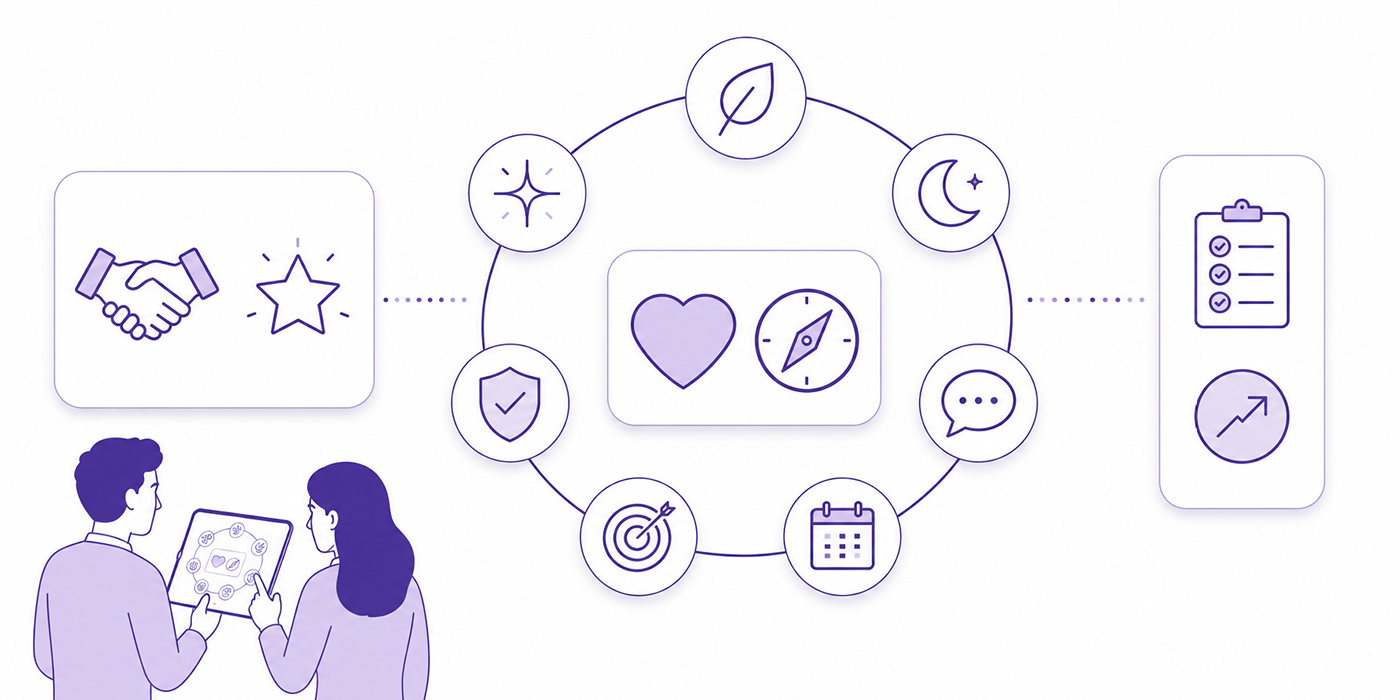
1. Why Clients Are Demanding Holistic Coaching in 2026-27
Holistic coaching examines how different areas of a client’s life influence one another. A client may initially request help with productivity, yet the deeper pattern could involve poor boundaries, unrealistic commitments, financial pressure, disrupted sleep, weak social support, or a career that conflicts with personal values. Treating productivity alone would leave the conditions producing the problem untouched.
The demand reflects how clients now understand well-being. The World Health Organization describes health through physical, mental, and social well-being, giving coaches a useful reminder that sustainable progress develops across connected life domains. A holistic practitioner can help clients improve routines, relationships, decisions, environments, and support systems while healthcare professionals manage diagnosis and treatment.
This wider lens matters because many clients have already tried isolated solutions. They have downloaded a habit tracker, bought a meal plan, created a morning routine, followed motivational accounts, and rebuilt their calendar repeatedly. Progress disappears because the intervention addresses the visible behavior while the surrounding system remains unchanged. Strong habit-formation tools, realistic accountability structures, and carefully managed client expectations help reveal why a sensible plan keeps collapsing.
Clients are carrying several pressures at once
A professional facing exhaustion may also be caring for children, worrying about job security, supporting aging parents, and trying to maintain a relationship. A business owner seeking revenue growth may simultaneously struggle with decision fatigue, inconsistent health routines, and social isolation. These clients need prioritization before optimization.
Gallup’s 2026 global workplace findings show why this has become urgent. Global employee engagement fell to 20% in 2025, while only 34% of employees were classified as thriving. Reported stress, anger, and sadness remained above pre-pandemic levels. Those conditions create demand for coaching that can connect workload, recovery, motivation, relationships, and meaningful action instead of treating workplace performance as a separate compartment.
Holistic coaching gives clients a way to examine how their stress responses, workplace expectations, daily habits, and relationship patterns interact. The process can uncover a high-leverage change that improves several outcomes simultaneously. One firm evening boundary, for example, may improve sleep consistency, family presence, food preparation, emotional regulation, and next-day focus.
Clients want meaning alongside achievement
Younger professionals increasingly judge success through purpose, well-being, development, and financial stability. Deloitte’s 2025 survey found that 89% of Gen Z respondents and 92% of millennials considered purpose important to job satisfaction and well-being. This indicates that coaches working with career goals need to understand values, lifestyle, relationships, identity, and financial realities alongside promotions or income targets.
This creates fertile ground for mindset coaching, financial coaching, transformational coaching, and emotional-intelligence development. A client may discover that the promotion they are pursuing would intensify the lifestyle conditions they already resent. Holistic coaching allows the client to clarify what the goal must provide before committing more energy to it.
Generic information has become easy to access
Clients can obtain meal ideas, journaling prompts, workout plans, budgeting templates, and productivity suggestions within seconds. Information alone carries less perceived value in 2026-27. Human coaching becomes valuable through contextual judgment, ethical challenge, emotional presence, pattern recognition, and sustained accountability.
A holistic coach asks questions that generic advice cannot answer automatically:
Which goal deserves attention first?
Which hidden pressure is draining the client’s capacity?
Which behavior creates the greatest positive ripple effect?
Which expectation belongs to the client, and which came from family or culture?
Which problem fits coaching, and which requires another professional?
How can the plan survive travel, caregiving, illness, deadlines, or financial strain?
This is where micro-coaching, constructive feedback, strength-based coaching, and safe coaching environments create value that a template cannot reproduce
Prevention has become more attractive than crisis-driven change
Clients increasingly seek support before their routines, relationships, or careers reach a breaking point. They want to recognize warning signs earlier, reduce preventable overload, and build plans for difficult periods. This preventive orientation strengthens the relevance of preventative health coaching, stress-management coaching, habit-based interventions, and future-proof coaching practices.
A holistic coach might help a client identify their early overload indicators, such as skipped meals, evening irritability, compulsive email checking, poor sleep preparation, or withdrawal from supportive relationships. The client then creates a response protocol before decision quality and functioning deteriorate further.
The Coaching market rewards clearer, broader value
The 2025 ICF Global Coaching Study reported approximately 122,974 coach practitioners worldwide and estimated annual coaching revenue of $5.34 billion. It also found that many coaches provide complementary services, including training, consulting, facilitation, and mentoring. Growth expands the audience for coaching while increasing the need for differentiated, professionally structured offers.
Holistic coaching can provide that differentiation when the offer remains specific. “Improve your whole life” sounds vague. “Build sustainable routines, clearer boundaries, and a career plan that fits your health, relationships, and financial priorities” communicates a tangible pathway.
Coaches can strengthen that pathway through industry benchmarking, awareness of changing client preferences, careful coaching-business scaling, and a deliberately designed client experience.
| Client Signal | Connected Life System | Measure or Explore First | Useful Coaching Intervention | Scope or Referral Check |
|---|---|---|---|---|
| Constant exhaustion | Workload, sleep routine, caregiving, recovery | Energy pattern across seven days | Preventative capacity audit | Persistent or severe fatigue requires medical evaluation |
| Repeatedly abandoned routines | Environment, planning, emotional triggers | Exact point where the routine breaks | Minimum viable habit | Screen for barriers exceeding coaching competence |
| Work stress affecting home life | Boundaries, communication, recovery | Transition behavior between work and home | Emotional transition ritual | Assess relationship safety before communication exercises |
| Career success without satisfaction | Purpose, values, identity, lifestyle | What success costs and provides | Values-to-career alignment map | Refer severe depressive symptoms appropriately |
| Financial anxiety | Income, spending, career, family expectations | Controllable decisions and recurring triggers | Financial behavior coaching | Regulated investment, tax, and legal advice needs specialists |
| Emotional eating patterns | Stress, environment, routine, self-regulation | Trigger, timing, context, and consequence | Behavior-chain review | Suspected eating disorders require clinical referral |
| Overcommitting | Boundaries, approval seeking, workload | Automatic yes responses per week | Commitment filter | Explore coercion or unsafe power dynamics carefully |
| Decision fatigue | Digital overload, family labor, work demands | Number of repeated low-value decisions | Decision-rule system | Severe cognitive changes require healthcare assessment |
| Social withdrawal | Relationships, confidence, energy, mood | Meaningful contact and support access | Support-network mapping | Marked withdrawal may require mental-health support |
| Sleep routine breakdown | Technology, workload, stress, household patterns | Pre-sleep behavior and consistency | Evening cue redesign | Sleep disorders require medical assessment |
| Confidence collapse after feedback | Identity, performance, emotional regulation | Interpretation attached to the feedback | Feedback recovery process | Maintain clear boundaries around psychological treatment |
| Caregiver overload | Family roles, health, time, support | Invisible labor and recovery gaps | Capacity-sensitive planning | Identify safeguarding or medical-support needs |
| Inconsistent movement | Energy, schedule, environment, motivation | Friction surrounding the first five minutes | Micro-action design | Exercise clearance may be necessary for health conditions |
| Relationship tension during stress | Communication, workload, expectations | Repeated conflict trigger and repair pattern | Relationship-pattern coaching | Abuse and violence require specialist safety support |
| Procrastination on important work | Fear, clarity, energy, task design | Emotion and thought present before avoidance | Friction-to-action map | Explore neurodevelopmental or clinical concerns responsibly |
| Purpose confusion | Career, contribution, identity, values | Activities creating energy and meaning | Future-life visualization | Avoid imposing the coach’s values |
| Digital compulsiveness | Attention, sleep, relationships, work | Usage triggers and downstream cost | Digital boundary plan | Severe compulsive behavior may require specialist help |
| Entrepreneurial burnout risk | Revenue, identity, workload, isolation | Hours, recovery, decision load, cash pressure | Capacity and cash-flow map | Separate coaching from accounting and clinical care |
| Loss of routine after major change | Identity, environment, relationships, energy | Which former cues disappeared | New-context habit design | Grief or trauma treatment belongs with qualified clinicians |
| Perfectionism | Identity, standards, fear, time | Cost of delayed completion | Evidence-based standard reset | Rigid and impairing patterns may need clinical assessment |
| Weak follow-through | Goal clarity, accountability, capacity | Commitment size and completion pattern | Layered accountability plan | Avoid shame-based pressure |
| Low motivation after achievement | Purpose, identity, future direction | Meaning attached to the completed goal | Next-chapter exploration | Screen concerning changes in mood or functioning |
| Recurring conflict at work | Communication, expectations, leadership | Facts, assumptions, and repeated responses | Conflict preparation framework | Workplace legal matters require qualified advice |
| Chaotic weekly schedule | Priorities, family, work, recovery | Fixed demands and discretionary commitments | Weekly systems reset | Respect disability and healthcare needs in planning |
| Repeated relapse after progress | Habits, identity, environment, support | First warning sign before the setback | Relapse-response plan | Escalate recurring clinical symptoms appropriately |
| Low self-trust | Decision-making, past setbacks, confidence | Promises made and kept to oneself | Self-trust evidence log | Keep trauma processing outside coaching scope |
| Unclear priorities | Values, roles, deadlines, energy | Consequences of continuing each commitment | Priority hierarchy | Check whether crisis needs override routine goal work |
| Progress that disappears under pressure | Habits, support, environment, expectations | Minimum behavior maintained on hard days | Pressure-tested action plan | Refer when safety or functioning becomes a concern |
2. What Holistic Coaching Covers and Where Its Boundaries Sit
Holistic coaching works across connected domains while keeping each intervention inside the coach’s competence. The process may explore health-supporting routines, emotional awareness, thought patterns, relationships, career direction, finances, environment, identity, purpose, and support systems. The coach helps the client identify connections, choose priorities, experiment with behavior, and evaluate outcomes.
A holistic coach might help a client see that late-night work contributes to poor sleep preparation, rushed mornings, skipped meals, low patience, and weaker decision-making. The coaching response could include a boundary conversation, an evening shutdown routine, a simplified morning plan, and accountability around one high-leverage habit. This combines habit coaching, emotional-intelligence skills, behavior-change planning, and expectation management.
Physical routines and daily capacity
Coaching can address the client’s planning, consistency, environment, motivation, barriers, and accountability around sleep routines, movement, meal preparation, recovery, and healthcare follow-through. Medical diagnosis, medication, treatment, and individualized clinical nutrition remain with licensed professionals.
The coach’s role may include helping the client prepare questions for a healthcare appointment, follow an existing professional recommendation, reorganize their environment, or design a realistic routine. Knowledge of NBHWC scope principles, nutrition and lifestyle topics, preventative coaching, and ethical certification standards strengthens these decisions.
Emotional awareness and self-regulation
Holistic coaching can help clients name emotions, identify triggers, pause before responding, prepare difficult conversations, and develop recovery practices. These skills support emotional intelligence, stronger client communication, healthier relationship patterns, and more effective stress coaching.
Clinical assessment, trauma treatment, diagnosis, crisis intervention, and treatment of mental-health conditions require appropriately qualified professionals. A referral can sit alongside coaching when the client, therapist, and coach understand their respective roles.
Thinking patterns and decision quality
A coach can help clients examine assumptions, unhelpful interpretations, perfectionistic standards, avoidance loops, and all-or-nothing planning. The intervention remains focused on awareness, learning, decisions, and action. Useful approaches include strength-based questioning, guided visualization, mindset development, and transformational behavior strategies.
The goal is practical clarity. A client who believes every decision must be perfect can learn to distinguish reversible decisions, define a sufficient evidence threshold, set a deadline, and review the result without turning one outcome into a judgment about personal worth.
Relationships and social support
Relationships influence health behaviors, confidence, work capacity, financial decisions, and emotional recovery. Holistic coaches can explore boundaries, requests, communication habits, expectations, conflict preparation, and support activation.
A client trying to protect three evenings per week may need a conversation with a manager, spouse, business partner, or family member. The habit plan will remain fragile until the relationship system supports it. Relationship coaching, safe-environment principles, constructive feedback, and difficult-situation management provide relevant tools.
Career, money, and life structure
A client’s health goals can be constrained by shift work, unstable income, long commutes, caregiving, or an unsustainable business model. Holistic coaching brings those realities into the plan.
The coach can help the client clarify career priorities, examine spending behaviors, prepare for income fluctuations, organize decisions, or build a transition timeline. Regulated tax, investment, employment-law, and financial-planning matters require specialist advice. Coaches can improve their judgment by studying financial-coaching pathways, economic-change coaching, financial forecasting, and legal requirements.
Identity, values, and meaning
Goals often fail because they were selected to satisfy external expectations. Holistic coaching asks who benefits from the goal, what the client hopes it will change, which values it represents, and how it fits the life they want to build.
A client may pursue a leadership position for status while valuing autonomy, family time, creativity, and low bureaucracy. The coach can help compare the opportunity against those values, gather missing information, and decide consciously. Future-self visualization, mindset shifts, strength-based exploration, and transformational coaching can make this process concrete.
3. The WHOLE Framework for Structuring Holistic Coaching Sessions
Holistic coaching can become scattered when every life area receives equal attention. The WHOLE Framework gives coaches a disciplined sequence for finding the highest-leverage issue, protecting scope, and turning broad awareness into measurable action.
W — Widen the client map
Begin by mapping the client’s current reality across six areas:
Physical routines and capacity
Emotional patterns and stress
Relationships and support
Career and financial pressures
Environment and daily systems
Identity, values, and meaning
Ask the client to score current satisfaction, pressure, and readiness for change in each area. The scores serve as conversation starters. A low score may carry little urgency, while a moderately difficult area may be causing damage across the rest of the system.
Useful questions include:
Which area consumes the most mental energy?
Which problem creates consequences elsewhere?
Which part of life currently supports you?
Where are you compensating through unsustainable effort?
Which change would make two other goals easier?
Which pressure needs another professional?
This initial map improves client expectation management, creates stronger accountability, supports an effective coaching environment, and gives future case studies a meaningful baseline.
H — Highlight the highest-leverage pattern
Holistic coaching requires prioritization. Select one pattern that influences several areas and can be addressed within the client’s current capacity.
For example, an overloaded professional may identify unprotected evenings as the central pattern. Those evenings affect sleep, food preparation, family tension, exercise, and morning focus. Improving that boundary may create more value than introducing five separate routines.
Use a leverage test:
How many life areas does this pattern affect?
How frequently does it occur?
How much control or influence does the client have?
What happens if it remains unchanged for six months?
Can the client take a meaningful step within seven days?
Does the issue remain inside coaching scope?
Behavior-change analysis, habit-formation methods, micro-coaching, and strength-based techniques help convert the selected pattern into a workable focus.
O — Organize outcomes into a hierarchy
Clients often arrive with ten goals that compete for the same time and energy. Organize them into three levels:
Primary outcome: The central result for the coaching period.
Supporting outcomes: Behaviors or systems that make the primary result more achievable.
Maintenance commitments: Essential practices that protect health, relationships, or functioning while the client works on the primary goal.
Consider a client preparing for a career change. The primary outcome may be securing a suitable new role. Supporting outcomes could include networking, portfolio development, and interview preparation. Maintenance commitments might include two protected family evenings, a stable sleep routine, and a weekly financial review.
This structure prevents the coaching plan from becoming another source of overload. It also supports career-focused coaching, financial resilience, networking development, and sustainable habit formation.
L — Link the action to the client’s real environment
A good action should specify when, where, how, and under which conditions it will happen. It should also include a reduced version for difficult days.
“Exercise more” lacks an operating plan.
“Walk for 20 minutes after lunch on Monday, Wednesday, and Friday, with a five-minute indoor version when work or weather disrupts the full plan” gives the client a cue, schedule, context, and fallback.
Environmental questions improve the plan:
What could make this action easier?
Which person needs to know about the commitment?
Which object, reminder, or location can become the cue?
What usually interrupts this behavior?
What is the minimum version?
How will the client restart after a missed day?
This design draws from habit tools, gamification strategies, responsible coaching automation, and effective client feedback systems.
E — Evaluate outcomes, ethics, and escalation
Review progress through observable evidence. Mood can be included, while behavior and system changes provide stronger information about what the coaching is producing.
Possible indicators include:
Number of boundaries maintained
Habit completion under normal and difficult conditions
Recovery time after setbacks
Meaningful support requests
Avoided conversations completed
Decisions made by agreed deadlines
Weekly energy pattern
Time spent on priority work
Relationship check-in quality
Confidence supported by completed actions
The evaluation should also review scope. Ask whether the client’s needs, risk level, functioning, or goals have changed. Consultation, supervision, collaboration, or referral may become appropriate as new information emerges.
This step strengthens ethical coaching practice, protects the NBHWC scope of practice, improves client feedback, and produces more credible transformation evidence.
4. Who Holistic Coaching Serves and How to Package the Offer
Holistic coaching works best for clients whose goals are shaped by several connected pressures. The niche becomes commercially stronger when the coach chooses a defined audience and explains the integration that audience needs.
Mid-career professionals experiencing misalignment
These clients may have income and status while feeling disconnected from health, family, purpose, or autonomy. A valuable program can integrate career decisions, boundaries, financial readiness, energy management, and identity.
A positioning statement could read:
I help mid-career professionals redesign their work and routines around the health, relationships, and values they want to protect.
The program can combine mindset development, financial decision coaching, habit systems, and relationship communication.
Caregivers and overloaded parents
Caregivers often receive advice that ignores their limited control over time. Holistic coaching can help them map essential responsibilities, request support, protect minimum routines, communicate needs, and reduce standards that consume energy without delivering meaningful value.
The offer should respect unpredictable conditions. Brief check-ins, flexible assignments, minimum actions, and compassionate re-entry plans can improve the client experience, strengthen retention, support micro-coaching, and make accountability feel achievable.
Founders, freelancers, and self-employed professionals
Business owners frequently experience blurred boundaries between identity, income, work, and personal life. A poor month can affect confidence, sleep, relationships, and decision-making simultaneously.
Holistic coaching can connect business goals with workload, personal capacity, financial planning behaviors, and social support. This audience may benefit from gig-economy coaching, financial forecasting, business automation, and economic-change strategies.
Clients rebuilding after a major transition
Career changes, relocation, parenthood, relationship changes, bereavement, or recovery from a health disruption can remove the cues and structures that previously supported daily life. Coaching can help the client rebuild identity, routines, relationships, and direction at a realistic pace.
The practitioner should assess readiness carefully and collaborate with healthcare or mental-health professionals when relevant. Safe coaching practices, emotional-crisis awareness, habit redesign, and strength-based coaching can guide the process.
A practical holistic coaching offer ladder
Holistic Clarity Session: A 90-minute mapping session that identifies connected pressures, one high-leverage priority, and a 14-day action plan.
Whole-Life Reset: A four- to six-week program focused on one urgent pattern such as boundary erosion, routine collapse, or career-health conflict.
Integrated Well-Being Program: A ten- to twelve-week program covering values, routines, relationships, work, environment, and sustainable accountability.
Career and Life Alignment: A specialized program for professionals evaluating promotions, career changes, entrepreneurship, or reduced working hours.
Holistic Group Coaching: A cohort program covering capacity, boundaries, habits, support systems, purpose, and relapse planning.
Maintenance Coaching: Monthly reviews for clients who have completed a structured program and want continued alignment without weekly sessions.
A strong offer explains the audience, starting problem, method, measurable outcomes, duration, support level, exclusions, and referral policy. Coaches can improve commercial design through high-ticket offer principles, payment-system planning, client-retention strategies, and responsible practice scaling.

5. How to Build a Credible Holistic Coaching Practice
The breadth of holistic coaching makes professional discipline especially important. Credibility comes from a clear method, relevant education, transparent boundaries, useful measurements, and a trusted referral network.
Develop layered competence
A holistic coach benefits from education in coaching competencies, ethics, motivational communication, goal setting, behavior change, habit formation, emotional intelligence, stress awareness, cultural humility, and referral judgment.
Continuing education can strengthen weak areas without encouraging the coach to claim expertise in every field. Useful pathways include CPD-accredited training, ongoing CPD maintenance, careful accreditation comparisons, and a strong certification portfolio.
Create a whole-person intake
The intake process should collect enough information to understand connections while avoiding unnecessary personal intrusion. Include:
The client’s primary goal
Current pressures across major life domains
Existing healthcare or professional support
Daily capacity and responsibilities
Current routines and recurring barriers
Relationships affecting the goal
Environmental constraints
Values and desired outcomes
Previous attempts and why they ended
Signs that would require referral or collaboration
Explain why each category matters. Give clients permission to skip questions and revisit them later. This strengthens trust, supports a safe coaching environment, improves expectation management, and creates clearer client-success evidence.
Build a referral ecosystem
A holistic coach should know qualified professionals across areas that commonly arise during coaching. The network may include physicians, therapists, dietitians, physiotherapists, financial planners, accountants, attorneys, domestic-violence services, career specialists, and emergency resources.
Before referring, understand the professional’s qualifications, services, availability, fees, location, and referral process. Protect client confidentiality and obtain appropriate consent before sharing information. Ethical coaching standards, scope-of-practice knowledge, legal awareness, and responsible joint ventures support this ecosystem.
Measure integrated outcomes
Choose three to five indicators linked directly to the client’s goal. A program for overloaded managers might track protected evenings, sleep-routine consistency, delayed decisions, stress-recovery time, and meaningful family check-ins.
A program for self-employed clients might track weekly planning completion, revenue-generating actions, working-hour boundaries, movement consistency, and support contacts. These measures improve accountability, sharpen client feedback, strengthen coaching case studies, and reveal when the program needs adjustment.
Use technology selectively
Digital tools can support scheduling, reminders, check-ins, progress dashboards, resource delivery, and session notes. Every tool should solve a defined problem. Too many platforms can increase friction and expose sensitive information unnecessarily.
Select tools through privacy, usability, accessibility, integration, and client-preference criteria. Review coaching automation, technology’s impact on coaching, must-have coaching tools, and business automation before building the technology stack.
Follow a 90-day launch plan
Days 1-15: Choose one audience, identify its interconnected pressure, review competing offers, and define three measurable outcomes.
Days 16-30: Build the WHOLE Framework worksheets, intake process, agreement, scope statement, referral criteria, and progress dashboard.
Days 31-45: Deliver a small beta program to screened participants. Record common language, barriers, completion patterns, and feedback.
Days 46-60: Refine the curriculum, shorten weak exercises, clarify exclusions, and improve the client journey.
Days 61-75: Publish content around specific pain points such as career-health misalignment, caregiver overload, routine collapse, weak boundaries, and purpose confusion.
Days 76-90: Develop referral relationships, run a focused workshop, gather ethical testimonials, and open the refined program to a limited number of clients.
Growth should follow delivery quality. Use business benchmarking, financial forecasting, networking strategies, and profitable scaling principles to expand once outcomes and operations become repeatable.
6. FAQs About Holistic Coaching
-
Holistic coaching is a whole-person approach that explores how a client’s routines, emotions, relationships, work, finances, environment, identity, and values influence the goal they want to achieve. The coach helps the client identify connections, select priorities, create realistic actions, and measure change.
The method frequently draws from behavior-change science, habit formation, emotional-intelligence coaching, and strength-based techniques. Its value comes from understanding the systems surrounding the goal and choosing an intervention that fits the client’s real capacity.
-
Life coaching is a broad category that can include goals related to career, confidence, relationships, habits, and personal development. Holistic coaching describes a specific way of examining those goals through their connections with other life domains.
A life coach may specialize in one defined outcome. A holistic coach intentionally maps the wider system before prioritizing action. Both approaches can use accountability coaching, mindset development, visualization methods, and client-expectation strategies. Competence, clarity, and ethical delivery matter more than the label alone.
-
Therapy and holistic coaching serve different functions. Holistic coaching focuses on awareness, goals, decisions, habits, accountability, communication, and future-oriented action. Therapy can assess, diagnose, and treat mental-health conditions, process trauma, and provide clinical intervention.
A responsible coach explains these roles during contracting, watches for changes in functioning or risk, and maintains a referral network. Understanding the ICF Code of Ethics, NBHWC scope, emotional-crisis support boundaries, and legal coaching requirements helps protect clients.
-
A coach can support behavior, planning, accountability, decision preparation, and follow-through within their training. A holistic coach might help a client organize meal preparation, follow a clinician’s recommendation, track a health-supporting routine, prepare questions for an appointment, or examine spending behaviors.
Diagnosis, treatment, prescriptions, individualized medical nutrition therapy, investment recommendations, tax advice, and legal advice belong with appropriately licensed or regulated professionals. Coaches should study nutrition and lifestyle concepts, health-coaching scope, financial-coaching pathways, and professional legal requirements.
-
Holistic coaching can support clients dealing with inconsistent routines, weak boundaries, career dissatisfaction, decision fatigue, relationship communication, life transitions, caregiving overload, purpose confusion, stress-management habits, and competing priorities.
The coach should translate each broad concern into observable patterns. “I need more balance” could become two protected evenings, a weekly planning session, one support request, and a consistent work-shutdown routine. That translation can use habit tools, micro-coaching, relationship coaching, and stress-management strategies.
-
A focused pattern may respond well to four to six sessions. A program integrating several areas commonly requires eight to twelve sessions. Longer engagements can support career transitions, leadership development, business changes, or maintenance after a structured program.
Duration should reflect the client’s desired outcome, readiness, capacity, complexity, and support needs. A coach can combine weekly sessions with micro-coaching check-ins, automated accountability reminders, habit tracking, and carefully planned client-retention support.
