
Health Behavior Change: The Real Secret to Lasting Client Results
Clients rarely struggle because they lack health information. They struggle because stress, environment, identity, emotional regulation, competing priorities, and unrealistic plans repeatedly overpower good intentions. Effective health coaching therefore requires more than education; it requires a practical system for translating intention into repeatable action. By combining the science of behavior change, strategic habit formation, skilled accountability coaching, and psychologically safe conversations, coaches can help clients create progress that continues after motivation fades.
1. Why Health Behavior Change Fails Even When Clients Know What to Do
The most expensive mistake a health coach can make is assuming that knowledge automatically produces action. A client may understand nutrition labels, recognize the benefits of sleep, know how exercise improves metabolic health, and still repeat behaviors that conflict with those goals. Information addresses a knowledge gap. Most long-term behavior problems involve an execution gap shaped by stress, routines, emotions, environmental cues, self-beliefs, and competing rewards.
This distinction changes the entire coaching strategy. A client who says, “I know what I should do, but I cannot stay consistent,” does not need another lecture. The coach must uncover what happens between intention and action. That investigation may involve the client’s daily schedule, social environment, energy levels, emotional triggers, expectations, or previous failed attempts. The coach can draw on transformational coaching strategies, emotional agility, client anxiety techniques, and strengths-based coaching to understand the individual rather than prescribing a generic solution.
Behavior also follows immediate rewards more reliably than distant outcomes. A late-night snack may provide comfort within seconds, while improved health may feel months away. Skipping a workout offers immediate relief from fatigue, while cardiovascular benefits remain abstract. Scrolling on a phone provides stimulation immediately, while better sleep requires giving something up now for a benefit tomorrow. Strong coaching makes healthy actions easier, more rewarding, and more compatible with the client’s actual life.
That is why vague goals such as “eat better,” “exercise more,” or “reduce stress” produce weak results. They contain no clear behavior, context, frequency, trigger, or recovery plan. A coach using habit stacking, micro-coaching, and the life balance wheel can convert those intentions into actions that can be performed, observed, and adjusted.
The emotional cost of repeated failure also matters. Clients who have started and stopped many plans may arrive with shame disguised as resistance. They may expect judgment, hide lapses, exaggerate compliance, or abandon coaching before another failure becomes visible. A safe coaching environment allows clients to report what actually happened. Honest data gives the coach something useful to work with; polished answers only protect the pattern that keeps the client stuck.
2. Diagnose the Real Barrier Before Choosing an Intervention
A behavior-change plan should begin with diagnosis, because the same visible behavior can have entirely different causes. Two clients may both skip morning exercise. One may be sleep-deprived, another may dislike the activity, another may fear being observed, and another may have scheduled an unrealistic workout during a chaotic family period. Giving each person the same motivational speech wastes time and can make the client feel misunderstood.
Start by defining the behavior precisely. “I am inconsistent with exercise” becomes: “I planned to walk for 30 minutes after work on Monday, Wednesday, and Friday, but completed one walk during the last two weeks.” Precision separates facts from identity-based conclusions such as “I am lazy.” It also supports the behavior-change science, constructive feedback, and client expectation management required for an effective intervention.
Next, examine the five conditions surrounding the behavior: capability, opportunity, motivation, emotional state, and reinforcement. Capability asks whether the client possesses the physical ability, knowledge, confidence, and practical skill. Opportunity covers time, access, money, environment, family demands, and social support. Motivation includes importance, confidence, values, identity, and perceived reward. Emotional state captures stress, anxiety, boredom, loneliness, frustration, and fatigue. Reinforcement examines what happens immediately after the action or avoidance.
This process exposes hidden friction. A client may say meal preparation is important while lacking food storage, a predictable schedule, or family cooperation. Another may want earlier sleep while keeping work notifications active beside the bed. A third may intend to walk daily while believing a walk shorter than 45 minutes “does not count.” The appropriate response may involve habit formation, mindset coaching, coaching automation, or an environmental redesign.
Coaches should also identify the client’s stage of readiness. A client exploring change needs clarity, relevance, and confidence. A client preparing for change needs a specific plan. A client already taking action needs feedback and friction reduction. A client maintaining progress needs relapse prevention and identity reinforcement. Treating every client as action-ready can create false commitments that collapse before the next session.
High-quality questions reveal readiness without pressure:
“What would improve in your life if this behavior became easier?”
“What concern makes you hesitate?”
“What has worked even briefly?”
“What usually happens immediately before the behavior breaks down?”
“Which part of the plan feels unrealistic?”
“What is the smallest version you would still consider meaningful?”
“How confident are you that you can complete this action during a difficult week?”
The final question is especially useful. A goal that receives a confidence score below seven out of ten often needs to become smaller, easier, or more flexible. This approach protects autonomy, strengthens positive psychology coaching, supports strengths-based coaching, and prevents the coach from forcing a plan that the client has already rejected internally.
3. Convert Motivation Into Action With a Behavior Design System
Motivation becomes useful when it is attached to a specific action under specific conditions. A strong behavior prescription answers six questions: what will the client do, when will it happen, where will it happen, what will trigger it, how small can it become, and what will happen when the original plan becomes impossible?
Consider the difference between “drink more water” and “after I start the coffee machine each morning, I will drink one glass of water from the bottle placed beside it.” The second version includes a cue, location, sequence, and preparation step. It can be measured without debate. It also uses habit stacking, micro-coaching principles, and accountability methods that reduce reliance on memory.
The coach should then lower activation energy. Healthy actions frequently fail before they begin because the first step requires too much effort. Exercise requires finding clothes, choosing a workout, locating equipment, and creating time. Meal preparation requires deciding what to cook, buying ingredients, and cleaning. Sleep improvement may require ending work, changing lighting, moving the phone, and tolerating an unstimulating transition.
Reduce those decisions in advance. Place walking shoes near the door. Create three default breakfasts. Schedule grocery ordering. Prepare a five-minute movement routine. Set a digital shutdown alarm. Use a visible checklist. A well-designed environment performs part of the self-control work for the client. This is especially valuable for clients managing stress through emotional agility, building resilience, or addressing anxiety through evidence-informed coaching strategies.
Every target behavior should have three versions:
The full version represents the ideal action, such as a 30-minute walk.
The reduced version fits a busy day, such as a 10-minute walk.
The rescue version preserves continuity during disruption, such as walking for three minutes after dinner.
The rescue version prevents one difficult day from becoming a complete identity collapse. A client who performs the smallest version still reinforces, “I am someone who returns to my health plan.” That identity evidence can be more valuable than the calories burned or minutes completed.
Immediate reinforcement should also be designed carefully. Reinforcement can include checking off the action, sharing completion with the coach, tracking a streak, enjoying music during movement, or recognizing a functional benefit such as improved energy. The reward should support the behavior rather than cancel it. Coaches can integrate reinforcement through coaching tools, automated reminders, and exceptional client experiences without turning the client into a passive recipient of notifications.
4. Build Habits That Survive Stress, Travel, and Imperfect Weeks
The real test of a health behavior is whether it can survive an ordinary difficult week. A plan that works only when the client is rested, motivated, organized, and free from conflict has not been designed for the client’s life. Sustainable coaching anticipates variation and builds flexibility before disruption occurs.
Begin by identifying predictable high-risk situations. These may include late workdays, weekends, social events, travel, poor sleep, family conflict, menstrual symptoms, deadlines, illness, or financial pressure. The coach and client can create an “if-then” response for each situation. For example: “If I arrive home too tired for the gym, I will complete the 10-minute mobility routine before showering.” This keeps decision-making out of the most vulnerable moment.
A weekly floor and ceiling can make the plan even stronger. The floor is the minimum behavior required to preserve continuity. The ceiling is the maximum amount appropriate for a high-energy week. A client might set a floor of two ten-minute walks and a ceiling of five 40-minute sessions. This protects against both disengagement and unsustainable overcorrection.
The approach works well alongside preventive health coaching, lifestyle medicine coaching, metabolic health coaching, and holistic coaching, because these areas require coordinated behaviors across sleep, activity, nutrition, stress, and recovery.
Coaches should also separate consistency from intensity. Intensity describes how much the client does on one occasion. Consistency describes whether the behavior remains available across time. A client who completes a demanding program for nine days and disappears for six weeks has accumulated effort without building a dependable system. A client who walks for 15 minutes after lunch four days per week may be creating a foundation that can grow.
Identity helps stabilize that foundation. Instead of focusing only on “losing 20 pounds,” the client can collect evidence for identities such as “I protect my sleep,” “I prepare for difficult days,” or “I return quickly after setbacks.” Identity should emerge from repeated action rather than positive statements disconnected from behavior. Coaches can support this process through self-actualization coaching, positive psychology, and transformational behavior strategies.
Social design deserves equal attention. Clients may live with people who discourage exercise, keep trigger foods visible, mock health goals, or expect availability during planned self-care. The coach can help the client make specific requests, establish boundaries, recruit support, or redesign shared routines. These conversations often require emotional intelligence coaching, constructive communication, and techniques for handling difficult situations.
A habit should be expanded only after the smaller version becomes dependable. Increasing duration, difficulty, or frequency too early can destroy the consistency that created progress. Coaches should look for evidence such as four stable weeks, low mental resistance, rapid recovery after interruptions, and confidence under imperfect conditions. Progression then becomes an informed adjustment rather than an emotional reaction to impatience.

5. Measure Progress, Repair Relapse, and Protect Coaching Boundaries
Effective measurement helps the coach make decisions. It should reveal whether the behavior happened, what influenced it, and what should change next. Tracking every possible variable can overwhelm the client and turn coaching into surveillance. Tracking only the final outcome can hide meaningful improvement until motivation disappears.
Use a small set of leading and lagging indicators. Leading indicators measure behaviors that influence results: walks completed, bedtime consistency, vegetables added, meals planned, or stress practices used. Lagging indicators capture later outcomes: weight, waist measurements, laboratory values reported by the client’s healthcare professional, energy, pain, sleep quality, or functional capacity.
The coach should also measure friction. Ask how difficult the behavior felt, how much preparation it required, and how confident the client feels about repeating it. A behavior completed with extreme effort may be close to failure even when the tracker shows success. This nuance strengthens client feedback systems, improves client retention, and supports the type of exceptional coaching experience that makes clients feel understood.
When a lapse occurs, the coach should conduct a brief behavior review:
What was the original plan?
What actually happened?
What changed in the environment or emotional state?
Which part of the plan created the most friction?
What helped even slightly?
What is the next realistic action?
What recovery rule will prevent the lapse from expanding?
This review removes moral judgment and turns the lapse into information. The goal is to reduce the time between disruption and return. A client who previously abandoned a plan for two months may show significant progress by returning within three days. That improvement deserves recognition even when the original behavior remains imperfect.
Coaches must also recognize situations that require referral. Health behavior coaching can support goal setting, self-monitoring, habit development, accountability, and communication with healthcare professionals. Diagnosis, treatment, medication changes, eating-disorder care, and management of serious mental-health symptoms require appropriately licensed professionals. Understanding the NBHWC scope of practice, creating a safe coaching environment, and knowing how to support clients during emotional crises protect both the client and the coach.
Documentation should remain concise and behavior-focused. Record the client’s stated goal, selected action, confidence level, anticipated barriers, agreed support, and review date. Avoid diagnostic language outside the coach’s qualifications. A clear record improves continuity, supports professional accountability, and helps the coach identify patterns across sessions.
Coaches can also analyze anonymized patterns across their practice. If many clients abandon goals in week three, the onboarding process may be setting unrealistic expectations. If check-in completion is low, the form may be too long. If clients repeatedly forget actions, reminder systems may be weak. These observations can improve coaching automation, strengthen business scaling, and generate credible coaching case studies without compromising confidentiality.
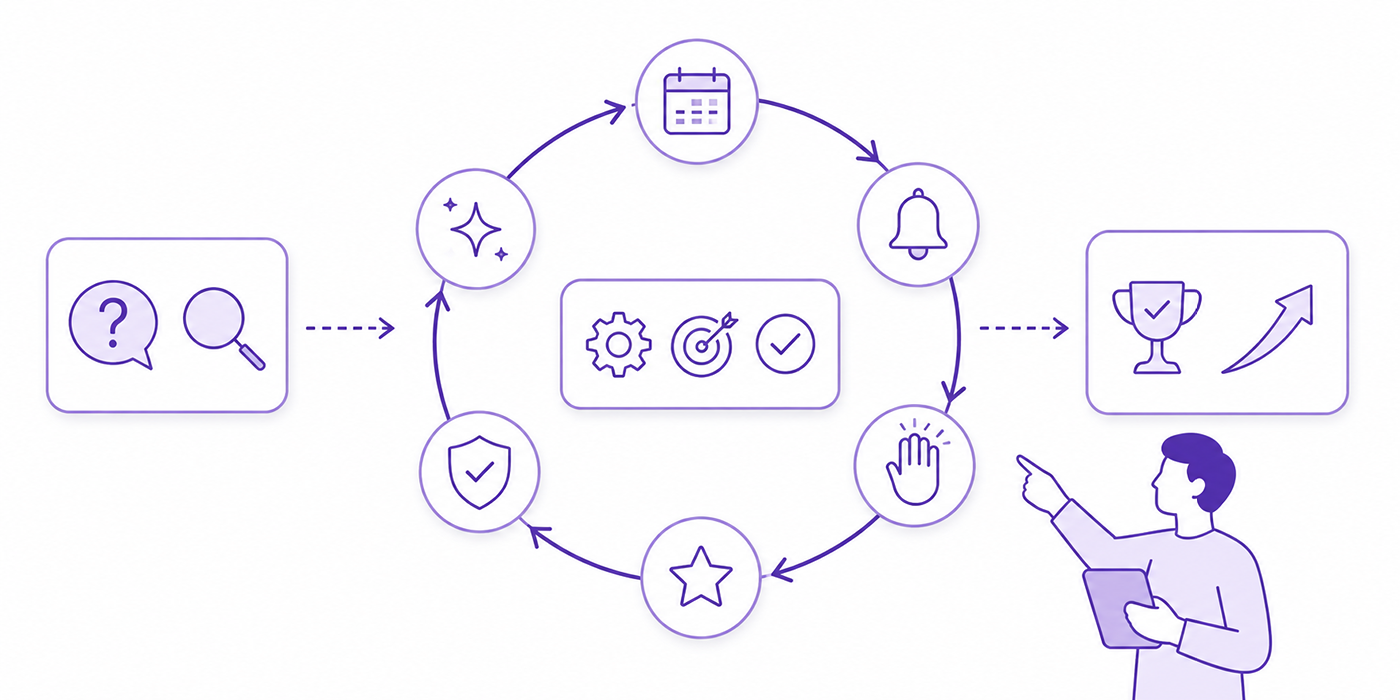
Lasting client results emerge from a repeatable cycle: diagnose the barrier, select one meaningful behavior, reduce friction, create a clear cue, prepare for disruption, measure the process, and adjust without shame. This cycle gives clients something more durable than temporary motivation: the ability to understand and redesign their own behavior.
6. Frequently Asked Questions About Health Behavior Change
-
There is no universal timeline. Automaticity depends on the behavior’s complexity, frequency, emotional reward, environment, and consistency. Drinking water after breakfast may become easier relatively quickly, while maintaining a complex exercise routine across changing schedules may require longer adaptation. Coaches should measure reduced resistance, fewer reminders, stable performance, and faster recovery rather than promising a fixed number of days. The most useful approach combines habit formation principles, habit stacking, and realistic expectation management.
-
Explore the barrier without labeling the client as resistant. The behavior may feel too difficult, restrictive, unrewarding, socially costly, or disconnected from personal values. Ask what the client would change about the plan, what concern remains unspoken, and what smaller action feels acceptable. Emotional agility coaching, strengths-based methods, and a safe coaching environment can uncover the actual obstacle.
-
Both concepts are less useful than designing a repeatable system. Motivation fluctuates, and discipline becomes harder under stress, fatigue, or environmental pressure. A stronger plan creates clear cues, lowers effort, limits decisions, provides immediate reinforcement, and includes a reduced version for difficult days. Behavior-change science, micro-coaching, and structured accountability help clients act with less dependence on emotional readiness.
-
Accountability should gradually transfer control to the client. Early support may include reminders, check-ins, and frequent reflection. Over time, the coach can reduce prompts, ask the client to choose the measurement system, and focus sessions on self-correction. The client should leave coaching with stronger decision-making skills rather than needing permanent external monitoring. The role of accountability, effective coaching automation, and thoughtful client feedback can support this transition.
-
Treat the relapse as a pattern to study. Identify the trigger, emotional state, environmental change, missing support, and first point where recovery could have occurred. Then create a smaller return action that can be completed quickly. Avoid punishment, excessive restriction, and dramatic restarts. Resilience coaching, mindset shifts, and constructive feedback help convert relapse into a stronger maintenance strategy.
-
Most clients benefit from one primary behavior and, when appropriate, one supporting behavior. The decision should reflect capacity, urgency, confidence, and environmental stability. Attempting simultaneous changes in diet, exercise, sleep, stress, hydration, and productivity often creates decision fatigue and weakens learning. The coach can use the life balance wheel, holistic coaching, and preventive health coaching to identify the behavior most likely to create wider benefits.
