
Remote Health Coach Jobs: Reddit Experiences, Salary Reality & How to Compete for Legitimate Roles
Remote health coaching looks attractive for obvious reasons: meaningful work, virtual delivery, flexible geography, and entry into digital healthcare. The hiring reality in 2026 is considerably more competitive. Coaches researching health coach jobs after certification, whether health coaching is still worth it, realistic health coaching income, and NBHWC career pathways need to understand what employers actually pay, which credentials survive screening, and why qualified applicants still struggle to get interviews.
1. What Remote Health Coach Jobs Actually Look Like in 2026
The remote health coaching market exists, and current vacancies confirm that legitimate employers continue hiring coaches into digital health, chronic-condition management, wellness, obesity care, musculoskeletal health, preventive care, and related programs. The important distinction is that “remote health coach” describes several very different jobs.
A current Vida Health posting offers a remote part-time health coach role at $30 an hour. It requires a health-related degree, an approved health coaching certification, and at least three years of one-to-one coaching experience after certification. The job includes individual and group video sessions, electronic messaging, Motivational Interviewing, SMART goals, documentation, multidisciplinary collaboration, and performance against quality and efficiency metrics.
That job description alone explains why reading about SMART goals in coaching, strengthening health behavior change skills, understanding coaching duty of care, and developing strong professional coaching conduct has practical employment value. Employers frequently want evidence that a coach can operate inside structured healthcare workflows, documentation requirements, privacy rules, and measurable performance standards.
Virta Health currently advertises a full-time remote health coach position at $30 per hour plus equity. Its requirements include coaching experience or recent completion of a coaching program, preferably NBHWC or ICF aligned, plus a health or behavioral-health-related degree. The posting also emphasizes chat and telephone coaching, health data, metabolic health, digital-platform fluency, AI-enabled tools, organization, and remote-care communication.
Another current example comes from Protera Health. Its fully remote Wellness Coach role pays $52,000 annually and requires health coach certification, at least two years in a patient-facing healthcare role, virtual-care experience, multidisciplinary healthcare experience, and comfort managing high-volume patient interactions. NBC-HWC status is preferred.
These requirements matter for anyone comparing ICF and NBHWC, evaluating certification ROI, trying to land first coaching clients, or wondering why certification alone fails to create demand. Hiring managers increasingly evaluate the entire professional package: certification, experience, specialization, healthcare literacy, technology comfort, communication, documentation, and evidence that you can handle an active caseload.
Reddit experiences echo that reality. One 2025 job seeker reported seeing remote roles attract very heavy competition, while another commenter described eventually reaching $37 an hour in an in-person role after struggling to gain traction with remote applications. Another 2026 thread from a newly certified NBC-HWC simply asked how to land a first remote job and generated interest from other coaches facing the same problem. These anecdotes cannot establish market averages, although they illustrate the applicant pressure surrounding location-independent roles.
The practical lesson for someone exploring remote health coaching employment, building health coaching income, improving behavior-change competence, or strengthening CLEAR coaching skills is straightforward: remote employers increasingly hire healthcare-adjacent operators who can coach, document, communicate, use technology, and function inside a measurable care model.
| # | Remote Role Type | Typical Employer Need | Strong Applicant Signal | What Could Eliminate You |
|---|---|---|---|---|
| 1 | Digital health coach | Behavior change at scale | Strong behavior-change coaching | Zero direct coaching evidence |
| 2 | Chronic-care health coach | Adherence and patient engagement | Healthcare experience + scope awareness | Weak clinical-team communication |
| 3 | Obesity-care coach | Long-term lifestyle adherence | Health certification + motivational interviewing | Making treatment claims outside scope |
| 4 | Prediabetes lifestyle coach | Sustainable preventive behaviors | Goal tracking and SMART goal skills | No measurable coaching process |
| 5 | Diabetes-program coach | Care-plan implementation | Chronic-condition experience | Confusing coaching with clinical treatment |
| 6 | Cardiometabolic coach | Habit and risk-factor support | Health-science background | Limited healthcare literacy |
| 7 | Wellness coach | Broad lifestyle behavior change | Recognized coaching credential | Generic resume with no outcomes |
| 8 | Corporate wellness coach | Employee engagement and prevention | Facilitation + presentation skills | One-to-one skills only |
| 9 | Health engagement specialist | Activation and retention | High-volume communication skills | Weak follow-up discipline |
| 10 | Care navigator | Patient coordination | Healthcare workflow experience | Little documentation experience |
| 11 | Patient advocate | Navigation and communication | Empathy + system knowledge | Poor boundary management |
| 12 | Behavior-change coach | Adherence and motivation | Structured coaching framework | Advice-heavy coaching style |
| 13 | Lifestyle coach | Daily routine change | Habit and accountability expertise | Unable to demonstrate client progress |
| 14 | Preventive-health coach | Risk reduction and engagement | Public-health understanding | Weak preventive-care knowledge |
| 15 | Musculoskeletal wellness coach | Care-plan adherence | Virtual-care experience | No multidisciplinary experience |
| 16 | GI health coach | Behavior and condition-management support | Specialty experience + ethical scope discipline | Overstepping nutrition scope |
| 17 | Sleep wellness coach | Sleep-behavior implementation | Evidence-based habit coaching | Presenting as a sleep clinician |
| 18 | Stress-management coach | Resilience and lifestyle support | Mental fitness coaching | Crossing into psychotherapy |
| 19 | Weight-management coach | Adherence and maintenance | Motivational interviewing | Unsupported nutrition prescriptions |
| 20 | GLP-1 lifestyle coach | Behavioral support alongside treatment | Excellent referral boundaries | Medication guidance outside role |
| 21 | Member success coach | Engagement and program retention | Customer success + coaching skills | Ignoring operational metrics |
| 22 | Population-health coach | Large-panel patient engagement | Caseload management | Only boutique 1:1 experience |
| 23 | Telehealth wellness coach | Remote member support | HIPAA-conscious virtual delivery | No remote-care workflow experience |
| 24 | Bilingual health coach | Expanded member access | Professional-level second language | Inflating language proficiency |
| 25 | Community-program coach | Education and prevention | Cultural competence | Weak group facilitation |
| 26 | Health coach contractor | Flexible capacity | Independent workflow management | Failing to price taxes and benefits |
| 27 | Part-time digital coach | Peak-hour coverage | Evening/weekend availability | Rigid scheduling requirements |
| 28 | Health coach coordinator | Programs + coaching + operations | Project and facilitation skills | Resume focused only on sessions |
| 29 | Coach team lead | Quality and performance management | Leadership competence | Insufficient coaching experience |
| 30 | Specialist health coach | Deep expertise in a defined population | Strong niche + evidence of outcomes | Broad “I coach everyone” positioning |
2. Remote Health Coach Salary Reality: What Current Job Postings Actually Pay
The cleanest way to understand salary in 2026 is to examine real openings instead of relying on one generic “health coach average.”
Current remote postings show a surprisingly wide spread.
US Preventive Medicine currently lists a full-time remote health coach role at $18–$24 per hour. Cadence Health advertises an NBC-HWC remote position at $22–$26 per hour, requiring active NBHWC certification, at least one year of health coaching experience, chronic-condition patient education experience, and remote-work readiness.
Cylinder Health has advertised a remote health coach role at $25.50–$29.50 per hour, plus a weekend differential. The position requires NBC-HWC certification or near-term exam eligibility, a health-related bachelor's degree, and at least one year of synchronous health coaching experience.
Vida's current opening sits at $30 per hour, while Virta's current full-time role also lists $30 per hour. Protera's annual $52,000 salary works out to roughly $25 per hour before considering the value of benefits. Future currently lists $30–$40 per hour, although its role is a 1099 independent-contractor engagement, meaning the contractor is responsible for taxes and does not receive Future employee benefits.
That produces a useful 2026 reality range: many coach-only remote positions currently cluster somewhere around the low-$20s through roughly $30 per hour, with stronger opportunities reaching $30–$40 or higher when credentials, specialization, experience, or business model support it. This is an observation from current openings rather than an official universal salary band.
Anyone calculating whether they can make a living as a health coach, comparing employment with independent practice, considering the financial ROI of certification, or studying client-acquisition timelines should compare total compensation rather than hourly rate alone.
A $30 W-2 employee role with health insurance, paid time off, employer payroll taxes, retirement contributions, and predictable hours can have stronger economics than a $35 contractor role where the coach funds their own benefits, absorbs unpaid administrative time, and carries greater income volatility.
Reddit users are actively discussing this exact problem. An August 2026 thread criticized a $20–$25 per hour role requiring NBHWC credentials. Another commenter reported securing $30 per hour as a 1099 contractor, while others pointed out that contractor taxation and missing benefits reduce the effective value of that rate.
A February 2026 discussion was similarly critical of low-paying “coaching mill” roles and high caseload pressure, although the original poster also reported interviewing for better-paying positions and observed that stronger jobs frequently required coaching certification. That helps explain why NBHWC eligibility, ICF versus NBHWC decisions, professional coaching standards, and health coaching career viability should be evaluated together.
Clinical credentials can move compensation into a different category
A remote “RN Health Coach” can command substantially higher compensation because the employer is paying for nursing licensure and clinical capability alongside coaching skills. Current listings include an Evernorth RN Health Coach position advertising $77,500–$129,100 annually.
A coach comparing that salary with a $25-per-hour NBC-HWC role needs to recognize that these positions purchase different scopes of practice and different professional credentials.
This distinction also matters when studying duty of care, coaching scope and certification, health coaching employment, and the economics of full-time health coaching. A credential should be evaluated according to the job category it unlocks.
3. Why Qualified Coaches Still Struggle to Get Remote Interviews
Remote positions remove geography from the first stage of competition.
A local hospital role may compete with applicants living within commuting distance. A U.S.-remote digital-health role can potentially receive applications from qualified coaches across dozens of states.
Reddit users repeatedly describe that pressure. A 2025 thread included one commenter claiming many postings received extremely high applicant volume and another coach who reported much greater success securing an in-person role after struggling with remote applications. A different 2025 discussion advised aspiring coaches that certification is increasingly common in job requirements, competition remains difficult, and flexible contract positions or related care-coordination roles may provide an entry route.
That makes the problems described in why certified coaches cannot find clients, health coach employment after certification, health coaching career ROI, and first-client acquisition highly relevant to job seekers too. Employment applications also require positioning.
Certification gets you through one filter
Some employers explicitly require NBC-HWC.
Cadence currently requires active NBHWC certification. Cylinder requires certification or eligibility to sit for the exam within six months. Vida requires an approved health-coaching certification and prefers CHES or NBC-HWC.
Understanding health coaching certification versus NBHWC, ICF versus NBHWC, certification career ROI, and health coaching income models therefore helps you target credentials according to actual employer requirements.
Experience eliminates another large group
Vida requests three years of one-to-one coaching after approved certification. Protera requires two years of patient-facing healthcare experience and previous virtual-care exposure. Cylinder wants at least one year of synchronous coaching experience.
New coaches therefore face a classic problem: employers want experience, while employment provides experience.
The solution can involve carefully chosen contract work, community programs, supervised coaching hours, part-time roles, preventive-health programs, patient engagement jobs, care coordination, or an independently developed coaching practice. Skills from SMART goal coaching, OSCAR coaching, T-GROW coaching, and CLEAR coaching become more valuable when a resume shows where they were applied.
Remote healthcare requires operational skills
Virta explicitly mentions texting, phone calls, video chats, instant messaging, Google Workspace, Slack, Zoom, digital platforms, and AI-enabled tools. Vida requires platform use, documentation, confidentiality, performance benchmarks, and strict handling of protected health information.
That means your resume should show more than behavior-change knowledge, coaching ethics, duty of care, and cultural competence. Employers also need evidence that you can operate inside their system every day without creating administrative chaos.
4. How to Compete for Remote Health Coach Jobs Without Sending 200 Generic Applications
The strongest application strategy begins by treating every vacancy like a matching exercise.
Take the employer's requirements and build a requirement-to-evidence matrix before applying.
If the posting requests Motivational Interviewing, identify where you used it.
If it requests chronic-condition coaching, identify the population, volume, and outcome.
If it requests remote care, name the technologies and communication channels.
If it requests documentation, describe the system and workflow.
If it requests multidisciplinary collaboration, identify which professionals you worked alongside.
This approach turns training in health behavior change, SMART goals, CLEAR coaching, and OSCAR coaching into evidence an employer can evaluate.
Replace responsibility bullets with evidence bullets
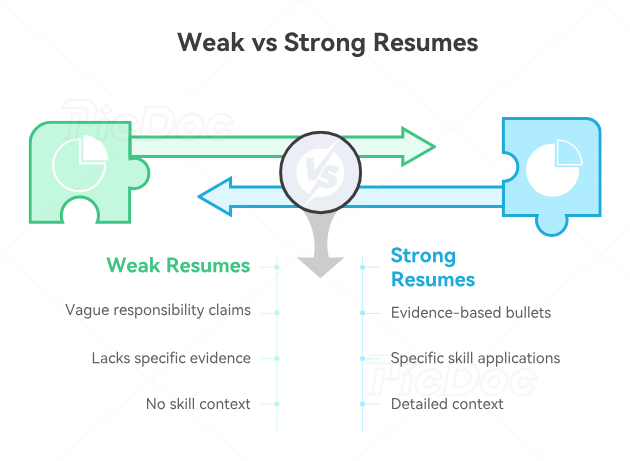
Weak:
“Provided health coaching to clients.”
Stronger:
“Managed a weekly caseload of 32 adults working on weight, activity, stress, and sleep goals using Motivational Interviewing and structured behavior-change planning.”
Weak:
“Helped clients set goals.”
Stronger:
“Translated broad wellness goals into measurable weekly behaviors, tracked adherence, documented barriers, and adjusted action plans through client-led coaching.”
This distinction matters for applicants reading about why coaches struggle to find opportunities, health coaching job requirements, professional coaching conduct, and duty of care. Your resume should show how you function in practice.
Search more titles than “health coach”
Many relevant jobs sit under adjacent titles:
Wellness Coach
Lifestyle Coach
Behavior Change Coach
Patient Engagement Specialist
Health Engagement Specialist
Care Navigator
Care Coordinator
Wellness Coordinator
Population Health Specialist
Patient Advocate
Digital Health Coach
Member Success Coach
A Reddit discussion about breaking into the field specifically suggested care-coordinator or engagement roles as possible entry points for candidates who need experience. This can be especially useful while developing NBHWC eligibility, building client-facing experience, strengthening behavior-change practice, and learning professional boundaries.
Build the six skills appearing repeatedly in legitimate postings
1. Motivational Interviewing. Vida explicitly tests candidates through a mock Motivational Interview. Pair this with CLEAR coaching, T-GROW, OSCAR, and SMART goal setting.
2. Virtual communication. Employers want coaches who can build rapport through video, telephone, messaging, and asynchronous communication.
3. Documentation. Remote healthcare runs on records. Accurate, concise documentation influences continuity, safety, quality measurement, and legal defensibility.
4. Caseload management. Employers need evidence you can maintain follow-ups, appointments, documentation, messaging, and escalation across dozens of members.
5. Scope discipline. Understanding coaching ethics, duty of care, contracting principles, and cultural competence helps you function within multidisciplinary teams.
6. Technology and AI fluency. Virta explicitly expects safe and effective use of digital platforms and AI-enabled tools. Cadence's current role goes further, requesting fluency with AI-assisted clinical tools and the ability to communicate where human judgment remains essential.
A 2026 applicant who ignores digital fluency leaves an increasingly important differentiator off the resume.
Build specialty leverage
A broad coach competes with every other broad coach.
Experience with diabetes prevention, metabolic health, obesity care, gastrointestinal conditions, musculoskeletal care, employee wellness, older adults, bilingual populations, or high-volume telehealth creates a clearer employment story.
That same positioning logic explains the commercial strength of specialized health coaching, health behavior expertise, culturally competent coaching, and career-focused credential choices.
5. How to Find Legitimate Roles, Avoid Job Scams & Build a 30-Day Application System
Start with sources closest to the employer.
The NBHWC operates a Career Center connecting employers with NBC-HWCs and currently lists health and wellness positions. Reddit users have also recommended locating opportunities through LinkedIn or job boards and then going directly to the employer's website to verify and apply.
This verification habit matters because remote-work scams remain active in 2026. The FTC warns that fake recruiters may impersonate legitimate companies, approach candidates by text, WhatsApp, or similar channels, promise remote work, and eventually request money or financial information. It advises applicants to research employers independently and avoid any job that requires payment to obtain employment.
The FTC also recommends verifying vacancies on the organization's actual website because scammers can copy real job advertisements and republish altered versions.
For someone researching health coach employment, full-time health coaching income, professional coaching ethics, and certification ROI, a legitimate-job checklist should include the following:
Confirm the opening exists on the company's official careers page.
Check whether recruiter email addresses use the employer's real domain.
Confirm salary or compensation structure whenever possible.
Identify whether the role is W-2 employment, contract employment, or 1099 contracting.
Read location restrictions carefully.
Verify credential and degree requirements before applying.
Look for clear responsibilities, reporting structures, technologies, schedules, and performance expectations.
Avoid employers requiring payment for equipment, mandatory recruitment fees, or job access.
Treat unexpected WhatsApp, Telegram, and text recruiting cautiously.
Avoid depositing an employer “equipment check” and sending money elsewhere.
Research the company alongside terms such as complaints, reviews, layoffs, or scam.
Confirm how protected health information is handled if the job involves healthcare data.
One current employer, Protera Health, even places fraud-prevention instructions directly inside its job posting. It specifies the domain its recruiters use, states that applicants will never be asked for payment or sensitive banking information before a written offer, and identifies the platform used for interviews. That level of clarity is a useful benchmark when evaluating unfamiliar employers.
A 30-day remote-job system
Days 1–3: Build your target list. Choose three job families rather than applying indiscriminately. For example: digital health coach, care navigator, and wellness coach. Compare each against your NBHWC pathway, health coaching experience, behavior-change skills, and professional boundaries.
Days 4–6: Create a master evidence bank. Write down every measurable example of coaching volume, outcomes, retention, documentation, chronic-condition exposure, motivational interviewing, technology use, group facilitation, multidisciplinary collaboration, and patient communication.
Days 7–10: Build two resume versions. One can target healthcare-integrated roles. The other can target wellness and engagement roles. Include relevant SMART goal work, CLEAR coaching, T-GROW methods, and behavior-change outcomes through real evidence rather than framework lists.
Days 11–20: Apply selectively. Aim for high-match applications where you satisfy most essential criteria. Tailor the top third of the resume, core skills, and experience bullets to the vacancy. Verify every opening through the company.
Days 21–25: Prepare interview evidence. Practice a five-minute coaching demonstration. Prepare stories covering a resistant client, a missed goal, a boundary issue, a difficult conversation, multidisciplinary collaboration, a high caseload, and a measurable client improvement.
Days 26–30: Diagnose your funnel. Track applications, recruiter responses, screening calls, interviews, assignments, and offers.
If 30 high-match applications produce zero recruiter screens, review the resume and targeting.
If screens occur and interviews disappear, improve interview evidence.
If final rounds occur repeatedly without offers, examine differentiation, role fit, compensation expectations, and reference quality.
This same funnel thinking applies to finding coaching clients, understanding why certified coaches struggle, calculating coaching-business income, and deciding between employment and independent practice. Diagnose the stage where conversion breaks instead of changing everything at once.
6. FAQs About Remote Health Coach Jobs in 2026
-
Current coach-focused postings show meaningful variation. Examples include $18–$24 per hour at US Preventive Medicine, $22–$26 at Cadence, $25.50–$29.50 at Cylinder, $30 at Vida and Virta, and $30–$40 for Future's contractor role. Protera currently advertises $52,000 annually.
Evaluate these figures alongside realistic coaching-income math, health coach employment, credential ROI, and private-practice alternatives.
-
Requirements vary. Some roles require it, some prefer it, and others accept an approved coaching program or related credential.
Cadence currently requires active NBHWC certification. Cylinder requires NBC-HWC status or near-term eligibility. Vida requires a recognized approved coaching certification while listing NBC-HWC as preferred.
Compare NBHWC certification pathways, ICF versus NBHWC, health coaching job requirements, and certification career ROI before selecting additional education.
-
Entry is possible, although current vacancies show why it can be difficult. Many competitive employers ask for one to three years of coaching or healthcare experience. Virta is comparatively accessible because its posting accepts coaching experience or recent completion of a coaching program, while also seeking a related degree and strong digital capabilities.
New coaches can build credibility through first-client experience, behavior-change practice, SMART coaching, and adjacent healthcare employment.
-
Remote roles draw applicants across wide geographic areas, and many certification programs graduate candidates seeking the same work-from-home opportunities. Current employers also combine coaching requirements with healthcare experience, digital literacy, documentation, specialty knowledge, and productivity expectations.
Reddit users have described intense competition and difficulty getting callbacks even with credentials. Stronger differentiation comes from specialized coaching skills, clear career positioning, NBHWC-aligned credentials, and proven professional standards.
-
Useful channels include the NBHWC Career Center, employer career pages, LinkedIn, Indeed, healthcare startup job boards, digital-health company websites, insurer career portals, hospital systems, and wellness vendors. NBHWC maintains its own Career Center for health and wellness opportunities.
Search related titles while continuing to develop health coach employability, behavior-change competence, coaching ethics, and a strong career-return calculation.
-
Verify the vacancy through the company's official website and confirm recruiter communication comes through legitimate channels. The FTC warns against unexpected job messages, upfront payments, requests to deposit checks and return money, and premature requests for sensitive financial information.
Keep the same discipline you would apply to coaching contracts, professional duty of care, the coaching code of conduct, and health coaching career decisions: verify claims before committing money or sensitive information.
