
Public Speaking Coaching: Why It’s Your Next Big Coaching Opportunity
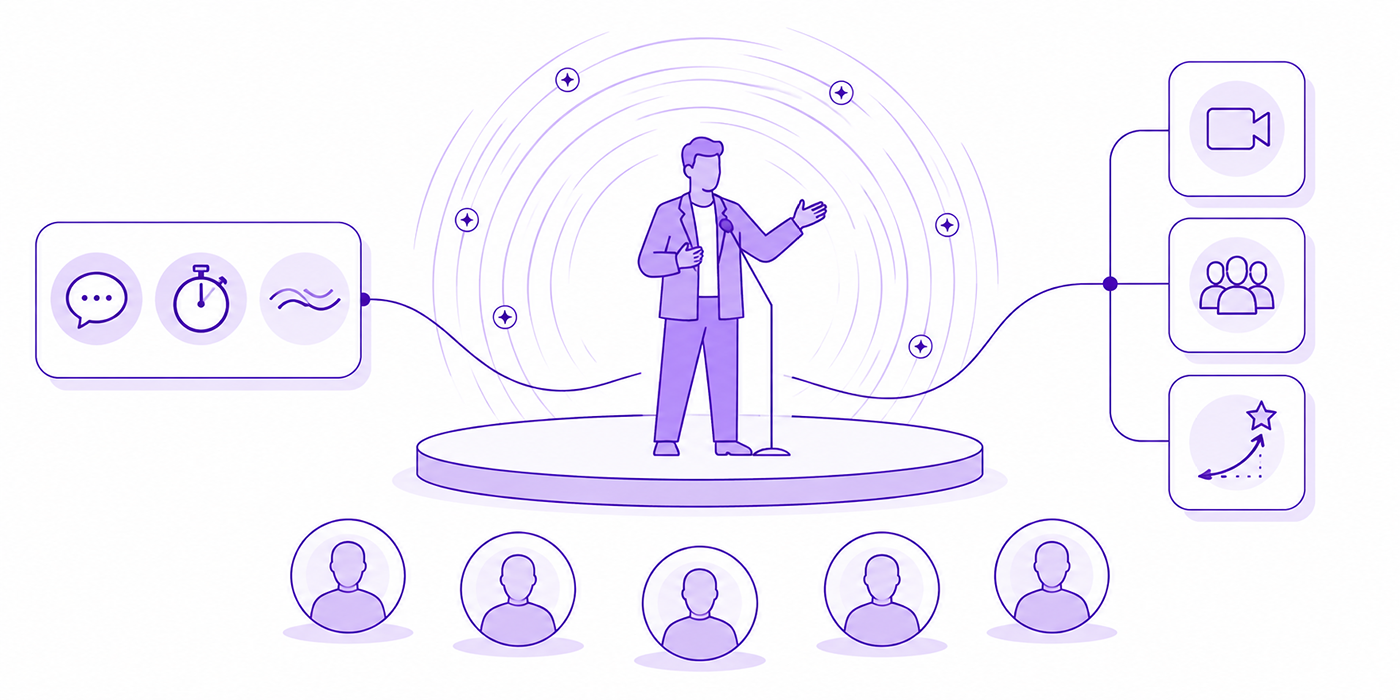
Public speaking now influences far more than conference stages. Professionals must lead meetings, pitch ideas, record videos, teach online, handle interviews, present strategy, and communicate during high-pressure conversations. Many have strong expertise yet lose authority through rushed delivery, unclear messaging, visible anxiety, or weak audience engagement. Public speaking coaching gives coaches a measurable way to improve client confidence, strengthen emotional intelligence, develop behavioral consistency, and connect communication skills directly to career and business outcomes.
1. Why Public Speaking Coaching Has Become a High-Value Opportunity
Public speaking used to be associated primarily with keynote speakers, politicians, lecturers, and corporate presenters. Today, almost every ambitious professional operates in environments where ideas must be communicated visibly. A project manager must defend a recommendation. A health coach must explain a program during a discovery call. A founder must pitch investors. A manager must deliver difficult feedback. A specialist must translate technical knowledge into language decision-makers understand.
This shift creates a large coaching opportunity because communication problems often remain hidden behind labels such as low confidence, poor leadership presence, weak sales performance, or limited career progression. A coach trained in strengths-based coaching, constructive feedback, client anxiety support, and emotional agility can identify the communication behavior underneath the visible problem.
A technically capable employee may remain overlooked because senior leaders rarely hear a concise explanation of their achievements. A business owner may generate leads and lose them during unclear consultations. A new manager may understand the strategy and struggle to communicate it with authority. A creator may have valuable ideas and avoid video because every recording feels awkward. Each situation creates a practical coaching engagement with observable before-and-after evidence.
Public speaking coaching also offers stronger positioning than generic confidence coaching. “Become more confident” feels broad. “Deliver a five-minute presentation without reading from slides, communicate three key points clearly, and answer challenging questions calmly” creates a specific outcome. Coaches can support that outcome through accountability systems, habit formation, micro-coaching exercises, and transformational behavioral strategies.
Public speaking is now a collection of commercial skills
Clients rarely need the same speaking outcome. The opportunity includes:
Leadership presentations
Sales conversations
Job interviews
Salary negotiations
Webinar delivery
Podcast interviews
Camera confidence
Workshop facilitation
Panel discussions
Networking introductions
Team briefings
Difficult workplace conversations
Community presentations
Conference speeches
Investor pitches
Client onboarding calls
Each format requires a different mix of message design, emotional regulation, audience awareness, vocal delivery, and rehearsal. This gives coaches room to build niche programs around leadership development, career burnout recovery, business growth, and client experience improvement.
The strongest opportunity often sits with competent people who already know their subject. Their problem appears when expertise must become understandable, persuasive, and memorable. A public speaking coach helps the client organize that expertise into a message an audience can absorb and act upon.
| Client Situation | Hidden Communication Problem | High-Value Coaching Exercise | Progress Indicator | ANHCO Resource |
|---|---|---|---|---|
| Executive presentations | Too much detail hides the central recommendation | Reduce the presentation to one decision, three reasons and one next step | Audience can repeat the recommendation accurately | Improve message clarity |
| Job interviews | Answers describe duties instead of measurable value | Build six concise achievement stories using context, action and result | Answers stay under two minutes and include evidence | Communicate professional strengths |
| Salary negotiations | Anxiety weakens the compensation case | Rehearse a value statement, evidence summary and specific request | Client states the request without apologizing or overexplaining | Strengthen negotiation confidence |
| Sales consultations | The speaker talks extensively before understanding the buyer | Use a diagnostic question sequence before presenting the offer | Client speaks less and uncovers clearer buying needs | Improve premium sales conversations |
| Webinar delivery | Information density causes audience disengagement | Insert an example, question or interaction every five minutes | Higher completion and participation rates | Use technology intentionally |
| Camera confidence | Self-monitoring makes delivery stiff and unnatural | Record five unscripted one-minute explanations | Fewer retakes and more natural eye contact | Apply rapid practice cycles |
| Conference speeches | The talk lacks a memorable central idea | Write a one-sentence audience transformation statement | Every story and example supports the same idea | Clarify the desired transformation |
| Team meetings | Updates contain activity without decisions | Structure every update around progress, risk and required action | Meetings produce clearer ownership and fewer follow-ups | Create stronger accountability |
| Difficult feedback | Fear of conflict creates vague communication | Describe the behavior, impact, expectation and support available | The recipient understands exactly what must change | Deliver actionable feedback |
| Investor pitches | Product features overshadow business relevance | Lead with the problem, market consequence and proof of demand | Listeners ask strategic rather than basic clarification questions | Present commercial evidence |
| Panel discussions | Long answers reduce impact and airtime | Practice 30-, 60- and 90-second versions of each viewpoint | Responses become concise and quotable | Respond flexibly under pressure |
| Podcast interviews | Answers wander because the speaker lacks message anchors | Prepare three themes, five examples and one audience action | Interview remains focused without sounding scripted | Use credible examples |
| Workshop facilitation | The trainer lectures instead of creating participation | Convert every concept into a question, activity or decision | Participants contribute and apply the material | Design stronger experiences |
| Networking introductions | The introduction sounds generic and forgettable | State who you help, the problem and the result in 20 seconds | Listeners ask relevant follow-up questions | Improve networking influence |
| Technical presentations | Specialist language excludes decision-makers | Replace jargon with consequences, comparisons and examples | Non-specialists understand the decision required | Create audience accessibility |
| New managers | Authority is confused with speaking forcefully | Practice calm direction, clear expectations and open questions | Instructions become firm, respectful and specific | Build relational authority |
| Remote meetings | Low energy and weak turn-taking reduce presence | Use shorter contributions, vocal variation and deliberate pauses | Client contributes earlier and receives more engagement | Improve virtual delivery systems |
| Client onboarding | Important expectations are buried in excessive information | Organize onboarding around outcomes, responsibilities and next steps | Fewer repeated questions and smoother implementation | Set expectations clearly |
| Impromptu speaking | The client freezes without preparation time | Use the point-reason-example-point response structure | Client answers unexpected questions within five seconds | Build pressure resilience |
| Storytelling | Stories contain detail without strategic relevance | Define the challenge, turning point, result and lesson | Each story supports a clear message | Structure transformation stories |
| High-speed speaking | Anxiety shortens pauses and reduces comprehension | Mark breathing points directly into the speaking notes | Key ideas remain understandable without sounding slow | Manage performance anxiety |
| Monotone delivery | The client focuses on words and ignores vocal intention | Underline contrast words and vary emphasis during rehearsal | Listeners identify key points more easily | Create delivery habits |
| Slide dependence | Slides function as a script instead of visual support | Deliver each slide’s message without looking at the screen | Speaker maintains audience contact throughout the presentation | Use presentation technology better |
| Handling objections | Defensiveness appears before the concern is understood | Pause, clarify the concern, acknowledge it and respond with evidence | Client remains composed during challenging questions | Handle difficult exchanges |
| Speech openings | The speaker wastes the audience’s highest-attention moment | Open with a relevant problem, decision or surprising consequence | The purpose becomes clear within 30 seconds | Lead with purpose |
| Speech conclusions | The talk ends with a summary and no action | Close with one decision, commitment or next step | Audience knows exactly what to do afterward | Connect communication with action |
| Audience questions | The client gives long answers to prove expertise | Answer directly, support briefly and confirm understanding | Responses stay focused and credible | Develop concise responses |
| Speech rehearsal | Practice consists of silent reading | Rehearse aloud under realistic timing and environmental conditions | Delivery becomes stable without memorization | Build repeatable rehearsal cues |
| Thought leadership | Ideas remain broad because the speaker fears disagreement | Develop one defensible perspective supported by evidence and experience | Content generates meaningful discussion and recognition | Build industry influence |
| Speaking after criticism | One negative response damages future performance | Separate useful feedback, audience preference and personal attack | Client adjusts specific behaviors without abandoning visibility | Use feedback productively |
2. How Speaking Anxiety Damages Performance, Visibility and Income
Speaking anxiety becomes expensive when it changes behavior. A client may avoid applying for leadership roles, decline podcast invitations, remain silent in strategic meetings, postpone video content, or price services defensively because explaining value feels uncomfortable. The financial consequence grows through lost visibility, weak influence, delayed decisions, and missed opportunities.
A useful coach examines the complete performance chain:
Trigger: The client receives an invitation, question, microphone, camera, or speaking assignment.
Interpretation: The client predicts embarrassment, rejection, memory failure, or public judgment.
Physical response: Breathing shortens, muscles tighten, the voice becomes unstable, or thoughts accelerate.
Protective behavior: The client rushes, reads slides, overprepares, avoids eye contact, speaks too softly, or cancels.
Audience effect: The message becomes harder to understand or trust.
Long-term consequence: The client receives fewer opportunities and gains less confidence-building experience.
This chain gives the coach multiple intervention points. Anxiety-aware coaching can reduce threat interpretations. Emotional agility helps clients act while discomfort remains present. Habit formation turns rehearsal into routine. Accountability coaching prevents avoidance from hiding behind preparation.
Diagnose the real cause before prescribing confidence exercises
Public speaking difficulties usually contain several overlapping problems:
Message problems: The speaker lacks a clear purpose, structure, audience focus, or central idea.
Delivery problems: Pace, volume, pauses, emphasis, posture, or eye contact reduce clarity.
Preparation problems: The client rehearses too little, memorizes rigidly, or practices under unrealistic conditions.
Anxiety problems: Fear changes breathing, attention, memory access, and willingness to speak.
Experience problems: The client has received little useful feedback and lacks repeated exposure.
Context problems: The audience, power dynamics, language demands, accessibility needs, or workplace culture create genuine difficulty.
A coach who labels everything as low confidence may give motivational advice while the structural problem survives. Someone who loses their place because a 40-slide presentation contains no clear architecture needs message design. Someone who knows the message and freezes when challenged needs pressure rehearsal and resilience coaching. Someone who fears workplace consequences may need safe-environment principles, emotional-intelligence coaching, and careful expectation management.
Replace vague confidence goals with speaking behaviors
“Speak confidently” creates no reliable practice plan. Coaches should translate confidence into visible behaviors:
Begin within three seconds of being introduced.
State the central point in the first minute.
Maintain a steady pace during the opening.
Pause after important statements.
Look at listeners rather than reading continuously.
Finish within the allocated time.
Answer questions in under 90 seconds.
Recover calmly after losing a word.
Make one clear request or recommendation.
Review feedback without abandoning the next opportunity.
These targets allow the client to improve through micro-coaching, constructive feedback, behavior-change planning, and strengths-based reflection.
3. A Public Speaking Coaching Framework That Produces Visible Results
A professional public speaking program requires more than advice about breathing, posture, and eye contact. The coach needs a repeatable method that identifies the client’s real communication objective, captures a baseline, strengthens one behavior at a time, and measures transfer into real situations.
Step 1: Define the communication outcome
Ask what should happen because the client speaks. Possible outcomes include approval, understanding, trust, action, investment, enrollment, promotion, behavior change, or conflict resolution.
A speech can sound polished and still fail when the audience remains unsure what to think or do. The coach should clarify:
Who is listening?
What does the audience already believe?
What resistance may appear?
Which decision is required?
What must listeners remember afterward?
Which evidence will feel credible?
What action should follow?
This process connects life-purpose coaching, life visioning, transformational coaching, and emotional-intelligence development with a practical communication objective.
Step 2: Record a realistic baseline
Ask the client to deliver a short sample under conditions resembling the real assignment. A presentation client can deliver the opening and one difficult section. An interview client can answer three common questions. A sales client can explain the offer and handle an objection.
Review observable categories:
Purpose
Structure
Relevance
Clarity
Examples
Pace
Pauses
Vocal emphasis
Physical presence
Audience connection
Time control
Recovery after mistakes
Response to questions
The coach should prioritize two or three behaviors. Overloading a client with twelve corrections usually creates self-conscious delivery and weak retention. Constructive feedback methods, positive psychology coaching, strengths-based coaching, and safe coaching environments help feedback remain precise and usable.
Step 3: Build the message architecture
A practical structure includes:
The audience problem or decision
The central message
Three supporting points
Evidence, example or story for each point
The requested action
A concise conclusion
This structure reduces memory pressure because the client remembers the route rather than every sentence. It also improves adaptability. The speaker can shorten or expand sections without losing the core message.
Stories should earn their place. A useful story demonstrates a problem, decision, consequence, or transformation. Coaches can apply the same discipline used in credible coaching case studies, successful client transformations, feedback-led business growth, and exceptional client experiences.
Step 4: Train delivery through deliberate practice
Choose one delivery variable per rehearsal. A client might first practice pauses, then vocal emphasis, then eye contact. This preserves cognitive capacity and creates faster improvement.
Useful exercises include:
Marking pauses into the script
Delivering the opening at three different speeds
Explaining the same idea in 30, 60, and 120 seconds
Removing filler words through silent pauses
Practicing with intentional vocal contrast
Answering questions under strict time limits
Rehearsing after a planned interruption
Presenting without slides
Recording one take without restarting
Delivering to a small live audience
Small repetitions align with habit stacking, behavior-change science, micro-coaching, and accountability-based coaching.
Step 5: Create a progressive exposure ladder
A nervous client may begin by speaking alone into a camera, then to the coach, then to two trusted people, then in a small meeting, and finally in the target environment. Each stage should be challenging enough to create learning while remaining achievable.
The coach measures completion, anxiety before and after, recovery speed, and the client’s ability to use the planned behaviors. This method supports emotional agility, resilience coaching, client anxiety strategies, and self-confidence development.
Step 6: Transfer the skill into real opportunities
The program should culminate in a real presentation, interview, sales call, webinar, video, or leadership conversation. The coach then reviews what transferred successfully and which conditions disrupted performance.
This final stage converts coaching into career and commercial evidence. The client can track stronger audience responses, increased participation, successful interviews, clearer decisions, improved conversion, or greater workplace visibility.
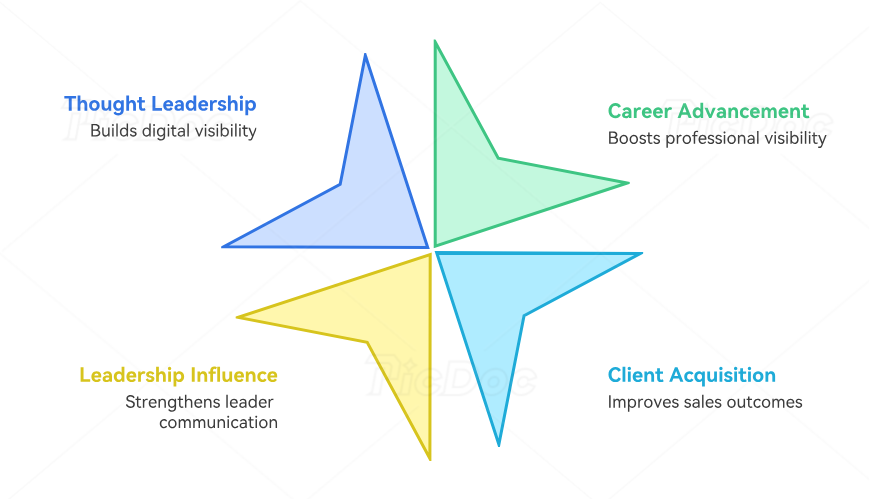
4. How Public Speaking Coaching Creates Career and Business Results
The commercial value of public speaking coaching appears when communication changes decisions. A stronger speech may lead to approval, promotion, investment, trust, enrollment, collaboration, or client action. Coaches should therefore connect every speaking goal to a meaningful external result.
Career advancement
Professionals often assume performance speaks for itself. Senior decision-makers usually experience only a small portion of an employee’s work. Presentations, interviews, meetings, and strategic conversations determine how much of that value becomes visible.
A public speaking coach can help clients:
Present achievements using measurable evidence
Contribute earlier during meetings
Explain complex work to senior leaders
Ask for expanded responsibility
Prepare promotion cases
Handle interview questions concisely
Negotiate compensation calmly
Lead cross-functional discussions
Communicate during organizational change
These outcomes connect naturally with career-burnout coaching, strengths-based coaching, life-purpose coaching, and emotional-intelligence development.
Client acquisition and sales
A sales presentation fails when the buyer cannot connect the offer with an urgent problem. The coach can help a business owner communicate value through diagnosis, examples, proof, boundaries, and a clear recommendation.
Track metrics such as:
Qualified conversations completed
Proposals requested
Follow-ups completed
Conversion rate
Average package value
Objections handled
Referrals generated
Webinar registrations
Consultation attendance
Audience-to-client conversion
This work integrates well with high-ticket offer development, client expectation management, business-growth automation, and payment-system design.
Leadership influence
Leaders speak during uncertainty, disagreement, underperformance, and change. Their communication must reduce confusion and clarify action. Public speaking coaching can strengthen town halls, performance conversations, strategic presentations, crisis updates, and team briefings.
A leadership client should learn to communicate:
What has happened
What remains uncertain
What decision has been made
Why the decision was made
What employees should do
What support is available
When further information will arrive
This approach reflects emotional crisis support, safe communication environments, constructive feedback, and handling difficult client situations.
Thought leadership and digital visibility
Professionals increasingly communicate through short videos, webinars, podcasts, online courses, and livestreams. The coach can help clients create repeatable message systems rather than treating every appearance as a completely new performance.
A useful content-speaking framework includes:
Identify one audience problem.
Explain why the problem persists.
Offer one practical insight.
Demonstrate it through an example.
Give one action the audience can take.
End before the message becomes diluted.
Coaches can support execution through coaching technology, automation tools, habit stacking, and networking strategies.
5. How to Package and Scale a Public Speaking Coaching Practice
Broad public speaking coaching can become difficult to market because potential clients experience highly specific problems. Strong positioning names the audience, situation, and result.
Examples include:
Presentation coaching for first-time managers
Camera-confidence coaching for health professionals
Interview coaching for senior executives
Webinar coaching for consultants
Pitch coaching for founders
Communication coaching for technical specialists
Workshop-delivery coaching for educators
Sales-speaking coaching for service providers
English-language presentation coaching for global professionals
Thought-leadership coaching for subject-matter experts
Niche positioning helps coaches create sharper messaging, repeatable assessments, relevant exercises, and credible case studies. It also supports profitable practice scaling, certification portfolio development, networking authority, and joint-venture growth.
Build a three-level offer ladder
Speaking diagnostic: A recorded assessment, written feedback, priority action plan, and one coaching session.
Focused speaking sprint: Four to six sessions targeting one event, interview, presentation, webinar, or pitch.
Communication mastery program: Eight to twelve sessions covering message design, delivery, anxiety regulation, impromptu speaking, questions, and real-world transfer.
The diagnostic creates a low-risk entry point. The sprint solves an urgent problem. The longer program develops durable communication capability. Coaches can support delivery using must-have coaching tools, coaching automation, exceptional client experiences, and client retention strategies.
Price around scope and coaching intensity
Pricing should consider:
Number and length of sessions
Depth of speech review
Written feedback
Rehearsal frequency
Between-session access
Event urgency
Executive seniority
Group or individual delivery
Customized research
On-site support
Recording and technology requirements
Follow-up after the speaking event
A high-stakes investor pitch or executive presentation usually requires more preparation than a general confidence program. The coach should define revision limits, response times, cancellations, ownership of materials, confidentiality, and expected client preparation. Payment systems, legal coaching requirements, business-structure planning, and financial forecasting support sustainable delivery.
Scale through groups and reusable systems
Public speaking coaching works well in small groups because clients learn by observing different speaking styles, audience reactions, and feedback. A group program might include weekly teaching, live practice, peer feedback, recordings, and individual scorecards.
Scalable assets include:
Presentation-planning templates
Rehearsal scorecards
Interview story banks
Objection-response worksheets
Speech-structure guides
Vocal-delivery drills
Camera-confidence challenges
Audience-analysis forms
Feedback frameworks
Progress dashboards
These assets make delivery more consistent and prepare the practice for business automation, franchising a coaching method, profitable scaling, and client-retention systems.
Protect ethical boundaries
A public speaking coach can support communication skills, performance habits, preparation, feedback, emotional regulation, and professional development. Clinical anxiety disorders, trauma, speech-language disorders, neurological conditions, and serious mental-health concerns may require licensed professionals.
Responsible coaches should know when to refer clients while continuing appropriate skill-based support. Coaching legal requirements, safe coaching practices, emotional-crisis support, and credentialing standards help protect the client and the practice.
6. FAQs About Public Speaking Coaching
-
A public speaking coach helps clients improve message structure, audience relevance, delivery, rehearsal, confidence, question handling, and real-world performance. Sessions often include recorded practice, targeted feedback, speaking exercises, exposure planning, and preparation for specific events. Strong programs use behavior-change science, accountability systems, constructive feedback, and micro-coaching exercises to create measurable improvement.
-
Public speaking coaching can support executives, managers, founders, consultants, educators, coaches, sales professionals, job seekers, technical specialists, content creators, and community leaders. The strongest candidates have a meaningful communication opportunity and a specific performance gap. Strengths-based coaching, career-burnout coaching, emotional-intelligence coaching, and life-purpose coaching can deepen the work.
-
Clients can often improve a specific behavior within one or two sessions, especially when the goal involves structure, pace, openings, conclusions, or question handling. Durable confidence requires repeated exposure in realistic situations. A four- to six-session sprint can prepare a client for one event, while an eight- to twelve-session program supports broader communication change. Habit formation, habit stacking, accountability coaching, and resilience coaching improve consistency.
-
Coaching can support preparation, gradual exposure, breathing routines, recovery skills, attention control, and realistic rehearsal. Severe anxiety that causes panic attacks, major avoidance, significant impairment, or distress across several areas may require assessment by a licensed mental-health professional. Coaches should maintain clear scope through client anxiety strategies, safe coaching environments, emotional-crisis awareness, and legal coaching standards.
-
The coach should record a realistic speaking sample and assess message purpose, structure, relevance, clarity, examples, pace, pauses, vocal emphasis, body language, audience connection, time management, and response to pressure. Feedback should prioritize the few changes with the greatest impact. Constructive feedback methods, positive psychology coaching, strengths-based assessment, and client expectation management keep the assessment useful.
-
High-value exercises include one-minute unscripted recordings, 30-second message summaries, planned pauses, filler-word replacement, question drills, no-slide rehearsals, opening repetitions, deliberate interruptions, audience adaptation, and progressive live exposure. Each exercise should target one observable behavior. Micro-coaching, habit formation, behavior-change coaching, and accountability systems help convert exercises into reliable skills.
